Summer Research at Puget Sound: From STEM to Sculpture

Two summer research students in the Thines Lab.

Here at the University of Puget Sound, students take their fresh insights and ideas far beyond the classroom, turning passion projects into reality through the Office of Experiential Learning’s Summer Research program. Working closely with a faculty advisor, they spend the summer exploring questions in their field and developing their own research projects. Along the way, they get the time and resources to deepen their expertise, whether that’s studio art, chemistry, or whatever they’re most passionate about.
Student Interns Discover Diverse Career Paths in the Department of Natural Resources

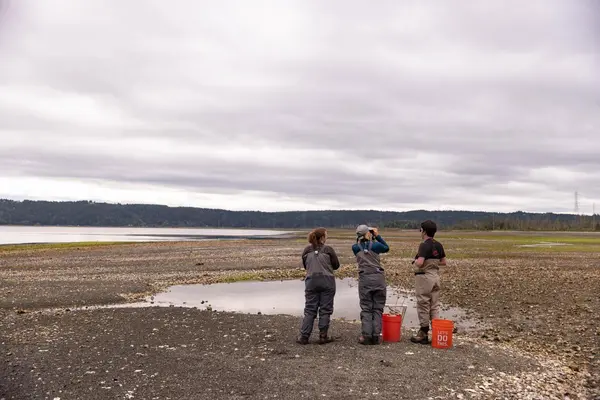
Three people stand at low tide looking toward the Puget Sound

In the early morning hours of a warm summer day, the tide in Puget Sound recedes, revealing glistening tide pools filled with an array of sea creatures. There, University of Puget Sound students Vincent Wills ’27 and Bea Moldow ’28 find themselves knee-deep in mud, placing PVC quadrats through the eelgrass beds and counting stalks by hand. They measure each stalk, record its length, and note the density of the plants around them, working methodically before the tide returns to reclaim the shore. It feels a world away from the lecture halls of Tacoma.

University of Puget Sound Student Research Shines a Spotlight on Cold Cases in Washington

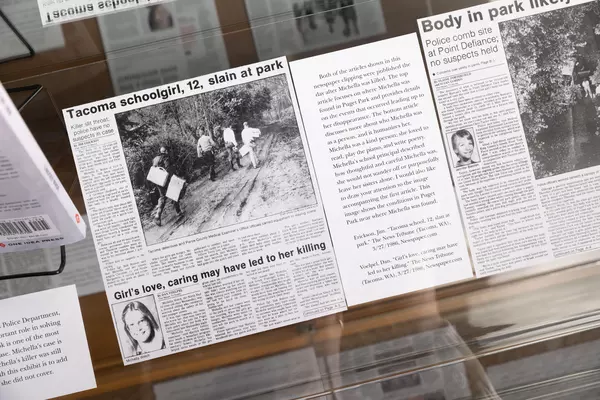
Newspaper articles about two Tacoma homicides from the 1980s for a summer research project by Anna Brown ’26.

In the spring and summer of 1986, Tacoma was rocked by the shocking rape and murder of two young girls, Michella Welch and Jennifer Bastian. Despite the killings occurring five months apart, the similarities between the victims, including their age, appearance, and the circumstances surrounding their disappearances, were hard to ignore. Locals worried that a serial killer might be lurking in Tacoma’s North End. Despite pressure from the community to bring the killer to justice and continued efforts by the Tacoma Police Department, there simply wasn’t enough evidence to build a case.

A Forensic Journey Through History

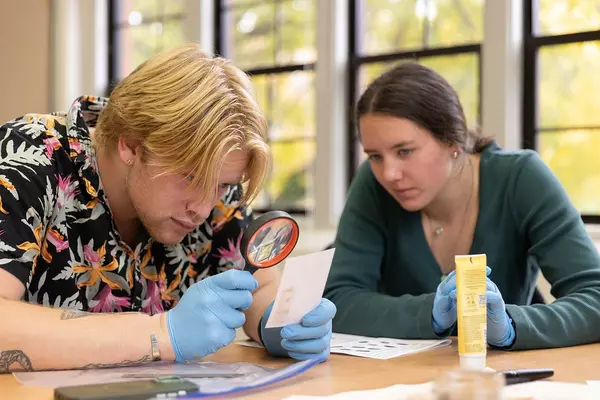
Student inspects a piece of paper with a magnifying glass.

It wasn't a fictional plot twist but a real-life 19th-century cold case that had Mia Steiner ’27 and her classmates huddled around a whiteboard, mapping out suspects and motives. The students were investigating the infamous 1880 Donnelly family murders — an unsolved case that took place in Canada more than a century ago. Their work was part of a Puget Sound class, Murder and Mayhem Under the Microscope, taught by Amy Fisher, professor of Science, Technology, Health, and Society.