University of Puget Sound student fuses art, science, and history
Eva Langenthal ’26 has been a bit of an expert on their capstone topic for over a decade.
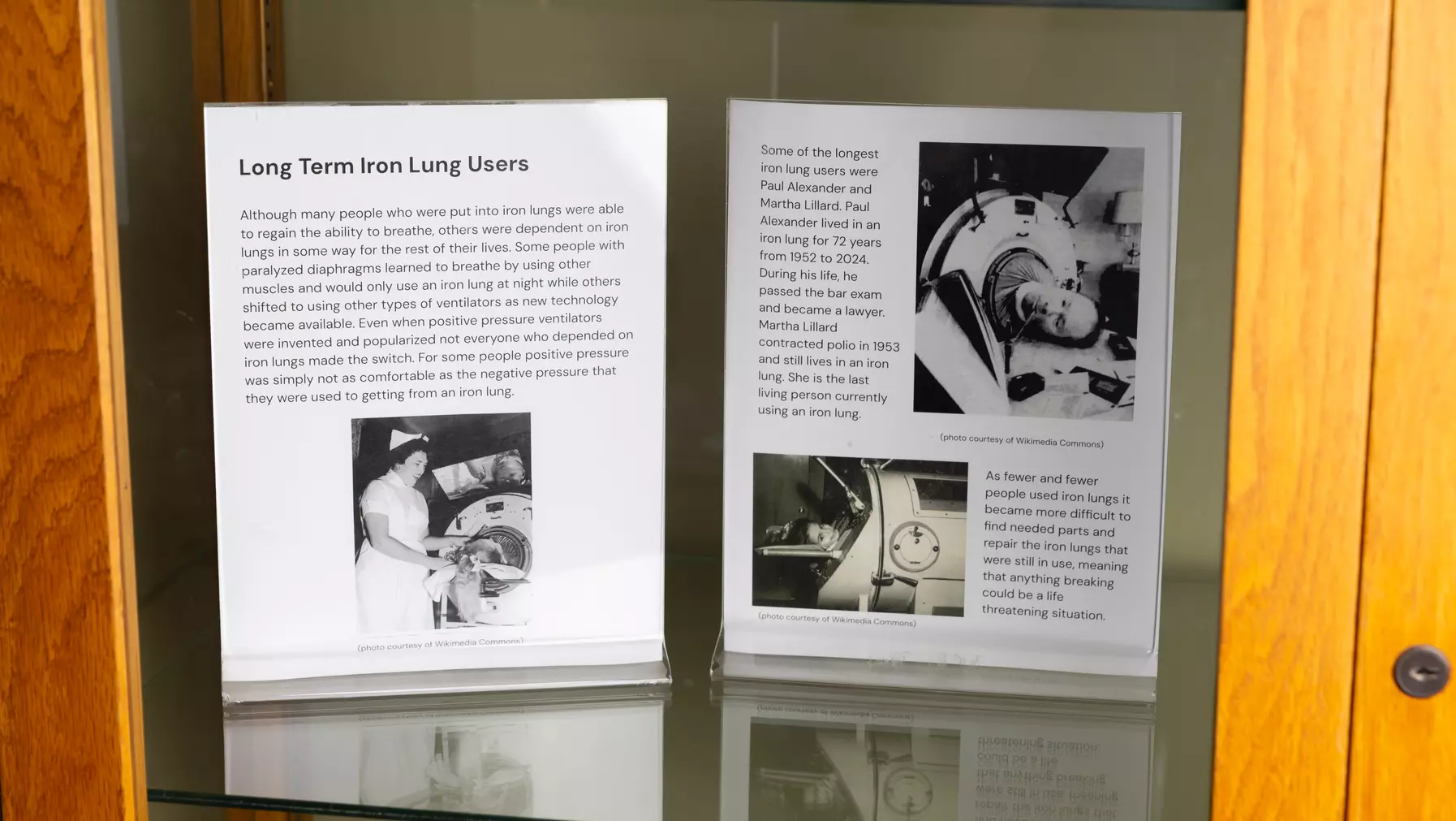
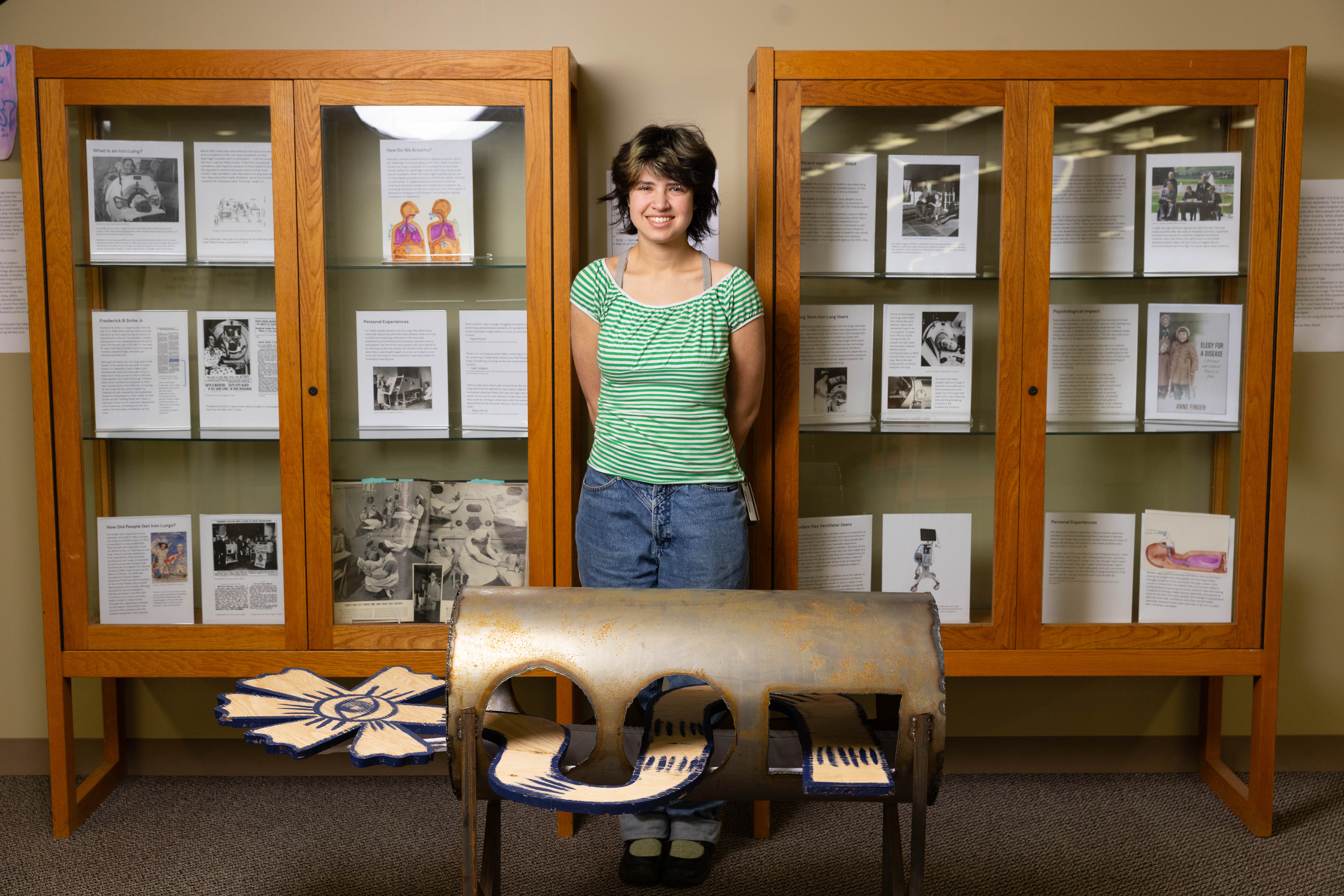
“I’ve been interested in polio since fifth grade, after randomly reading a book about it. I was like, ‘Yes, this is my thing,’” they said. The interest hasn’t waned since, and their senior capstone project — “Why Should You Care About Iron Lungs?” — is up for view on the first floor of Collins Memorial Library for the rest of the semester.
The project was completed for Langenthal’s Science, Technology, Health & Society (STHS) major, and takes the form of an informative museum exhibit intended to educate viewers on polio, which can lead to respiratory and spinal paralysis, and its now-obsolete treatment, the iron lung.
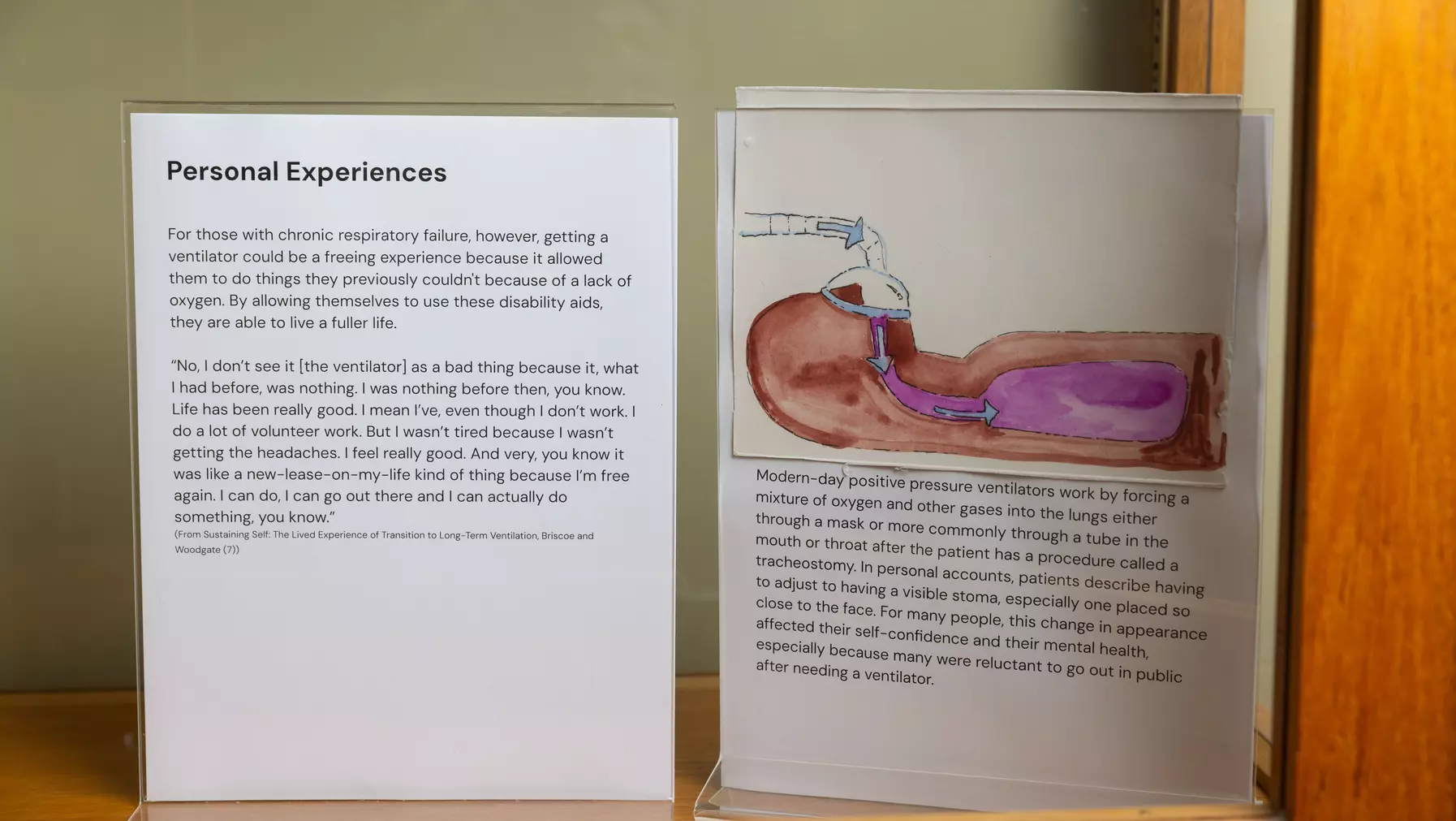
“I also talk about how the views of disability have changed over time,” Langenthal said. “Obviously, in the 1930s to ’50s, the time period when iron lungs were primarily used, the view of disability was very different from our current-day understanding because of activism that has happened since.”
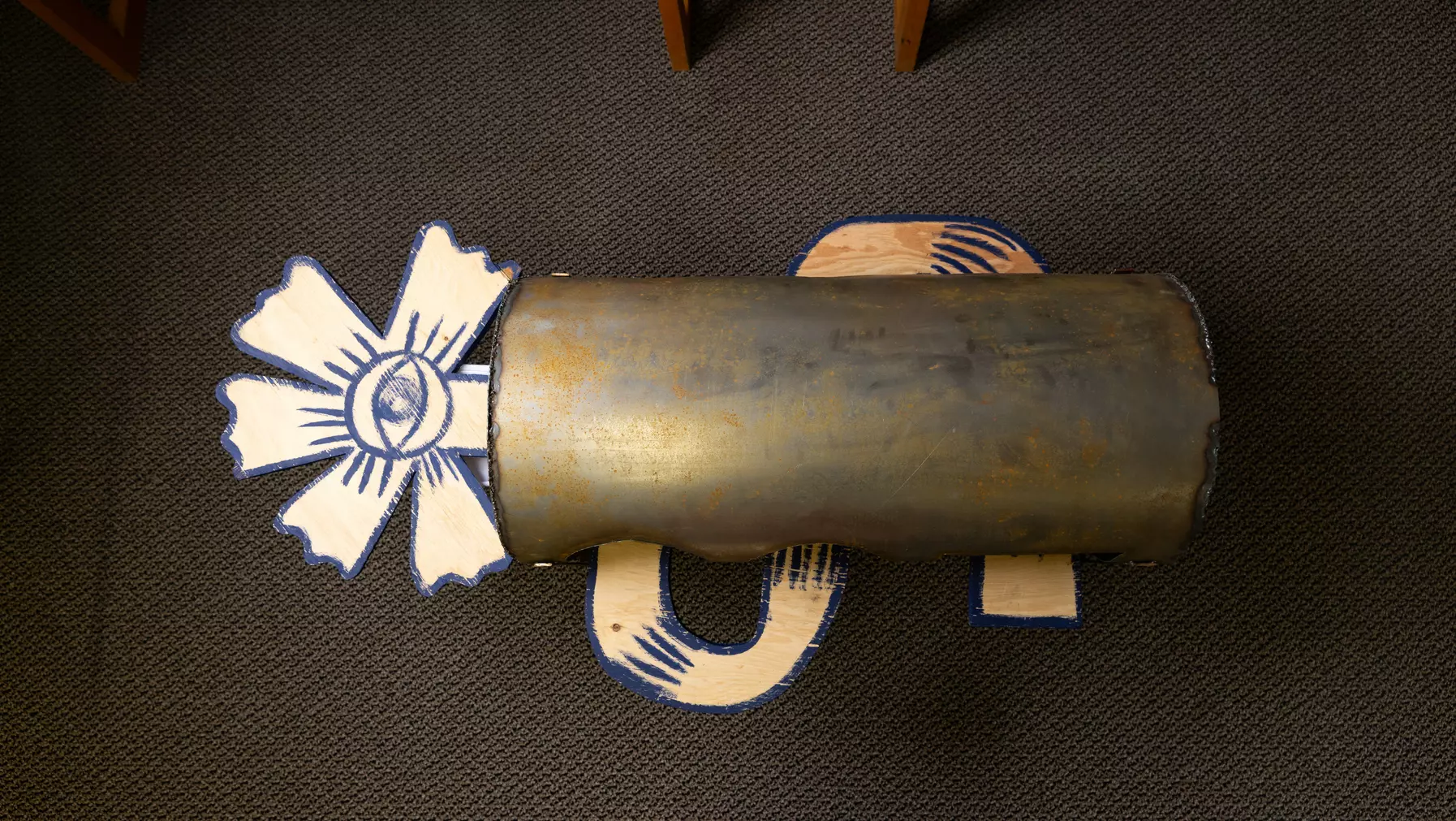
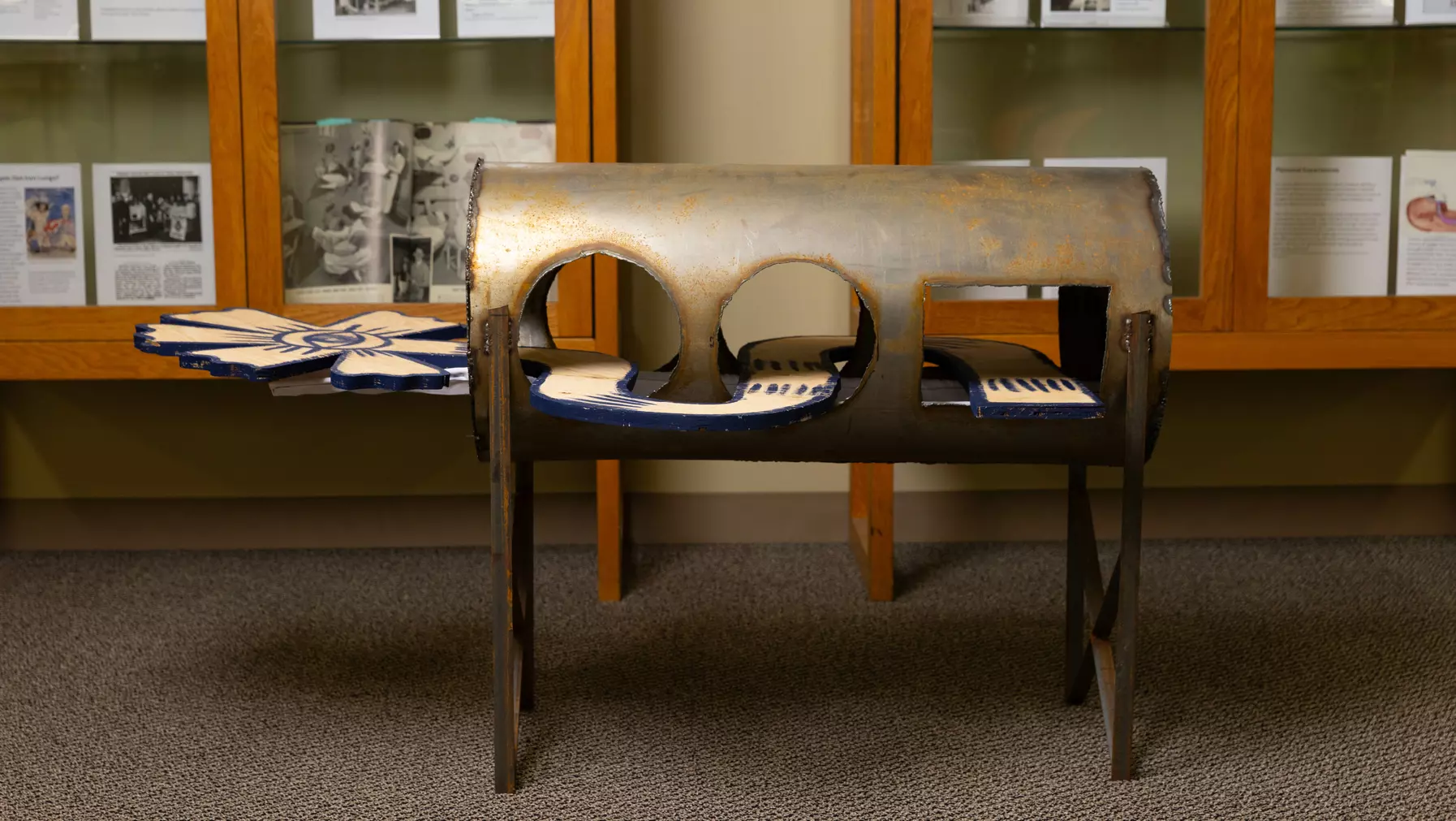
Langenthal’s exhibit is accompanied by an art piece they made for their metal sculpture class, inspired by the iron lung. The project aims to immerse viewers into the STHS mindset, which focuses on the intersection of human development, philosophy, and world events.
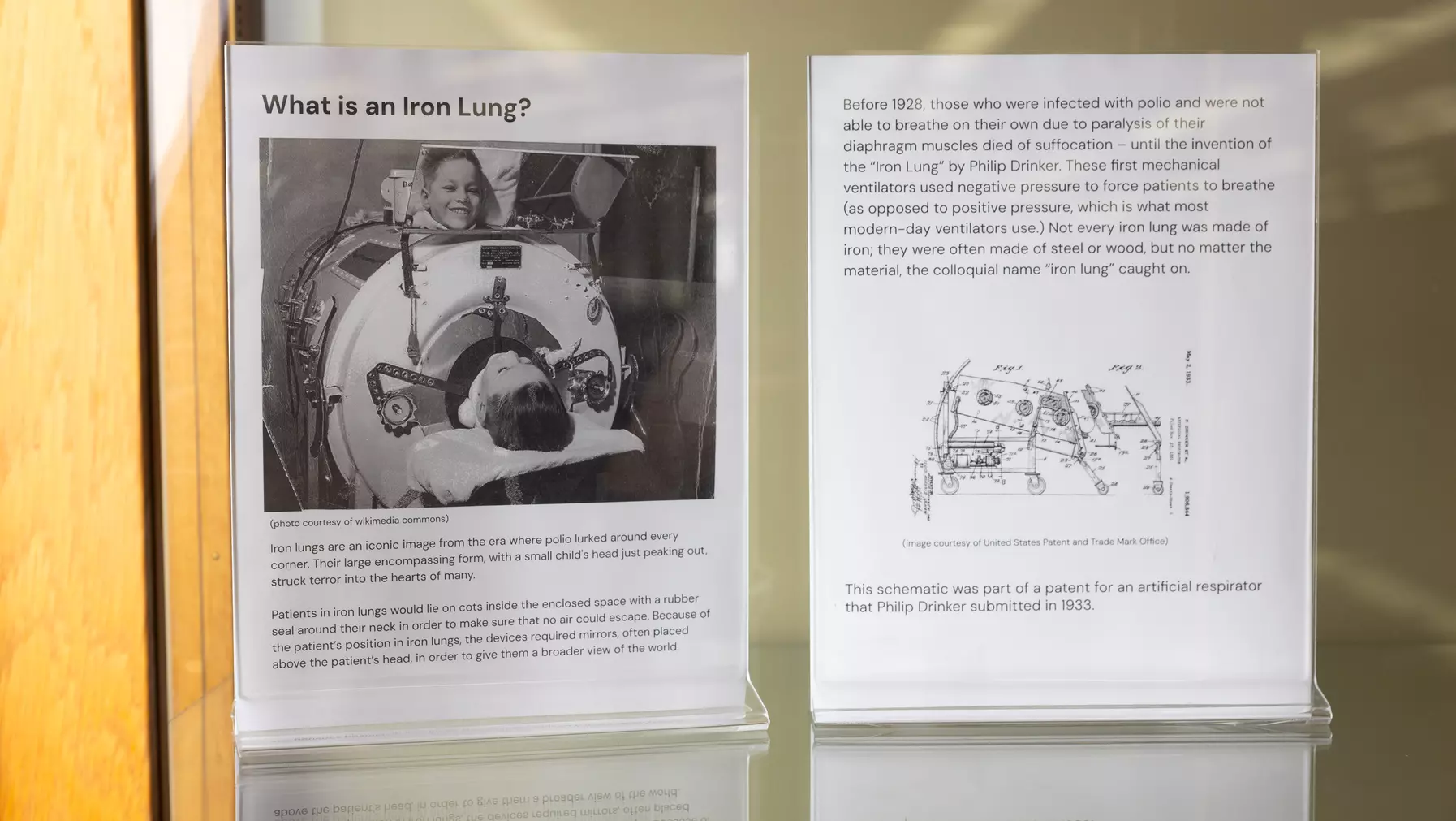
An iron lung is a large metal tube that encloses a patient’s body from the head down. The “lung” works as a ventilator, forcing the body to breathe through the negative air pressure supplied by a system of bellows. The machine was a common sight in hospitals during the height of the American polio epidemic in the 1940s and ’50s, but is now obsolete thanks to the invention of positive pressure ventilators, which supply oxygen directly to a patient’s airways, and the widespread adoption of the inactivated polio vaccine.
“Iron lungs aren’t used anymore because they’re heavy, loud, expensive,” says Langenthal. “You also don’t have any access to the patient’s body while they’re inside, which is a big issue if someone has multiple medical issues going on.”
Yet for Langenthal, something elusive about this piece of obsolete medical technology seems to endure.
“Iron lungs were the first widespread mechanical technology to keep someone alive. I’m really fascinated by the progression of medicine in the last hundred years. Think about the fact that 100 years ago, we didn’t really have any effective antibiotics, and today you can get a heart transplant, which is crazy.”
FUTURE UG STUDENTS
Stories to be featured on the Future Undergraduate Students audience page