Bringing Physics to Life

Fluid dropper on a microscope slide

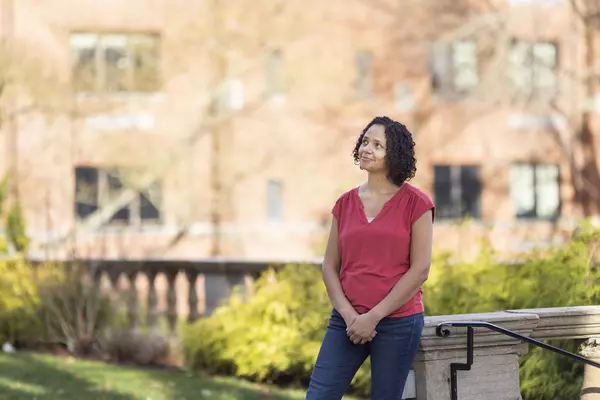
Standing at the intersection of physical and life sciences, Rachel Pepper’s curiosity has led her to investigate how living systems function. Her research focuses on how tiny organisms interact with water and other fluids, with outsized impacts on everything from erosion and plant disease transmission to wastewater treatment and carbon sequestration. We sat down with the associate professor of physics and William D. and Flora McCormick chair in biophysics to learn more.

Create the Most Masters

Karin Steere

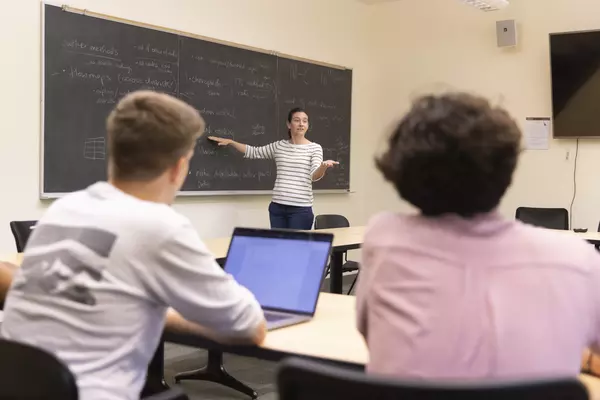
Clinical Associate Professor Karin Steere D.P.T.’09 wears a lot of hats in the School of Physical Therapy. When she isn’t teaching courses on cardiopulmonary physical therapy, systemic pathology, and pharmacology, she treats performing artists and is working on a Ph.D. dissertation on pain and heart rate variability. We recently spoke with Steere about how her time as a professional dancer in a touring company led her to pursue a career a physical therapist.

Haunted by the Past

Brett Rogers

Brett Rogers is fascinated by how antiquity continues to reverberate in the modern world. As professor of classics and ancient Mediterranean studies, he teaches courses in ancient languages, mythology, and gender, and his research focuses on analyzing Greek drama in the context of the time when it was performed. We caught up with Rogers to talk about science fiction, artificial intelligence, and how learning ancient Greek reorganizes your brain.

Creature Cognition

Erin Colbert-White

Associate Professor of Psychology Erin Colbert-White always wanted to be a veterinarian, but after realizing she was allergic to most animals, she decided to find a different field. A psychology course in high school introduced her to the field of comparative psychology and the idea of understanding the differences between the ways humans and nonhuman animals think. Now, she studies human-to-nonhuman social interactions and communication. We recently caught up with her to discuss her research and her role as director of the newly created Faculty Development Center.

No Passport Necessary

Illustration of two bike riders pedaling toward the French countryside

The coronavirus forced the cancellation of 2020–21 study abroad programs—including the long-running Dijon program that, for many French majors, satisfies a graduation requirement. So the program leaders had to get creative.

Tracy Doyle's Musical Mission

Tracy Doyle

When most people think of a music composer, Tracy Doyle knows they usually think of a European white male. But she also understands how limiting that presumption can be. So, since starting as director of the School of Music last July, she has helped expand the school’s efforts to improve diversity, equity, and inclusion. “Historically speaking, it’s been hard for people to step away from the European art-music canon,” says Doyle, 51, an accomplished flutist who came to her position from Adams State University in Colorado.

Five Things You Don't Know About Pacific Northwest Trees

Close up of tree trunk bark

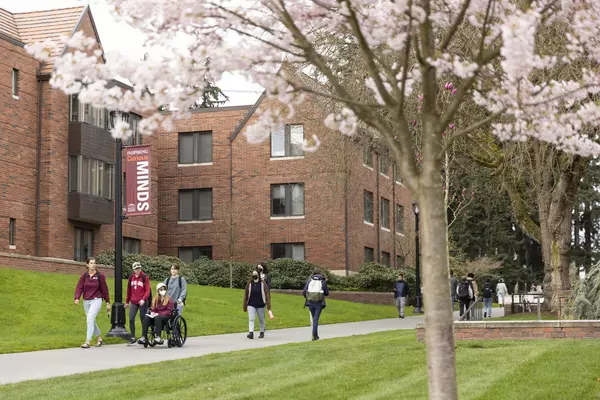
In honor of Puget Sound receiving a Tree Campus Higher Education designation from the Arbor Day Foundation, recognizing the university’s responsible stewardship of campus trees, we sought out an expert to help us get to know some of the evergreens and elms that greet Loggers every day. Enter Associate Professor of Biology (and resident Puget Sound tree expert) Carrie Woods, who set us straight on the role trees play on our campus and in the Pacific Northwest. Here are five things we learned: