University of Puget Sound Assistant Professor of Biology Elisa Frankel has launched a new research program focused on synapses, the vital connections between brain cells, following a successful grant proposal to the M.J. Murdock Charitable Trust. The project investigates the molecular mechanisms that help synapses remain stable as the nervous system ages.
The three-year project, titled “Mechanisms of Presynaptic Maintenance in Aging,” is supported by a Scientific Research Grant from the Trust. Because most neurons must remain functional over an animal’s lifetime, the ability to stabilize these connections is vital for long-term nervous system health.
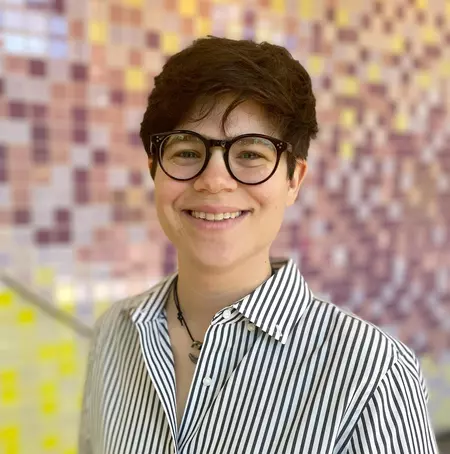
“Understanding how synapses are stabilized during aging is significant because synaptic decline is an early and progressive hallmark of neurodegeneration,” Frankel said. By identifying molecular pathways that support synapse maintenance, this research may provide insight into processes that are disrupted in neurodegenerative conditions such as Alzheimer's and Parkinson's disease.
The grant, totaling $70,000, serves as a critical foundation for the university’s neuroscience capabilities and expands opportunities for Puget Sound undergraduates to participate in neuroscience research using genetic engineering and advanced imaging techniques. Frankel intends to use the data collected during this period to compete for larger federal grants from the National Institutes of Health (NIH) and the National Science Foundation (NSF) to sustain and expand the program.
At the core of the project is a deep integration of undergraduate researchers, whom Frankel describes as the backbone of the lab. Students will be involved in every stage of the scientific process, from experimental design to data analysis and manuscript preparation.
Students will use high-tech tools to study the aging process in a tiny, transparent worm called C. elegans. Because C. elegans has a simple, well-mapped nervous system and a short lifespan, it allows researchers to follow synaptic changes across aging in ways that would be difficult in more complex animals. One of the primary techniques they will use is CRISPR-Cas9 gene editing, often described as “molecular scissors” because it allows researchers to make precise edits to DNA. In combination with this genetic approach, Frankel’s group will use confocal fluorescence microscopy to study how targeted genetic changes affect synaptic structure, localization, and maintenance throughout the lifespan of C. elegans.
“Microscopy is an extremely powerful teaching technique because it allows students to see biology unfold,” Frankel said regarding the lab's visualization-based approach. “Students can label a synaptic gene and then directly observe where its protein product localizes in a neuron. They can see whether that protein reaches a synapse, how it interacts with other proteins, and how mutations alter its localization and interactions. This approach teaches us so much about neuronal function and helps us understand how synapses are built and maintained through development and aging.”
The program also emphasizes the development of what Frankel calls scientific resilience. By working in a professional lab environment, students learn to navigate the challenges of complex research, preparing them for the rigors of graduate school, medical training, and scientific careers.
“College is a critical time for students to develop as scientists,” Frankel said. “Research gives students the chance to ask their own questions, make mistakes in a supportive environment, and learn how to keep going when experiments don’t work the first, or fifth, time. That process builds the confidence and resilience they need for the next stage of their training.”
Through this project, Frankel aims to build a long-term research program at Puget Sound that advances understanding of synapse maintenance during aging and gives undergraduates sustained experience with the persistence, creativity, and problem-solving that scientific research requires.
ABOUT M.J. MURDOCK CHARITABLE TRUST
M.J. Murdock Charitable Trust, created by the will of the late Melvin J. (Jack) Murdock, provides grants, programs, initiatives, and convenings for nonprofit organizations in five states of the Pacific Northwest—Alaska, Idaho, Montana, Oregon, and Washington — that seek to strengthen the region’s educational, social, spiritual, and cultural base in creative and sustainable ways. www.murdocktrust.org
CURRENT UG STUDENTS
Stories to be featured on the Current Undergraduate Students audience page
FUTURE UG STUDENTS
Stories to be featured on the Future Undergraduate Students audience page
PARENTS & FAMILIES
Stories to be featured on the Parents & Families audience page