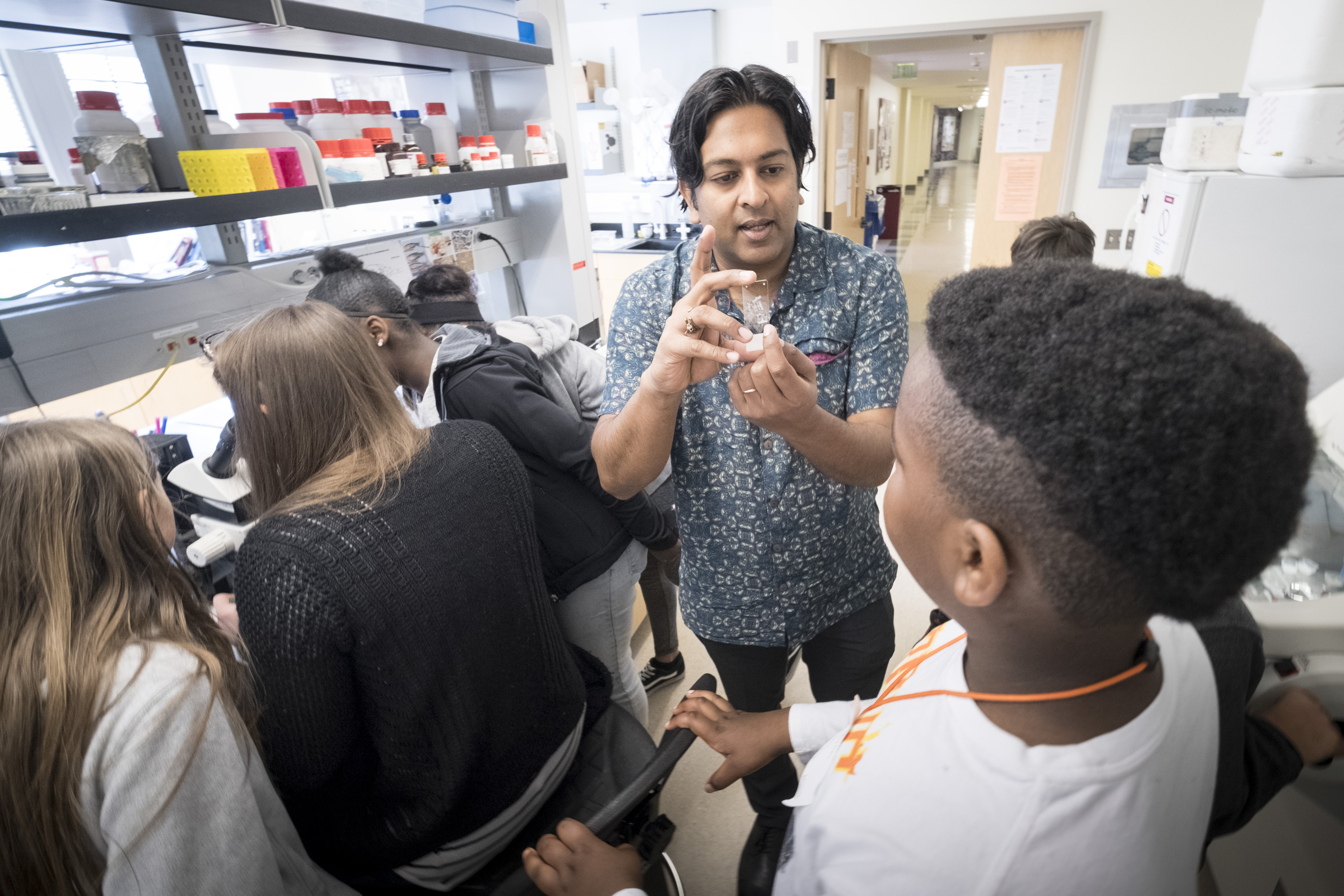
U.S. Rep. Emily Randall recently toured the science facilities at the University of Puget Sound, meeting with faculty, students, and university leadership as part of an effort to secure federal funding for a critical piece of research equipment.
The visit centered on a $905,692 appropriations request submitted through Randall's office to replace the university's aging confocal microscope — a high-powered imaging instrument used across multiple disciplines, including biology, chemistry, and neuroscience. While the amount included in the House Commerce, Justice, Science Subcommittee's draft appropriations bill was reduced to $772,700, the project has already cleared a key hurdle in the federal funding process.
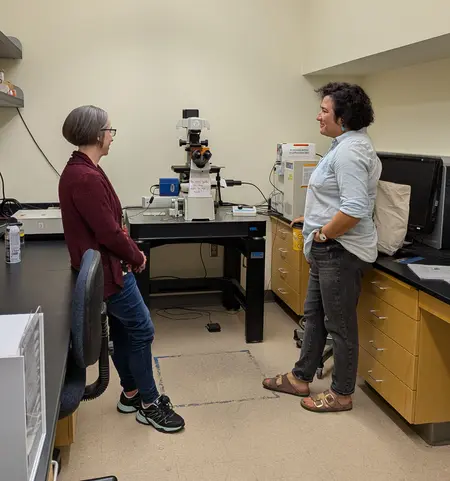
For Puget Sound, the need is urgent. The current system is increasingly unreliable, and researchers say the consequences of losing it extend well beyond campus, as it is the only comparable confocal imaging system readily accessible in the South Sound and is regularly used by researchers from neighboring institutions. A replacement would not only restore a critical research tool, but expand what is scientifically possible — enabling advanced live-cell imaging and supporting emerging techniques like CRISPR-Cas9 gene editing that current technology cannot accommodate.
“I was actually very surprised that there was nothing in this area at all amongst all of the schools that are here — no comparable microscope available — and that we were the ones being depended on,” said Assistant Professor Elisa Frankel, whose research relies on the instrument. “But now that our system is becoming less reliable, it's harder to provide that for people as well.”
Frankel currently travels to the University of Washington's Seattle campus to conduct research that the Puget Sound instrument can no longer support — a workaround she described as costly and limiting for students. A new spinning disk confocal microscope would also address emerging research needs, she noted, as modern gene-editing techniques produce cellular signals too faint for older systems to detect.
Randall, who represents Washington's 6th Congressional District, said the visit reinforced why protecting scientific infrastructure at smaller institutions matters nationally.
“Right now, when it feels like science is such a controversial space, we need to make sure that science at institutions like the University of Puget Sound can continue to provide hope to the next generation of scientists,” Randall said. “We can't lose folks from doing scientific research long term for the future of our country.”
Puget Sound also serves as a regional imaging resource. Faculty have hosted researchers and students from UW Tacoma, Pacific Lutheran University, and Bellarmine Preparatory School. Letters of support from faculty at those institutions accompanied the university’s funding proposal.
“It's been a fun part of the job connecting with faculty from different institutions,” said Science Core Facility Technician Amy Replogle. “I've formed really great relationships with people at UW Tacoma and PLU, and a long-lasting partnership with teachers from Bellarmine. We all collaborate and work toward something fun.”
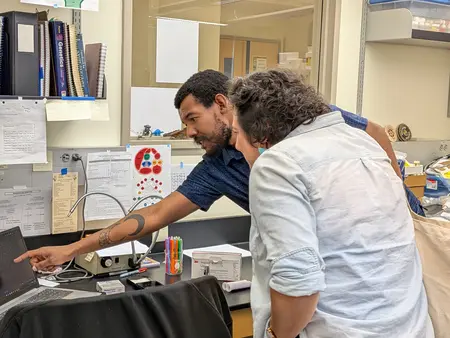
Biology major Mikhail George ’26 uses the existing confocal microscope to study cell growth in plants. Originally, George considered attending a community college in his home state of Alabama. However, he ultimately chose to pursue his education at Puget Sound because of the hands-on scientific experiences available there.
“Growing up in the South, I realized how hard it was to actually find scientific and research opportunities,” George said. “I am really glad I actually came up here. I have been on what seems like a nonstop rollercoaster ride, but it's been so much fun being here and doing research, and I feel like I've really grown a lot coming up here.”
Puget Sound President Isiaah Crawford said the funding request reflects the university's longstanding commitment to scientific research.
“The University of Puget Sound is proud to have a strong science program that provides our students with the opportunity to study science through an interdisciplinary, liberal arts framework,” Crawford said. “We are grateful to Rep. Randall for her advocacy to ensure our students and educational partners have access to the tools they need to pursue their studies and research.”
The funding request must still clear the full House budget process and be signed into law.
COMMUNITY
Stories to be featured on the Community audience page
CURRENT UG STUDENTS
Stories to be featured on the Current Undergraduate Students audience page