The Chiricahua Mountains, in southeastern Arizona, are home to some 6,500 animal species. Known as a “sky island” range, the topography changes dramatically as you climb; many of the species can’t survive in the low desert climates, so they’re essentially stuck on their “island” mountain.
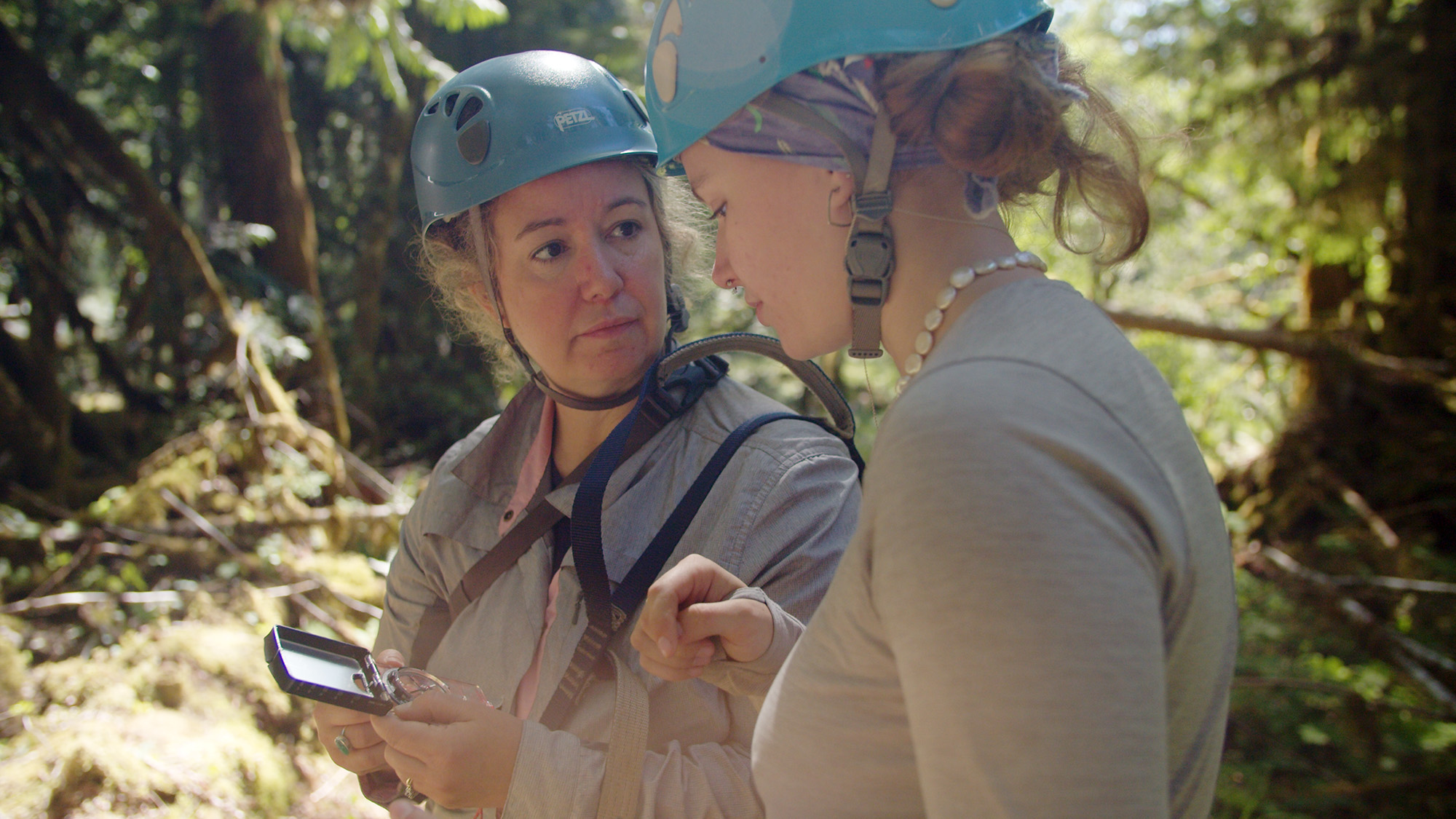
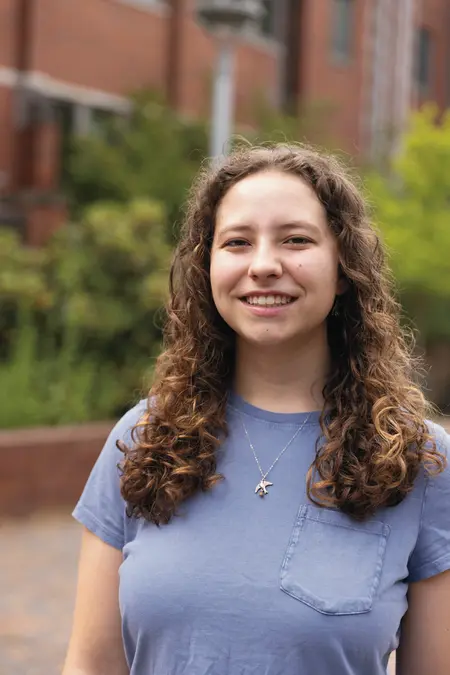
Sophia Haynes ’27 spent three weeks this summer researching one of these species: the striped plateau lizard. Living and working out of the Southwestern Research Station, located about 5,400 feet above sea level, Haynes studied how the cold-blooded lizard thermally regulates in the heat of the Arizona mountains, and more specifically, whether the lizards take refuge in trees when it’s hotter in order to regulate their temperature.
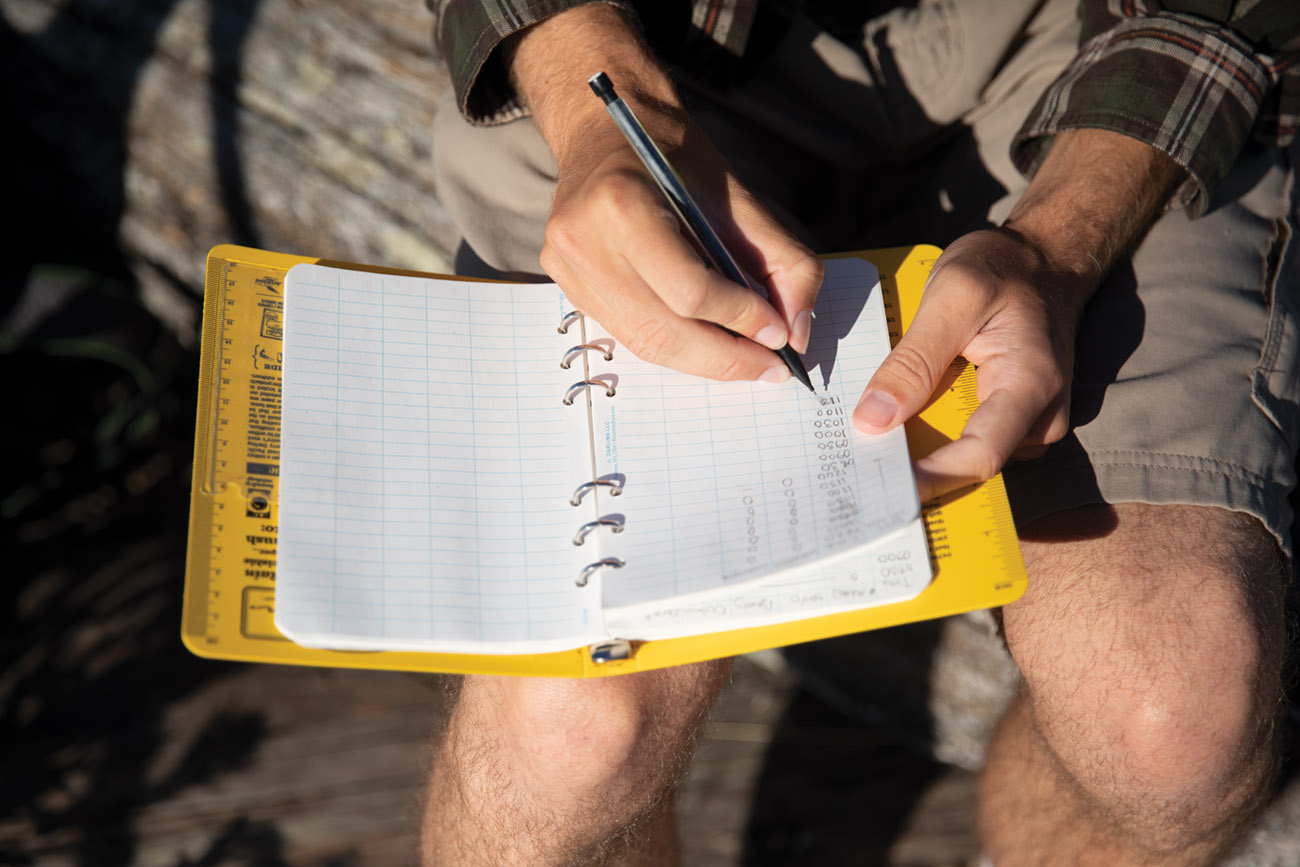
Every day, she and her faculty advisor, Professor of Biology Stacey Weiss, would catch lizards, take their body temperature and a series of measurements, and document where they were found.
Haynes was one of 106 students who received grants in 2026 as part of Puget Sound’s 10-week summer research program. With funding of at least $4,000 each, students researched everything from better manufacturing procedures for pharmaceutical waste to the evolution of homophobia in Western religion. While the program has been around for decades, it has become an increasingly important component of Puget Sound’s experiential learning requirement, which went into effect in 2022 and also includes study abroad, internships, and community-based learning.
And while students and their faculty advisors naturally hope the work validates whatever research question they’re studying, professors involved say the value extends far beyond results. That includes Associate Professor of Exercise Science Kirsten Coffman, who has been advising students nearly every summer since she started at Puget Sound in 2019.
“For most students, it’s about the experience of learning how to run equipment, troubleshoot, interact with subjects, deal with stressful days,” she said, adding that she asks early on what students want out of the experience — and how much day-to-day support they prefer — and then calibrates accordingly.
Students start thinking about their research in the fall, working closely with a faculty advisor to draft a five-page proposal outlining what they want to study, how they plan to go about it, and what existing research will inform their process.
“The biggest challenge is [students who come to me and say,] ‘I have this idea.’ [Then I ask,] ‘OK, how are we going to test that?’” said Coffman. “That’s kind of the initial piece: How do we turn this interest you have into something we can do?”
She works with students to sharpen both the research question and the methodology, especially given that it can be difficult to get human test subjects during the summer.

Associate Professor of Psychology Melvin Rouse agreed, citing a past student who was researching how adults learn about pleasure in the context of sex education. “[Methodology] was a big part of our conversation in the fall,” he said. “Because from my perspective, I’m thinking about who’s going to be reading this? Who’s the reviewer? They’re going to be assessing whether this is a feasible project, and if they don’t see that there’s a clear plan for getting the numbers necessary to have a significant finding, that’s going to be a stumbling block.”
When envisioning research projects, it’s natural to picture a lab, and, historically, science and math students made up a large portion of summer research students. But in recent years, there has been a push to bring more Arts, Humanities, and Social Sciences (AHSS) students into the fold, according to Experiential Learning Program Manager Elize Hellam. Those efforts are working: In 2026, the 106 students were evenly split between AHSS and Science and Mathematics.
The program is set up to provide structure and community for students, even as they work on projects individually. There are cohort meetings every week, where students present their progress to peers. Hellam also teaches a class where student researchers reflect on their research experiences, and she coordinates professional development and social opportunities for students throughout the summer as well.
In July, there’s an epic dessert competition, where groups of students come up with concoctions that showcase their research. (Haynes lit up when talking about plans for a lizard-themed dessert. “It’s my favorite,” she said.) In the fall, the school holds a symposium for students to present their research, which is usually done with a poster.
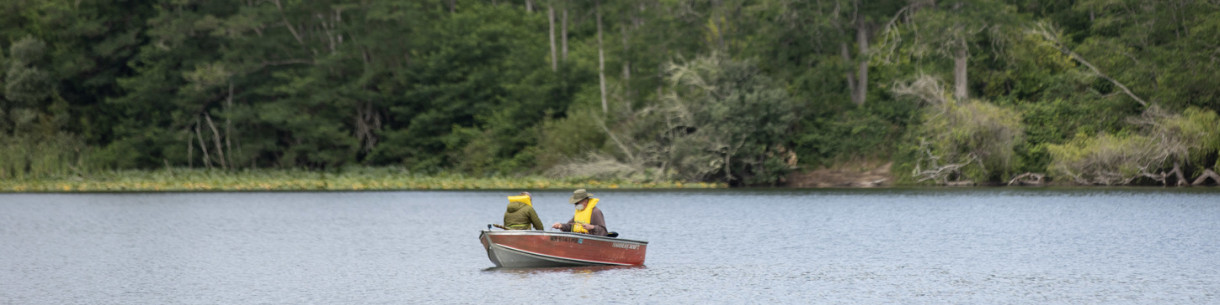
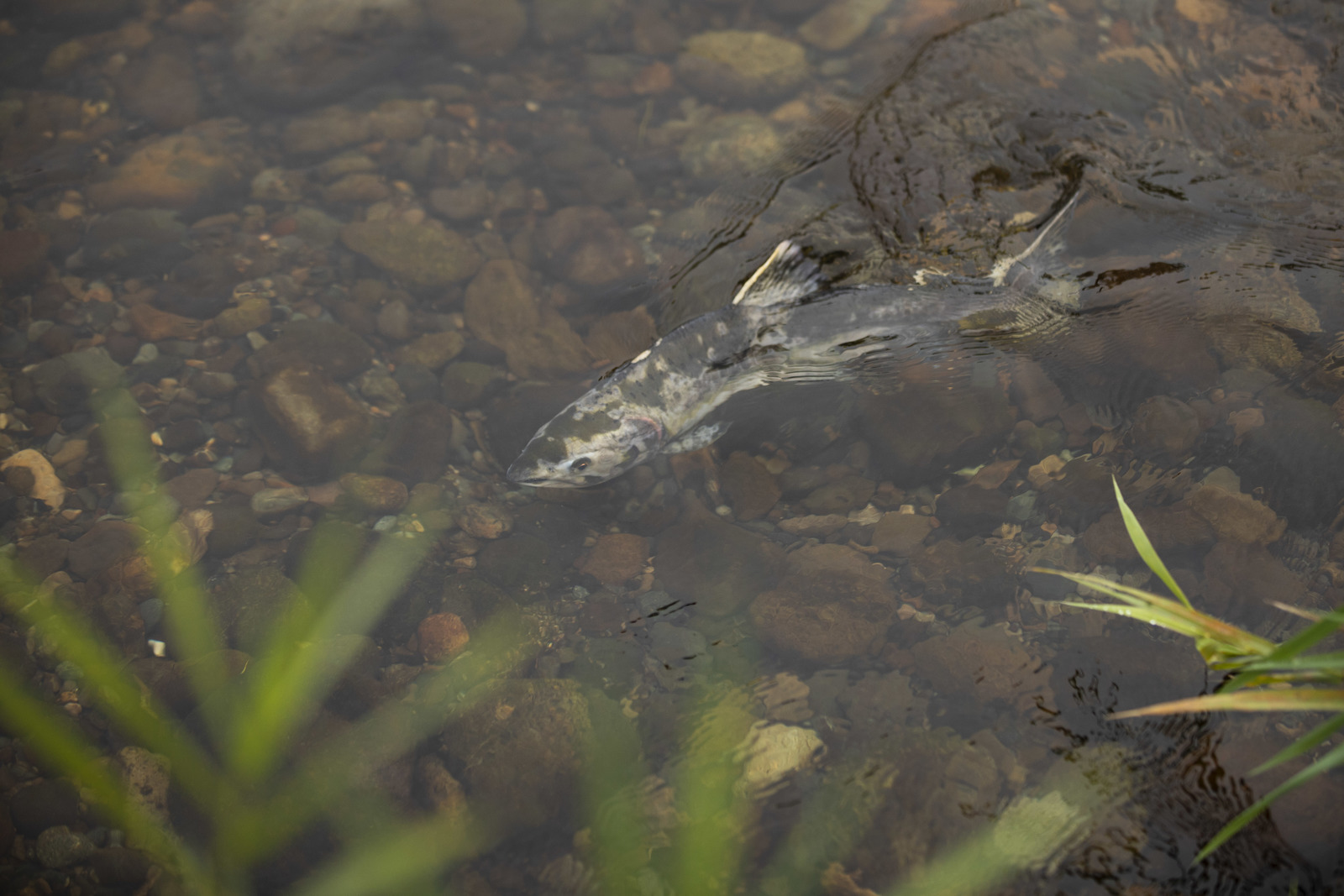
While Hellam said most students only take on a project for one summer, Haynes’ time in the Chiricahua Mountains marked her second year with the program. Last summer, she lived in Mount Rainier National Park, working closely with its Aquatic Ecology Program on a stable isotope analysis of mountain lakes: essentially measuring carbon and nitrogen isotopic ratios to see how non-native fish impact aquatic food webs.
Haynes, who’s a double major in Environmental Policy & Decision Making and Earth & Environmental Sciences, with a minor in music, plans to do a statistical analysis of the data from Mount Rainier for her senior thesis. She’ll use her own data as well as data several other Puget Sound students have collected. She said both research projects underscore how much she values collaboration.
“When you’re doing independent research, it feels like it’s going to be like an independent thing,” she said. “But it has never been, in my experience, actually all that independent.”
At both research locations, she was working alongside people from all walks of life who were exploring different facets of biology and ecology. “[In Arizona], it was like a little sampling — almost a buffet — of being able to see all the options out there.”

Rouse emphasized this part of the Puget Sound experience, particularly for setting students up for success in scientific fields.
“The days of the solo scientist, that’s really not how science is done anymore,” he said. “Science is really collaborative, and if students don’t have that idea going in, that ‘I will be working with people, I will have to talk with folks and answer hard questions about the things I’m interested in,’ I think that can put them at a disadvantage.”
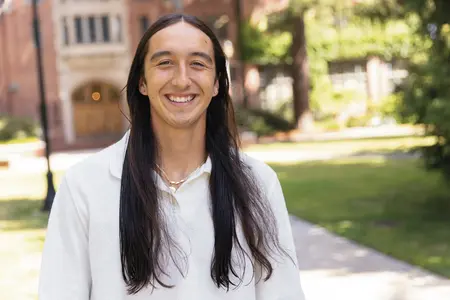
English major and Matelich Scholar Tdohasan Sunray ’27 also spent the past two summers doing research, but his projects were distinct. In the summer of 2025, he served Indigenous youth by leading creative writing workshops, which he said were influenced by English Professor Tiffany MacBain’s course on Native American literature. She advised him on that project.
In the summer of 2026 — this time advised by English Professor Priti Joshi — he researched Indigenous identity in Washington tribes — although that’s not where his proposal started.
He realized early on that his initial thesis question, which focused on Indigenous activism, needed to change. “What I found was that the idea of identity was intrinsically attached to all these movements of tribal activism, and so I became more and more interested in literally what does it take to even defend the notion of an Indigenous identity?”
His project took on a new shape, looking at tribal identity through two specific lenses: the federal recognition process — a designation that provides access to funding, healthcare, and a range of other federal resources — and disenrollment, which is when tribes remove from their rolls members who are not deemed “Indian enough,” Sunray said. Using that framework, he’s also researching the people and entities that are pushing back against these “tribal identity injustices” in Washington.
It could be no small thing to shift gears after spending months researching and writing a proposal, especially when it meant changing the tribes that he was looking at. But he said his advisor, Joshi, wasn’t fazed.
“Her philosophy regarding research is that it’s something that is supposed to grow and change over time,” he said. “And so when I told her I had concerns that my project was maybe shifting to something that I hadn’t proposed entirely, she said, ‘That’s exactly what I wanted to hear.’”
Sunray spent the summer studying five Washington tribes and made nearly a dozen site visits, attending powwows, participating in a canoe journey practice, and visiting elders at the Duwamish Longhouse.
“[They aren’t] the focus of the project, but they do set the grounds for being able to have conversations with people there,” he said. This is critical, as his project was qualitative in nature: attending happenings, poring over documents, and interviewing people at the sites. “The project is looking at who gets to be Indian and who’s making those determinations for who is and who isn’t. It’s hard to quantify identity.”
The project has piqued his interest in both journalism and law, and he’s considering careers in both after graduation.

Surya Kalaimani ’24 knows first-hand the value of the summer research program after graduating. She also spent two summers doing research — one in science, where she looked at the effect of the chemical BPA on neuroendocrine systems in snails, and one in AHSS, where she analyzed the archeological findings of a particular biblical site.
“I was somewhat indecisive with what I wanted to do [after graduation],” said Kalaimani, who double majored in anthropology and neuroscience. “Being able to do two research projects in very different disciplines taught me that I simply enjoy research environments.”
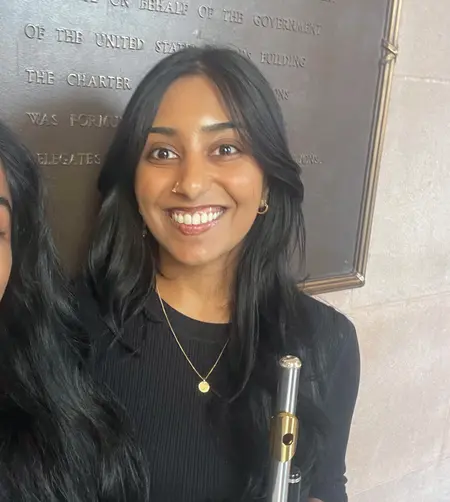
In the last few years, Kalaimani has worked in development and research for several museums; she recently started working at Stanford Law School in development and corporate relations. Graduating into an unstable job market, she said she heard a lot about the importance of being flexible and having nonlinear career paths; she didn’t realize until later how much the research program had reinforced that.
“There was something in the air [at Puget Sound] where everyone was so on board with me pursuing multiple paths of study, even if they were completely unrelated,” she said. “That experience, and the freedom to pursue those different things, definitely contributed to my ability to be more nimble now and open-minded.”
Kalaimani said she’s spoken to peers who attended other universities who are “shocked that my undergraduate opportunities were almost all funded.”
Haynes said when she was applying to colleges, she thought smaller liberal arts schools like Puget Sound might not have the same opportunities as the R1 research institutions she was also considering. But as it turned out, she said the inverse has actually been true.
“The reason I’m doing [my] research right now is because I had a good relationship with my professor,” Haynes added. “And that’s not impossible, because the class was small, so we all had good relationships with her. I feel like there are a lot more opportunities here for me at this small school, because I am not competing with 30,000 people.”
GWA EL Pillar
Stories related to the GWA campaign pillar about experiential learning
CURRENT UG STUDENTS
Stories to be featured on the Current Undergraduate Students audience page
FACULTY & STAFF
Stories to be featured on the Faculty & Staff audience page
PARENTS & FAMILIES
Stories to be featured on the Parents & Families audience page
HOME Featured
Stories to be featured on the home page.