A Chemist After All

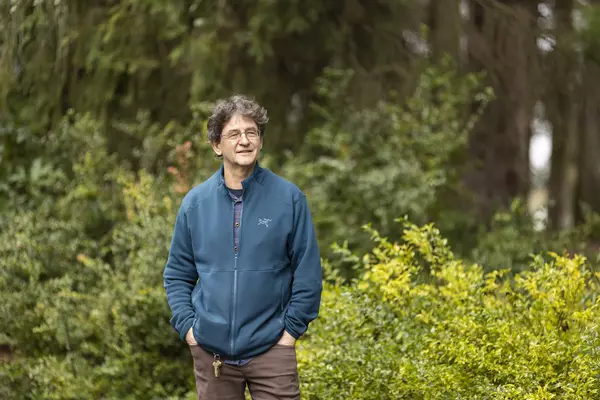
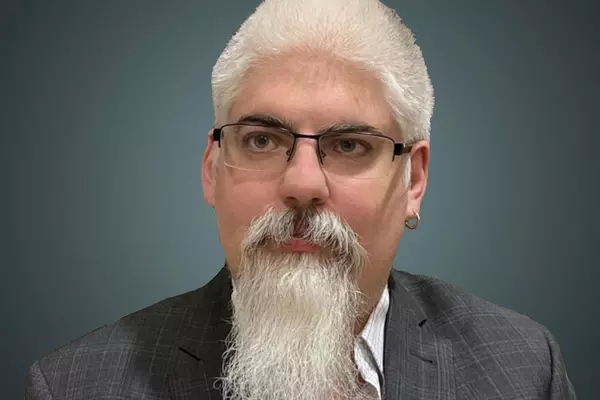
Adam Willard ’03. Photo by Justin Knight

When Adam Willard ’03 emerged from high school in Bend, Ore., and prepared to enroll at Puget Sound as a pre-med major, he hated chemistry so much that he made his teacher a promise: He would never take another chemistry course that he wasn’t absolutely required to take.

A few years later, after deciding he didn’t want to go to medical school, Willard discovered that the only way he could graduate on time was by majoring in chemistry. When he took a quantum mechanics course, he realized he’d found a branch of chemistry that he actually enjoyed.

6th Avenue Brewer

Julie Davidson ’96

In March 2020, Julie Davidson ’96 made a pivot. A certified facilitator, coach, and consultant—and president and CEO of her own consulting company, The JD Group— Davidson started to see her contracts dry up as employees were sent home in the early days of the pandemic. So, she leaned into a hobby: kombucha brewing.

A Passion for Whitewater

J.T. Hartman ’19. Photo: Quinn Martell ’20

Growing up in North Bend, Wash., J.T. Hartman ’19 spent time in and around rivers, but not paddling them. That changed when he was 12 and a family friend took him on a six-day rafting trip on Oregon’s Rogue River.

“From the second we pushed off the shore, I just needed more and more,” he says. “It was almost a visceral need to be out on the water. It just felt like nothing else.”

The Business of Baseball

Illustration of a baseball with "Loggers" written across is and graph markings to the right of it

And while some of it has to do with the Loggers’ on-field success in the sport, much has to do with what happens in the classroom.

“The vast majority of the classes are smaller and are in boardroom settings—and if you didn’t come strapped in, having done the reading and willing to hold your position, you were going to get bulldozed,” says Correa, who is the bench coach for the San Francisco Giants. “And in higher-level baseball, you have a ton of meetings, discussion, and debates with really bright people, from front-office employees to coaches and players and scouts.”

The Artist's Way

Painting: Landscape With Cheesecake, by William Turner ’65

William Turner ’65 first fell in love with art as a child growing up in Lakewood, Wash.

His family stopped at a restaurant on the way home from a trip to Seattle, and he was fascinated by the colorful paintings that hung on the walls. Later, he became interested in drawing.

The Joy of Dance

Ameera Nimjee

On a shelf in Ameera Nimjee’s study sits a small, garlanded statue of Nataraj, the Hindu god of dance. It’s an appropriate icon for an Indian classical dancer to own: Nimjee, assistant professor in the School of Music and the university’s first ethnomusicologist, is trained in Kathak, an Indian classical dance form known for its crisp, rhythmic footwork and evocative storytelling through hand movements and facial gestures. She is every inch the dancer: graceful, poised, expressive with her hands and eyes—even though she didn’t begin dancing until she was 18.

Adaptation

Stacey Weiss

Stacey Weiss didn’t have to look very far to find new lizards. When COVID-19 kept Weiss from returning to her study site in southeast Arizona last year, the William L. McCormick professor of natural sciences found locations not far from Tacoma where she could continue her research on the microbiomes of lizards—specifically, the protective microbes that female lizards pass on during egg-laying. We asked Weiss about adapting her research, the joys of collaborating with undergrads, and why swabs and miniature lassos are essential to her work. 

Where Science Meets Art

An artist book from the exhibition Science Stories with a dark cover and what appear to be curved horns coming out the sides of the book.

There’s an intriguing collection of books on display now at Collins Memorial Library. It’s called Science Stories, and the exhibition is appropriately named—they are, after all, stories about science. But these aren’t typical books; instead, artists from the Pacific Northwest have taken scientific research by faculty members at Puget Sound and other nearby schools, and interpreted that work into an array of imaginative “artist books.”