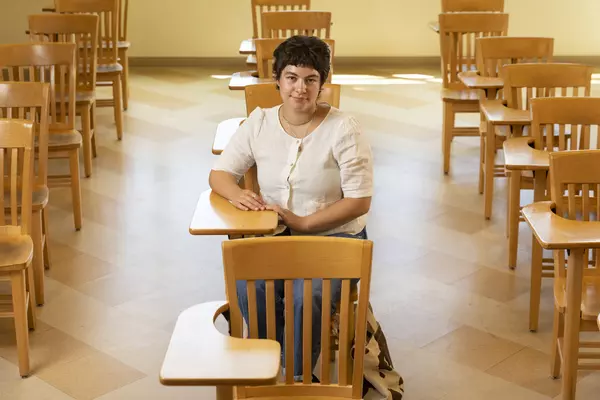
Ruthy McBride ’22 is studying a topic that’s controversial in the education community: the role of police in schools.

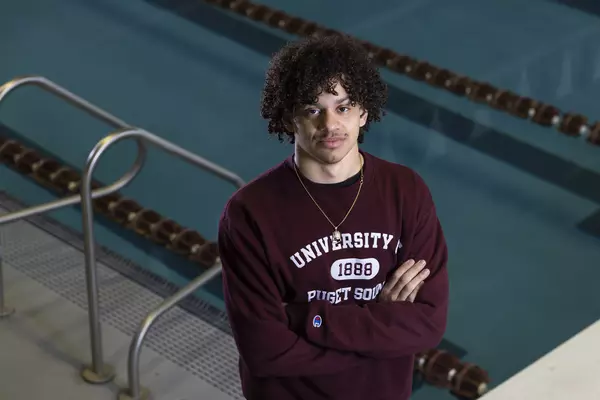
When Jaden Francis ’25 stepped up to the edge of the pool for his first relay as a member of the University of Puget Sound men’s swim team, it was a moment he’d been building up to for almost two years. Even before the COVID-19 pandemic canceled his high school swim meets, Francis had to contend with the closure of the public pools back home on the island of Guam due to funding and maintenance issues.
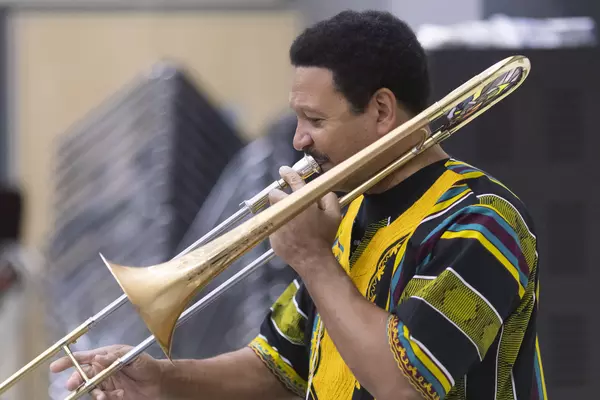
On a rainy, winter evening, the stage lights went up in Tacoma’s historic Blue Mouse Theatre, where Grammy Award-winning trombonist, composer, and music educator Delfeayo Marsalis was on hand to lead the University of Puget Sound Jazz Orchestra for a night of holiday standards and reinterpretations of classic songs. Before the concert, Marsalis spent time on campus teaching a master class and rehearsing with student performers, which included vocalist Eli Kitchens ’22.
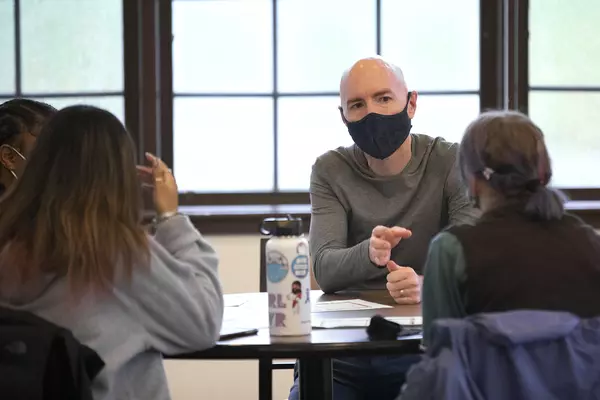
Police brutality incidents, such as the murders of George Floyd and Breonna Taylor in 2020, have made the issues surrounding policing and racism more visible than ever before. The social movements sparked by these incidents, and dozens like them in the last decade, have caused many, including Puget Sound students and professors, to ask tough questions about the current American justice system.
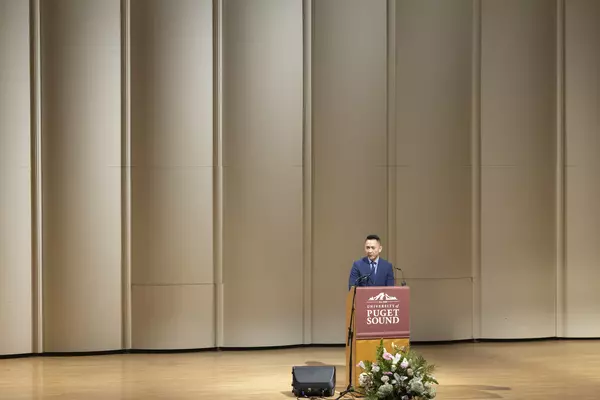
Author Viet Thanh Nguyen’s earliest memories are of being separated from his parents. The hazy recollections of his family’s escape from Vietnam in 1975 and arrival in the United States fuel his work as a writer to reconcile his dual identities as both an American and a refugee. Nguyen spoke this month at University of Puget Sound, where he gave the fall 2021 Susan Resneck Pierce Lecture in Public Affairs and the Arts.
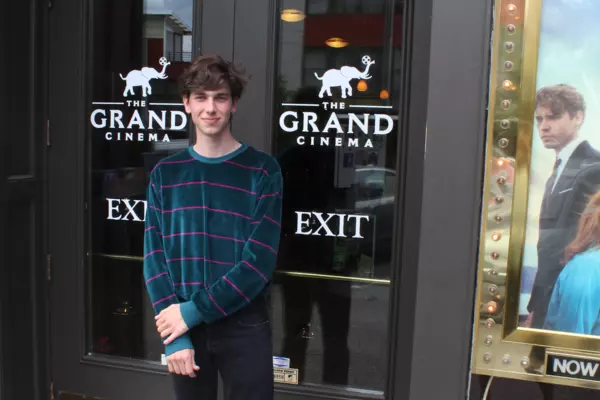
It was nearly 2 p.m., and summer camp at the Children’s Museum of Tacoma was wrapping up for the day. Linnea, a Puget Sound psychology student, is working at the museum this summer as a “learning experiences” intern, teaching dozens of children about science, technology, and art. She found the internship through RISE (Reflective Immersive Sophomore Experience), a new Puget Sound program designed specifically for second-year students.

Books and movies often portray medieval Europe as a highly regimented, theologically conservative society marked by strict gender roles and a total absence of queer people, but according to history major Chloe Shankland ’23, that view isn’t accurate. While few sources exist, literature from the period hints at a vibrant world of nonheteronormative art and culture.
Shankland worked with her advisor, Professor of History Katherine Smith, to examine poems, legal documents, and church records from 1000 to 1250 A.D. in search of references to queer identities and fluid gender roles.

TACOMA, Wash. – Josh Cunningham of Boise, Idaho, and Gwen Lindberg of Minneapolis, Minn., have been named University of Puget Sound Lillis Scholars. The university's most prestigious and competitive award honoring incoming students for their academic excellence, the Lillis Scholarship covers tuition, fees, and room and board for up to four years.
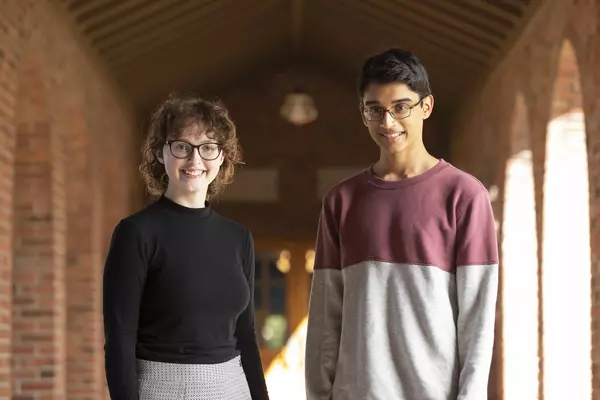
TACOMA, Wash. – Ainsley Liberty Feeney of Memphis, Tenn., and Kaushal Raghu of Sunnyvale, Calif., are the University of Puget Sound’s two newest Matelich Scholars. The pair were awarded the prestigious scholarship in recognition of their outstanding potential to excel academically, succeed as inspirational leaders, and give back to their communities through sustained personal growth and a lifetime relationship with the university. The award covers tuition, fees, and room and board at the university for up to four years.