The Kids Are All Right

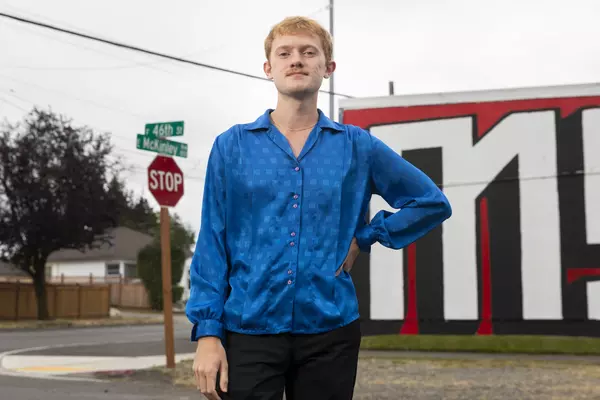
Dana Levy close up

Under ordinary circumstances, Dana Levy ’21 has a lot going on. 

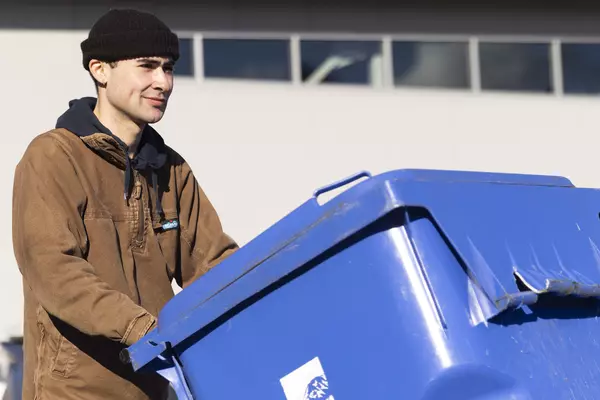
Levy is double majoring in English and gender and queer studies (GQS) with a minor in music. He’s also a violinist and active member of the Puget Sound LGBTQ community. (Levy identifies as transmasculine.) 

Last summer, however, looked like it would be pretty quiet. The coronavirus had nixed any prospects for a summer job, and by early June, the California native was, he says, “sitting around, twiddling my thumbs.” 

Sewing To Curb the Spread

“It feels good to help,” Zoe Love ’23 said over a Zoom call from her childhood bedroom in Evergreen, Colo.

Like a lot of current students, Zoe is trying to make sense of everything that’s going on. Thrust into her old life when COVID-19 seemed to change everything overnight, she moved back in with her parents when Puget Sound classes went online a week before spring break.

Democratizing Opportunity

Two people at a table looking at a tablet screen

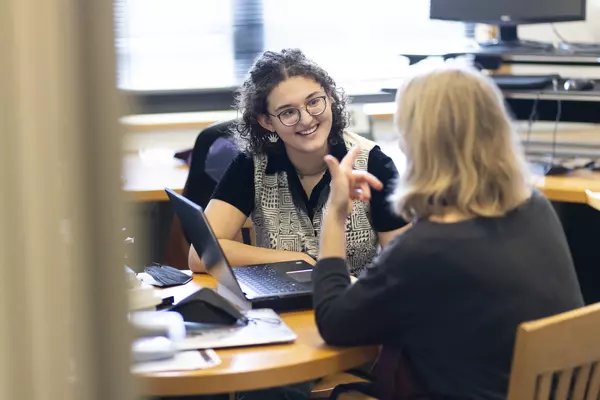
Called Handshake, the career search platform launched in January, replacing LoggerJobs. Sue Dahlin, associate director of career and employer engagement, says the platform is more than a place to find career and internship opportunities. “It’s a hub for all things related to the career search,” she says.

Wind 'Em Up

Emma McAllister

Since the COVID-19 pandemic began its domination of the global news cycle in February, the virus has served as a framework around which to discuss a host of other topics. One of the most notable: the shortcomings of the American health care system, specifically the limited number of ventilators. In March, the American Hospital Association estimated that up to 960,000 Americans could become sick enough to require ventilation—but the United States only had about 200,000 machines.

Finding a Way

Two people sitting outside

Kaela Hamilton ’20 presented her senior thesis research in biology in late April from a room in her boyfriend’s house in Tempe, Ariz. Using her laptop and Google Meet software, she showed a series of slides about her research on the composition and distribution of epiphytes on bigleaf maple trees while her advisor, Assistant Professor Carrie Woods, and about two dozen faculty members and students watched from their respective homes.

ASK a Logger: How To Get a Job

man talking

Tom Perry ’98, a history major while attending Puget Sound, spent much of his professional life in positions related to hiring within the tech industry. Now, he’s is a professional career coach at Engaged Pursuit in Seattle, where he works with a variety of clients, including new graduates navigating life after college.

Cultural Exchange From Home

video conference call

Picture this: Inside a bustling mega mall in Yogyakarta, Indonesia, 10 Puget Sound students are trying to get their bearings. Anthropology professor Gareth Barkin has just tasked them with talking to the shoppers—many of whom are locals and don’t speak English—about hijabs, specifically how the religious headscarf has become high-fashion among young, Indonesian Muslims. It’s an unfamiliar topic for the students, who are already outside their comfort zones in a foreign country.

Home School

Drawing of four different people's headshots

Despite the obstacles to teaching and learning while under COVID-19 quarantine orders, the Puget Sound faculty displayed agile and creative adaptability in the crisis. Some professors kept it old school, sending packages of tools and coursework to students’ homes; others went digital, using platforms such as Google Jamboard and Slack. Most courses used one video platform or another, including the campus’s learning management system, Canvas. Here are just a few examples of ways that faculty members adapted.

Knowledge Over Fear

Suburban landscape with mountain in the background

Jolie LiBert ’20 was overwhelmed. Home in Flushing, N.Y., for spring break, the Puget Sound senior had moved from one coronavirus epicenter to another. It was mid-March, and virus cases in both Washington and New York were trending sharply upward every day. “I told my mom, ‘I wonder how I can proactively think about this without reading bleak statistics,’” LiBert recalls.