Queering the Middle Ages

A stack of books sits on a table, visible just beyond two hands typing on a laptop keyboard

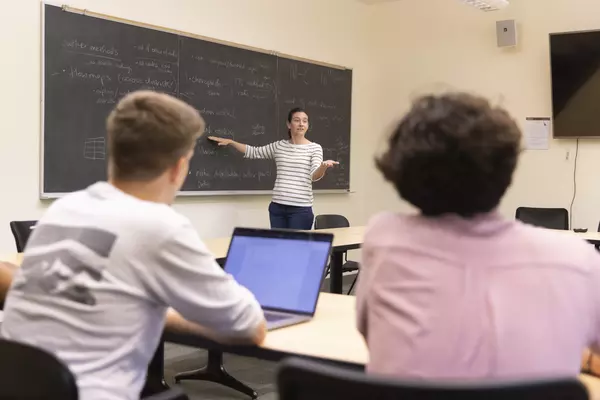
Books and movies often portray medieval Europe as a highly regimented, theologically conservative society marked by strict gender roles and a total absence of queer people, but according to history major Chloe Shankland ’23, that view isn’t accurate. While few sources exist, literature from the period hints at a vibrant world of nonheteronormative art and culture.

Shankland worked with her advisor, Professor of History Katherine Smith, to examine poems, legal documents, and church records from 1000 to 1250 A.D. in search of references to queer identities and fluid gender roles.

Summer Scholars

spotlight on a petri dish

Projects covered a range of topics: nonconformist gender presentation in stories of courtly love and other high medieval source material, disability justice and racial equity in high school classrooms, what honeybee brain science can show about Parkinson’s disease, and more.

See a sample of student projects:

Where Is the Methane in the Ocean Coming From?

Two female students hold a large water-filtering apparatus on a dock at the Puget Sound

Clarissa Troutman ’22 has spent a lot of time on the Puget Sound, hanging out with friends, but last summer she made repeated visits there for a different purpose: to collect seawater for her undergraduate research project. Troutman has been working with Oscar Sosa, assistant professor of biology, to better understand the unaccounted-for biological sources of methane in the ocean.