Faculty at the University of Puget Sound have published a paper in the Bulletin of the American Meteorological Society, one of the field’s top journals, showcasing a novel climate model designed not for advanced researchers, but for undergraduate students. The paper, published on Jan. 1, 2026, identifies a major gap in climate education, and presents "Cambio," a simplified yet robust climate model that fills that gap.
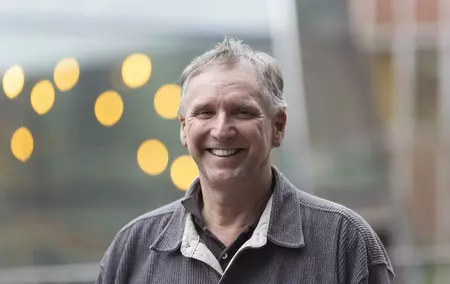
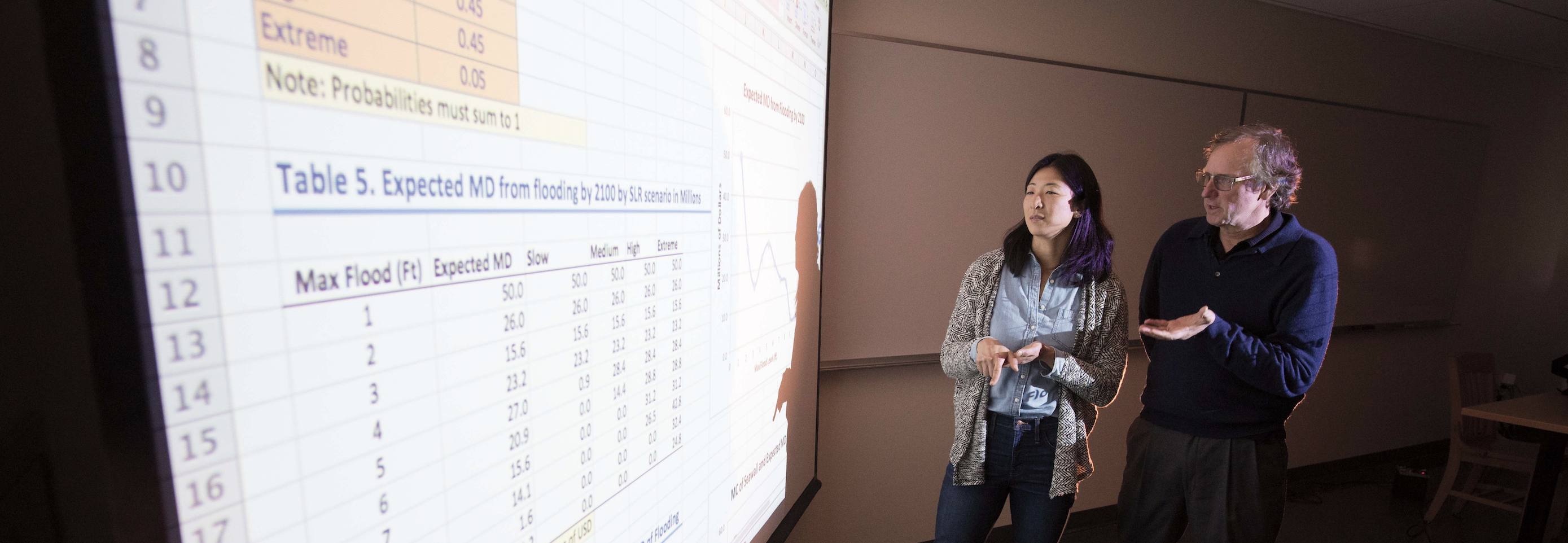
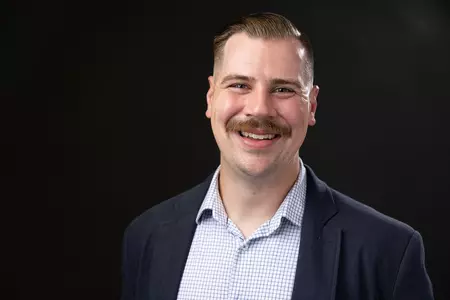
The paper, co-authored by Professor of Chemistry Steven Neshyba and Assistant Professor of Environmental Studies and Sciences Joel Eklof ’16 describes how the “Cambio” model forms the backbone of a Connections course (CONN 350). In this interdisciplinary class, students code, run, and modify the model themselves using the Python programming language.
“The Cambio model sits right in the middle, completely built to be a tool in student learning,” Eklof said. “It fills a pretty big void that has been troubling for a lot of people when it comes to climate education.”
The model addresses the gap between two approaches to teaching climate. On one side, there are diagrammatic methods that typically yield qualitative predictions. On the other side are complex Global Climate Models used by agencies like the Department of Energy, which provide quantitative predictions but demand significant time and specialized training to master. This level of commitment is often impractical for undergraduates who are not majoring in climate science.
“The great thing about Cambio is that you don’t have to have a graduate degree in atmospheric science to put together the model or run it,” Neshyba said. “It occupies this intermediate space between a qualitative tool and a tool that can be too complicated for most undergraduates to grapple with.”
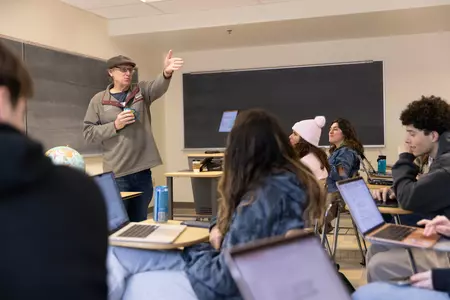
The university’s Connections course uses a teaching philosophy called “computational guided inquiry,” where students start by implementing the Cambio model in its simplest form, then slowly add on real-world complexities to their models — like changing emission peaks or simulating volcanic eruptions — and observing those outcomes.
“It’s totally hands-on, so that makes a huge difference,” Neshyba said. “The power of the model is that it enables you to make quantitative answers to those kinds of ‘what if’ questions.”
Students have used the model to explore scenarios ranging from the global impact of painting rooftops white to determining how quickly emissions must fall to stay below 2 degrees Celsius of warming. Neshyba pointed out that an important take-home lesson of the model is that global emissions need to peak before 2040 to avoid serious climate feedback loops that would continue warming the planet even after emissions decline.
The paper's reviewers were quick to note its value as a teaching tool. One wrote that the manuscript “provided significant inspiration for my own teaching” and inquired about accessing the open-source code.
For students like biochemistry major Noelani Moffat ’27, the course transformed climate change from an abstract concept into a tangible, coded reality.
“I didn’t have much experience with code before,” she said. “Actually building and running a climate model was eye-opening. It helped me see how many complex components contribute to warming and how they interact. Working hands-on made climate dynamics feel much more concrete.”
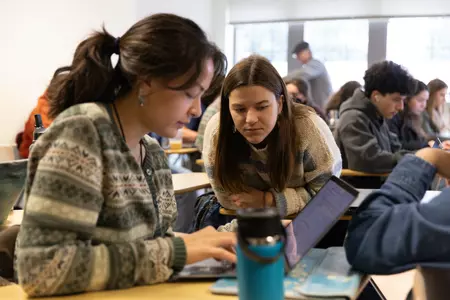
She also highlighted the faculty’s role in making complex material accessible.
“Prof. Neshyba created an environment where asking questions felt easy,” she said. “And Prof. Eklof had such an infectious appreciation for the subject that made us all happy to be in class.”
Eklof graduated from Puget Sound in 2016 with a degree in physics and will take over teaching the course after Neshyba’s retirement this semester. Both professors hope the published paper and open-source model will be adopted by instructors worldwide.
“This is very well-deserved recognition for the university,” Eklof said. “It’s an opportunity to allow others to teach climate change in an effective way with a new tool, which is something we really need right now.”
The paper is available in the current issue of the Bulletin of the American Meteorological Society. The Cambio model and teaching materials are available open-source for educational use.
FUTURE UG STUDENTS
Stories to be featured on the Future Undergraduate Students audience page
PARENTS & FAMILIES
Stories to be featured on the Parents & Families audience page
COMMUNITY
Stories to be featured on the Community audience page
FACULTY & STAFF
Stories to be featured on the Faculty & Staff audience page
CURRENT UG STUDENTS
Stories to be featured on the Current Undergraduate Students audience page