Julie Gates (00:06):
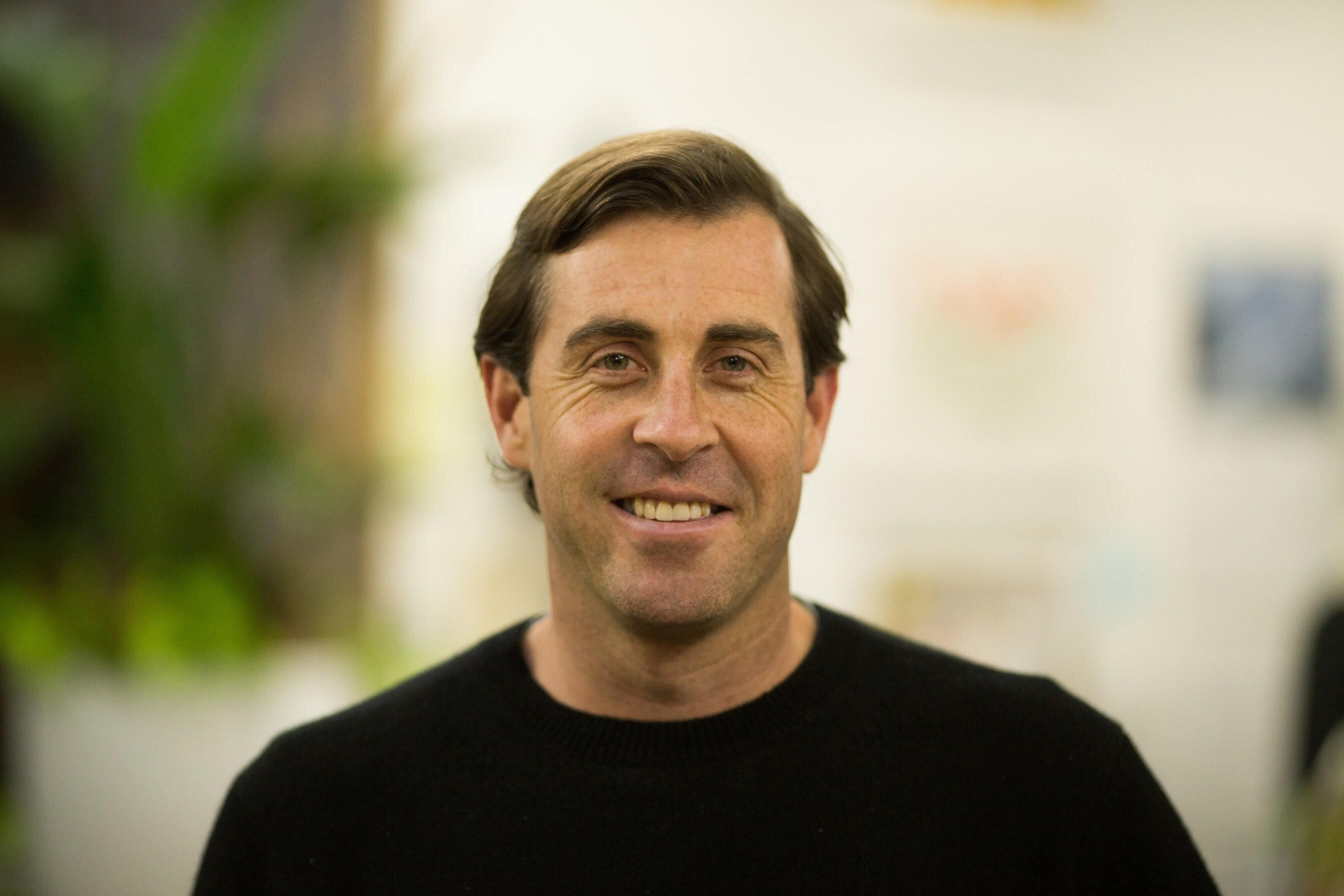
Welcome to the Always a Logger podcast where we meet University of Puget Sound alums who've taken their lives to the heights. Today we're being joined by David Bean, a 1991 business graduate who also studied accounting. David is a previous chairman of the Puyallup Tribe of Indians and the current chairman of the Indian Gaming Association. I'm so happy we got to finally connect. David, we've been trying to do this for quite a while, so thank you. I can see you're out and about this morning. What are you doing today?
David Z. Bean (00:32):
First of all, thank you for reaching out and being so persistent. I really appreciate your persistence. Today, I'm just out being a member of the Puyallup Tribe. It allows me the opportunity to do engage in our tribal treaty fishing activities, and so today we're getting ready for a Dungeness crab opener in South Puget Sound. And so just on the road getting my crab pots ready, getting all my gear ready to load on the boat. So just doing what I do. I try to stay active, teach my kids to stay active, and most importantly, make sure they're engaged in these fishing activities.
Julie Gates (01:09):
Yeah, I'm sure the tribal culture and the history is really important to teach the younger generation.
David Z. Bean (01:14):
Yes. Yeah. Thank you again.
Julie Gates (01:17):
Yeah, sure. So you have so many great stories. We did a pre-interview just before we started recording, and I'm excited about all of them. One of them that I think is really interesting is your non-traditional pathway as a student, you're a first-generation college student and you were going through some really big things in your personal life when you attended Puget Sound. Do you want to share your story?
David Z. Bean (01:36):
Yeah. My path is definitely not a traditional path, but influenced by University of Puget Sound alumni Chuck Bingham. I love talking the story, sharing the story about Chuck Bingham, my science teacher at Chief Leschi, my coach at Chief Leschi and Michael Pable. He brought in guest speakers and quite often the speakers would come in and we couldn't identify with them. They didn't look like us, they didn't have the same experiences as us. So he brought in Michael Pable a Skokomish man who attended University of Puget Sound, and they talked about their experience at the UPS and so much so that when it came time to make a decision, it was very simple. Chuck and Michael went to University of Puget Sound. I'm going to go to University of Puget Sound. It was that simple. Now, the task, the journey there was not as simple, it's a hard school to get into. It was challenging, but we took the steps necessary. But at the time, I was preparing to be a teenage parent. I became a father in the summer of 1987, started school in September 1987. And so my first year, year-and-a-half was an incredible adjustment period, learning to be a father, being a college student, that nobody in my family had ever experienced that. And so that was an adjustment in and of itself. But the campus itself was incredibly beautiful and incredibly warm. The student-professor ratio was really low. So I think at most, I don't think I had more than 25, 30 classmates in any one of my classes. So I really liked that, liked the fact that we had access to our professors and they were so kind and caring, and I just really appreciate them. So being a teenage parent and a student, that was tough, but I made it through it and I had great support from my family, my community members, and my community at the University of Puget Sound. So I was thankful for the experience.
Julie Gates (03:42):
I imagine being a teenage parent and a first-time parent and a first-time, first-gen college student, you probably didn't have time to do much else. You must've been very, very overloaded at the time.
David Z. Bean (03:52):
Incredibly overloaded. Fortunately, being an older brother, first and foremost, I had some younger siblings that I had a hand in help raising, so that kind of prepared me, but not 100% prepared me for putting a baby to bed at night. You know, babysitting for my mom and dad, changing a diaper, occasional diaper or two, but having to do it every day, all day, every night, and then manage the school schedule. And I was working, taking care of my kid, going to school. And so trying to juggle all that. And like I said, before we started the interview, I was actually on academic probation and it was an interesting journey and challenging, but I'm thankful. Like I said, there was one professor, I don't remember her name, but she kept asking me, why are you here? I gave the answer to get an education. Why are you here? I want to prepare to take care of my family and my community. In about the fourth time, I started getting irritated, and I think she could see that, but what she said following that, she goes, you're not doing the work. That's why I'm asking you. Why are you here? This is an incredibly expensive education. If you're not going to put forth the effort, why are you here? That was an incredible wake-up call, but I'm thankful. While I was irritated then, I didn't like the lesson, but I appreciate it now in reflection, because she challenged me, she made me open my eyes, and at that point, I began putting down even the video games. That was one thing. That was probably a big distraction. I want to say Super Mario Brothers might've been the thing at the time, but put down the,
Julie Gates (05:33):
It probably was.
David Z. Bean (05:33):
Yeah, because nobody is going to challenge you. The professors, while they do care, they're not going to check up on you all the time. They get paid regardless. And so the fact this young, that professor took time to ask me and challenge me, I really appreciate that. And I felt that, and I tell that story. I tell that often when I talk to kids in our community about going to school, and the one piece of advice I give each and every one of them is, I don't care where you go, just go off to college. Get that education. It's going to prepare you for the challenges that life throws at you. And there are many, I think as children, we're in such hurry, we're in such a hurry to grow up, can't wait to get my own car, my own place. But what folks don't tell you is the bills that come, and once they start coming, they don't stop. Be it rent or your mortgage payment, your car payment, whatever kind of debt you accrue as a young adult that is new to the world of adulthood and responsibility. And so once you become an adult, you start adulting, those bills keep coming. And so that's the one thing I make sure and tell folks, once those bills start, they don't stop until you die. So prepare yourself, put together a solid investment plan, a savings plan, put together a budget. These are things that I preach every day to kids in my community, even at the age of 57, I've been doing that for the last 25 years. And so I'm constantly telling folks, where are you going to go to school? How are you doing in school? Stay after it. What's next? So I'm constantly challenging them to look forward as folks challenged me during my college career at University of Puget Sound.
Julie Gates (07:22):
Yeah, I had a professor too that needed to challenge me for different reasons as well. And it's amazing how that can just be that fire that you get lit in you that makes you have that turnaround. You had quite the turnaround story, but you went from a period on academic probation to amazing, amazing results.
David Z. Bean (07:38):
Well, yeah. And again, it is not an inexpensive education. And we took a loan out, and this is before the tribe had any resources. The Puyallup Tribe now has plenty of resources with the development of Emerald Queen Casino. But prior to that, I had to take out a student loan. And so once that professor challenged me, I said goodbye to all of my friends in and around Tacoma. It was easy to go up the street and go visit with a friend. Oh crap, I got homework. Well, it'll be there tomorrow. But I had to tell all my friends, "I love you. I'll see you after graduation." And so for a period of three years, I won't say I got perfect scores, but they were damn near perfect scores for the following three years. And so I'm thankful again for the fact that our professors took the time to check in on us, challenge us, hold us accountable. Those are all important factors that we begin to develop as adults. But I think that's the whole reason behind the college experience is you're learning how to be an adult.
Julie Gates (08:41):
Yeah. Yeah. I think your story's really encouraging because a lot of young adults stumble. They have blocks or issues or problems, and look what you've achieved. You've been the chairman of your tribe, you're also chairman of the Indian Gaming Association. So we can go through hard things when we're young and thankfully for these great professors, we can get a little bit of a nudge and get back on track. You have been a business owner and done a lot with your business degree. Kind of give us a little summary before we get to your time as the tribe chairman.
David Z. Bean (09:12):
You know what? Yeah. And I don't want to overstep the challenges. I want to touch on that in one moment. Again, I always credit Chuck Bingham. He was a Marine as well, and I was actually afraid of him. He was a big man, and he, anytime we walked in his office without knocking on his door, and to this day, I don't walk into an office without at least tapping on the side of the door. He made us do 25 pushups. If we didn't walk in without knocking, if we didn't call him Mr. Bingham, 25 pushups, if we said the word "can't," 25 pushups. I got really good at doing pushups my first year working with Mr. Bingham. But what I learned was that there are no limitations once we set our mind to it. And so I'm thankful to Chuck Bingham for helping me develop that mindset that I can overcome any challenge. So I'm only limited to what I believe I can do. And so I don't say the word can't anymore, but one thing I've developed my personal mantra from being coached by Chuck Bingham, he was a basketball coach, a football coach, a track coach. But one thing he always says, keep your feet moving, keep your feet moving. And so in life, I keep my feet moving. My personal mantra is stay in motion. And that stay in motion is you are going to encounter challenges in life. It's guaranteed. And I told myself, when I come up against the obstacle, I'm going to go over it. I'm going to go under it. I'm going to go around it. I'm going to go through it if I have to. And that's because of the time I spent with Chuck Bingham, and he did give me permission to call him Chuck after I graduated. So I wanted to give that backdrop because I believe that has been a large contributor into making me into the person I'm today. My parents were business owners and the business was cyclical. They sold tobacco products and tribal smoke shops. And so I got engaged with business at an early age. You can do the math again, and I already gave my age, but in 1976, at the age of seven, I sold my first carton of cigarettes, carton of Camel non-filters, Camel non-filters. The cost was $3.75. And again, at the age of seven, I counted as change back to 'em, 25 cents, make four a dollar, makes five, thank you, and have a nice day because my dad and his business partner we're busy talking and I've done what I've seen them do so many times before. So growing up, I said, I'm going to own my own business. My friends told me, you're so lucky. Your parents own a business. I'm like, not really. I got to work every day. And kind of what we were taught, if you don't work, you don't eat. That's plain and simple. And we grew up at a time, we didn't have very many resources, and so we always had to work hard. My parents, I watched 'em work in the fields, picking fruit, vegetables, fishing on the boat, catching salmon, and that's not easy work. It's very difficult work. So this is what I grew up doing. And so I always thought I was in trouble because my friends got to go play and I had to work. But all of that led to me saying, I'm going to own my own business one day, and so I'm going to jump back and forth. Graduated in ’92, got hired by my tribe, the Puyallup Tribe, to work at the economic development arm, Puyallup International Incorporated. Now, they had a company with the plans of developing our Port of Tacoma commercial property for international trade. So it was a great vision. However, we did not have the resources and we didn't have the capacity or the brain power, but we did have smaller pieces that we could develop. So my first project out of college was to develop Chinook Landing Marina. So for any of our colleagues or alumni that are still in Tacoma and may moor their boat at Chinook Landing, I was a part of that development team, and that was my first project out of college. And again, being in a tribal environment, you get to wear many hats. So after building it, the manager we hired didn't last very long. "Dave, you got an accounting degree, Dave, you can manage this, get down there and run that show." And so I did. I ran it for about a year, year-and-a-half, brought on someone else, and then they said, we're going to build a casino and "Dave, go find us financing." And that was a time where banks weren't too familiar with the tribes or tribal enterprises, let alone tribes being involved in the gaming space. We've always been involved with bingo, which is class two gaming. And so I'd say right around ’94, they said, "Hey, go get the financing." So we engaged in some creative financing. We bought a riverboat from Mobile, Alabama, and we shipped it up here through the Panama Canal up the West Coast, docked it in the Port of Tacoma on the Blair Waterway. And then once we had it here, we were able to borrow against the value of that boat to build. The Shoreside facility opened up in ’96, and now the Emerald Queen Casino is one of the largest employers in the South Puget Sound. And we probably have over, I want to say close to 2,500 employees at the Emerald Queen Casino. So I'm very thankful for that opportunity, for that exposure, that trust that our leadership had and me participating in a team, and I didn't do it alone. I want to make very clear, I was a part of a team that put this finance together. Folks from Catholic Community Services were on our board. So I learned a tremendous amount from Michael Reichert from Catholic Community Services and folks like Jeff Lyon, who is a commercial developer here in Tacoma, Washington. And so being a part of that team, folks from the Frank Russell Company, I remember him and he was about promoting education, but these are all folks I got to work with, work under learn from and grow, and it's helped me become the person I am today. And so being a part of the development of Emerald Queen Casino and taking care of commercial activities on behalf of the Puyallup Tribe has been an incredible part of my journey. But it's rooted in being a business owner, a student of the University of Puget Sound. And so that's led me on my journey. Now, my path to becoming a business owner, my mom, this interesting story, but she fired my dad. She said, "I've asked your dad to leave." And they had split up when I was about 10 or 11, but he still stayed engaged, but she let him go in ’98. He goes, I need you to come take over. And I walked into an empty 10,000 square foot retail facility. And I've done what I've done so many times before when I sold fireworks — is just pure hustle. Within six months became the largest store on the Puyallup reservation. I filled that store back up and being an incredibly frugal individual, maybe that's the accountant in me, I was looking to lower my transportation costs. And so I began talking to my competitors across the street, up the street and asking 'em, if I can get this for you at a certain price, would you be willing to buy 'em? Well, guess what? It helped me lower my transportation costs. That was my focus. And so what I began doing from that point forward, it worked so well, was to help start supplying our sister tribes, Muckleshoot Tribe, Suquamish Tribe, Tulalip Tribes. And so that's what started me off to having my own distribution center. I kind of peeled off. My mom's store was running great. And then fast forward to 2006, we had a tribe member who couldn't adapt to the new environment of the cigarette compacts that the tribe has signed with the state of Washington. He was going to close his doors. He was an elder. And I just told him, do you mind if I give it a shot? And I began running the store for him and he just said, "You know what? Why don't you just give me a monthly lease payment, grow it as big as you want to" word for word. Okay, done. That was in ’06. So I had my own retail store, I had my own tobacco distribution center that is alive and well today, and I presently provide tobacco products. Fast forward to 2018 when I got selected to serve as vice chair. And shortly after that, I became chairman of the Puyallup Tribe until I took a step back in 2021. But through that time in 2009, tribal leaders here in the Northwest asked if I would represent the region for, at the time, the National Indian Gaming Association. Now, that was an association that was created nearly four decades ago to again protect tribal sovereignty, to protect Indian gaming and to promote economic self-determination. So I served on that board for several years, 2009 to 2017 as a Northwest delegate. And then in 2017, a vacancy came up in the vice chair position and the board unanimously voted to appoint me to serve as vice chair. And my style is very straightforward. And when I travel to D.C., I work with tribal leaders across the nation. I work with congressional reps, and I'm known for just being very straightforward. Get in there, say what I got to say, get out, but also respectfully, if I have to push back, push back respectfully. And so that was a reputation I developed. And so they wanted me to serve as vice chair. Now, our longstanding former chairman, Ernie Stevens Jr., who just passed away September of 2025 of a heart attack. I call him Big Brother. He was a mentor, not just to myself, but so many tribal leaders across Indian Country and throughout the United States. And I'd say about a year and a half ago, he told me, he goes, "You tell people that I'm training you to take my place." He just did not say how soon. And so ascending to the level of chairman of Indian Gaming Association, bittersweet not how I wanted to earn this position, but happy to walk in chairman's footsteps. He was a large man, literally and figuratively. And I get told all the time, those are big shoes to fill. And I told folks, "I don't want to fill his shoes. I simply want to walk in his footsteps." And that's exactly what I did. He had this personality that was just larger than life, like I said, literally and figuratively. He was a big man, 6-foot-4, about 300 pounds. He's just a big solid dude, basketball player, boxer, played baseball. So he had a ton of stories to share, and that's how he engaged Indian Country. It was through his athletic stories, his athletic experiences, his battles on the court, his battles off the court. Those are the fun ones. But that was in between taking care of business. And again, me, anytime I got opportunity to step up to the mic, it was OK, I'm going to get after it. I don't have the stories I wished I did. I wish I had the stories that chairman has, but for me, I just want to get in there and get it done. And so bylaws of the association mandate that I fill his unexpired term. And so I've been there since October of 2025. I'll be there ’til April 2027 where I'll have to seek reelection. And so we represent 125 gaming tribes across the United States. It is a $52 billion industry. We employ over 680,000 Americans, natives and non-natives throughout rural America. We generate nearly $20 billion in tax revenue, local taxes, state taxes, and the federal taxes. So we are tribes, wherever they are located. Quite often, they are the largest employers. And so I'm thankful to be a part of this organization because I know what life was like before gaming, because the federal government has not fully lived up to their trust responsibilities. And I saw that every time after going back three or four years. It's like I'm saying the same thing over and over, congressional reps, this is our need for transportation. This is our need for public safety. This is our need for healthcare education, and this is what you're actually funding us. And there was a large gap. So gaming has helped many tribes, not all, but many tribes bridge that gap, bridge that gap to sending their kids to school, providing safe and affordable housing, helping tribes develop infrastructure, not just transportation, but broadband infrastructure. So these are all things that help tribes compete in today's world. So I see the value in the Indian Gaming Association to see what we bring to tribal communities, to our neighboring communities and to the state and federal governments. So that's what I do now, is advocate to protect tribal sovereignty, protecting the gaming, and promote economic self-determination. And I get to travel to different tribal nations across the U.S. and there are so many similarities while hundreds, maybe thousands of miles separate us. We have so many similarities and differences are really negligible, but probably more relative to their geographic location. But everybody wants safe and affordable housing for their kids, native or non-native. So these are stories I'm able to tell congressional reps, too. We are no different. The only difference is you signed a treaty with us that you're not living up to. And those are quite often difficult conversations, but nonetheless necessary conversations. So I'm still doing that and talking about things that are affecting the gaming industry. And it is not without challenges. I enjoy working with the American Gaming Association. We have similar interests. And again, that's been my mode of operation. I'm going to flip back to being a council member. Between 2006 and 2009, I asked our council, why don't we talk to Pierce County or the Port of Tacoma or the City of Tacoma? And they said, we tried. There's this historical head-butting, whether it be over fishing or us taking land to trust. There's a variety of issues. And I just started inviting folks to lunch. "Let's go grab coffee, let's grab lunch, let's grab breakfast." And the chairman at the time, the age gap, I was the youngest council member at 37, and the age gap was anywhere from 10 years older than me to 40 years older than me. And so yeah, 40 years. And the eldest one who was our chairman, he just said, "Knock yourself out, kid. Go ahead. We've tried that." And what I've learned, those issues happen in the past. None of us are in control of the past. We're only in control of today forward. So I start by breaking bread because that's when folks, their defenses come down. That's when you start learning about their values and their priorities. And pretty soon we start to realize we have more in common than differences. And the sooner we all collectively recognize that, the sooner we can work together and grow together. And so from those efforts, I'm happy to say that we go back to D.C. arm in arm with the City of Tacoma, for example. We've worked with Pierce County on a variety of issues. And so I'm thankful for that, thankful for the trust that my chairman had in me. I think they thought, "Hey, we've tried that. It didn't work out. Let's see what the kid does." And that's how Chairman referred to me. "Yeah, go ahead, kid. Get out there and earn your stripes." So going to D.C. arm in arm with the mayor of Tacoma made Congress take a double-take. "What's going on here?" And so I share that same mindset with congressional reps, both sides of the aisle. Tribal issues are supposed to be nonpartisan. And so I work with Democrats and Republicans and what I like to do, and I told our lobbyists back in D.C., I just said, it's really easy to go into a friend's house and have a conversation about things that we agree on or have in common. I want to go into the unfamiliar offices, I want to go to the unfriendly offices and have those conversations. And quite often, I'd come out with a familiar friend. The unfamiliarity or the unfriendliness was for the most part, doing large part due to a lack of understanding of the history and whether the congressional reps had tribes in their district or didn't have a relationship with their tribes. I took that opportunity to tell our story, to educate and then advocate. And so like I said, quite often I'd come out with a familiar friend, and I got to a point where I developed relationship with different congressional reps where I'd get calls, Dave, what do you think about this issue? What do you think about that issue? And so that was for me, a product of sitting down and simply wanting to break bread.
Julie Gates (27:18):
I love this. I'm thinking about holistically. If we're talking about your leadership messaging to people, it's really about building relationships with people no matter what side you're on and what point of view you have, it is building that friendship first. That's really good.
David Z. Bean (27:34):
I think that's key in any relationship. And so I'm thankful for the time I've had with folks, and I've heard stories of our past council members having a meeting with congressional reps in a broom closet. And I didn't understand, what do you mean until I experienced it? One congressional rep out of Seattle district, I forget the district, but he just basically met us outside the door of his office with kind of a blank look. Like what? Again, I have a job to do. We have a job to do. And so we worked on trying to break down those barriers and build a relationship and tell our story.
Julie Gates (28:16):
I have a question about part of your journey. If I can interject for a second. When you were chairman of the Puyallup Tribe of Indians, I noticed that there was an open Congress seat and people were encouraging you to run and you decided not to. Why did you say no to that?
David Z. Bean (28:33):
Great question. I was approached in December of 2019 when Denny Heck announced he was not running. I had just become chairman earlier that summer of 2019. And one, I didn't want to abandon that post. I didn't want to send that message, oh, something bigger and better is coming along. Let me jump on that. Even though I think it might possibly have benefited, not just the Puyallup Tribe, but Indian Country. I'm a father of five, and with being a father of five, my kids have grandchildren. I have grandchildren now, the benefit of being a young parent, being a young grandparent, and at that time, my grandson was probably eight, nine years old, and he had simply asked me a simple question, Papa. He said, will you teach me how to play basketball? And I had my answer right there, and then, I need to be here for my grandkids because it is incredibly important work to serve as Congress, but it takes folks away from their home for a majority of the time, and I appreciate the work they do, and I don't want to take nothing away from it, but I needed to be there for my grandkids, and I wanted to be that stable force in their lives. And so I had to respectfully decline. It was an incredible honor for folks to think of me to run for Congress. But again, at the end of the day, it's all about taking care of family, taking care of community, and you can't do that if you're not present. And I don't know how they manage it, but many of them do and they do it well. I just knew that I needed to be here for my grandson. So I mean, thank you for that question.
Julie Gates (30:17):
That was beautiful. Well, this also piggybacks into something culturally with tribes, I think is this beautiful connection with elders, ancestors, and young ones. It's this connection with people of all ages and stages. Do you want to riff on that a little bit about the philosophy there?
David Z. Bean (30:34):
Absolutely. When I first ran it was, if I go back to ’06, I need to give history on this. And even before that, and there's an incredible story that will come about as I tell this, but we're always taught to take look after our younger brothers and sisters, look after the young ones. That's part of our traditional ways. There was 10 of them that we recited at Chief Leschi Elementary. And the ones that jump out the most at me, there's like I said, 10 of them. But first and foremost, our way is sharing and caring. A greedy person will lose everything in the end. The second one, a person will be remembered for what they have done for their people, not what they have done for themselves. Our older brothers and sisters look out for their younger brothers and sisters. And the biggest one probably is not, probably the biggest one, is our old ones in our community hold a place of honor. They're not to be cast aside, but to be held up in honor and respect. And so my takeaway after listening to all those stories is, and I tell folks, you heard me mention we didn't have much before the casino, but our ancestors and our elders have done so much more with so much less resources. If you go back to the fishing struggles back in the ’50s and ’60s, which led to the Bolt Decision, recognizing our right to engage in our treaty activities, hunting and fishing and harvesting natural resources. So I was aware enough to know of the struggles. I didn't understand the severity of it, but what I saw at the age of I was six. My mom was seven months pregnant, and this is after the Bolt Decision that came, the implementation of it. And the fish and wildlife folks, the sport fishermen didn't particularly care for it, but they were still engaged in activities that were harmful to our fishermen. Now, my father was on the tribal police officer. My mom worked with the fisheries department, and they were trying to take Frank Wright Senior's fish, Frank Wright, senior or junior, and my mom at seven months pregnant, she's holding on, you can't see my hand, but she's holding onto this bag while the fish and wildlife folks are trying to take the fish away. You got two guys restraining my dad. So that's an iconic picture that was in the newspaper. I grew up with that image in my head knowing that, okay, this was important enough, my mom at seven months pregnant to be battling for that fish, my dad being restrained. And I think that could be considered a traumatic moment, but in reflection, we were simply just trying to put food on the table. Again, back to that story, if you don't work, you don't eat. And so watching that, so I grew up watching folks defend tribal sovereignty, and that's what I do today. But let me think about this. So in the context of honoring our elders to take care of our children, those traditional ways are a big part of that. My mom is also a big part of that. Again, I mentioned I always thought I was in trouble. I always had to work while my friends were out playing. I had to work if it was set up a vendor booth at the powwow while they were out playing and running around, I was serving up selling hot dogs, Pepsi, chips, candy, whatever. But I learned along the way how to communicate. I learned how to manage money, how to manage inventory. And so I was always good with numbers growing up, which is why I wanted to pursue a business degree and focus on accounting. But throughout my council journey, my mom passed away before I got elected. She passed away in 2002. I got elected in 2006. I met my wife in 1997, and so she was around my mom for what, oh gosh, four years before she passed. And they got quite close. And so she would go, my mom still, despite being a business owner, she still went secondhand shopping, always went garage saling, Goodwill, St. Vincent De Paul, Salvation Army, all these places. I remember as a kid going, and she still did as an adult. So during the time my wife spent my mom, she told her a story, but my wife didn't share it with me until, she didn't share it with me until 2017. So 11 years after I was elected, 15 years after my mom passed, she goes, I raised my son to be a leader at that time. He doesn't know it yet, but I'll let him know when it's time for him to step up. He is going to lead our tribe. He's going to lead our community, and this is everything that's going to come with it. These are the responsibilities that's going to come with it. These are the attacks that are going to come. And she prepared my wife, she goes, your job is to put him back together every day and send him back out. And so that was an incredible gift, incredible story, but an incredible gift on my birthday in 2017. And I get to tell folks that journey. But my mom, she, like I said, when I thought I was in trouble, I didn't appreciate those lessons then. I didn't like 'em, but I appreciate 'em now. And so while I was working, she was preparing me just for a life of work. Even deeper than that, my traditional name, the short version, strong man. As we began to dive into our language and we revitalize our language, it actually means one who does things with great effort. And that has been my life. I've been a worker, a hard worker in all that I do as a council member. My mantra there was, with all due respect to my fellow council members, my goal is to be the hardest working, best informed council member I can be. And I tell the story because I had to revise it. When I started working in D.C. I met tribal leaders from around the country that were all hardworking, that were all intelligent. So I had to revise that, say, my goal is to be the best informed, hardest working tribal leader I can be. I'm surrounded by these folks, and they challenged me to be better, and I grew as a result. And so I challenged our young ones in the same context, challenge them to be better, challenge them to work hard, challenge them to be informed. And so that's just part of that circle of life. We take care of our young ones, we take care of our elders. And along the way, you learn lessons and you receive lessons from the elders. You pass lessons down to the young ones. And so that's a part of how I was raised. And again, by an incredible woman, Gloria, she was a visionary with the name that she gave me and the lessons she taught me growing up. And so I take those lessons as I took those into my role as tribal council member, I was everywhere I possibly could be. What type of leader did I want to have? I wanted someone who was actively engaged in our community, actively engaged with our kids, engaged with our elders, just wherever there was a community event. I wanted to be there. And that's exactly what I did. And so I think folks caught onto that. And I remember folks coming to speak to us at Chief Leschi as kids, and the ones that we really gravitated towards are the ones we identified with folks who we knew came from the reservation. And so I wanted to have that same impact on our kids. I spent time at Chief Leschi. Our school is nearly a thousand students from probably close to a hundred different tribes across the US. I sang with them, I dance with them. I go on a canoe journey with our community, and there's a dance I do not as much now as I'm getting older. It's called the Squirrel Challenge, and it's a series of hopping in a deep squat, hopping around, aggressive change in direction with a change in drumbeat. And I had surgery probably about nine years ago, and I was encouraged, okay, maybe you ought to hand that off to someone else. But I still, to this day, every time the Squirrel Challenge dance comes on, the community's like Dave Bean, come defend your title. I claimed I was the champion. I did claim to be the champion. But the reality is, man, those kids at our school are tough, and they did kick my butt. But that's a part of, again, looking after your younger brothers and sisters, looking after our young ones and letting 'em know, we see you, we hear you, and you are important. Those are messages that every child needs to hear and feel. I'm long-winded.
Julie Gates (39:34):
I'm going to throw in a few more. Oh, go ahead.
David Z. Bean (39:37):
I was just going to apologize for being long-winded.
Julie Gates (39:39):
Oh, it's fine. No, you're telling such good stories. I'm going to try to squeeze in a few more questions and then we'll wrap it up. I do want to address the FIFA World Cup is coming to North America, and it will be in Seattle, and the Puyallup Tribe is involved. Can you share a little bit about that? That's really exciting.
David Z. Bean (39:55):
Yeah, no, we started engaging with the Seattle Sounders. I'm going back to, I want to say 2020. Yeah, we were wearing masks. We brought the Sounders to the school, and I challenged them to dance with our kids too. But the owner, I want to say Peter, one of the owners of the Sounders, Peter Thomas, I want to apologize if I messed that up, but he talked about how Seattle was trying to recruit the World Cup and how we could partner with them. So the Puyallup Tribe partnered with the Sounders and FIFA World Cup to host the games that were in Seattle. And we felt it was a great way to, one, support economic activity that will benefit this entire region, but also get exposure for the Puyallup Tribe and show to the world that we're still here, we've reclaimed our history, we've reclaimed our language, our songs, our dances, our culture, all of these things that we were excited to partner with FIFA World Cup and tell our story along the way, and they've embraced it. We've had World Cup representatives participate. Last year during our canoe journey, when we were bringing our canoes through Seattle, they actually brought out the, I don't know what it is, the World Cup trophy, and nobody could take pictures, and they were very observant. We were trying to be slick with our phone off to the side, and they'll cover it back up. But they want to get that perfect shot where the canoe in the background with the Seattle skyline. And so they got that. But I'm excited that they've embraced our culture so much so that we're going to have a World Cup powwow. So we're going to expose the world to our tribal powwow, our tribal way of life, our traditional gambling, we call it slahal, some call it hand games, some call it bone games, but it's just basically a 50-50 proposition. You have a white bone and a white bone with a black stripe with the male and the female bone, and you're trying to guess and find one of the other, sometimes both because two sets of bones. And so we're going to have a traditional slahal tournament, a powwow, and we're going to bring our canoes, our Canoe Society. We revitalized that back in ’88. And because our traditional way of practice and religions were banned, they were outlawed. We can get in trouble for performing smokehouse activities. And so we're able to reclaim that. And so we're going to bring canoes in, we're going to have protocol. And again, to share that story with the world because there's one of probably two, 3 billion people watch the World Cup. And so this was an opportunity to share our story, to let folks know that the Puyallup Tribe is open for business. We want to do business on a global scale.
Julie Gates (42:47):
I'm understanding from what I read, is this is the first indigenous community involved with the World Cup. Is that true?
David Z. Bean (42:54):
From my understanding, yes. But it's not the first indigenous community involved in professional sports though, because you're starting to see tribes around the country partner with NBA teams with Major League Baseball teams with the NFL, for example. Puyallup used to work with the Seahawks, and I think we still do, but excuse me, the Muckleshoot Tribe has kind had that title sponsor lately with is it Lumen Field? But those are examples, and I just learned last week, the Sycuan Tribe down in San Diego, they own a soccer team. And so you're starting to see tribes get engaged with professional sports. I wouldn't say we're the first to engage with professional sports, but certainly all the first to engage with FIFA in the World Cup. And we're really excited about that.
Julie Gates (43:42):
That's big. Okay, we are running out of time, but there's so many other things I want to ask you. So I'm going to do quick questions. So try to do a lightning round here. I want you to talk about self-care because if anybody follows you on social media, they're going to see you running stairs at stadium, just exercising like crazy. So why is self-care so critically important in your world?
David Z. Bean (44:02):
That's a great question. Now, in Indian Country growing up, and I'm going to be as fast as I can, we were told that Indian men don't live beyond 45. So man, that was a really stark and dark statistic. And it was like whether it be diabetes, heart disease, obesity, all these type of ailments affect Indian Country at a higher rate than it does our neighboring communities. And so I watched my grandfather die at the age of 60. My grandmother lived till 70, but both my grandfather lost from a heart attack, my grandmother from congestive heart failure. But what I learned along the way is, you know what, if I am going to live beyond 45, it's up to me. It's up to me. Do that. Nobody talks to us about it, thankful we have the internet available to us. You can look things up. I didn't want to die or suffer from diabetes. I didn't want to suffer from heart disease. I didn't want to be obese. And so the closer I got to 55, I'm like, "Hey, there's something to this exercise." I want to be that messenger because I have a large platform. I'm very visible as a council member, as a tribal vice chair, as a tribal chairman, as a member of National Board Indian Gaming Association, I wanted to use that platform to promote wellness to our tribal communities around the nation and anyone who takes an interest, because at the end of the day, we all have the same physical makeup, but just actively walking, actively running, swimming, any kind of exercise. I promote it. And sometimes at nauseum, sometimes, folks, "Yeah, we get it, Dave, we get it." But I've also, on the flip side, I've heard people say, "You know what? That's inspirational. It's motivational. Thank you for reminding me that I need to get off my butt and get out there." But just turning 57, I'm like, I got fewer years left ahead of me than behind me. So it's up to me the quality of those years. Now growing up, I've seen folks hunched over. I've seen people in wheelchairs. I've seen people who have to walk on crutches, just struggling to move around. And so again, if I don't do something, my mindset was I'm going to suffer that same fate. I'm going to be that uncomfortable. And so I want folks to be well, and I want folks to live long, and I want folks to enjoy life. And by enduring a little bit of pain and discomfort through exercise, stair running, squats, lunges, sprinting, swimming, jumping rope, lifting weights, whatever it is that gets folks out moving in, your blood flowing, go out and do it. Suffer through that because it does add days, weeks, years, to your life. And so I'd like to thank you for asking about that, and I'm going to continue doing that until I can no longer move.
Julie Gates (46:47):
You're inspiring me. Okay, two more questions. I want to talk to you for hours. There's a big issue facing the Indian Gaming Association right now. Can you just high-level it and figure out, I don't want to figure out, but can you share with us how we might be able to assist? Because it sounds like there's some headwinds.
David Z. Bean (47:04):
Yeah. Right now, there's illegal online sports betting taking place in all 50 states and all reservations in all states across the United States in the form of prediction markets. They're allowing these illegal sports bets to take place through prediction markets, which is traditionally a space geared for agricultural, for farmers and folks in the egg community to hedge their bets on the values of future crops. Now, folks are applying that to sports. Now, if you go back just 18 months, the Commodities Futures Trading Commission prohibited these prediction market contracts from being utilizing the gaming space. Now, those regulations are still on the books, but the current chairman of the Commodities Futures Trading Commission chairman Michael Selig, has determined that these are swaps, these are trading instruments. It's not sports betting, but the reality is it walks like a duck. It quacks like a duck. It's a duck. So these illegal online prediction market contracts are sports betting. They have the exact same prop bets and every aspect of sports betting, they have it, it mirrors it. They even have financial institutions underwrite in the same way a sportsbook would have insurance on a particular bet. So what can folks do? Folks can call their congressional reps and tell them to make the CFTC do their job and enforce their own regulations because the Commodities Exchange Act, which gave rise to the CFTC, again, specifically prohibits these prediction market contracts from being utilized in the gaming space and any space where an activity is deemed illegal. Now, if a state or a tribe has not legalized sports betting, let alone online sports betting, it's taking place. And so in that respect, it's illegal. And so again, looking at their own regs in areas where activities are deemed illegal, they shouldn't be utilized. So they're saying, this is federal jurisdiction. This is an incredible intrusion on tribal sovereignty. And for those that care about state sovereignty, this is an incredible intrusion on state sovereignty. States and tribes have been working together for nearly four decades with the passage of the Indian Gaming Regulatory Act back in 1988. That came about as a result of the Cabazon Decision, which recognized tribes' right to engage in gambling activities. Congress passed a law to regulate Indian gaming. It required us to work with states. It required us to regulate. So Indian gaming is the highest regulated, heaviest regulated industry. We're regulated by tribal regulators, state regulators, and federal regulators through the National Indian Gaming Commission. So all these folks at the National Gaming Commission are failing to do their job, but the states are standing up, the states are suing the CFTC, the states are suing these prediction market companies and what's going on. You're seeing the CFTC turn around starting to sue states. Michael Selig just recently filed lawsuits against the states of Illinois, Arizona, Connecticut, and very soon I hear he's going to be suing the state of Washington, which is going to give tribes standing to jump in on these lawsuits because they're injured parties in the process. So folks, if interested, can help out because at the end of the day, we're about responsible gambling. We're about preventing underage gambling, we're about knowing who our customers are, knowing their sources of revenue. You simply don't have that present in these prediction market spaces. And there are examples where folks, these things can be manipulated through insider trading or inside information. And just recently,
Julie Gates (50:40):
Oh boy.
David Z. Bean (50:41):
A military man who was involved in the capture of Maduro took out a $400,000 —
Julie Gates (50:45):
I saw that.
David Z. Bean (50:46):
— contract. And so that's an example of how these can be manipulated and how there is no regulation.
Julie Gates (50:53):
Yeah, and we want to protect all these jobs and how these drive the local economy. So we don't want all this stuff going. Okay, thank you for sharing that. Okay. Let's finalize with you giving advice to Puget Sound students. I hear as a leader, your advice is to keep moving and to work hard. What else do you want to share with Puget Sound students on how they can drive their success as they leave the university and move into the workforce?
David Z. Bean (51:19):
Yep. Based on my experience, again, you're going to get out of your experience exactly what you put into it. So it's important to be present. And for me, going to school at the University of Puget Sound was literally my backyard. I had access to all my friends that I grew up with and some who were off going out to college, some who stayed home, some who were up to no good. And I didn't differentiate or delineate. I just, if you were my friend, you're my friend. And we hung out. Sometimes that was distracting. And again, with that professor challenging me, my takeaway is be present. You're going to get out of this exactly what you put into it. If you give it minimal effort, you're going to get that minimal education. But if you give it max effort, you're going to come away with an incredible education. You're going to come away with an incredible experience, incredible lifelong friendships. So give it your all. Be present, stay in motion, and work hard. I give that advice to kids in my community, my children, my grandchildren, and it to tell you, I got five kids. I got five kids, ages 30 to 39, and my wife and I, we have a blended family. She brought three from another relationship, I brought two, but they all got the same lessons, the same requirements. And out of five kids, I have one that's an entrepreneur. The next one down is in the legal space. The third is in the tech space. The fourth child is in the environmental space, and my fifth child is in the social workspace. I don't know how my wife did it as teenage parents, but we managed to get five kids, raise five kids, four off to college, five, five productive kids, and five beautiful grandkids.
Julie Gates (52:59):
That's incredible. Thank you, David, for joining and sharing your story. It's been so fun talking to you.
David Z. Bean (53:05):
Thank you. I really appreciate it. You can't see I'm raising my hands and giving thanks to you for your time, and ask me to tell, share my story.
Julie Gates (53:13):
Thank you. David Bean, 1991 business graduate of the University of Puget Sound, former chairman of the Puyallup Tribe of Indians, and current chairman of the Indian Gaming Association. We're looking for great Puget Sound alums for future episodes of the Always a Logger podcast. So if you know names of some great folks, send them my way to juliegates@pugetsound.edu. Thank you.