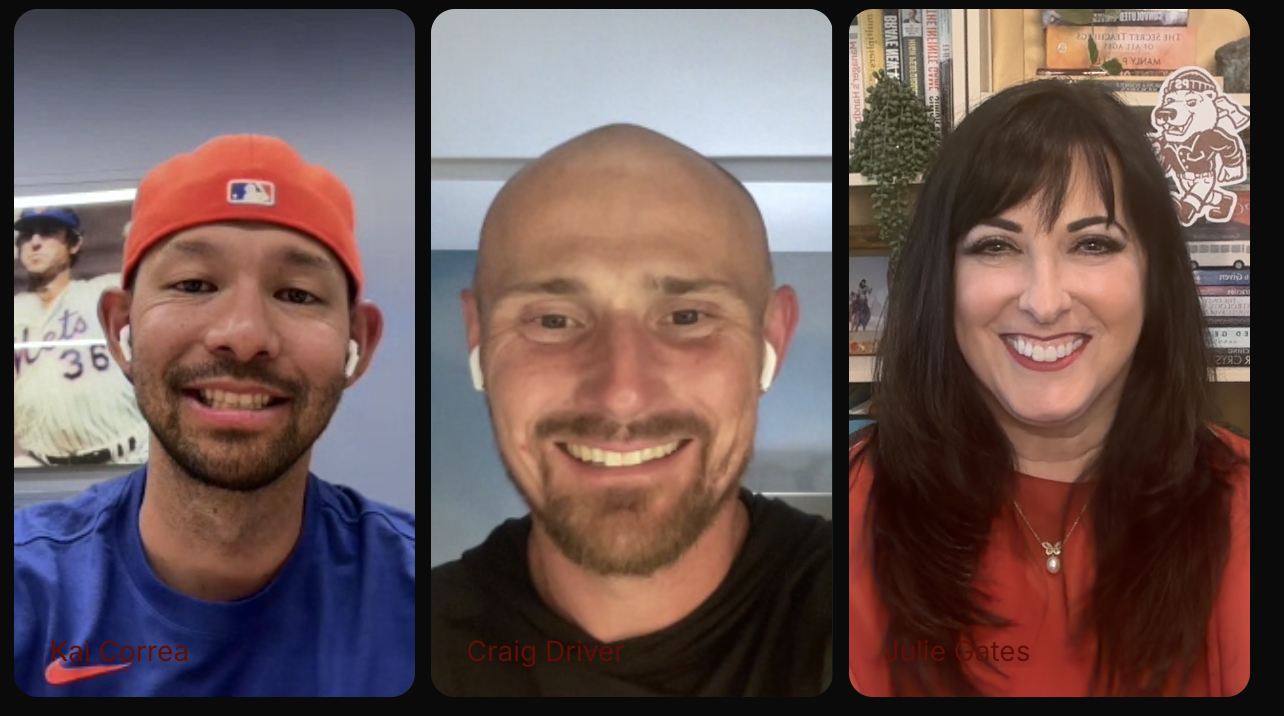
Julie Gates (00:06):
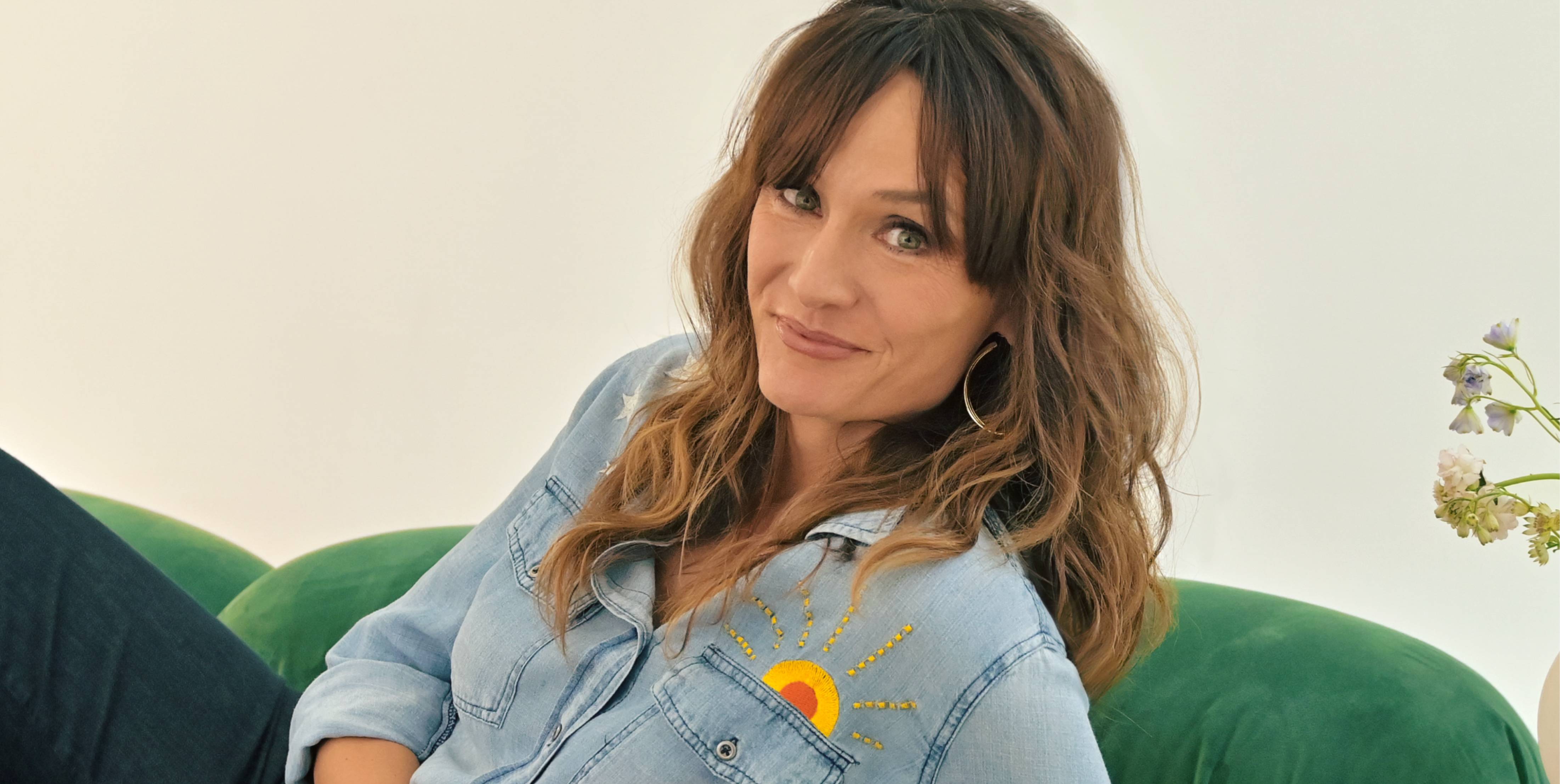
Welcome to the Always a Logger podcast. It's a University of Puget Sound alumni production, where we talk to alumni who've taken their careers, their endeavors, their lives to the heights. I'm really excited to talk to Stacy Wells Chapin. When's the last time you heard the last name "Wells," Stacy?
Stacy Wells Chapin (00:21):
Been a long time since I was in college.
Julie Gates (00:25):
Stacy is a graduate of the class of 1991 from Puget Sound. She earned her degree in education, was an educator, and now she's leading a foundation. And we'll talk about that. I think we have to start with why you started a foundation. So I do want to issue a little bit of a warning to people who are listening to this episode that we are going to be talking about some violence and some crime. Stacy, you went through the most impossibly horrible situation anyone could go through. Your son was murdered while attending University of Idaho. And to make matters worse, this case became an international true crime sensation. So not only did you lose one of your triplets, someone you love with all your life, the center of your universe, but then the rest of the world was obsessed with this crime case. What amazes me about you, by the way. What's that, love?
Stacy Wells Chapin (01:19):
I said, they still seem to be obsessed with it, but yeah.
Julie Gates (01:23):
Yeah. What's remarkable about Stacy is most of us would've been in the fetal position and unable to do anything, even breathe, Stacy has created with her husband, Jim, this amazing foundation to help young adults go to college. So we'll get into the beautiful thing that you've created, but for people who are watching or tuning in, doing this as a video and audio podcast, will you share the scenario so people know which case we're actually talking about?
Stacy Wells Chapin (01:52):
Yeah. I mean, they call it the Idaho Four. There were four beautiful kids that were murdered just off campus. My son being obviously one of them. He was at his girlfriend's house that night. That's why he was there. And it just turned into this national crime story that I feel like everybody knows about it, but maybe there aren't people who know or who can associate the crime to our family. And it's just crazy. I'll be honest, as a parent, you play through all of the worst-case scenarios all of the time. What phone call are you going to take? How are you going to handle it? And I can honestly say that you, in all of your worst imagination scenarios, this is not the phone call that you ever think that you are going to take. And it was our triplet son who Ethan's triplet sibling who had to call. So I mean, there's intimacies throughout this whole story that people don't really, you don't stop and think about that part of it.
Julie Gates (03:11):
Yeah. His siblings who are now missing a triplet.
Stacy Wells Chapin (03:14):
The mom and daughter, who are standing outside of the house have to make the call to mom, and then mom has to make the call to dad, which was terrible. So I mean.
Julie Gates (03:24):
Yeah. Let's honor the names of the four beautiful students. So people who are watching, they may know who they are, if you mentioned them by name, obviously, Ethan Chapin.
Stacy Wells Chapin (03:34):
Kaylee Goncalves, Maddie Mogen, and Xana Kernodle.
Julie Gates (03:39):
Yeah. So your life gets turned upside down and you sprung into action. You became like the bear mom of the entire University of Idaho Vandal community. What, as your friend, someone who knew you — we went to college together. We were actually sorority sisters together. As someone who loves you dearly as a human being and as a friend, I was astonished that you were able to do what you did. So share a little bit about, clearly the event is just, actually, let's start with one thing: your family. Events like that, tear families apart. You all leaned in and you seem stronger than ever. Tell me about how you were able to protect your family through something like this.
Stacy Wells Chapin (04:22):
Honestly, it just came, the mama bear. There are two very specific moments that happened. One that Sunday, November 13th, we had to drive from our home here in La Conner, Washington, to Moscow, which was a whole story in itself. And we pulled in about 9:30 at night and picked up Maisie and Hunter, and then we had to go to the police station.
Julie Gates (04:50):
Those are your two other children.
Stacy Wells Chapin (04:52):
Yes, those are our two other surviving triplet children. And I got both of those kids in the car. And honestly, the first thing that came out of my mouth, honest to God, and my kids can confirm this, I said, "I do not know what the hell has just happened to my family, our family, but this thing isn't going to sink us, kids." So I don't know, it just remarkable. It was just like, dear God, what has happened? But at the same time, you have to understand that from the very beginning you're looking at these two surviving kids in your life — they deserve the very best life still every single day and the same mom and the same dad. And that has driven us every day still today, because I don't think it would be fair to have to be those two kids and go through, I mean, they've already gotten a bum deal, let's be honest. But to have to go through life and have mom and dad in a life that has been profoundly altered by this thing, and it has. But I want them to feel everything they've ever felt. That was the first thing.
Julie Gates (06:02):
Yeah, you just leaned in.
Stacy Wells Chapin (06:03):
That same night, they put us in a hotel. We were in the hotel with, when we showed up, all of the kids involved in this, Ethan and Xana's dearest friends, Hunter and Emily, they were there. All the kids were in this hotel when we got there. And there's no sleep. The four of us are laying in this hotel room together, thinking and laid there most of the night, very early the next morning. And it was very cold outside. I told Jim, I'm getting up and I'm taking a walk. I'm out.
Julie Gates (06:40):
Yeah, can't sleep.
Stacy Wells Chapin (06:41):
Yeah, I can't sleep. I'm out of here. So I bundled up in all of my clothes and Jim was like, well, you're not going by yourself, so I'm going to come with you, right? So the two of us headed out, and it wasn't, I knew where I was going, I didn't know it, but I knew I walked right to the front of that house. I was going to stand there and just where it happened, a little reality check here, what has just happened? But the point of that is, is that in order to get to the house from where our hotel was, we had to go through the fraternity. We cut down through the fraternity and out the bottom and across.
Julie Gates (07:18):
Where your two sons were members. Yeah.
Stacy Wells Chapin (07:19):
Yes. So as we came upon that fraternity, which was like 6 or 6:30 in the morning, the boys, all of their friends, were flocking out of the house. It was the most profound moment in all of this. They had their pillows and we were hugging them, and they were just all saying the same thing. Our moms have called us home. We were one week away from Thanksgiving break. And it was a very profound moment to Jim and I, we still both talk about this thing that was like, there was this moment that was like, my God, it's not just our own kids. It's all of these kids. I mean, think about it, some of these kids lost four of their best friends. Oh my gosh. In one night. And you don't think about that until, I mean, obviously we lost Ethan, and that's one thing. And then we handle the siblings, and that's one thing. And we handle his girlfriend, Xana. It was a loss. She had spent the summer with us. But you realize some of these kids, just in one horrible moment, have lost a lifetime of their best friends. And so, we just saw it in these boys, and I don't know, it just became something. Jim and I were like, OK, we don't just have our own kids. We have everybody. We need to do whatever we can for these kids to help heal.
Julie Gates (08:49):
So you really stepped in as the mama bear of the Sigma Chi house as well at the University of Idaho.
Stacy Wells Chapin (08:57):
Yes. There. And yeah, the Thetas. Mae'sped kind of had her best friends wrap, arms wrapped, tied around her, too. I mean, it would come back two months later when we put our kids, which we can talk about, when we put our kids back in school. Those friends became profoundly important to us as Jim and I to turn them back over. Yeah.
Julie Gates (09:21):
Oh my gosh. Well, I think what's been remarkable for me watching this unfold was how you just stepped up. You were going through the pain yourself, but this is part of where we're leading to is why you're a recipient this year, the 2026 recipient of the University of Puget Sound Alumni Achievement Award for Community Service. You've taken this tragic event, by the way, we should put a little footnote in here that the murder, the person was found and was in jail, the whole thing. Yes.
Stacy Wells Chapin (09:49):
Yes.
Julie Gates (09:50):
So that piece is closed. So for those who are watching and hearing about this for the first time, we identified who it was and justice is being served Well, I guess depending on whose point of view that is.
Stacy Wells Chapin (10:01):
Justice has been served. I agree. Yes.
Julie Gates (10:07):
But the remarkable thing for me watching was how you and Jim leaned into the University of Idaho Vandal community and really stepped in and put your arms around everyone. So much so that the university gave you honorary degrees. They had you really involved in a lot of the healing process on that campus.
Stacy Wells Chapin (10:27):
And I don't know, it just came naturally. We needed to be there for Maisie and Hunter, and I think that that is different than the other families. We still had kids that were going to go to this university.
Julie Gates (10:42):
Because all three triplets were there.
Stacy Wells Chapin (10:44):
All three of our kids had gone to college together, and we were putting these, we'd made a decision that took some time to put Maisie and Hunter back in school. And so that required also that the whole community, that they were returning to, was also healing. And we just started in, it was funny because when we made the decision to do it, I told Jim, I'm like, "Well, I'm moving to Moscow." As any mother would, right?
Julie Gates (11:18):
Of course.
Stacy Wells Chapin (11:18):
Maisy was like, "That's kind of overboard, Mom." And so
Julie Gates (11:24):
Mom, I'm trying to go to college here.
Stacy Wells Chapin (11:27):
So actually what we did was rented an Airbnb and we went every two weeks for the whole semester just to be there, just to check in. And we started by just inviting every kid to dinner. And we would sit through the weekend, and as the weekends progressed into the spring, we realized that less kids would show up. And that meant healing was happening to the point that in late spring, our kids called and said, I don't think you guys need to come this weekend. We have plans. It was the greatest marker of healing in our kids. But we also knew that they were surrounded by their friends, and those friends became, we're forever indebted to them, but we would meet with the Dean of Students and ask how we could help. We would talk to the chapter, Hunter. We would talk to, you know, meet with the boys. We had a little private meeting one night that was actually, I think we were drinking warm Keystone beer and it took us back to our college days, but it was so cathartic, and these kids were showing us videos, and it just started there. It started at the Vandal, I spoke at the, I'm kind of jumping all over with the dates, but going back clear to November, I spoke at the Vandal Healing. They did a, whatever that thing, I can't remember what it was called.
Julie Gates (13:00):
Just kind of a community gathering. Just get everybody to start healing this. Yeah. This is a very tragic event.
Stacy Wells Chapin (13:06):
We spoke there too. We were like, you guys, all of you have to carry on because it's what these kids would want from all of you.
Julie Gates (13:16):
So let's pivot a little bit and talk more about the work you've done. You've really turned this into a moment of clarity and advocacy.
Stacy Wells Chapin (13:25):
Yes.
Julie Gates (13:27):
Of course, you want to tell the story. You want people to remember Ethan, for Ethan, right? You wrote this great book. Stacy, tell me why did you write this book?
Stacy Wells Chapin (13:35):
Honestly, I woke up in the middle of the night. I think I was saying it was, the only thing I can equate it to is maybe a country artist writing their greatest hit after a breakup or something. I just had this, I was compelled to tell this story of literally Ethan, who was one of the greatest kids ever. It's hard to make sense of how such a great kid could have something like this happen. It's hard to ever have it make any kind of sense inside of my head, but I'm like, well, at least I can tell his story. Because part of the motivation behind the book was at that time, we were being inundated by not only media, but movie, book writers. I, and I just thought, nobody should be able to tell the story, but me. I'm his mom, you know, or his siblings, and I just became overwhelmed with this. I have a story to tell. So every single word of that book is true, and every single illustration is actually a photo from our life.
Julie Gates (14:41):
Wow. Turned into illustration. That's cool.
Stacy Wells Chapin (14:43):
Turned into an illustration. I found an illustrator. I had a girlfriend, a ,girl I used to run with who has a small publishing company in Seattle. She's like, "This is how I can help you." She's like, "You need an illustrator." So I drove to Target and I looked at all the illustrators, and we just contacted this one, and she was like, "Absolutely, I know the story. I'll help you." And so I would just show her. We would put the little stanza up, I'd show her the family photo that I think, she would illustrate it. And it just turned out amazing. I mean, even the golf cart, there's the golf cart of us and our family. That's an actual photo. So I mean, the triplet stroller on the beach, that's a real photo. So I mean, the whole thing, it was a labor of love that I needed people to know. This is the real story of Ethan Chapin because he was an amazing kid. Proceeds...
Julie Gates (15:38):
Go ahead, go ahead. We keep cutting each other off.
Stacy Wells Chapin (15:43):
Everything that we do goes to the foundation. It has turned into something, but we can get to that.
Julie Gates (15:48):
So let's talk about this. You've taken complete tragedy and turned it into a way of giving back. You've created, you and Jim have created the Ethan's Smile Foundation. Tell us about your foundation and what it does.
Stacy Wells Chapin (16:00):
I mean, it just strictly scholarships kids, a hundred percent of the proceeds scholarship kids to go to school. The premise is that our goal for sending our kids to university is just to have them stand on their own two feet someday. To be able to give them an education, to go do something with our life, regardless of what that is. And we built the airplane as we flew it, to be honest. I think that people wanted to help us and didn't know how to help us. And so it wound up coming in money, and we just started with these little pockets of money and we were like, what are we going to do with this? And we just were like, let's build a foundation. We honestly didn't know.
Julie Gates (16:51):
It's overwhelming. You're going through the grief yourself.
Stacy Wells Chapin (16:53):
We did not know what we were going to do with it. But the idea was is that our kids went to this cute little K-8 school called Conway School, and we were like, let's start there. And people just gave and gave, and it has turned into the most amazing thing that we could do in honor of our son, because what we are doing is giving kids an education in his name. And so it will be beautiful to see how that plays out in years to come. We have some amazing stories of people. We scholarshiped a young man this year who went to the University of Puget Sound. I am like, yes. Wonderful. Yeah. So I dunno, it's just in hindsight, I don't know that, I'm not sure that we knew how it was going to start and what it was going to look like. But where we are today and looking back on it, it's literally the greatest thing that we could do to empower other kids to be able to go and do something that allows them to stand on their own two feet. And in our, it's not just a two or a four-year education. We have now scholarship real estate school, barber, vocational trades. Anything you want to go to, you want to be a bartender, have at it. We just pay it directly to the institution.
Julie Gates (18:29):
This is amazing.
Stacy Wells Chapin (18:32):
Not everybody is after a four-year education. And we have joked even specifically, to be honest with you, about Ethan. He loved the social life more than anything, but it was a byproduct. It was kind of here for the social. And we have lots of funny stories with him about going to class, but
Julie Gates (19:00):
That's funny. So you've been able to provide education for young adults to get their life started through every possible version of education, not just a four-year institution, but vocationals and the trades and all the great jobs that exist and all the great people with the different abilities. How many scholarships have you given out so far since you've started the Ethan's Smile Foundation?
Stacy Wells Chapin (19:21):
It's 84 scholarships and it's like $105,000. I mean, in two years of scholarships, it's shocking. I mean, it's cathartic in itself to be able to see, to give and help. And I just actually yesterday got an email from a community member and I thought, I didn't realize until I just read this email that this is what we were after. It was somebody that was like, we want to partner with you because it is incredible what you have done for this community and the kids and the youth in this community because there is a second scholarship foundation that we have here, and it's for the basketball community because Ethan loved basketball. So we've also helped fund a basketball so that all kids can play club ball, or if you need a new pair, just
Julie Gates (20:17):
That's amazing.
Stacy Wells Chapin (20:18):
We just try to do whatever we can to help kids. And it has turned out to be really a beautiful thing for us. Yeah.
Julie Gates (20:27):
This is amazing, Stace, cause again, you're going through one of the hardest things I think anyone could ever experience, and that's a loss of a child. Not just the loss of a child, but the murder of a child. And it was a wrong place, wrong time, murder. He didn't even probably know the person.
Stacy Wells Chapin (20:42):
Yeah. We jokingly say right place, wrong time, right? He was where he wanted to be.
Julie Gates (20:49):
Where his people were.
Stacy Wells Chapin (20:50):
We all harrassed him into college. We weren't always where we were supposed to be. And we have never questioned that. I mean, kiddo was where he wanted to be that night. And we are perfectly happy with that. We have just no regrets with how we handled our kids and the time that we spent with them, and it's amazing. So we try to feel fortunate for the 20 years that we had with him. And now moving forward, our family looks a little bit different, but it's still trying to be as meaningful and impactful for Maisie and Hunter as well.
Julie Gates (21:29):
So they have now graduated. That's how long. So, How are they doing?
Stacy Wells Chapin (21:33):
Let me tell you how proud we're of them to have gone back to school and finished what they started. They both graduated in May. Yep.
Julie Gates (21:42):
Congratulations.
Stacy Wells Chapin (21:43):
Yes, Hunter graduated with a marketing degree and Maisie in the health sciences. Medical science.
Julie Gates (21:50):
Great.
Stacy Wells Chapin (21:51):
Hunter actually just took a job in wildland fire. He's going to start that. He's actually working for us right now, and Maisie is working up at the hospital. I don't know. It's a beautiful thing. When your kids feel like where they're supposed to be, there's a lot of peace in that. Any parent, right?
Julie Gates (22:10):
Yeah.
Stacy Wells Chapin (22:11):
When you feel like your kids are, right?
Julie Gates (22:14):
I want to ask you though, what advice do you give people? We all have that dark night of the soul at varying degrees. Everybody's journey has that moment. It's a different version for all of us. You all somehow managed to go through it, but come out on the other side and everyone is doing the best they can to live their lives and move forward.
Stacy Wells Chapin (22:36):
Right.
Julie Gates (22:36):
Advice do you have for everyone who's listening, whether they're alumni or current students at Puget Sound on how to have resiliency and get through something really, really hard?
Stacy Wells Chapin (22:50):
Oh boy. There's lots of parts to that question, but I mean, I think that the best advice I think is, is that honestly, you get up and you try to do a little bit better the next day. And there are some days where you just have to call it. Jim and I, over the course of the last three years, there have been days where just like, I'm out today and I go to bed and get a good night's sleep and get up and try again the next day. As a mom, I think that the best thing I did was literally walk it out. You can't drink it. You can't. So many other ways that you could try to bury and grieve and my poor little dog night after night would be like, "You're taking me on another walk?" I mean, I would walk in the middle of the night. I'd walk all day. I mean, trying to heal your mental health. If my mental health, I have to get a good night's sleep and my mental health has to be intact. And as a mom or as a mom handling my kids, that has been the most important thing I can do is wake up and just go again.
Julie Gates (24:05):
Yeah,
Stacy Wells Chapin (24:06):
It is, the loss of a child I think is different. I mean, my opinion is because it never goes away. Even if you go through a divorce or whatever, as terrible as some of those moments are, there is life beyond that. At some point in your life, your life is going to feel amazing again, not that my life doesn't feel amazing because it does. I feel fortunate to, you just have to feel understood. Only option, to be honest. No, no matter what, that kid is still gone. And I think that's the difference between losing a child and all the other things that cards you get dealt in life. Sure. So I mean, that's just for me personally, it's not a very, you know, profound.
Julie Gates (25:01):
I'm sure there are others who are watching who've been through this. So I think just having that companionship, that solidarity with others, I think it's helpful to talk to other people who've gone through your experience.
Stacy Wells Chapin (25:14):
Honestly, Jim and I are very thankful for each other. At moments when I've been strong or the yin and yang, we go back and forth and can share anything at any time. And I know that I'm profoundly safe in my space with him, and we parent that way, too. We will take something and take a walk and say, OK, here's all the different scenarios for how this thing could play out. And then we just communicate openly — and openly with the kids. Sometimes I have to start conversations with my kids because they're reluctant to talk about it. The loss still sits very, very... it's a difficult topic for us in our family. So it has to come up either naturally from the kids if we have a conversation about it. But there are things that we've had to talk about where I just have to sit those two down and be like, okay, here's the deal. You're not going to like what we have to talk about, but you have to listen. So you have to be an active listener. And there are just some things that we've just had to take head on.
Julie Gates (26:25):
Those are not just good coping skills, they're good leadership skills. I thank you for sharing those. So walking it out, replacing the feeling with a positive self-care routine versus drowning yourself. For me, it would be sugar or food, but for others it could be alcohol or drugs or...
Stacy Wells Chapin (26:41):
Drink it, gamble it. You are going to try to replace that. We had to have long conversations with our kids about that when we sent them back to school, because we were like, OK, look, you're going to go back to partying and doing all the things that you're doing, and it isn't going to go away no matter what.
Julie Gates (27:01):
So it's the healthy habits and good communication. Those are great tips. Thank you for sharing that. Wow. Stace, I could talk to you forever. And there are other couple of things I would love to hit highlights on. One is you've really become a sort of national spokesperson for many causes. One that I would like to address quickly is there's an entertainment genre that has swept the imagination and the love of our nation. It's called true crime. And everyone I know watches TV shows and podcasts and they love the genre. But I think having you here on this podcast helps personalize that. It's not necessarily only entertainment. There's also someone else on the other side, and that's a family. So I would love to hear your insight on that. I know you spoke at a conference, you've talked with people who do this type of work. Share your insights and feedback on this.
Stacy Wells Chapin (27:57):
You want to say to every person who is involved in true crime, "That is my son, you're talking about." And regardless of sharing what you think and maybe potentially making money on some social platform, social media platform, it's tricky. I think it's been the hardest part of this. I don't really understand the fascination at the end of the day. I mean, I do and I don't, right? But at the end of the day, I'm friends now with people who have other high-profile stories. And it's one of the things that we talk about is just turning on the news and seeing yourself or somebody who has taken your words out of context or who is saying something about your kid. Or, what's really hard for me right now is when I hear people talking about Maisie and Hunter or Ethan and Xana's best friend's, Hunter and Emily, right? It's not fair to them. Every time you open your mouth, you are hurting family, friends, and siblings. But the flip side of it is, I mean, I can't be a hypocrite. I have done interviews and I have gone to CrimeCon, weirdly, that's a whole different story. But I went for my foundation the first time and the second time I think we're going to talk about it. I went with Othram, who is the company who did the DNA testing.
(29:41):
There's good and bad, but we are at a point three years, two months, and how many ever days we're into this where it needs to stop, you know? That's a whole different topic. I suppose it's time for it to be done, but it has allowed us to also, we were involved, we did make a family decision to be involved in the Amazon Prime doc, and that producer is amazing. Matthew Galkin, "One Night in Idaho." And we did that because we needed people to hear our story. Not some contorted story that other people were telling. I don't think it's right that other people get to tell our son's story. It should only be told by us, and that's the mama bear in me. And so that has motivated a lot of what we've done personally, but it also does, when you watch it and somebody else is talking about your son, it does make you go, wait a second. Hold on. You don't get to do that. But there's both sides of it, but it has become a huge genre.
Julie Gates (30:45):
And it's become a big part of your life. So I think it's really valuable just to remind all of us to just be good human beings. Whatever you're doing, just be a good human.
Stacy Wells Chapin (30:52):
We hear it. We, it's tough to ignore it, but you can't. What am I going to argue with somebody on social media? No. Everybody's entitled to their opinion, I guess. But yeah.
Julie Gates (31:08):
Alright, well, talk about the other advocacy work you're doing. It's quite fascinating.
Stacy Wells Chapin (31:12):
It's a very interesting story that goes actually back to 2023. And I was at CrimeCon. Somebody had convinced me I needed to go talk about the foundation, which turned out to be really good advice. But I wondered what I was doing there. And I wound up in an advocacy group of, there were probably 20 of us, and it was all high-profile true crime families. And there was a woman who at the end of it was hugging me and she was whispering in my ear and she just was like, "This is going to be OK." Anyways, we jumped forward years ahead, and it was actually Kristen Mittelman, who is she and her husband David, have created Othram, which is the DNA company that identified the DNA on the knife sheath in our case. And so when the gag order was lifted, because everybody was under the gag order, including them, they called and we were like, "Oh my God, we can all finally have this conversation." But I did. I was in D.C. in December. We were actually supposed to fly out tomorrow. And the idea is, is that the current DNA system, which is called CODIS, is 30 years old. It was built by the FBI, and a perpetrator has to already be in the system. Now, there's lots of people who aren't in the system. So in our case, when they put the DNA in, there was no match. And there was a forensic scientist out of Idaho who was working the case who knew about Othram, who's out of Houston, just outside of Houston. And they were like, we need to take a chance on this company. And so they hand-flew the DNA, there was enough DNA on the knife sheath that they flew it down to Othram, and within like 48 hours, they could do the genealogy on the DNA. And they knew exactly, I mean, they basically knew who it was, but you have to, it takes the rest of law enforcement to still put together the case. So it's DNA recognition of a potential perpetrator, plus the case still has to be built. So I have been working with Othram to try to get a bill on the Congress floor to have kind of a backup or a secondary when there is no match, that you can have a, because right now it's privately funded. You could use them, but you would have to pay for it to have it done. But they're like a hundred percent in identification. They only test the genetic part of a, I'm not the scientist, let's be honest. And I'm not a politician. It's funny because that's what I always have to say. When we were in D.C. I'm like, I'm just the mom, but why would you not? It seems so simple that there is not a system in place. Yeah. So we've been working to, because all families who are either in our position who have unidentified killers or future victims deserve to know who it is because I admit that I watch other crime things of families who don't know who potentially murdered their kids. And I think that would be worse, I mean, there's just different levels of how you play it out. But yeah, so I've worked with Othram to help try to get some secondary DNA testing involved for crimes, all crimes.
Julie Gates (34:49):
Interesting. Yeah. On quite a fascinating journey. I look forward to hearing how that all develops.
Stacy Wells Chapin (34:55):
Yeah. Yeah.
Julie Gates (34:57):
Wow. Stace, I mean, we haven't even covered half of the stuff that you've been on The Today Show. You've been in, I think, The New York Times. This whole situation has really pulled you into the national and international spotlight. I want to just say thank you for creating something so beautiful, the foundation. The fact that you and your family have found a way to turn this pain into a way to help other young adults is remarkable. So I want to encourage everyone to go buy the book, The Boy Who Wore Blue, it's actually so charming. And the proceeds go to the foundation. So you'll be helping, they can also make donations directly to your foundation. Where can they find you, Stacy?
Stacy Wells Chapin (35:35):
Ethanssmile.org. Okay. Yep. What would you like to say to Puget Sound, students, alums about your journey at Puget Sound and how that shaped who you've become today?
(35:46):
Yeah. There's two things. One, just in hindsight of our situation, our family has just continually tried to take the high road. And I believe that that has been beneficial. It's happened. We can't change the outcome, and we need to only look forward for the future of our own personal kids, their friends, and our family, because we have this life still together that we need to build. And Jim and I still have a relationship and the rest of our life that we were looking forward to. And it's important to realize that you have a choice when you get up every single day and how you choose to live your life. And that is our decision, is to recognize that we cannot change what has happened and to look forward and try to, to create this great life that we had because we all deserve it still. And second, the University of Puget Sound is genuinely part of who I am. And I mean, I admit to being not a super active alumni. I have genuinely worked every day from the day that I graduated from there, I went right into teaching and then became an administrator, became a mom to triplets. I run our family business now, right now, along with the foundation, but I watched all of my friends at the time we were talking about this, going to these big universities. I would've been lost. And the greatest thing about the University of Puget Sound was I was a name and a number, and it makes you show up to class, and your professors cared about how your success and I go back, and they were the greatest years of my life and really genuinely help build the foundation for what I went on and did from there. And I am forever grateful for my degree from that school, from the University of Puget Sound. Genuinely.
Julie Gates (37:52):
Yeah. It launched who you are today, and I got to be a part of that. I enjoyed being on campus with you.
Stacy Wells Chapin (37:57):
You're amazing. And thank you for all of the work that you do. Also, because, I mean...
Julie Gates (38:02):
This is your interview, Stacy.
Stacy Wells Chapin (38:06):
No, it's important because I mean, you're the one, you did this, so I am forever grateful to you as well.
Julie Gates (38:14):
Well, thank you for reminding us to take the high road. I think that's just something that we can all, especially if we're living in such an interesting time just globally, and if we can each individually choose the high road, I can't even imagine what the world would look like today. So thank you for that advice. Yeah, you're welcome. Well, we look forward to celebrating you. Stacy is the 2026 recipient of the Alumni Achievement Award for Community Service for the great work she's done with Ethan's Smile Foundation. So again, give us that website one more time, Stacy, where can we follow you?
Stacy Wells Chapin (38:46):
Ethanssmile.org. Yep. Got everything there. You can contact us on that page. It goes to me, and it's a labor of love, so for the greatest reason.
Julie Gates (39:01):
Yeah. Yeah. Welcome. Thank you, Stacy.
Stacy Wells Chapin (39:03):
You're welcome.
Julie Gates (39:03):
It's been good talking to you. Thank you for sharing your story and for being such an inspiration to all of us. Thank you. Thank you.
Stacy Wells Chapin (39:08):
You're welcome. Yeah.
Julie Gates (39:10):
For anybody listening or watching, if you have a guest idea for a future episode of the Always a Logger podcast, where we're profiling our greatest alums, people who've really taken their endeavors to the heights, send me an email. My address is juliegates@pugetsound.edu. We'll see you guys next time.