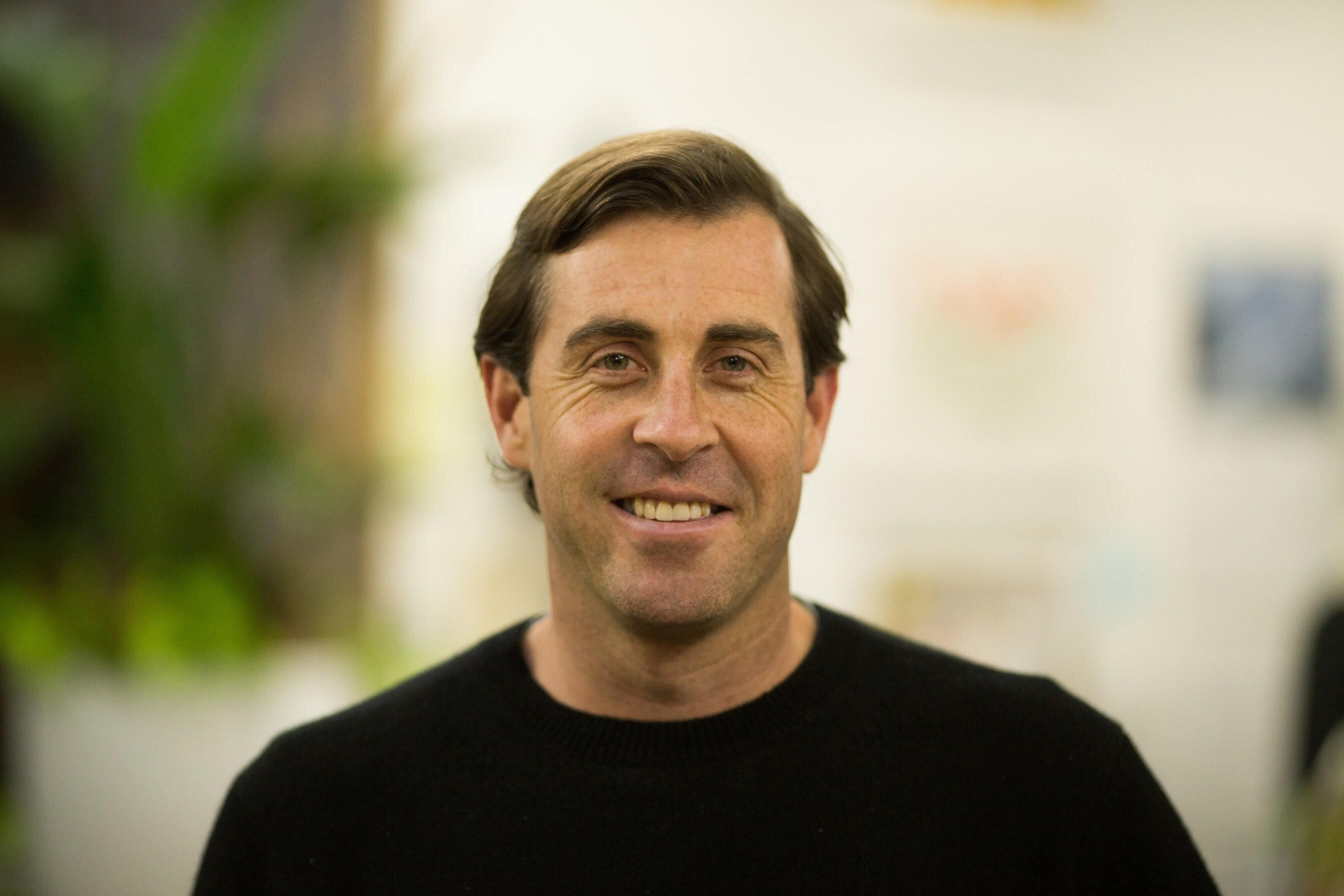
Julie Gates (00:06):
Welcome to the Always a Logger podcast where we feature alumni of the University of Puget Sound who've taken their careers and their pursuits to the heights. Today we're going to meet Major General Roosevelt Mercer. General Mercer is from the Class of ’75, earned his degree in urban planning, and was in the distinguished program, a distinguished graduate of the ROTC program at the University of Puget Sound. Today, General Mercer is retired 32 years from the United States Air Force and CEO and executive director today at the Virginia Spaceport Authority. That is exciting to me. You're working with space. I can't even imagine how wonderful that is, General Mercer.
Gen. Ted Mercer (00:47):
It is exciting. It's the only reason that I am still doing what I'm doing, that I'm still working at this point in my career. You can tell that by what you just already articulated, that I graduated in 1975, that I am indeed old. So for me to continue to do this, it has to be exciting for me.
Julie Gates (01:10):
True. You could be sitting on a beach sipping Mai Tap right now, but you're still at it.
Gen. Ted Mercer (01:14):
That's right. It is an exciting business and it never gets old.
Julie Gates (01:19):
Well, tell me about the Virginia Space Port Authority. What do you do there?
Gen. Ted Mercer (01:23):
So Virginia Spaceport Authority is a political subdivision of the Commonwealth of Virginia, the state of Virginia, and we own and operate the Mid-Atlantic Regional Spaceport up at Wallops Island, Virginia. So we are one of only four spaceports in the entire nation licensed by the FAA for vertical lift to orbit. In other words, we launch rockets. So there are four spaceports in the nation. One is in Alaska, Kodiak, one is at Vandenberg Space Force Base in California. One is everybody knows Cape Canaveral, and then one is us, the Mid-Atlantic Regional Spaceport. So we launch rockets for a living and it is, like I said, it never gets old and a million things have to go right every time you launch one, so it never gets dull.
Julie Gates (02:20):
I imagine with a role like this and with your leadership role in the military, you have to be really refined in decision-making. What tools do you use to make a decision at that level of leadership?
Gen. Ted Mercer (02:33):
Well, it actually started back when I was with the University of Puget Sound. I chose to go after a liberal arts degree in an institution that at that time, I don't know if it still is today, but at that time was called the Stanford of the Pacific Northwest. And so I pursued a liberal arts degree primarily with a focus to learn how to analyze and assess and make, do my own research, do my own analysis, and not have to listen to a political pundit on TV to tell me what to think or to tell me what is true or what is not true. I wanted to have the ability to analyze and assess myself and the University of Puget Sound is where all that started and then it continued through my military career, through the various primary military education that I continued and I've had an opportunity to serve and complete programs at some of the best institutions in the nation from Syracuse University to Harvard. So that's where it comes from. That's how it develops. And then in the United States military, from a very young age, you are given an opportunity to begin to learn or how to lead and how to make decisions and what questions to ask and how to analyze a scenario and look at what is coming and determine whether it's the right thing to do or not. I was a young lieutenant at 23, 24 years old, sitting in underground missile silos, operating and maintaining an entire intercontinental ballistic missile silo and complex. So you start early, they teach you early, and then you evolve as you go through your career.
Julie Gates (04:32):
Is there a tip or two you could share with all of us Muggles who have not served in the Armed Forces or with outer space about making decisions? How do you get clear in making the right decision? Is there a tip or two you can share?
Gen. Ted Mercer (04:45):
I would say, first of all, "to thine own self be true." Don't let others necessarily persuade you from a position that is based in fact on data to another position, "to thine own itself be true," is what I will tell you. And then look at, try to make as much as possible data-driven decisions, not knee-jerk reactions, not emotional decisions. Try to make data-based decisions and then take care of your people. Because no matter how sophisticated your systems, no matter how cutting edge they are, no matter what marvelous AI capability they have in them, nothing gets done without the people to execute all of that. Take care of your people. So those are the things I would say.
Julie Gates (05:44):
That's amazing. I love all of that. Let's talk a little bit about Virginia Space Authority. Someone was telling me you have an exciting new project called the Neutron rocket. What is that?
Gen. Ted Mercer (05:56):
Okay, so we service a multitude of rocket launch providers. The rocket that you are referencing here is by a company called Rocket Lab. They are the number two lift provider in the nation. SpaceX is number one and Rocket Lab is then number two, they're developing the neutron rocket. It is a brand-new rocket, a incredible cutting-edge design. Never been designed like, a rocket has never been designed like this before. It is a mid-class rocket, but it is very, very large. It'll be about 141 feet tall in excess of some 25 feet in diameter, capable of lifting some 32,000 pounds to low earth orbit. So that is the Neutron and that's what they call it.
Julie Gates (06:51):
So it sounds like it's going to be, of course, it's going to carry supplies is what it sounds like.
Gen. Ted Mercer (06:56):
It'll be able to carry everything from supplies to complete satellite constellations. It'll be able to carry an entire constellation and insert it into orbit.
Julie Gates (07:09):
Can you speak about any of the other projects or rockets that you sent off or what missions you serve? I know there must be a lot of confidential work, but maybe there's some things you can share.
Gen. Ted Mercer (07:19):
Yes, certainly. We also launched for Rocket Lab, their Electron rocket. That's become kind of a workhorse for them in terms of capability. It's launched some 80 times consecutively successfully. Not all of those from ours, but they have another launch site in New Zealand. But between the two sites, they've launched over 80 electron rockets. So it's a smaller rocket, but a real workhorse for them. We also, our other customers, Northrop Grumman. Northrop Grumman is developing a brand new rocket called the Eclipse. It's actually going to be larger than the Neutron, capable of lifting some 35,000 pounds into low earth orbit. That's in development now as we speak, and within the next year we expect to launch both of these.
Julie Gates (08:12):
I had read somewhere that you all deliver supplies to the International Space Station. Is that accurate?
Gen. Ted Mercer (08:18):
Yes, it is about twice a year. Northrop Grumman, their Antares rocket generally up about 8,500 pounds of supplies, experiments, equipment to the astronauts on the International Space Station. And we tend to do that twice a year. We have not done it this year because Northrop Grumman is developing a new Antares rocket, a new series of which the Eclipse will be a part of. So once they start flying again, hopefully within this next year we'll go back to resupplying the astronauts from ours. In the meantime, they're getting their supplies delivered to them from the Cape, they're launching out of the Cape.
Julie Gates (09:06):
I imagine working with space has to change you in some ways, some sense of wonder or mystery. How has this changed you?
Gen. Ted Mercer (09:14):
Yeah, so it lets you know what's in the realm of the possible, what is really doable, and that the amazing capability that you're able to do a controlled explosion, which is what a rocket is. It's a controlled explosion and put a ultrasensitive ultra capable satellite into orbit. And most Americans don't recognize how reliant we really are on space every day. It affects your life every day. You just don't think about it. When you put in an address in your phone to go take you turn-by-turn directions. The only reason you're able to do that is because of a satellite constellation flying in middle earth orbit. That's the only way you can do that. But you don't think about that at the time. If you go to an ATM machine and you want to get some of your money out of your bank account at an ATM machine, that does not function without a, that's a satellite transaction that allows that to happen. TVIf you want to go and watch Dish tv, if you have Direct TV or Dish TV at your house that is a satellite constellation flying some 22,000 miles away from Earth that give you that capability to go turn on your TV and watch Direct TV or Dish TV. It affects your life every day. When you pick up your phone, your cell phone, and you want to call California from Washington State, or you want to call me here on the East Coast, that's not going by towers. Those are satellite operations that allow you to make that call seamlessly. You don't think about it. You hit the button, you hit call, it rings, and somebody picks up. Space affects your life every day, every American, every day. We just don't think about it. And so when you recognize the realm of what is really possible and what is going on in space and around you, it's astounding. And that's what's exciting to me.
Julie Gates (11:29):
That's wonderful. Thank you for framing it that way. You're right. I don't think about any of those things as I'm using all these normal household or daily conveniences. Thank you for framing that. Oh, how does this frame, I imagine working at the VSA also makes you look at life beyond our planet, too. Has that shaped or changed any opinions that you had?
Gen. Ted Mercer (11:50):
Well, I have always believed that we are not alone in this universe. I find it hard to believe that our creator created the human being on Earth, and there is no other life in all of the galaxies that exist. So it just puts a finer point on it. When you look at what we are doing and the exploration that we're doing. NASA just launched the Artemis mission. We have satellites now, or not satellites, but astronauts orbiting the moon and taking images of the moon and doing their experiments out there. Well, we are humble human beings. If we can do that. I'm sure there's life out there that can go beyond that.
Julie Gates (12:36):
I imagine we'll hear more soon. I keep hearing all this word coming from the White House about disclosure, so I guess we'll stay tuned, but thank you for entertaining that conversation. Let's roll you back to the University of Puget Sound. Why did you choose UPS? Were you raised in Washington state?
Gen. Ted Mercer (12:55):
No, I was not. I was an army brat, so I grew up all over the world, and my father in a earlier assignment was assigned to Fort Lewis, Washington, as a younger soldier, and they fell in love. He and my mother fell in love with Washington State. So when it came time for him to retire years later, for them, it was a no-brainer. They wanted to come and live back in Washington State. So they retired in Washington state in the Lakewood/Tacoma area of Washington state. And I finished up high school there and then began my search for colleges and universities. And like I said, I liked the fact that the reputation that the University of Puget Sound had, certainly at that time as the Stanford of the Pacific Northwest and
Julie Gates (13:46):
Want to hear a funny comment? When I attended Puget Sound, people were calling it the Harvard of the Northwest.
Gen. Ted Mercer (13:53):
Okay. Okay, good.
Julie Gates (13:55):
So I think the name changing, but someday they'll all say they're the Puget Sound of
Gen. Ted Mercer (14:02):
That's right.
Julie Gates (14:03):
Of the region. But I love that we both had these different markers when we attended the university. So you were participating in the ROTC program. Can you share a little bit about what that is for students who haven't participated?
Gen. Ted Mercer (14:14):
Yes. So it's a reserve officer training corps. It is one of the programs that prepare you to be a commissioned officer in the United States military. And all of the services have ROTC capability and units embedded within universities. And for me, I consider myself one of those lucky kids because I always knew that I wanted to join the military. I always knew I wanted to follow in my father's footsteps. I wanted to be just like my dad. And so I always knew that the institution at University of Puget Sound allowed me to do both of those things. And what I told you about the ability to get a liberal arts degree, the ability to learn how to analyze and assess and be challenged in the academic arena. And the university is superb at that. It's one of the finest institutions that I can think of. And I sit on the boards of other board of trustees of other institutions, and I can tell you UPS is among the top.
Julie Gates (15:25):
Yeah, we've been very fortunate to attend such a great institution. So what other things did you do while you were on campus? Or was that a lot ROTC and being a full-time student?
Gen. Ted Mercer (15:36):
Well, that was a lot because I had to work my way through college. So I was working two or three jobs at a time. As I was working my way through school, I did join some of the groups on campus. There was a Black Student Union that I was a part of while I was there, and that afforded some comradery and get to know some of the other students on campus. The other thing though that I liked about the University of Puget Sound was their view about academia and individual thought and creative thinking and inclusiveness. I was truly touched about that because as you said, I graduated in ’75, that means I entered in ’71 and we were just coming out of the Sixties and all of the turmoil that the nation experienced from the mid, early to mid to end of the Sixties. And it was also the time that we were coming out of the Vietnam War. We were in the middle of the Vietnam War during that time. We ended up coming out of it in April of ’75, the year I graduated. But all of that turmoil was going on too. And what I really liked about the University of Puget Sound to this day, I still reflect on the openness of that institution and the lack of guardrails in terms of academic pursuit and expanding one's mind and experience. It was outstanding. And for me, it set a foundation that carried me through to this day, in fact.
Julie Gates (17:24):
That's lovely. Let's take a little career journey. Will you tell us what you did? So you would be a commissioned officer when you finished the ROTC program. So where did you go? What was next?
Gen. Ted Mercer (17:34):
So my first assignment was I was assigned to intercontinental ballistic missiles.
Julie Gates (17:39):
Wow.
Gen. Ted Mercer (17:43):
It was the Titan II intercontinental ballistic missile system. I went to Wichita, Kansas, to McConnell Air Force Base. There were 18 of them there around the Wichita area. And these were the underground silos that were during the height of the Cold War. And so we were always on pins and needles every time we go out. Was Russia going to do something crazy or was China going to do something crazy? And so that's where my career began, and I think that is where my attention to detail began. Also, because it was an unforgiving business, the smallest thing, there was no margin of it for error. So even the smallest things you had to pay attention to, which most people would not consider important, you had to consider down to specific words that were used and the meaning of those words. In that work, it was a world of checklists where every checklist step had to be done. You were dealing with nuclear weapons and extremely, extremely caustic propellants, nasty, nasty stuff that's still used in space lift today, quite frankly. The stuff is still used, but nasty, nasty stuff.
Julie Gates (19:11):
I was going to ask you about the checklist. Did that create a habit for you of discipline and checklist that you still use today? Is that something that we should all be paying attention to?
Gen. Ted Mercer (19:21):
Absolutely. Absolutely. And you can ask my staff, you met my chief of staff and you met my executive assistant. Ask them what they think about my attention to detail because it is amazing over time doing it for so long. If I'm reading something and there's an error and it just jumps straight out on you, I'll let them convey to you kids with that
Julie Gates (19:49):
Can't make mistakes with you as the boss.
Gen. Ted Mercer (19:51):
That's right.
Julie Gates (19:52):
You notice the typos I bet.
Gen. Ted Mercer (19:55):
I do. I do indeed. But
Julie Gates (19:56):
I understand there are many lines of work where every detail really matters. It's life or death details,
Gen. Ted Mercer (20:04):
And it really is literally, we actually did have people lose their lives doing this duty. I was on alert at one complex when a neighboring complex had an accident, and we lost two young lives there. I'll never forget it. It stays with you for life, trust me on that. But yes, it was that dangerous. The danger was real, I guess is the way to put it.
Julie Gates (20:39):
What was next after that?
Gen. Ted Mercer (20:41):
Okay, so I did that for four years, and then it was one of those things that I guess I was good at. And so they recognized that and they said, we need you to go teach this to the younger generations, the guys that are coming up. So at that time, there was a unit called the 4315 Combat Crew Training Squadron out at Vandenberg Space Force Base, California. It was an elite organization. In fact, you had to meet a board and be hand-selected to become a member of that board. So that's what happened. My commander submitted my name and my package, so I got selected for that. So off to Vandenberg, I went after four years and I was an instructor teaching the business. And then within six months, I was the senior instructor evaluator, of which there's only one in the entire squadron. So I taught that business for a while and until there was a two-star general that was in charge of the base at the time, and his name was Jack Watkins. Just a wonderful guy, amazing leader. He brought a tour through the training facilities where we had simulators for underground missile silos where we taught students. So he brought people through for a tour, and I was the guy giving the tour of these distinguished visitors that he had coming through. So I did that one day and then he left and my commander got a phone call from him and he said, listen, I would like Ted Mercer to come become one of my command briefers at the headquarters.
Julie Gates (22:26):
Wow.
Gen. Ted Mercer (22:28):
So the squadron commander came to me and he said, "Ted," he said, "What do you think about that?" I said, "Well, sir, I like what I'm doing. I'm the senior instructor evaluator here. If you are happy with me, I'd like to stay." He said, "Oh, great, Ted. I was glad. I was hoping you'd say that." He said, "I'll go call him." So he went back and he called Gerald Watkins, and then he came back to me and he said, "Well, Ted, I told him, and he said that you start as a command briefer on the 1st of August."
Julie Gates (22:58):
That's about right. That's how it goes.
Gen. Ted Mercer (23:03):
That's how it went.
Julie Gates (23:03):
Sometimes you can be too good at your job.
Gen. Ted Mercer (23:07):
That's how it went. So that's how I got into the command briefing at the headquarters and the protocol business. And so I did that for a couple of years, and then my boss called me in and he said, "Say, I got great news. You've been selected to go to Strategic Air Command Headquarters in Omaha, Nebraska." So I was a young captain and went to Omaha, Nebraska Strategic Air Command headquarters. We used to call it SAC. And I was there in charge of all assignments for intercontinental ballistic missile individuals. So I managed all of those assignments for him. And one day I got called by the director of personnel. His name was Colonel Larry McNeil, another great guy. So I get down to his office and I report in and he says, he says, "Captain Mercer." He said, "You are immaculate in your uniform." He said, "I'm surprised to find that you are out of uniform today." And I said, "What do you mean, sir?" And then he pulls out a set of majors, oak leaves for getting promoted from captain to major. So he said, "Congratulations," had a big bottle of champagne. And the staff came.
Julie Gates (24:26):
Oh, that's so nice.
Gen. Ted Mercer (24:28):
And so I was promoted three years ahead of my contemporaries. So I got promoted early there, but that was at the headquarters. And
Julie Gates (24:39):
What a moment. I bet that's going to be seared in your memory for a lifetime.
Gen. Ted Mercer (24:43):
You don't forget it. I didn't know what was going on.
Julie Gates (24:47):
You think you're in trouble for a minute there?
Gen. Ted Mercer (24:49):
I did. Well, I did. And he let that perpetuate in my mind, way too long.
Julie Gates (24:55):
He probably did. He probably loved every minute of it, too.
Gen. Ted Mercer (24:59):
And so then I went off to Air Command and Staff College. That's one of our primary military education, teaching leadership and history and all of that. I did that for a year. And then I left Air Command and Staff College and then went to the Pentagon. And so I was in the Pentagon working there. I was an executive officer for one of only two at that time, only two female generals in the entire Air Force. Her name was Marilyn Coffinger. Wonderful lady. A great story there. I come into the office one day and I, I'm working, I'm responsible for writing what's called a posture statement where all generals have to go over to Congress and report on their particular area of expertise, their department. And so I was one of the guys that would write those, that testimony. So I was in my office doing that, and my boss came over and he said, "Hey, the general said, as soon as you got in, she wants to see you." So I said, "So what's going on?" He said, "I don't know. She just said, as soon as you come in, you got to come over and see her." So my office was right across the hall. So I went across the hall, I went here reporting, "Ma'am, reporting as ordered." And I said, "Ma'am, may I stand at ease?" And she looked up and she said, "No, you won't be in here that long." And then she broke and she aired back in her chair and cracked up. She was laughing. She said, "It's okay. Stay at ease." And basically he told me that she had selected me then to be her next executive officer. So I've been executive. So I did my Pentagon assignment, and then one day I got called in by the deputy. Her deputy was a general named Marcus Hurley. He's a fighter pilot. And he called me into his office and he said, "Hey, got great news. We've just been notified that you have competed to become, get on the squadron commander list." And I said, "Whoa." I said, "That's extraordinary, sir." But squadron commanders are usually lieutenant colonels, not majors. And I said, "So sir, I thought you had to be a lieutenant colonel to be a commander." He said, "Oh yeah, if I forgot to tell you, you got promoted to lieutenant colonel, you're two years ahead of your contemporaries."
Julie Gates (27:26):
My goodness. This sounds like a career just constantly teaching yourself. I mean, yeah, you were definitely right for you picked the right career path. It seems like everything just lined up so well.
Gen. Ted Mercer (27:39):
Yeah, it all worked well. And so I left the Pentagon and went up to Grand Forks, North Dakota, commanded the 447 Strategic Missile Squadron up there, an ICBM Squadron, Minuteman ICBM Squadron. And the wing commander at the time was a Colonel Lance. Lord, an interesting story to show you how small the world is. I'm going out next week because he went on to become a four-star general, and they are presenting him with the prestigious Hill Award in Colorado Springs next week. So I'm going out for that. I worked for him two subsequent times after the squadron. But I get there and he calls me right into his office. My first day in the squadron, after the change of command, he calls me in and he says, "Ted," that's how he talks. He says, "Ted," he said, "Look," He said, "You got the most problematic squadron in the wing." There were five squadrons in the wing. He said, "You got the most problematic squadron in the wing." He said, "Their proficiencies in the toilet, their morale is in the toilet." He said, "I brought you in to fix it." He said, "You have carte blanche to do whatever you need to do to turn this squadron around." And so I had two years to do that. And when I left the squadron, they were identified or recognized as the SAC squadron of the year when I left it.
Julie Gates (29:09):
Did you do, what kind of magic did you do?
Gen. Ted Mercer (29:12):
It's about holding to standards, not reducing standards. It's about taking care of your people and making sure they have what they need and that you are doing what you can to ensure that they progress and that they are successful in each individual. And it worked. It worked.
Julie Gates (29:34):
That's how you build trust.
Gen. Ted Mercer (29:35):
Yeah.
Julie Gates (29:39):
Are we even a third of the way through your military career?
Gen. Ted Mercer (29:43):
Yeah. Yeah. Well, about that. About that.
Julie Gates (29:46):
This is a remarkable story. So then what was next?
Gen. Ted Mercer (29:50):
So then I went over and did a little stint in the maintenance side of the house after my squadron command. Time was over. And then I got a call from the personnel center down in Texas, and the personnel manager that handled our career field from there at the Air Force Personnel Center called me, a gentleman named Darryl Sims, and we're great friends to this day. He calls me up and he says, he says, "Colonel Mercer." He said, "Hey, what do you think about an assignment to Germany headquarters, European command?" And I said, "Well, I haven't lost nothing in Germany. I'm not interested in going to Germany." He says, "Well, let me put it another way. He said, how would you like to go to Germany?" That was it. I got assigned to take over the nuclear division at Headquarters European Command at Stuttgart, Germany. And my job there was to manage the nuclear stockpile for the NATO alliance. So that's what I did there. I had been promoted to colonel, to full colonel, and so I went over there as a select. I had not even pinned on the new insignia yet because my time had not come to pin on. But when I got over there, because I was the chairman of an international group, the commander or the deputy commander of European Command, which was a four-star Air Force General, said that, look, we need to get you frocked to colonel. And all that means is you're not going to be get paid for it, but we want to get approval to get you to put the insignia on so that when you meet with these international colonel equivalents, you are wearing the signature of a colonel. But the Air Force only did two of those a year. They only authorized two of those a year out of the entire Air Force. So he sent a message to the chief, vice chief of staff of the Air Force, and in that message, he said, we need to frock Colonel Mercer to get him ready to do the duties, the joint duties here on the international community in Europe. So we waited, and I was having to brief him every week because President Bush won, had decided that he wanted to bring all of the short-range nuclear weapons back to the United States. So these were thousands of systems, and my job was to them safe them and return them to the United States. So every week I was briefing him on the status, how many we've have gone back, how many have been collected? So I'm in there doing that briefing one day, and he looks at me and he says, "Ted," he said, "When are we going to frock you? We got to get eagles on you." The chief of personnel was in the room at the time, and he looked over at him. His name was Hayes Bumgarner. I felt sorry for him because the four-star looked over to him and he said, "Hayes, when are we going to frock Colonel Mercer?" So Hayes says, "Well, sir, I hadn't had a chance to tell you, but the vice chief denied your request."
Julie Gates (33:24):
Uh oh.
Gen. Ted Mercer (33:25):
Oh, man. The four-star went nuts. He dismissed everybody out of the room every,
Julie Gates (33:33):
Oh my goodness.
Gen. Ted Mercer (33:34):
Everybody out of the room. He closed the door. He had his exec come in. You could hear through the door though. He had closed the door, but you could hear his voice was so loud. He told him to get the vice chief on the phone right now. And his exec tried to tell him that, well, there's a six-hour time difference from Germany and the Pentagon. The four-star said, get him on the phone now. Get him out of the bed.
Julie Gates (34:05):
Oh my goodness.
Gen. Ted Mercer (34:06):
You could hear him on the phone. I mean, he's cussing at the other four-star. So the next day, honest to God truth, I still have the message. The next day I get a call from Haynes Baumgarter, the head of personnel. He says, "Ted, I got a message here from the vice chief of staff. He said, I'm going to read it to you. And it was very short. The message said, I remember to this day, the message said, 'Upon further consideration of your request, your request to frock, Colonel Mercer is hereby approved.' The next day. The next day. True story.
Julie Gates (34:49):
These are great stories. I bet you have days worth of stories to share. Are there any final stories you want to share about your experience in the United States Armed Forces?
Gen. Ted Mercer (35:03):
There are many. I guess the most profound was during 9/11.
Julie Gates (35:10):
Oh, wow.
Gen. Ted Mercer (35:12):
I was the commander of Keesler Air Force Base in Biloxi, Mississippi, at 9/11 when it occurred on that installation, I had 6,018 to 21-year-old students. This is where they got their technical training for whatever specialty they were going in. So I had 6,000 on the installation students. I had 7,000 permanent party personnel, military people assigned to the base, and I had two geographically separated housing units with families at 9/11, and I'll never forget it. Every weekend, I would get about 200 new military members from Lackland. Their basic training. Now they ship 'em to us for their technical training. So every Tuesday, I would be standing up in front of that group, telling them what to inspect, expect, what their behavior should be like, and so forth and so on. And it was during one of those that came over the radio from the command post that the first airplane had flown into the tower, thought maybe that might be an accident. So I told them to keep me informed. Just a few minutes later, called again, second airplane is at the tower. So I immediately convened the battle staff, and then the rest is kind of history, accounting for some 20,000 people I had to account for. I had to lock that base down and ensure that everybody on that installation were safe and nobody was hurt. We didn't know what was going on no more than anybody else did. But we had a job to do. And I'll never forget that. My wife was a hero of the hour because there was a lot of panic, a lot of young wives and families that did not know what was going on. So she started every day, 7:30 in the morning, she would meet at one of our facilities and have all the spouses that wanted to come over and the room was packed, and she would relay the latest information that she would get from me. So they knew what was going on, what was happening, what was going on around them. We had also the only Muslim chaplain in the Air Force Station there, his name was Mubarak, that was his name. And we had him to come to these families, these wives, and explained to them about the Islamic religion and what the tenets were and that this was not part of Islam. These were radical nuts. And so she did this. She was the hero of the hour because those wives were no longer in a panic every day. They knew they could get the latest information about what was going on, what was happening around them. But it was a profound memory in my mind, carved in my mind because of the events of the day.
Julie Gates (38:46):
It really reinforces the message of how important communication is. And not every leader supports communication. Some people like to withhold or keep it close to the vest. So why did you do the opposite?
Gen. Ted Mercer (38:59):
It's because of what I learned over time. What I learned over time was that what you just pointed out, people are always starved for information. Tell them what you can. We cannot go into exposing classified information to anybody that's not authorized to receive it. Everything outside of that, tell people what's going on. Share with them. There's nothing, you know, stop the "I got a secret" stuff. Because some people do that. Some leaders do that because their sense of power is vested in that I know something you don't know. That's not leadership. That's not leadership. That's not where your power or your authority comes. So that's why I operate the way that I do.
Julie Gates (39:50):
If you could deliver a message to the Puget Sound students who are in the ROTC program today, what would you like to share with them?
Gen. Ted Mercer (39:59):
Take care of your people. Don't let your fear of failure get in the way of success. Don't let your fear of failure get in the way of success.
Julie Gates (40:13):
Wow. That's a big one. I think everybody fears failure. How do you face it? What's your advice?
Gen. Ted Mercer (40:23):
Prepare. Prepare. Be the best at what you do. I'll tell you another story. When I was going through training, intercontinental ballistic muscle training, it was a two-phase process. It took you about a year to get through all the training. When I was at Vandenberg, Santa Barbara is only 50 miles south of Vandenberg Space Force Base in California. Wonderful. Santa Barbara and the beaches in the town. When I was going through training there on the weekends, the draw for the young guys on the weekends, the weekend is here. Let's jump in the car, go to Santa Barbara. Where was I? In my dorm room studying. That's where I was. And when I got to the operational wing, within six months, my expertise had been recognized and I had been selected to be an instructor within six months at the wing. It paid off. But the commitment is early on, be the best at what you choose to be, whatever that is. It doesn't matter. Just be the best. But that also means put in the work. There are no shortcuts. Put in the work.
Julie Gates (41:42):
Well said. And very clearly. That's the mantra that's gotten you to where you are today. Major General Roosevelt Mercer, Class of ’75 and a distinguished graduate of the ROTC program and current CEO and executive director at the Virginia Spaceport Authority. Thank you so much, General Mercer for being a part of the podcast today. We've just loved everything about your leadership and your expertise. Thank you for sharing.
Gen. Ted Mercer (42:06):
Thank you so much. It was an honor to be here. You given me such a wonderful opportunity and I thank you for that.
Julie Gates (42:15):
It's fun to walk down memory lane, isn't it?
Gen. Ted Mercer (42:17):
It is. It is.
Julie Gates (42:18):
It really is.
Gen. Ted Mercer (42:19):
I have such fond memories of the university there and it sent me on a course for the rest of my life and I still use and remember some of the things I learned there at the institution. It's a great school.
Julie Gates (42:33):
Thank you so much for being a part of this. We are always looking for future guests for the Always a Logger podcast. If you know someone who has done something amazing and taken, there are pursuits to the heights, send me recommendations. You can send me an email at juliegates@pugetsound.edu.