Did you know that Mandarin Chinese is the most widely spoken first language in the world? With over a billion native speakers and growing global influence, learning Chinese opens the door to understanding one of the world's oldest civilizations and the dynamic Chinese societies and communities around the world. 

The Asian Studies Department offers both a major and minor in Chinese Language and Culture, supported by four full years of Mandarin Chinese language instruction. This interdisciplinary program includes courses in language, history, literature, arts, religion, philosophy, politics and government, political economy, anthropology, and sociology. 

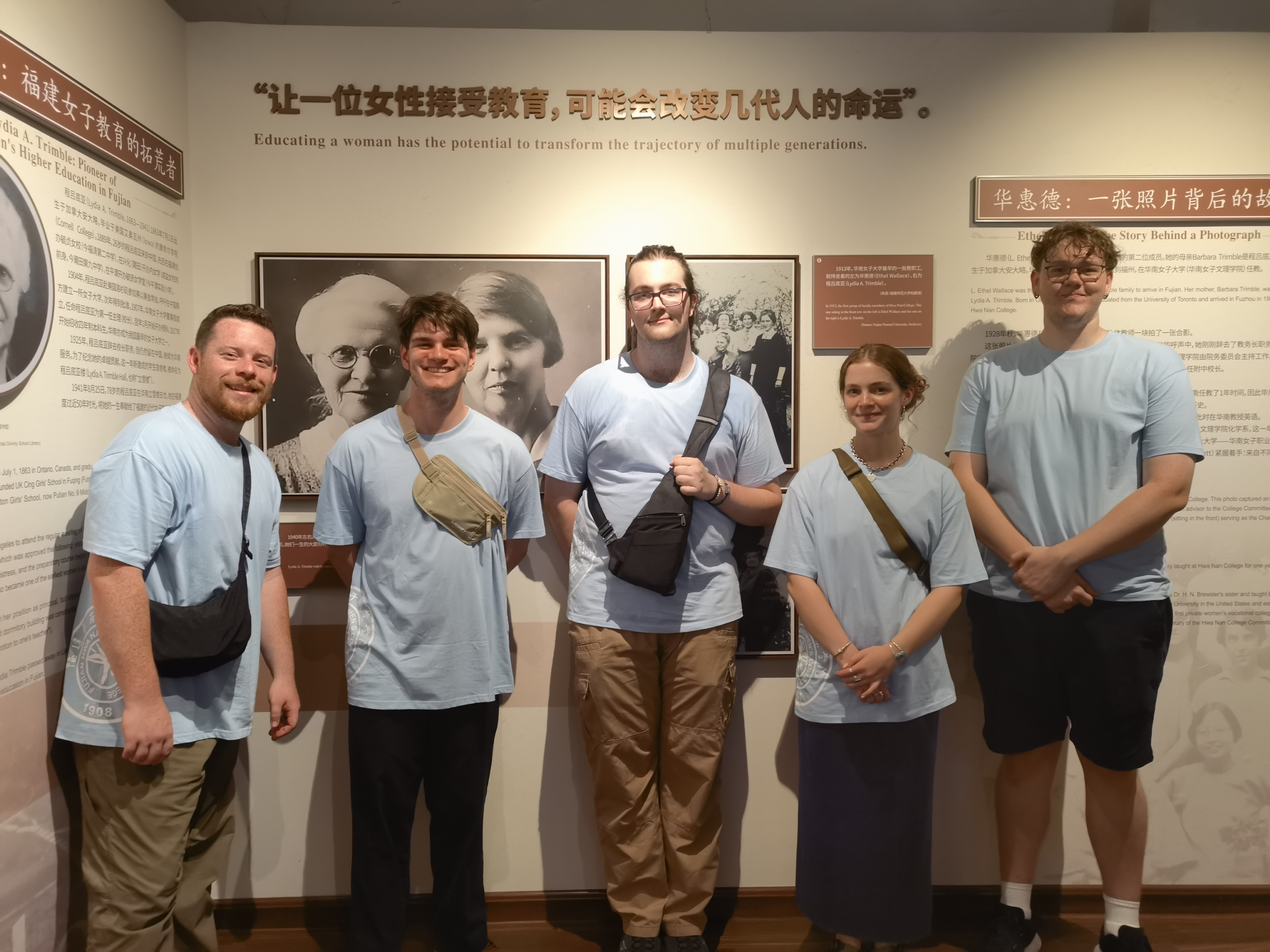
Students can deepen their learning through a variety of study abroad opportunities in China and Taiwan - from a 5-week summer mini-semester in Taichung, to full-semester experiences involving study and internships in Taipei or Shanghai. Student can choose to focus on intensive language training, cultural knowledge, and/or professional internships, depending on their academic and career goals.

To support students success, the department offers scholarships and need-based financial awards for both on-campus study and overseas experiences. Majors are also encouraged to pursue independent research in Asia, and many go on to win prestigious national scholarships such as Fulbright, Critical Language Scholarships (CLS), and Boren Awards for international study and research. 


Where Our Graduates Work
  • National Taiwan University

  • Fulbright ETA

  • New York State Assembly - Policy Research Assistant

  • University of Washington - UW Study Abroad Program Manager 

  • ELCA Leadership Network - Program Manager

Where Our Graduates Study
  • National Chengchi University Graduate 

  • Columbia University

  • National Taiwan University

  • American University Washington College of Law

  • The Hopkins-Nanjing Center

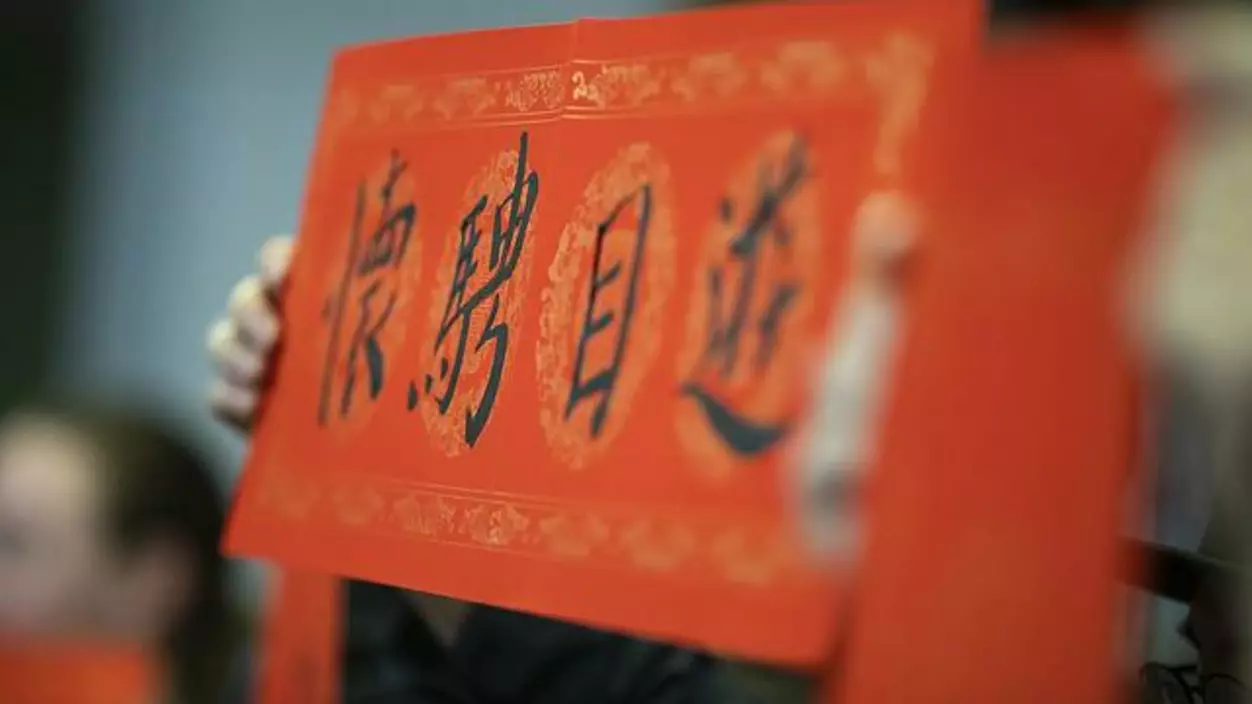
Red paper with Chinese Calligraphy

Lunar New Year is celebrated as the beginning of the new year in the traditional lunisolar calendar at the end of January. 
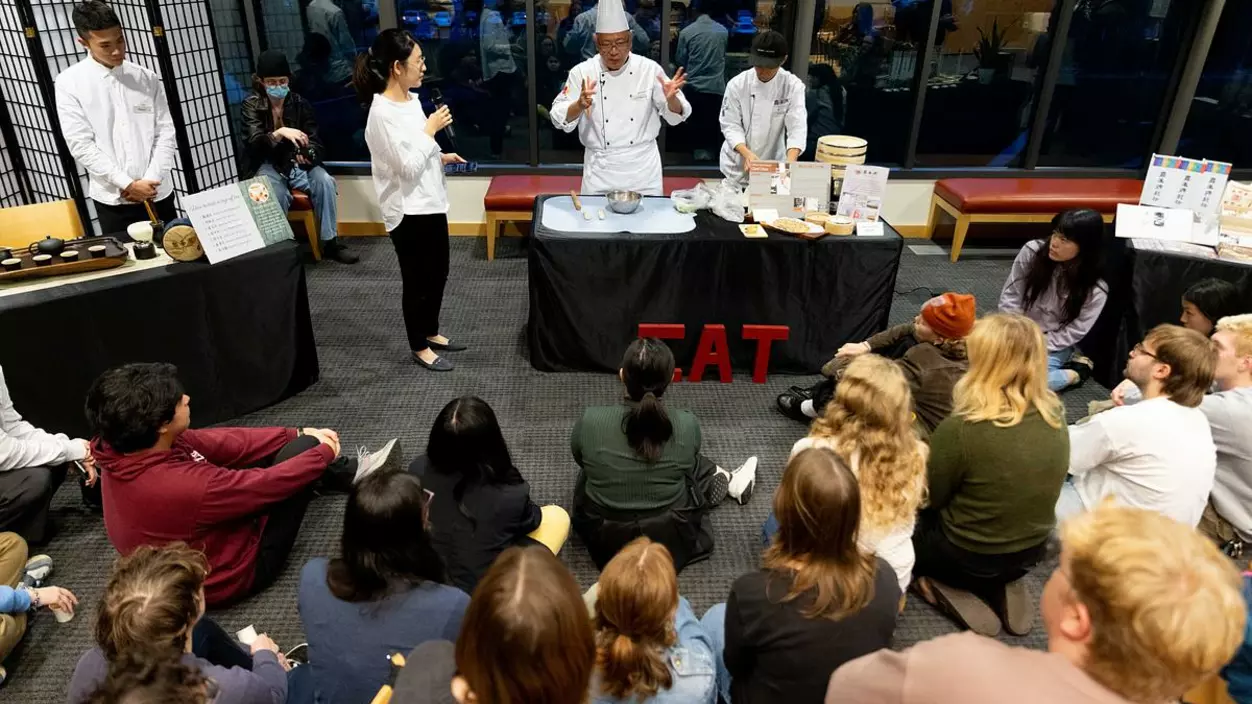
Chef Chou cooking Infront a college student audience.

Chef Ching-Yuan Chou demonstrates how to make various Taiwanese dumplings and more during Taste of Taiwan in 2023. 

Experiential Learning

Sample Courses

Introduction to the fundamentals of Mandarin Chinese in four basic skills: comprehension, speaking, reading, and writing. Emphasis is on the development of communicative skills, in both oral and written language.

Code
Language

This course provides an introduction to the wide range of religious beliefs and practices that have emerged over the course of Chinese history. Topics covered include not only the classic traditions Confucianism, Daoism, and Buddhism, but also such broader examples of religious expression as oracle bone inscriptions, medieval ghost stories, and contemporary practices in longevity. Throughout the course students explore how those in China have understood the world religiously, and how scholars have interpreted the diverse world of Chinese religion. Some of the questions include: What has it meant to be a human in China? What other spirits, ghosts, and divinities inhabit the Chinese religious world? What is included and what is excluded when we use the term 'religion,' or even 'China'? How do cultural, historical, and political changes affect religious experience, or a person's understanding of 'ultimate reality'? A primary goal of the course is to develop a broad understanding both of Chinese religious history and of contemporary issues involving religion in China.

Code
Artistic and Humanistic Perspectives

Chinese-language films produced in Mainland China, Hong Kong, Taiwan, and the Chinese diaspora have been global powerhouses, winning major international awards and capturing remarkable box office receipts. With a long and intricate history, Chinese-language cinema is not only one of the most important forms of cultural productions within the region, it also has assumed an increasingly important role in the global cultural industry and imagination. This course introduces students to the broad historical scope of the Chinese-language cinema, covering three major traditions of Mainland China, Hong Kong, and Taiwan. The films examined in the course powerfully capture the ethos of their times, from the early twentieth century to the present. They address important issues such as gender, modernity, national identity, ethnicity, and globalization. While these issues define the contemporary societies under study, they also condition the making of the films.

Code
Artistic and Humanistic PerspectivesKnowledge, Identity, and Power

This course examines Chinese art in the socially and politically tumultuous twentieth century, which has witnessed the end of Imperial China, the founding of the Republic, the rise of the People's Republic, and the impact of the West throughout the period. The focus is on the art and society from the Cultural Revolution (1966-1976) to the 21st century.

Code
Artistic and Humanistic Perspectives

Although China can lay claim to both the world's longest continuous civilization and the first modern state, in just the past half century, China has experienced tumultuous political revolution, sweeping reform and most recently painful retrenchment. This begs the questions: Will the growing divisions between rich and poor, coastal and provincial, urban and peasant tear China apart? Can the center hold? Can the Chinese political economy, its environment, and indeed the world accommodate not only a billion capitalist workers and consumers, but also embrace the same number of potential citizens demanding a political voice in their future? Will China's "rise" be peaceful? These questions are empirical, not rhetorical, and their answers are as important as they are uncertain. Students employ the analytical tools of comparative political economy to frame appropriate questions and weigh those factors most relevant to this remarkable story of socio-political and economic development: political and economic, social and cultural, structural and historical, domestic and international.

Code
Social Scientific and Historical Perspectives
Prerequisites
PG 102,103, or permission of the instructor.

Chinese language studies explores topics related to food in Chinese culture. This course includes a grammar review and a multimedia component, and aims for development of oral and written fluency at the advanced level with emphasis on reading, writing, and group discussion.

Code
Artistic and Humanistic PerspectivesLanguage
Prerequisites
CHIN 301, 302, or 303, or permission of instructor.