

It didn’t quite work out how I planned: At the end of the week, I found out I hadn’t matched with my preferred houses. But I muddled through the rest of the semester and started to find my footing. Despite some lingering disappointment, I tried again during fall rush my sophomore year.
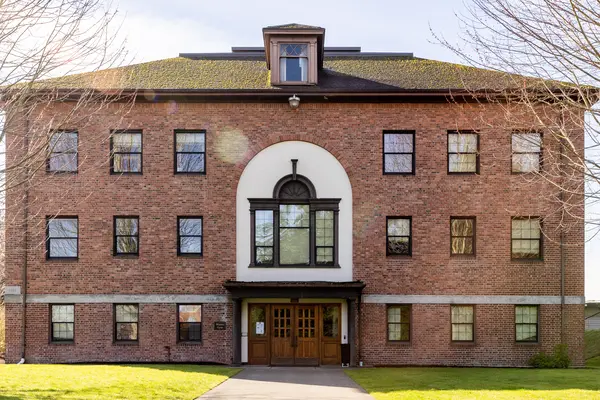
The smell of hazelnut filling my nose as I clutched my morning latte on the way to class. The din of lacrosse practice sneaking through the glass of my Phibbs Hall dorm window. The feeling of damp wool socks sliding around inside my Birkenstocks. The calming, omnipresent sight of ivy blanketing the campus as if it were protecting us from the outside world. Puget Sound was a beautiful bubble from the harsh realities that lay ahead. It was, in the truest sense, how it felt to be safe.

I was thrilled to get a job there as a sophomore, first as a French tutor and then — by my junior year — as a writing advisor. I could not have anticipated how holistically the CWL would change my life. In our first semester as employees, tutors were required to take an additional course that taught us about potential internal biases, ways of learning, and methods or meeting people where they are in their academic journeys so that we could best serve as many students as possible.

When Puget Sound’s early leaders proposed building a college to “rival the finest institutions in the East” in the late-19th century, they could not have envisioned how this scrappy port town with grand aspirations would grow, evolve, and continually reinvent itself while staying true to its roots. Sound familiar?
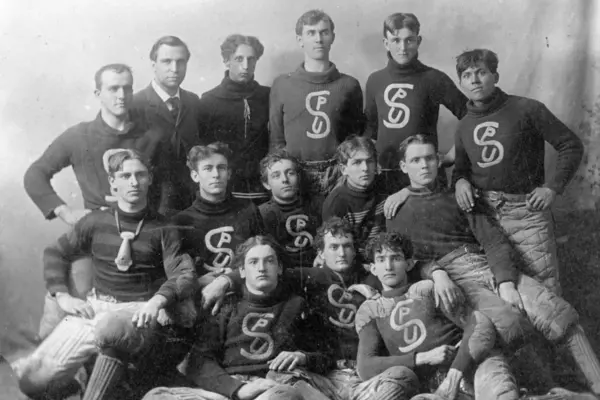
Loggers have competed in the Evergreen, Northwest, Northern Pacific, and Great Northwest conferences, and as an unaligned independent. Puget Sound’s teams have won 14 national championships in five sports. They include men’s basketball (NCAA Division II 1976); women’s swimming (NAIA 1989, 1990, 1996, 1998, and 1999); men’s swimming (NAIA 1995, 1996, and 1997); women’s cross-country (NAIA 1992, 1993, 1994, and 1995); and women’s volleyball (NAIA 1993). That is more than any other school in the Northwest Conference.
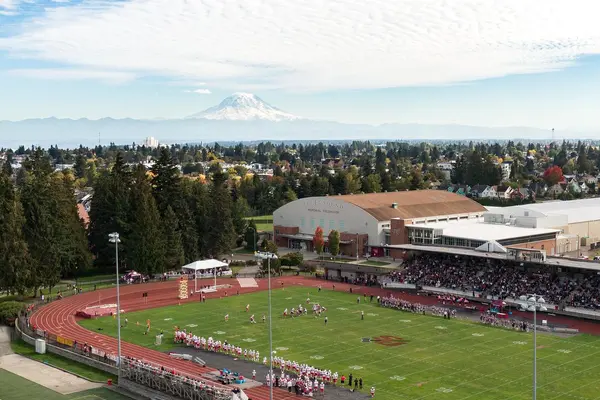
McArthur needed to find a venue for a football game against the Hawai`i Rainbow Warriors since the then-perennially boggy field at Baker Stadium seemed unsuitable for such a high profile game. He settled on Cheney Stadium — a baseball facility that could hold up to 10,000 people, twice as many as what was possible at Baker. While the stadium was not designed for football and McArthur was told a football field simply couldn’t fit, he discovered a way to make it work. He was also able to convince the NCAA to designate the game as an official recognition of college football’s Centennial

Four student awards — the Lillis, Matelich, Neukom, and Posse scholarships — provide full tuition (and in some cases, also room and board) for all four years to talented students who otherwise may not have the opportunity to realize the full breadth of their academic and leadership goals.
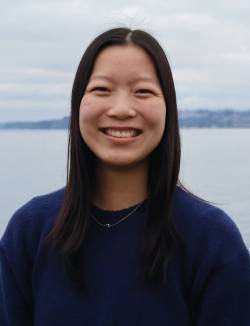
What follows in the next pages are first-person accounts of three esteemed alumni and one stand-out senior who say their life and career trajectories have been forever changed by their financial awards.