Traveling Between Cultures

Yu Luo

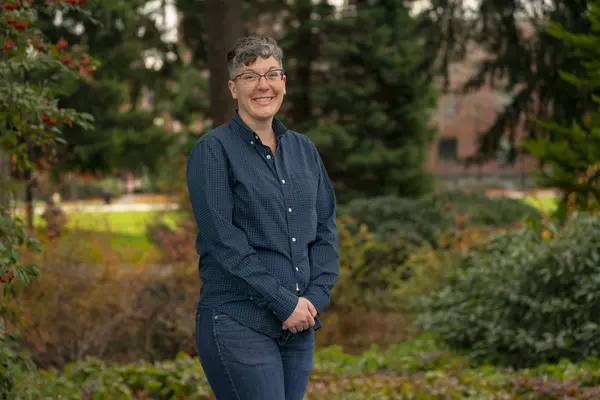
Born in a multi-ethnic region of China, Yu Luo, Puget Sound’s Suzanne Wilson Barnett Chair in Contemporary China Studies and assistant professor of sociology and anthropology, didn’t realize how little she knew of her heritage until college. It was through her doctoral fieldwork in her home province that she noticed how unique her perspective could be as both an insider and outsider of her own culture. We talked with Yu about her research on China’s ethnic minority groups, what it’s like studying something so personal, and how her research translates to teaching.

Born Educator

Steven Neshyba

Academia is in Steven Neshyba’s DNA. The son of an oceanographer, the chemistry professor recalls that dinner table conversations while he was growing up were always very intellectual. “My father ... did a lot of work in the Arctic and the Antarctic, so when he brought that home, that kind of got into my blood,” he says. Neshyba’s research centers on ice, specifically ice in clouds and how global warming is changing the makeup of that ice. In the classroom, he has received attention for his “class flipping” approach to teaching, which challenges traditional higher education models.

Birds on the Brain

Peter Hodum

A self-professed “outdoor bum,” Peter Hodum, professor of biology and environmental policy and decision making, spends his nonteaching days by the sea studying birds. Seabirds were a passion he discovered as a first-year student doing summer research at Bowdoin College. That opportunity was “revelatory and transformative,” he says. Now, his research centers on seabird conservation, specifically community-based conservation—an approach that centers local communities in the work.

Beyond the Classroom

Jairo Hoyos Galvis

As an assistant professor of Hispanic studies and director of Puget Sound’s Latina/o Studies Program, Jairo Hoyos Galvis wants to make sure his students get to know the people and communities they’re studying. Learning Spanish is not just learning another language, he says; it’s an opportunity to engage with other cultures—their experiences, struggles, and successes. We sat down with Hoyos Galvis to talk about the difference between Hispanic and Latina/o studies, the importance of learning outside the classroom, and his passion for shepherding students to success beyond Puget Sound.

The Species Maker

Kristin Johnson

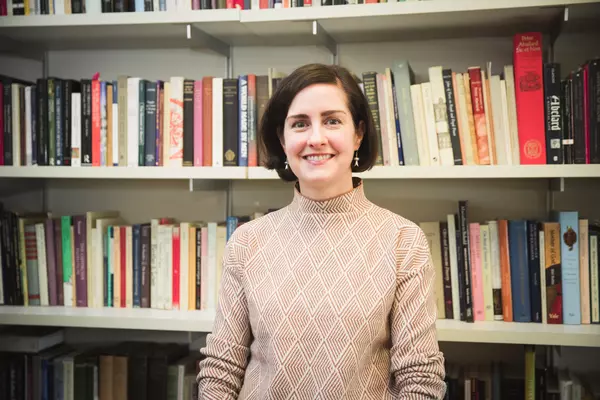
As a professor of science, technology, and society, Kristin Johnson has interests ranging from conservation biology to the history of science and religion. She’s also a prolific writer whose newest book is set against the backdrop of the heated argument surrounding evolution in the 1920s. Her novel, The Species Maker is now available for pre-order and will be in bookstores on Oct. 26.

The Joy of Dance

Ameera Nimjee

On a shelf in Ameera Nimjee’s study sits a small, garlanded statue of Nataraj, the Hindu god of dance. It’s an appropriate icon for an Indian classical dancer to own: Nimjee, assistant professor in the School of Music and the university’s first ethnomusicologist, is trained in Kathak, an Indian classical dance form known for its crisp, rhythmic footwork and evocative storytelling through hand movements and facial gestures. She is every inch the dancer: graceful, poised, expressive with her hands and eyes—even though she didn’t begin dancing until she was 18.

Adaptation

Stacey Weiss

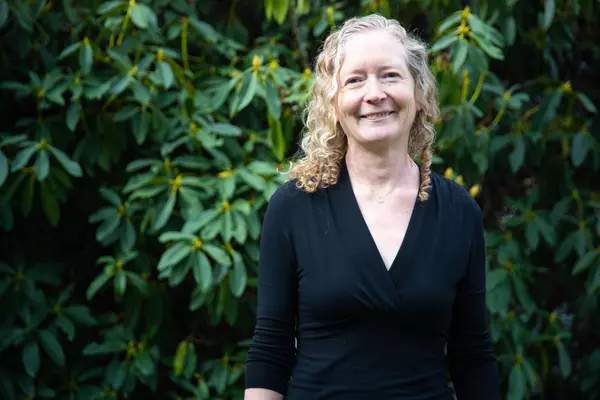
Stacey Weiss didn’t have to look very far to find new lizards. When COVID-19 kept Weiss from returning to her study site in southeast Arizona last year, the William L. McCormick professor of natural sciences found locations not far from Tacoma where she could continue her research on the microbiomes of lizards—specifically, the protective microbes that female lizards pass on during egg-laying. We asked Weiss about adapting her research, the joys of collaborating with undergrads, and why swabs and miniature lassos are essential to her work.