Rebecca Johnson DPT’27 and her classmates spend their Wednesday mornings at the YMCA, showing local teenagers the difference between a proper squat and one that invites injury later. No prescriptions. No diagnoses. Just conversation, demonstration, and the occasional laugh between sets.
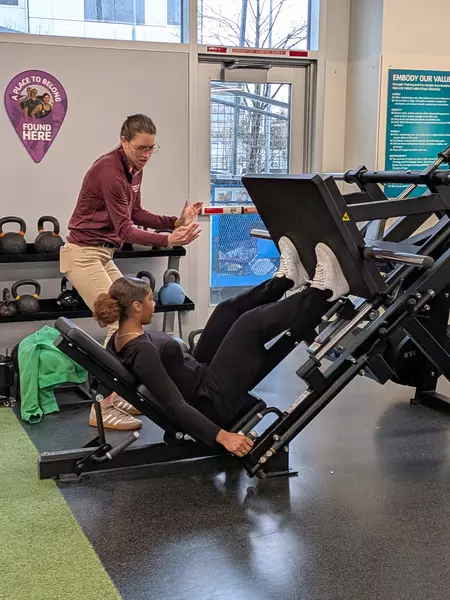
Johnson is one of eight doctoral students from the University of Puget Sound who met weekly this spring with nine students from Tacoma’s Willie Stewart Academy for 90-minute wellness sessions that blend exercise with conversation about healthy habits. The program, now in its second year, pairs Logger Doctor of Physical Therapy (DPT) students one-on-one with local high schoolers. Unlike a traditional physical therapy clinical rotation, these sessions focus on prevention rather than treatment. The high school students don’t have injuries or impairments — they’re simply learning how to move their bodies more intentionally.
“Our profession wants to take on a new role in population health by doing preventative things, like getting people more physically active because we know that pays off over time with your health and your happiness, your longevity,” said Clinical Professor Danny McMillian. “We discuss nutrition, stress management, and avoiding harmful substances all in this hour and a half with students. We’re taking a holistic approach to caring for people.”
The sessions take participants through the full circuit of gym offerings, using free weights, cardio equipment, and stretching areas. But the work goes beyond building up a good sweat. Graduate students talk with their partners about why movement matters, offering tips on proper form and explaining which muscles different exercises target. The conversations often drift toward sleep, nutrition, and stress — the broader pillars of lifestyle medicine. Thanks to the generosity of the YMCA of Pierce and Kitsap County, which provides free use of the gym, the program operates with minimal funding.
“When I was a teenager, I didn’t really know how to form healthy habits,” said Johnson. “So it’s been fun to use what I’ve learned in school to help other people form those healthy habits.”
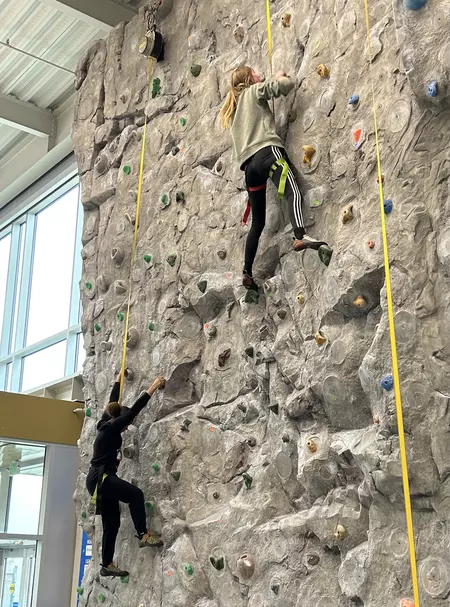
For Willie Stewart Academy student Aushala Cromwell, the hands-on instruction revealed things she hadn’t considered about her own body.
“Things like your posture when you’re lifting — and also that your body uses a lot of muscles that you don’t even know you have,” Cromwell said. “I didn’t know I had muscle, but some of the weights and stuff that we use, I’m like, ‘Wait, this works this part right here?’ I didn’t feel that it targeted that part of the body, but it does. It’s really a cool thing to think about.”
Willie Stewart Academy is a re-engagement center aimed at students who have dropped out or are lacking in credits. It provides a flexible and individualized pathway to earning a high school diploma or GED. The wellness program functions as an elective for them, fulfilling a state physical activity credit while introducing tools for long-term health.
Richard Andrew Roxas DPT’27 spent part of the morning on the treadmill keeping pace alongside Anthony Draper, a Willie Stewart Academy student. Draper commented on how much he’s enjoyed the time spent with Puget Sound students.
“With PE, it feels more like a forced thing to do instead of it being a choice of my own,” said Draper. “Last time I did PE, it was like, ‘We’re going to do all these in a circle, and then you’re going to rotate,’ which is really boring. But this class, I’m actually just able to do the things that I’m feeling and want to focus on. Richard has been pushing me to do better and made it much harder to quit.”
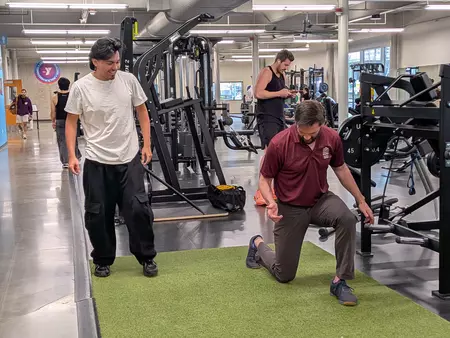
For the graduate students, the experience offers something equally valuable. It provides students with hands-on experience that turns their classroom knowledge into real-world conversations.
“I struggle with the language — how to describe nutrition, because I’m not an expert in that field,” said Baylee Foresman DPT’27, a physical therapy student. “But it is something we should be talking about. This has been really helpful for us, starting to figure that out.”
As healthcare continues to shift toward prevention as a means of reducing chronic disease, improving quality of life, and lowering costs, programs like this are preparing the next generation of practitioners to lead that change.
FUTURE GRAD STUDENTS
Stories to be featured on the Future Graduate Students audience page
COMMUNITY
Stories to be featured on the Community audience page
GWA EL Pillar
Stories related to the GWA campaign pillar about experiential learning