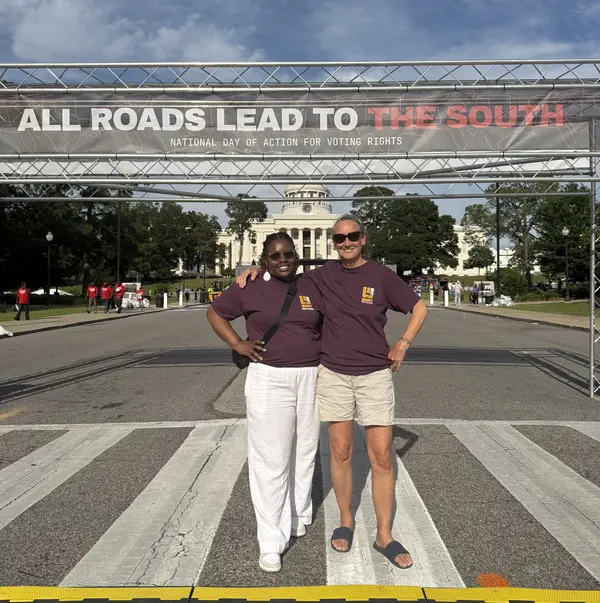
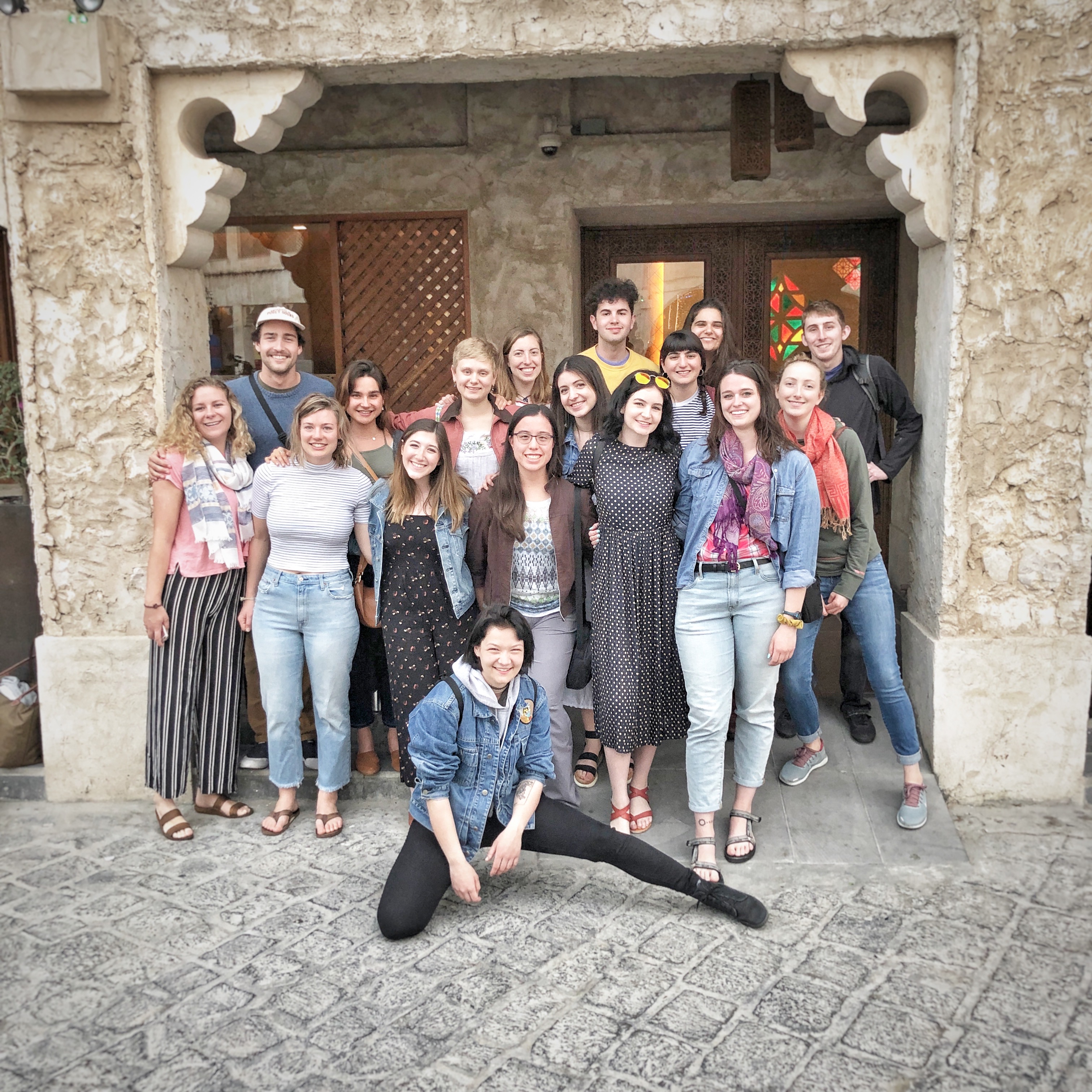
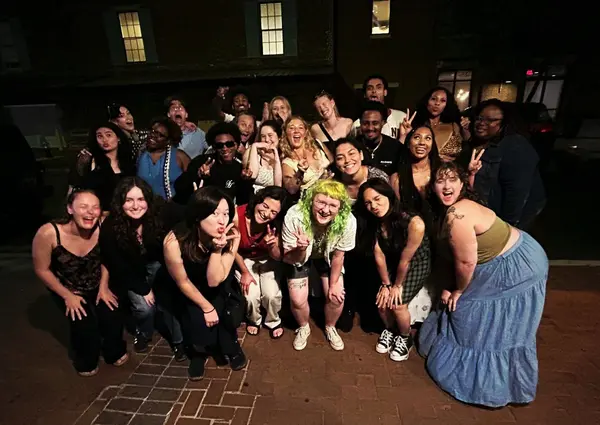
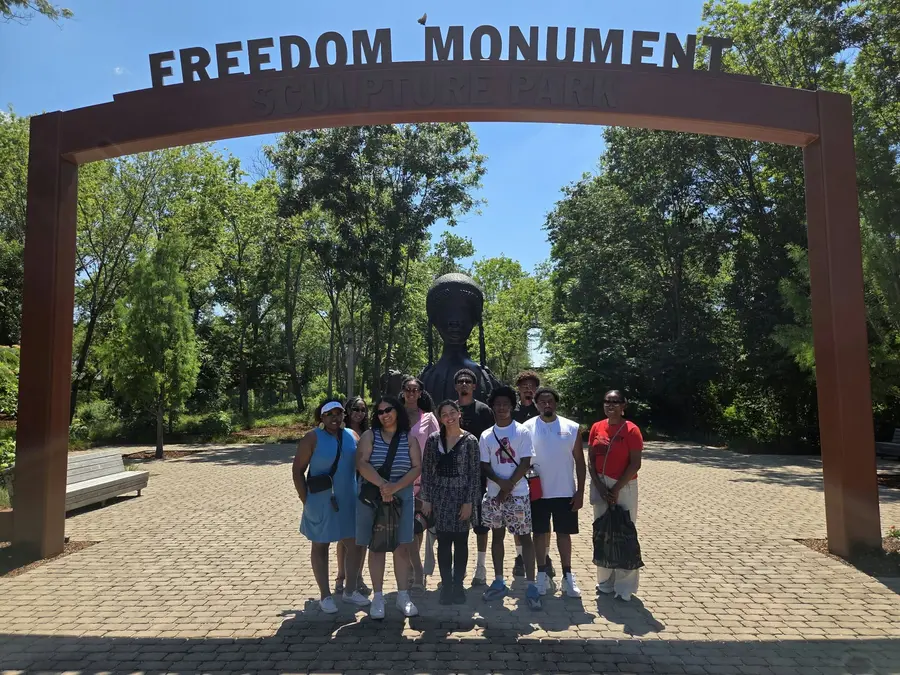
For two weeks this summer, 22 University of Puget Sound students swapped traditional classroom lectures for the highways, monuments, and historic landmarks of Georgia, Alabama, Mississippi, and Louisiana.
Students in the course, The American South: Race, Place, Memory, and Identity, undertook an intensive study-away journey exploring the Civil Rights and Black Power era through the interdisciplinary lenses of African American studies, history, and memory studies. Co-taught by Associate Professor of African American Studies Dr. LaToya Brackett and Professor of History Dr. Nancy Bristow, the course challenged students to move beyond textbooks and physically stand where history was forged.
“You can read about the Civil Rights Movement a hundred times,” Brackett said. “But until you stand on the land where people marched, where they were attacked — you don’t fully understand that this was real.”
Funding from the department’s Peter Rippe’60 and Maria Rippe Fund endowment and the ASUPS Expressions Fund helped lower course fees, enabling students from diverse academic disciplines — ranging from history to natural sciences — to participate in the experience.
Throughout the trip, students visited sites such as the Equal Justice Initiative’s Legacy Museum and National Memorial for Peace and Justice in Montgomery, Alabama; the 16th Street Baptist Church in Birmingham; the Sumner County Courthouse in Mississippi where Emmett Till’s murderers were acquitted; and the Whitney Plantation in Louisiana.
Trevon Hamilton '28, an African American Studies major from Oregon and a varsity athlete, had never visited the South. Hamilton says that as an African American man, stepping into these spaces became significantly impactful. Invited to join the course by Brackett, Hamilton approached the experience expecting it to be intense and emotionally challenging. He hoped to gain a deeper understanding of what it feels like to stand on the ground where history was made and to learn how the past influences his life today.
The reality of that history became apparent when he visited the Equal Justice Initiative. While walking through the exhibits, Hamilton says he experienced a visceral connection to the material that permanently shifted his perspective.
“I cried through the whole site, from the waters all the way to mass incarceration,” Hamilton said. “What made it hit so hard is that it doesn't treat the past as something that ended. It follows the story of our people from slavery to the present, so I could see how the same system keeps changing its form.”
“I walked through it as a young Black man, which made it personal,” Hamilton added. “I wasn't only learning history — I was seeing my own life and my future in it. I left hurt, but I also left determined.”
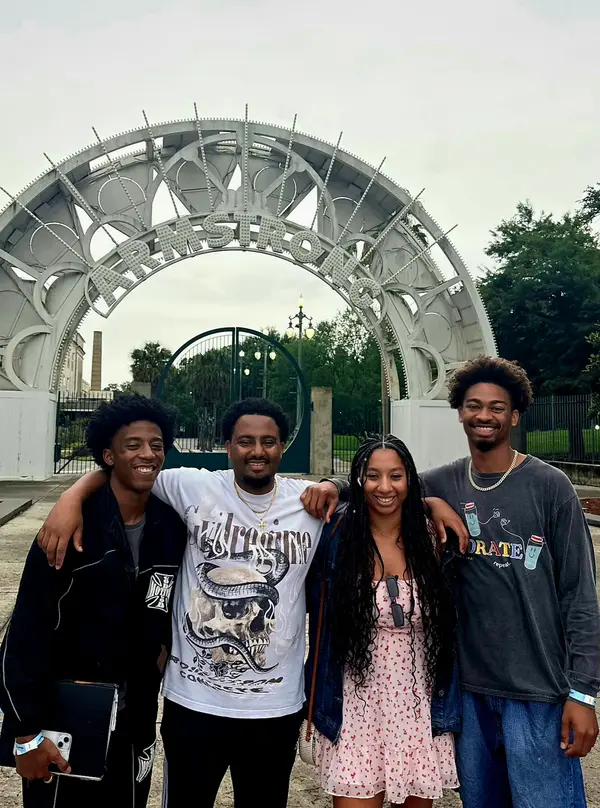
For Jade Watson ’28 — a biracial African American and Mexican woman majoring in chemistry — the visit to Birmingham, Alabama, was deeply personal. Her grandparents grew up in the area and moved back to the city after the 16th Street Baptist Church bombing, which claimed the lives of four young girls. Watson noted that the day the class visited the church was the same day the Supreme Court ruled that Alabama could redraw its congressional map to eliminate a majority Black district.
“That was election day for Alabama, and we were sitting in the 16th Baptist Church having a conversation about how the Supreme Court was deciding if the voting maps were going to change,” Watson said. “And it just kind of put it into perspective, ‘Wow, the generations before me were here, and now I’m here learning their history, as their hard work is being undone.’ It was very powerful for me.”
The trip also offered Watson, a chemistry major, a rare opportunity to bridge the gap between STEM and the humanities. Additionally, as the only STEM major on the trip, Watson drew connections between her chemistry and bioethics coursework and systemic racial issues.
“To think that my Chem 231 class would allow me to further investigate why so many African Americans are disproportionately incarcerated was something I did not expect,” Watson said.
While standing before the interactive displays at the Legacy Museum — where individuals affected by imprisonment share personal testimonies — Watson recalled learning how two well-known illicit substances, which devastated the Black community, were virtually identical at the chemical level. Yet the substance more common in white communities was treated very differently by the legal system, resulting in little to no consequence.
“That was an aha moment for me,” Watson said.
These disparate legal consequences for chemically identical compounds disproportionately impacted marginalized communities for generations. For Watson, that combination of science and African American studies strengthened her commitment to equity as she prepares for a career in medicine.
“This trip helped me understand how science and African American studies are intertwined, and in order to eliminate health disparities, there needs to be more conversations between these disciplines,” Watson said. “I declared my AFAM minor this summer.”
Looking toward her goal of working in healthcare, Watson expressed that understanding historical inequalities is vital for healthcare providers working to eliminate modern-day health inequities.
“Thinking about the generations before and after me, I have to think about how I want to make this world a better place and what my purpose in life is,” she said. “My purpose is to help others, particularly marginalized communities in healthcare, and to explore ways we can eliminate health disparities.”
Quinn Sullivan '27, a white trans man double-majoring in history and gender and queer studies, found standing among the steel monuments at the National Memorial for Peace and Justice in Montgomery to be an emotionally overwhelming moment.
“It’s one thing to read about and learn that the place that you’re from was one of the most racist places,” said Sullivan, who grew up in rural West Virginia and Ohio. “But it’s another thing to actually see individual people’s names written down and the day that they died.”
Sullivan shared that confronting uncomfortable historical truths is essential for modern citizenship and community building. Connecting history to current socio-political realities isn’t just an academic exercise for Sullivan — it is preparation for a future career in history, advocacy, and community leadership.
“We live in a very tumultuous time where people are being alienated from each other,” Sullivan said. “And the only way to stop that, at least in my view as a historian, is to learn how everything is connected and how the past is the present.”
The connection between past and present was central to Professors Bristow and Brackett’s design of the study-away experience. Bristow, who taught the classroom version of the course for years, noted that visiting physical locations creates an unmatched depth of understanding.
“This isn’t just history,” Bristow said. “The racial geography of the American South — the monuments, the courthouses, the churches — they’re active sites of memory that shape who we are. You have to go there to feel that.”
For Brackett, guiding students through the South allowed space not only to confront historical trauma but also to recognize resilience, community, and ancestral strength. The weight of the experience was profound, particularly for students of color.
“I had to remind all of our students that I had to be there for everyone, but I really had to be there for those students of color who were experiencing their own history,” Brackett said. “It was heavy.”
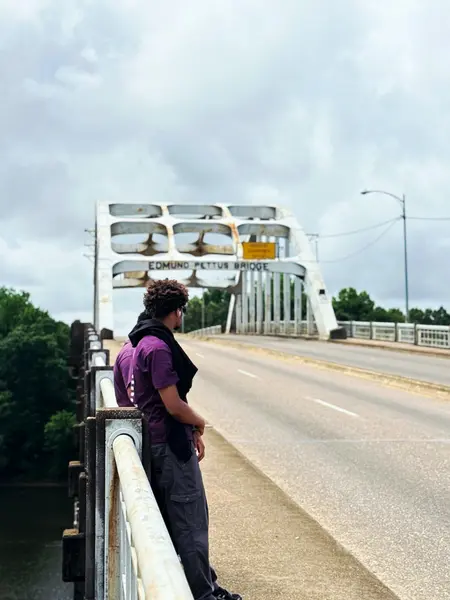
This heaviness followed the group to the Edmund Pettus Bridge in Selma, Alabama.
“When we went over the Selma Bridge, it was a highlight because 1965 brought the Voting Rights Act, and now we’re seeing those rights stripped away,” Brackett said. “It forces you to think about recent ancestors … knowing people were waiting to beat them up, and they kept going anyway. Our students were able to stand in those spaces.”
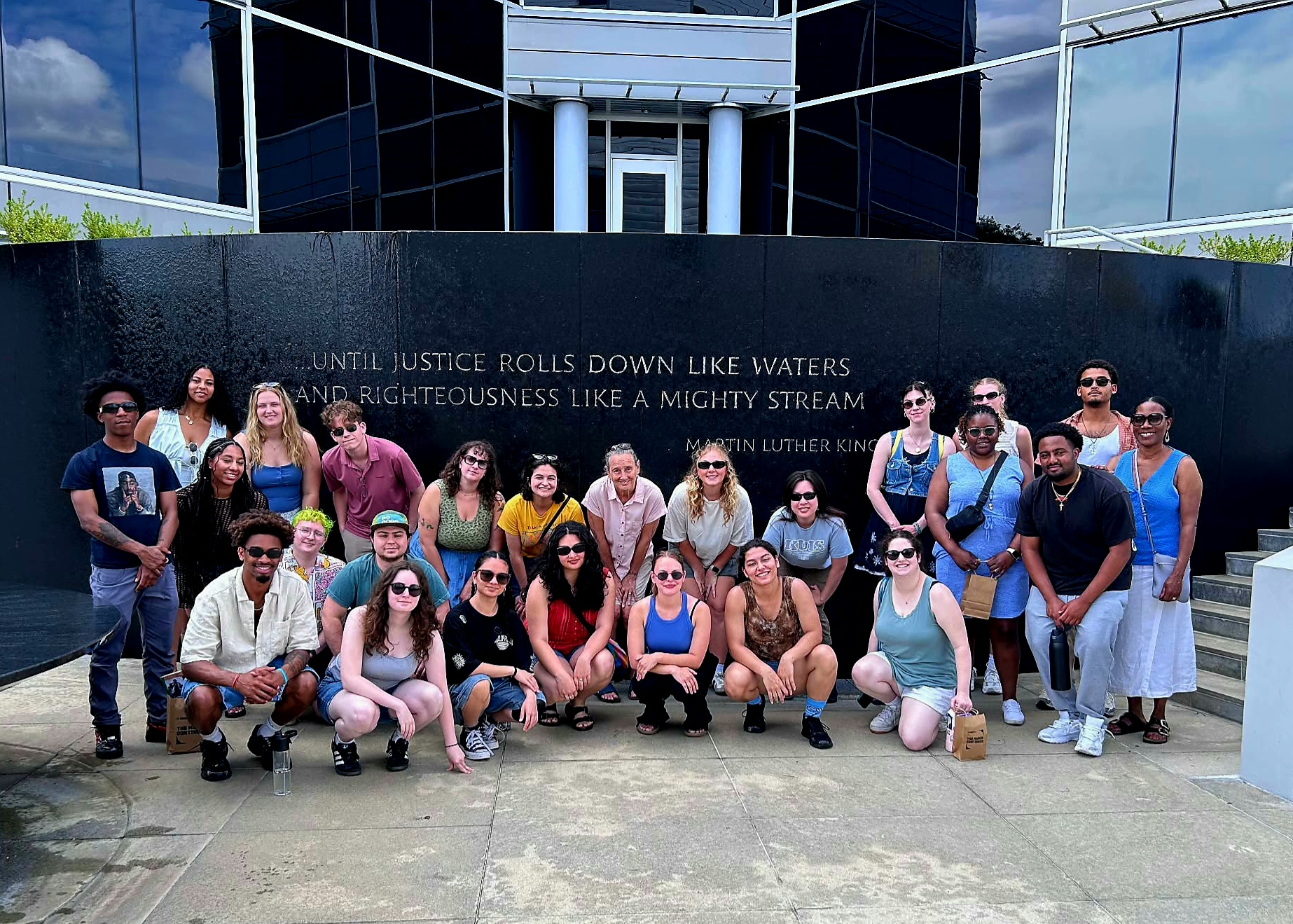
The intensity of these visits led to some powerful moments among students where they confronted their feelings head-on. Many difficult conversations occurred, and that’s where Brackett and Bristow say some of the real learning happened.
“The things that the students of color, the Black students in particular, were willing to share about their experience were heartbreaking, heart-wrenching,” Bristow said. “And at the same time, their willingness to do that was an absolute thing of beauty.”
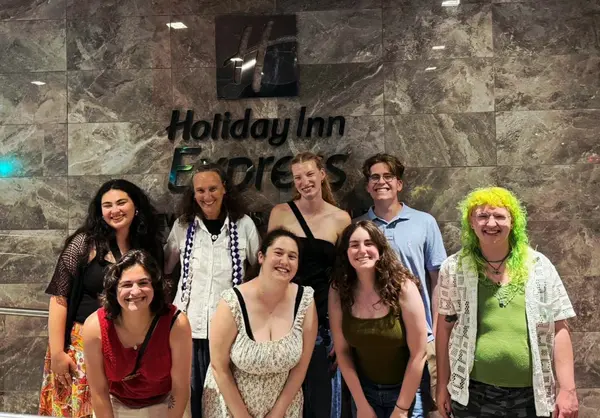
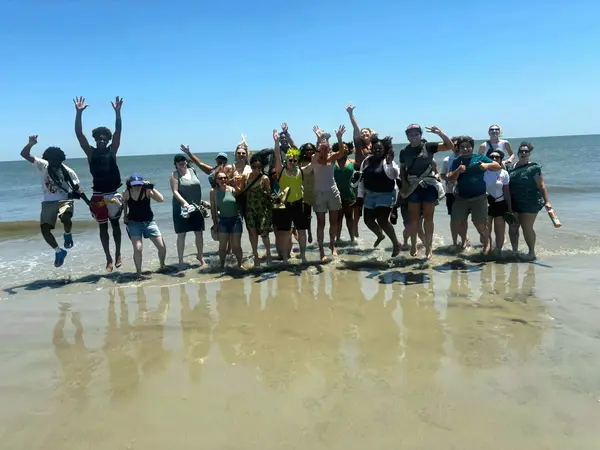
These challenging moments also bonded students, creating a new sense of community. Sullivan said students from different majors and social circles came together in ways they never would have on campus.
“It was a deeply emotional, educational, and great experience that I think I’ll carry for the rest of my life,” Sullivan said.