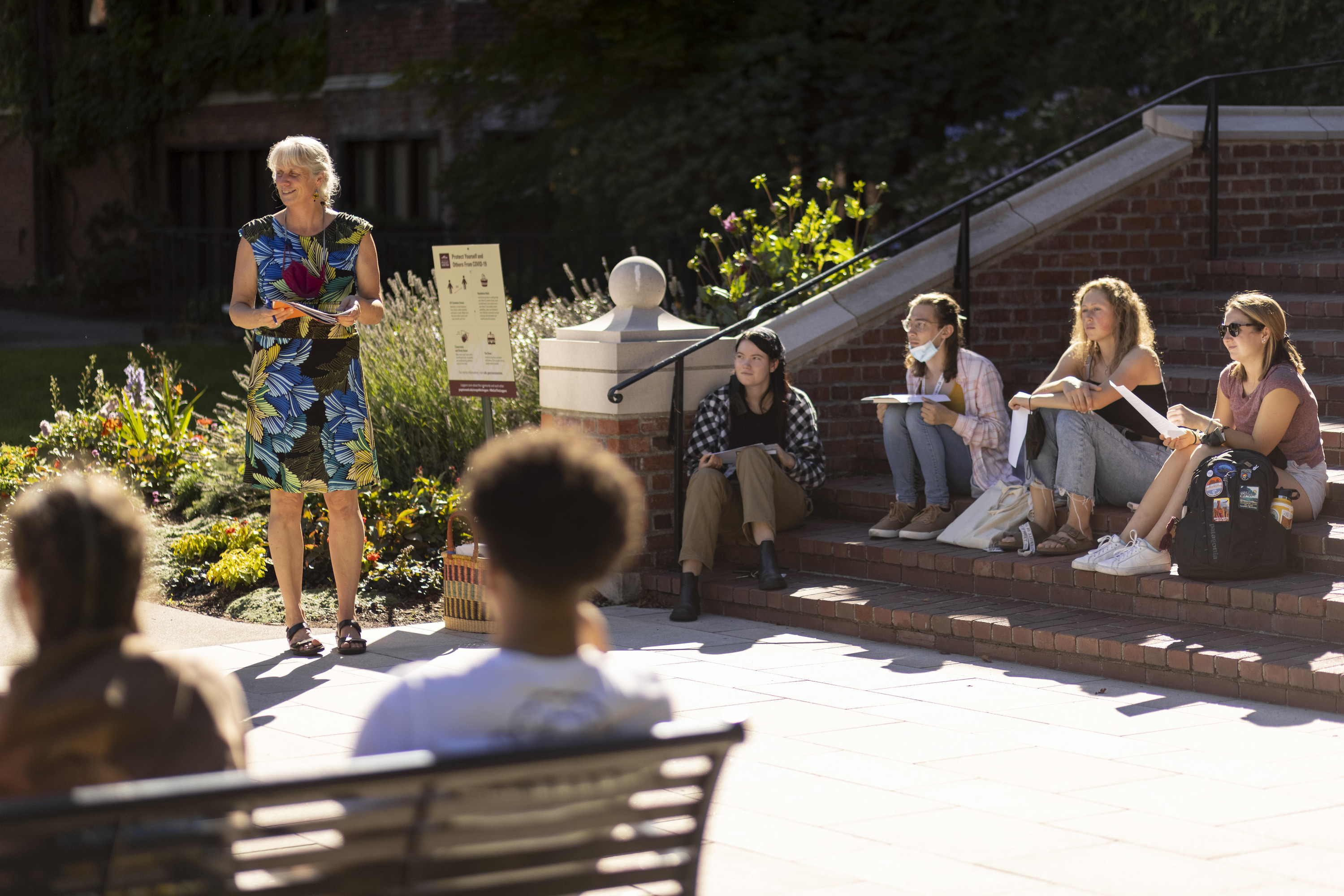
There aren’t many workplaces that keep a steady supply of sewage samples in the freezer, but you’ll find one on campus at the University of Puget Sound.
This summer, three Puget Sound chemistry students worked a steady 9-to-5 in a wastewater epidemiology research lab run by Professor Dan Burgard, learning to measure molecules that get flushed down the toilet.
It’s part of Puget Sound’s summer research program, which gives students the opportunity to earn a stipend while they build and flex professional skills they’ll need in a commercial chemistry lab or graduate school. The program also moves students out of the controlled environment of a teaching lab — where samples are pristine and outcomes are predetermined — and into the real world.
That’s vital experience for anyone who wants to move forward with their chemistry studies. Students who don’t get a chance to apply chemistry techniques to real world samples are missing out on a key opportunity, Burgard said.
“If you got to grad school having thought that a lab always works, it would be a very big wake up call and can make students lose confidence ,” he said, “it can cause people to leave.”
In Burgard’s lab, the messiness of real-life chemistry is literal. Samples come from wastewater treatment plants in Seattle and Spokane. From that truly raw material, students must isolate, concentrate, and measure the markers of specific pharmaceuticals or pollutants.The result is a population-level analysis of how much of these substances pass through people’s bodies in a community over time.
Past projects have looked at marijuana and Adderall use. This summer, student Georgia Magers ’27 continued research Burgard and a previous student have done on the use of antihistamines and albuterol inhalers when wildfires cause poor air quality. Another student looked at fentanyl use, and a third examined the prevalence of GLP-1s in wastewater.
At the end of the summer, students create a poster displaying their methodology and findings. They’ll also present posters on their research at the American Chemical Society conference this spring in New Orleans, where they can see their research alongside the work of thousands of other student chemists.
Cool tools for precision measurements
The students in Burgard’s research lab have a sense of humor about what they’re doing. They even competed in a dessert competition with other summer research students by creating a sewage-themed dessert: poo-shaped brownies and lemonade. But they know the process of analyzing wastewater samples is serious and precise.
It’s not enough to simply measure the presence of a drug or pollutant in wastewater. That could have been flushed down the toilet or entered the sewer some other way that doesn’t involve human consumption. Student researchers often must look for metabolites, which are the molecules that substances turn into after they’ve gone through a human body. Adding further complication, there is typically not going to be that much of a given molecule in a raw sewage sample.
“Most of the things we're measuring are in the part-per-trillion level,” Burgard said. “Which is really small.”
The flipside of that challenge is that summer research students get expanded access to high-level chemistry equipment in order to do their work.
“They get to use really fancy, sophisticated mass spectrometry,” Burgard said.
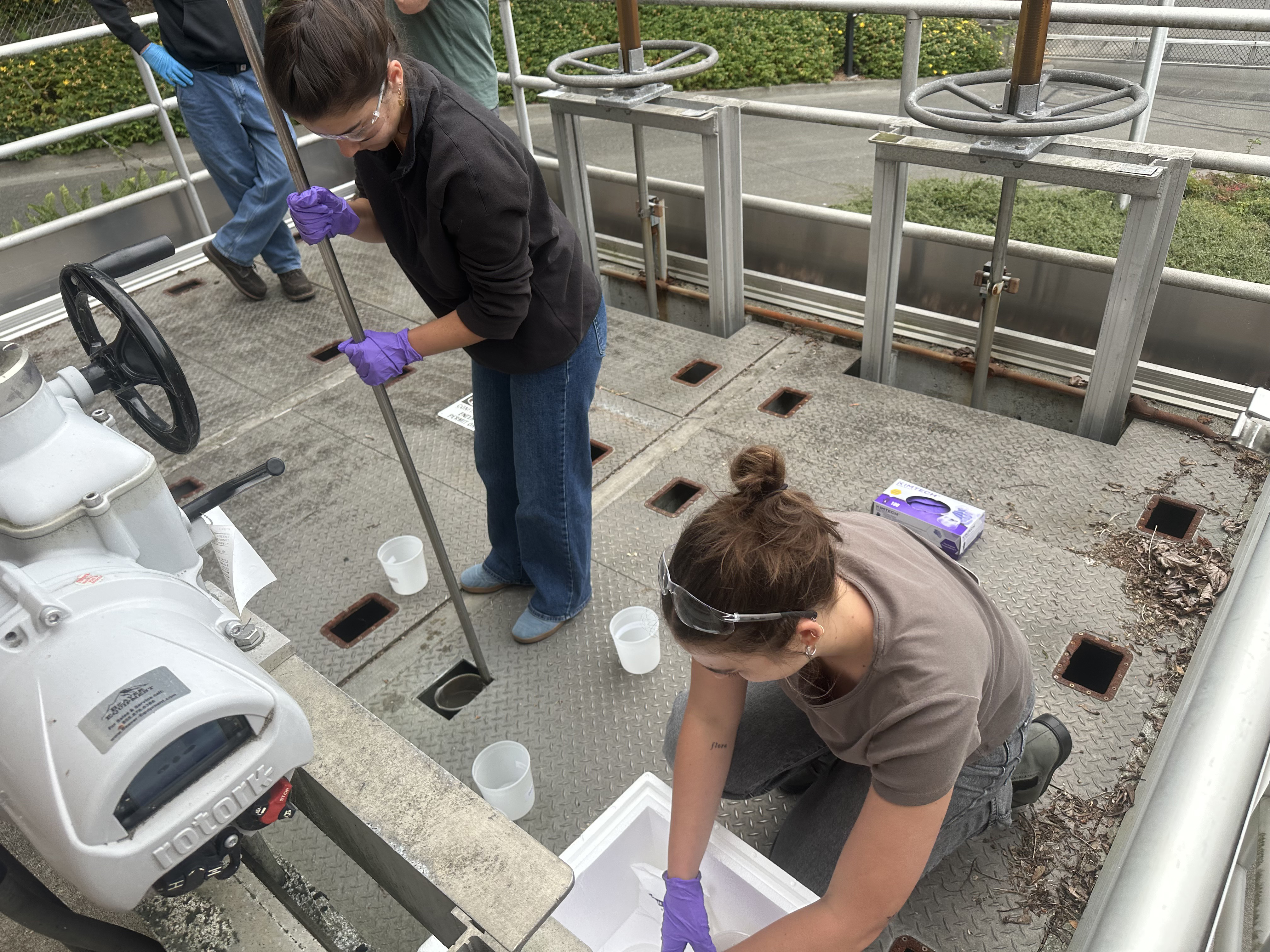
But that’s at the end of the process. To get started, student researchers go to a freezer where tubes of wastewater are kept at -20 degrees Celsius. They use a technique called solid phase extraction, in which a vacuum pulls the samples through an array of small containers and traps the target molecules along the way.
Getting to use this process on real-world samples was a huge learning opportunity, said Magers. Chemists call this “method development,” or as Magers described it, “figuring out what gets us the most of the molecule we want stuck on these little silicon beads.”
Further processing allows Magers and the lab’s other students to take 2 mL brown glass vials of their samples over to the mass spectrometer. The instrument, which helps identify and measure the atoms in a molecule, was paid for in part with a grant from the National Science Foundation for sophisticated science and engineering tools in academic and non-profit research settings.
Puget Sound’s chemistry department has three of these “major research instruments,” which are available to teaching lab students as well as student researchers. The mass spectrometer in particular is mostly for the research labs. None of the students, however, has to compete for time on the instruments with grad students or other more senior researchers.
“That's one thing that separates us from other schools,” Burgard said. “Every instrument is for undergraduate students.”
A foundation for a strong thesis
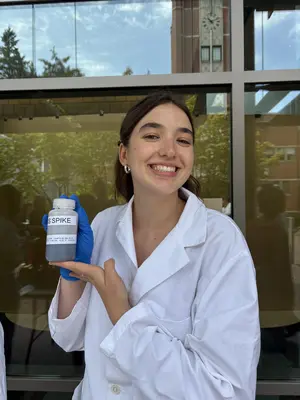
For her research, Magers looked at wastewater samples in the lab’s freezer from days with moderate air quality, measuring metabolites of albuterol, antihistamines, and soot particulates. Previous research in Burgard’s research lab has shown a surprising decrease in use of inhalers during moderate air quality days. Anecdotal data suggested that might be because people who use inhalers before they exercise skip their outdoor workouts when the hazy skies roll in.
For Magers, the summer research program was also a chance to experience chemistry as a job. She’s no stranger to working, but for a summer she got to practice organizing her time, coordinating with everyone else in the lab, asking questions and taking notes, all without juggling a full class load.
“I was using my academic brain,” she said, “but it was nice that it was structured like a 9-to-5.”
Magers’ passion is environmental chemistry, so she jumped at the chance to use chemistry to understand the impact of wildfires on human health and behavior. In addition to presenting a poster at the American Chemical Society’s national meeting in New Orleans this spring, she’s competing this November in the Environmental Challenge, a multi-disciplinary contest for college students put on by a professional group for people who work in the environmental management field.
In the meantime, she’ll be building on her summer research for her senior thesis, which Burgard said is part of the appeal of summer research on campus.
“The most successful senior theses are the ones that students have done a summer research project on,” Burgard said. “So it's very powerful for graduates.”
CURRENT UG STUDENTS
Stories to be featured on the Current Undergraduate Students audience page
FUTURE UG STUDENTS
Stories to be featured on the Future Undergraduate Students audience page
FACULTY & STAFF
Stories to be featured on the Faculty & Staff audience page
GWA EL Pillar
Stories related to the GWA campaign pillar about experiential learning