Loggers in the performing arts shine a light on how they make their way in the business of show business.
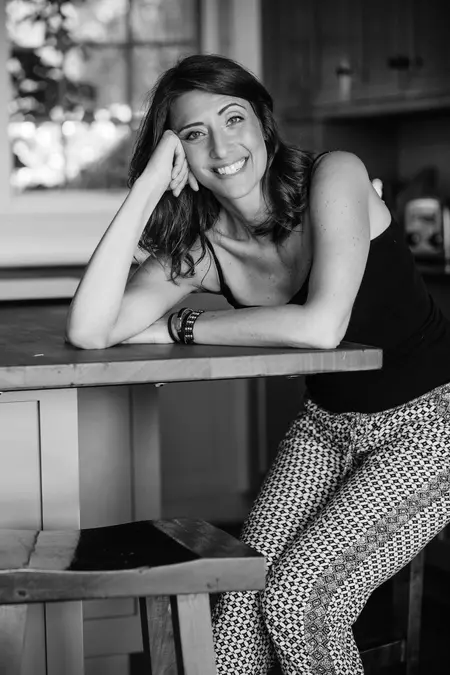
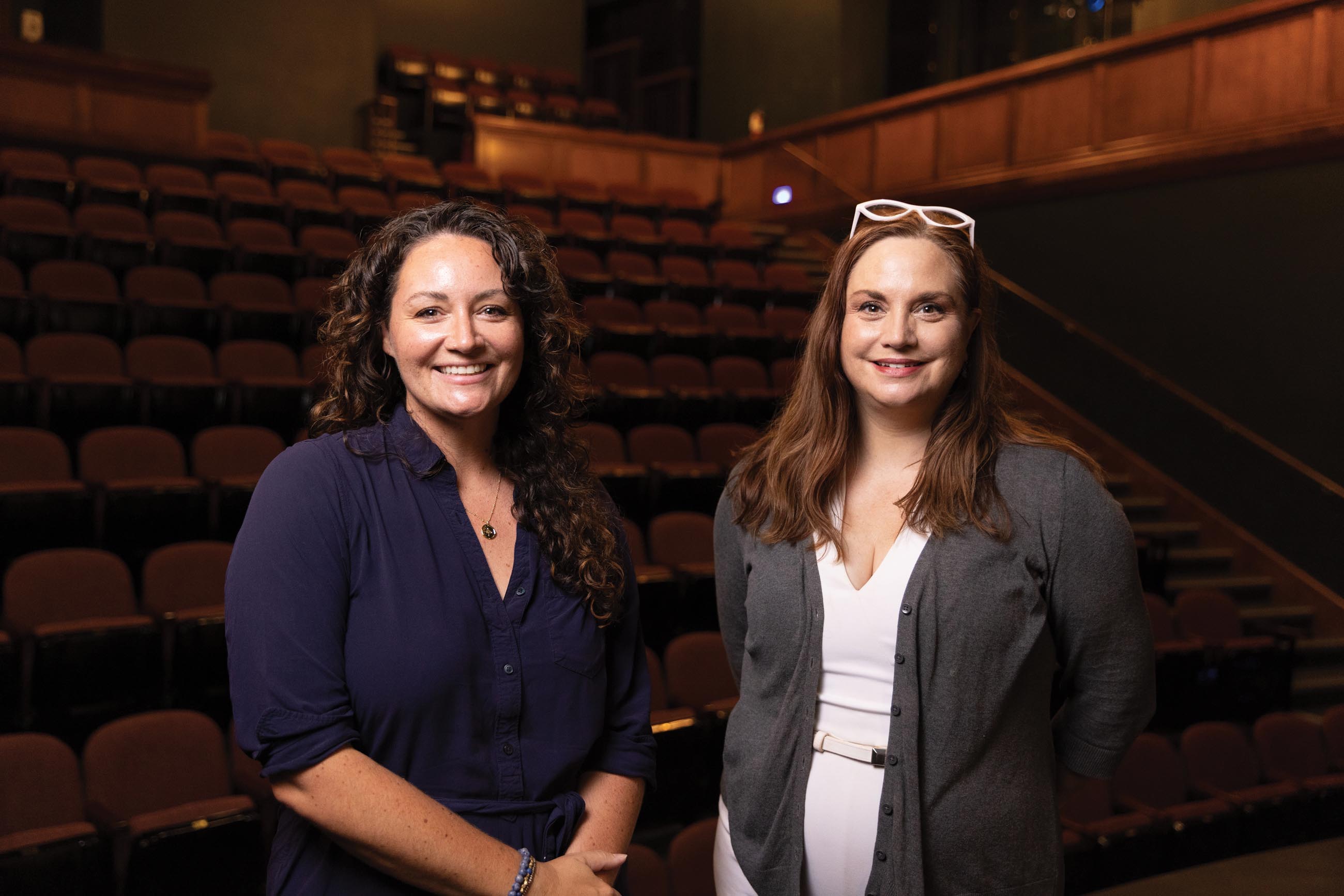
Jenn Ruzumna ’95 knows what it looks like to navigate a non-linear path in the show business industry, driven by the love of it. After earning her degree in theatre arts from Puget Sound, Ruzumna interned at Tacoma Actors Guild before getting married and having children, “relatively young, considering,” she laughs. “I did keep my foot in theater all these years, but I was definitely really centered around family life most of the time,” says Ruzumna.
Around 2015, she decided to recommit to herself as an artist. “I did my first audition in probably 15 years,” Ruzumna says. “I remember being so nervous.” From that audition, she was able to secure an agent and start building a resume in film. In the last decade, she’s worked as a playwright, artistic associate at Seattle Public Theater—a role which includes mentorship and fundraising—and has starred as the titular character in Marcie’s, an independent film now available on Apple TV+.
More opportunities dot the horizon, Ruzumna says, as she steps into the next season of her life as an empty nester—in the spring, her youngest graduated from high school and is off to pursue acting himself, a dream that Ruzumna says was hopefully fed by the fact that he got to watch his mother pursue that passion throughout his childhood.
The journey wasn’t always easy. It included a lot of work for often not enough pay, and without the support of her husband, she says, the money she makes through the arts would not be enough to make ends meet. Even so, Ruzumna encourages her son’s artistic ideals because “I think art is a form of activism. It’s community-building, and I really believe that storytelling is where we see each other’s humanity. That’s been the north star that keeps me going.”
Ruzumna is one of dozens of Loggers walking unconventional paths to rewarding careers in the show business industry. For some, that looks like making their way—often solo and as independent contractors—through the worlds of comedy, film, theater, and more; for others, pursuing a career in the arts through an established institution offers an opportunity for financial stability and a chance to approach their artistry from a different angle. All of them, however, share a love of the art-making itself: a quality that keeps them engaged in what can be a difficult but incredibly rewarding line of work.
'Finding people you love and making each other laugh'
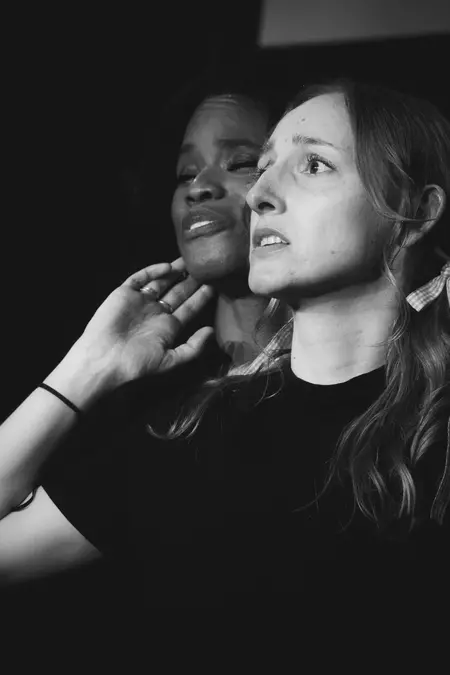
Jordan Moeller ’15 and Sarah McKinley ’14 (who uses the stage name Sarah Kylie) were both members of Puget Sound’s improv sketch comedy group Ubiquitous They (UT), and both cite community as a main component that keeps them grounded during the grind that is being a comedian based in Los Angeles.
McKinley, who specializes in improv and sketch comedy, pays the bills by working odd jobs that don’t take up too much creative energy, such as dog-sitting, working as a background actor, and even taking on shifts as a janitor at IKEA. Even so, she says she feels more joyful than ever, despite the hard work and juggling schedules. “I think the best part is finding people that you love and just making each other laugh,” she says.
Moeller, who specializes in solo character work, says he’s been “pleasantly surprised” by the communal spirit of the comedy scene in Los Angeles, especially for an industry where the competition can be cutthroat. “A lot of my best friends are just people I’ve collaborated with,” he says. “It’s a generally welcoming environment. People are kind.”
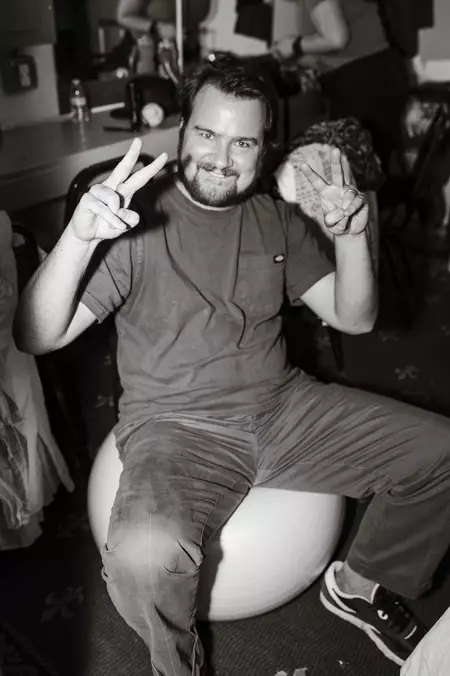
Having fun is part of what keeps him working on his art while balancing a full-time job as a communications manager for a social justice philanthropic organization based out of New York—a role that he is passionate about. Doing comedy on the side, he says, feels like a more sustainable option. And though he’d still love to live in a world in which he’s able to make all his money through comedy, he says that as he’s gotten older, he’s become more content. “I’m at a point in my life where, even if that kind of breakthrough doesn’t happen, it doesn’t mean that I won’t be creatively fulfilled,” Moeller says. “At this point, I’m doing this for the love of the game.”
'But then the next hurdle comes'
Allie Lawrence ’18 is treading a similar path in New York City, where she’s been steadily climbing the ranks of the comedy scene since 2019. When she first moved to New York, Lawrence—who double-majored in English and theatre arts and was also a member of UT—worked full-time in publishing as a marketing and publicity assistant, and many of her goals as a performer were sidelined. After the pandemic, she more seriously pursued stand-up and built up to bigger and longer performances, including, most recently, a 30-minute solo show, Quiet Kid.
Five years ago, her goals focused on venues where she wanted to perform—feathers in her cap that made her feel like she could call herself a comedian. “Now I’ve done shows at many of those dream venues, which is really exciting,” Lawrence says. “But then the next hurdle comes.”
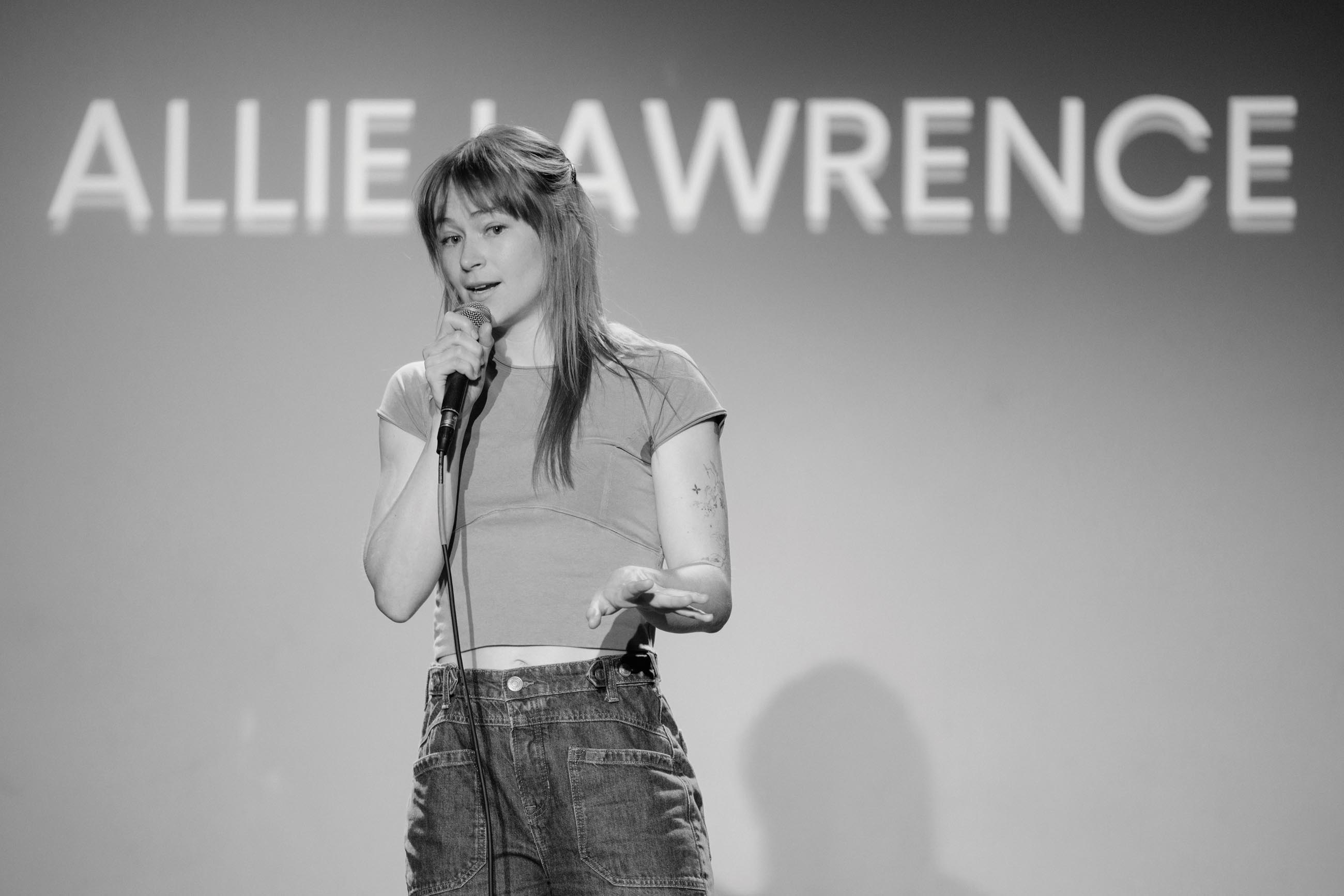
For Lawrence, that next hurdle is her long-term goal of making a living fully through creative work. For the past few years, she’s balanced comedy gigs with work as a café manager, which she’s leveraged into part of her online persona. Her “Barista Diaries” videos on Instagram and TikTok—which document her often-ridiculous encounters with customers as a “bean tender”—often go viral and have earned her a decent-sized following. And while alumni across the board tend to agree that social media is not their favorite landscape for creativity, they admit having an online audience helps.
“I try to think of it as a tool,” says Lawrence, who says she’s “not a social media person” though she now has more than 50,000 TikTok followers. “It can create opportunity and connection in a really cool way.”
'Cool, weird projects that might just change your whole outlook on show business'
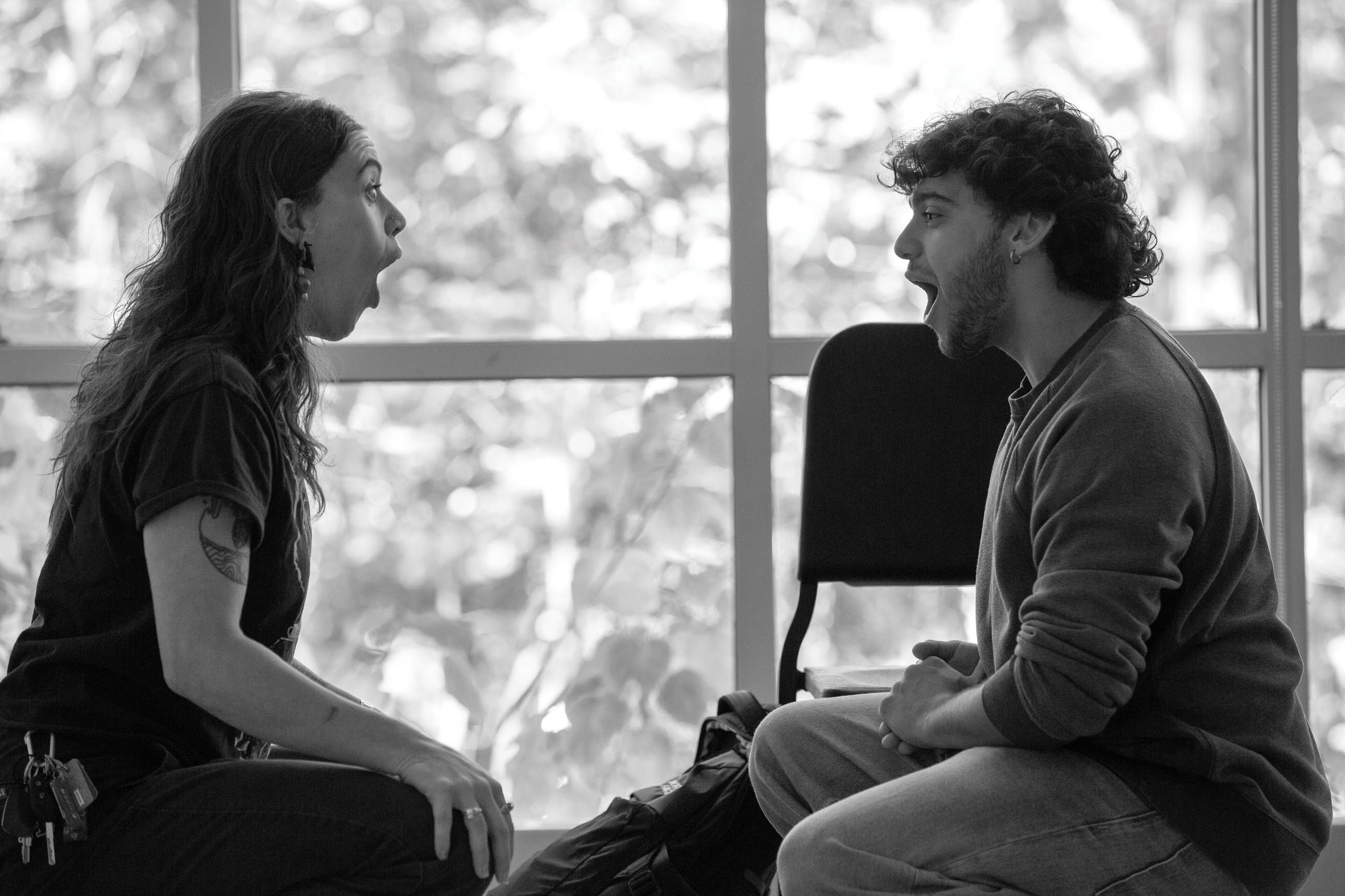
Allegra Ritchie ’18, who holds a master’s degree in theater and works as an assistant professor of voice and speech in the theater department at Pennsylvania State University, took an unexpected path to her full-time employment in the industry.
Ritchie was a sociology and anthropology major with a minor in French and had a party trick knack for accents; a bartender until the pandemic, she earned a graduate degree at Cal State Long Beach and then landed the job at Penn State, where her endless curiosity and creativity have thrived. Academia offers her access to myriad interesting projects, from her directorial debut in collaboration with a former-student-turned-playwright at The Edinburgh Festival Fringe in August 2025 to her recent auditing of a puppetry class, which took her to the Northeastern Regional Puppetry Festival. “If you’re willing to say yes to them,” Ritchie says, “there are so many opportunities that arise for cool, weird projects that might just change your whole outlook on show business.”
'To scratch that itch'
Also making a full-time career in the arts through a series of “yeses” is Megan Ahiers ’06, who moved to Seattle after graduating and got involved in a volunteer-run festival called The 14/48 Projects. The concept: staging 14 premiere plays in 48 hours. Overnight, playwrights create 10-minute plays, which a group of actors then rehearses throughout the day and performs that evening. Then: rinse and repeat.
“It’s a completely community-driven event,” Ahiers says. “It’s about getting people who don’t normally collaborate into rooms together—from people who work with the big equity houses to people who run their own tiny things in a basement.”
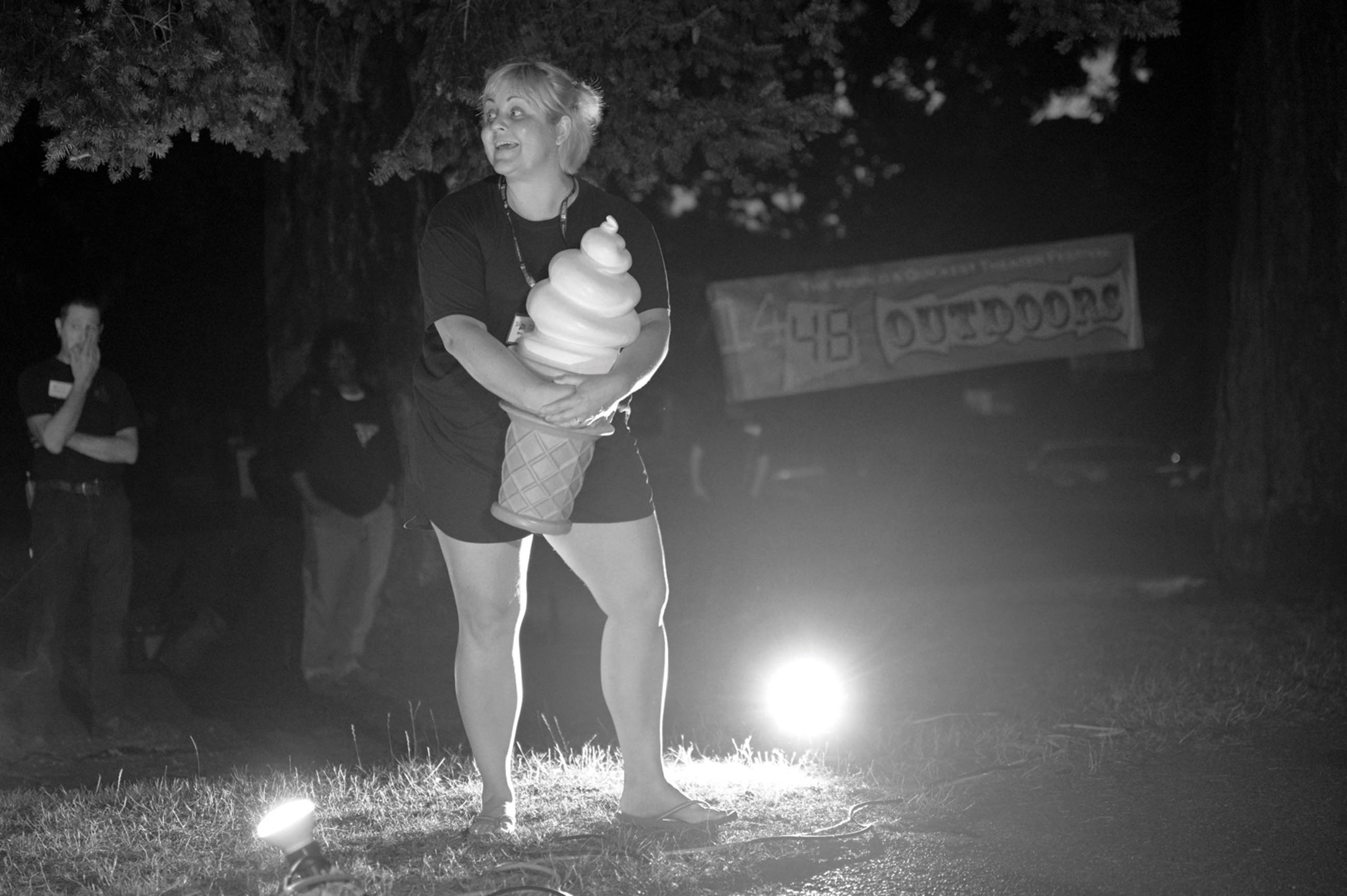
Ahiers and her partner are responsible for turning the festival into a non-profit, which also allowed them to turn it into their full-time jobs. Ahiers, a rare breed of creative who also has Type A tendencies, was the perfect person to take on a project that included, she says, an unbelievable amount of paperwork. In 2013, 14/48 earned tax-exempt status, which has since allowed it to launch partner programs in London, Austin, and Hollywood.
Thanks to her experience setting up and running the backend logistics of the venture, Ahiers has earned herself a career as an arts administrator. She now works for the Seattle-based firm Scandiuzzi Krebs, which supports culture and community-building organizations, while still serving as operations director for The 14/48 Projects.
“And I still act, probably in a play once a year or so,” Ahiers laughs. “You know, to scratch that itch.”
'The live arts are something that feeds the soul and builds community'
Ahiers would describe herself as a producer of 14/48, which for her includes many logistical and planning details. For Ken Willman ’82, P’15, P’18, however, producing means being a patron of the arts by investing in shows at the Broadway level.
An artist himself, Willman started off at Puget Sound as a music major with a love of conducting. He was soon struck by the competitiveness of the field and the apparent difficulty of earning a living in the arts. So, he shifted to a double major in economics and politics and government, and went on to earn a law degree in 1986.
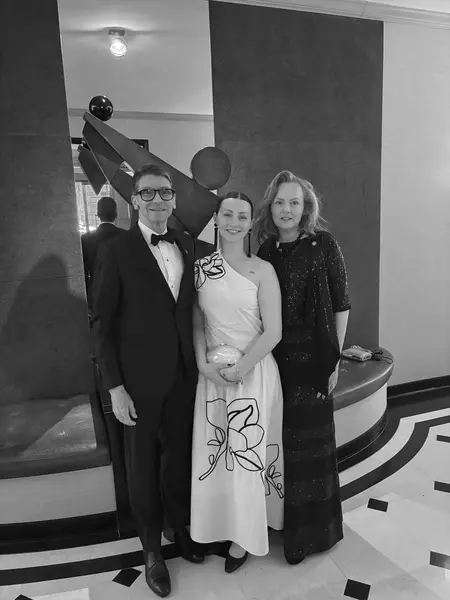
With a successful global career in finance and law, Willman found himself in a very different position than he once might have when he imagined himself standing before an audience as a symphonic conductor: He was a person who could, because of his means, help make the artistic system go.
In 2012, Willman was invited to join the board of The 5th Avenue Theatre in Seattle, where the Willmans’ daughter was involved in educational programs and high school productions. By the summer of 2013, Ken and Rosemary Willman had their first opportunity to invest in a Broadway show alongside one of Willman’s fellow 5th Avenue directors who was among the show’s lead producers.
Since then, the Willmans have delved into co-producing musicals—which are particularly close to Ken Willman’s heart—and plays, having had a hand in more than 50 different productions. The two of them have collected Tonys for their involvement in Parade, Hadestown, and just recently Sunset Blvd., and Oliviers for Come from Away and Dear England. It’s gratifying, he says, to support because “the live arts are something that feeds the soul and builds community.”
Certainly, there are safer ways to invest one’s money—many shows lose money, and most barely break even—but being at the right place at the right time, as they were with Come from Away, could mean a handsome return on investment.
“It’s a delicate balance,” Willman says of choosing which projects to get involved with. “It’s a continuum. On one hand, we try to select stories that we think are really important to be told; on the other, it’s also good to have some shows that make a good commercial profit. It’s kind of like putting together a venture capital portfolio.”
Of course, it’s also about the heart of the thing: caring about the industry itself. And Willman does care. In another life, he is there in the pit, eight shows a week, holding the project together in a completely different way. There is a part of him, he says, that does ache for this life: who wonders what might have been. Sometimes, he says, when he’s alone in his office, he’ll put on a beloved symphony, close his eyes, and conduct.
'It’s all about joy and community'
Success in the world of show business is an ever-moving target—a personal arc that never really ends. One goal is met, and a new one appears. A dream is shifted for something like stability, but the shadow of the dream never really disappears. Working artists make constant trade-offs and sacrifices; they hustle, they pivot, they partner with and push back against institutions. And in the end, for many of them, there is one real thread tying them: They love creating the art itself. The process is the point.
“Even if the industry fell into the Earth’s core and disappeared forever—I love my friends, and I love what we’re making together,” says McKinley. “It’s all about joy and community. I’ll do it for the rest of my life.”
Zoe Branch ’18 is a Brooklyn-based poet, essayist, and journalist. She makes a living primarily by writing custom, on-the-spot poems for strangers on a typewriter, which she does on the street, at events, and on the internet. She publishes a regular newsletter, Due Regards, and co-hosts a weekly poetry + comedy podcast, Poking Around.