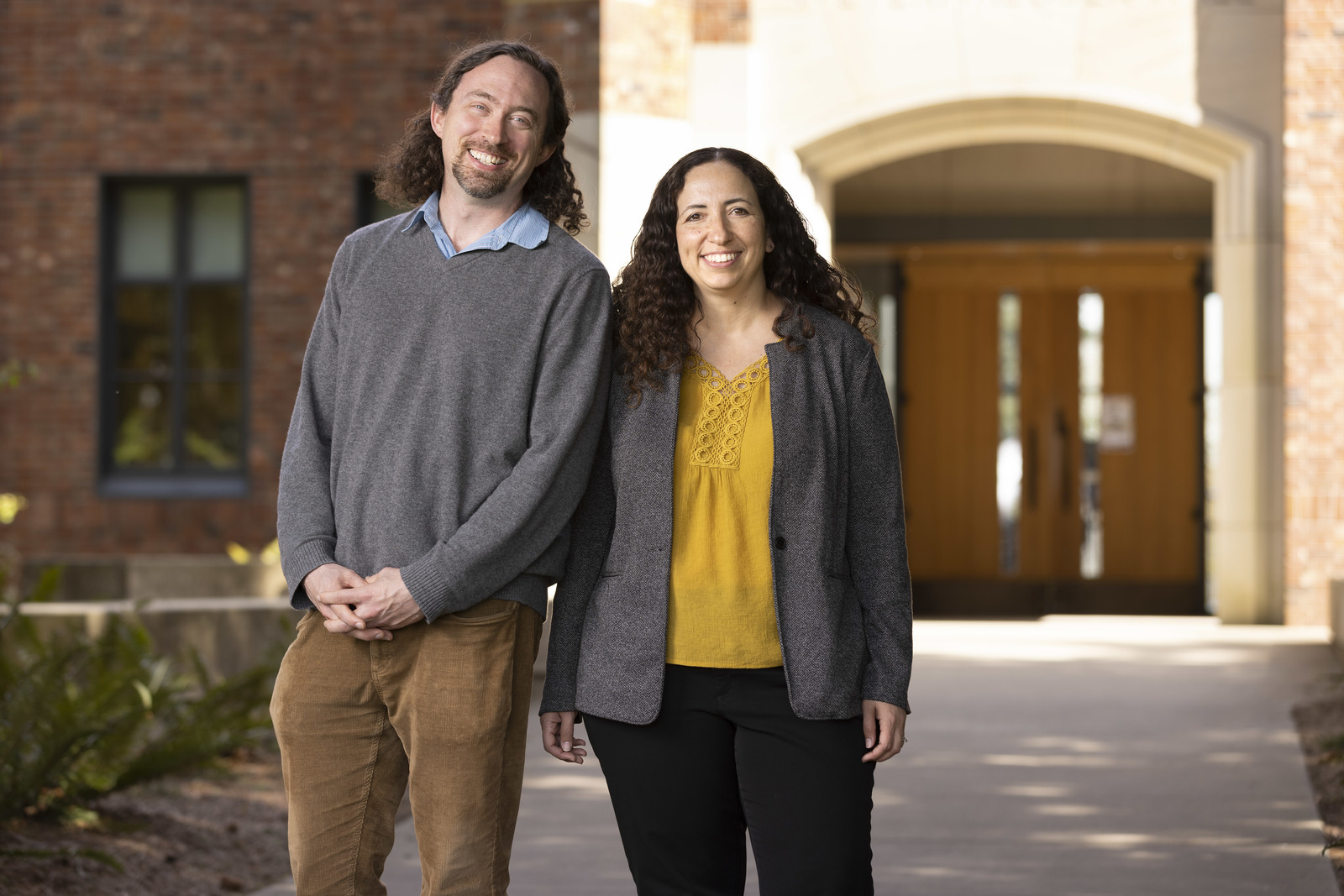
New research into the inter-personal relations connecting China and Central America will provide a critical perspective on shifting global alliances. This work, led by Monica DeHart, University of Puget Sound professor of sociology and anthropology, has been awarded a prestigious 2025 Project Development Grant from the American Council of Learned Societies (ACLS). The highly competitive award, given to only 36 scholars nationwide, will fund ethnographic research that explores these relationships beyond the scope of bilateral agreements and international headlines.
“This isn’t something we can study in books — it's all about ethnography,” DeHart said. “I go and talk to people, I look at the different spaces where people are connecting, and I get a sense of what's going on.”

DeHart's work builds on her 2021 book, Transpacific Developments: The Politics of Multiple Chinas in Central America, which examined the history and politics of Chinese development in Central America. This new project goes deeper, exploring how Chinese entities are engaging with Central American actors at the municipal level, such as through city councils and mayoral offices. She noted that these “low-level” connections often fly under the radar of a lot of what would be federal oversight.
“I'm really interested in this next-level, or lower-level of people-to-people connection," DeHart explained. “I’ll need to do a lot of fieldwork to understand it.”
The grant will support her sabbatical in 2026, allowing her to conduct fieldwork in Guatemala and Costa Rica to put into her words “flesh out what's happening on the ground.”
The grant recognizes the importance of this kind of trans-regional work, which studies how different parts of the world are connected. DeHart noted the significance of the award for scholars at institutions like Puget Sound, where faculty balance teaching with their research.
“To be recognized for our scholarship at a national level, despite the fact that our teaching time occupies so much of our time, it feels gratifying,” she said.
Her research will have critical implications beyond academia, particularly in the current climate of shifting global power dynamics and trade tensions. DeHart's work provides a more nuanced understanding of these complex geopolitical issues.
“It's not so black and white as China versus the U.S., and pick a side," she said. "We need to understand this really complex phenomenon.”
DeHart is excited about the fieldwork, which she says will help unravel the puzzles of these relationships. By talking to everyone from politicians and union leaders to community members, she can get a much clearer picture than what is typically portrayed in the media or by politicians.
"People are navigating lots of different ideas about who or what China is and how it matters to their lives. They have deep relationships with their Chinese Central American neighbors, they've had decades of partnership with Taiwan, and now they're seeing new initiatives from Beijing," she said. "Getting their perspective gives us a much better understanding of what's going on."
DeHart believes her research could have important policy implications for the U.S. and for Central American communities as they navigate China’s overseas development efforts.
“I am hoping that this generates more enthusiasm among my future anthropology and ethnography folks to think about the fact that we don't just go in and study small communities,” DeHart said. “But we can illuminate these big global questions.”
FACULTY & STAFF
Stories to be featured on the Faculty & Staff audience page