Julie Gates (00:07):
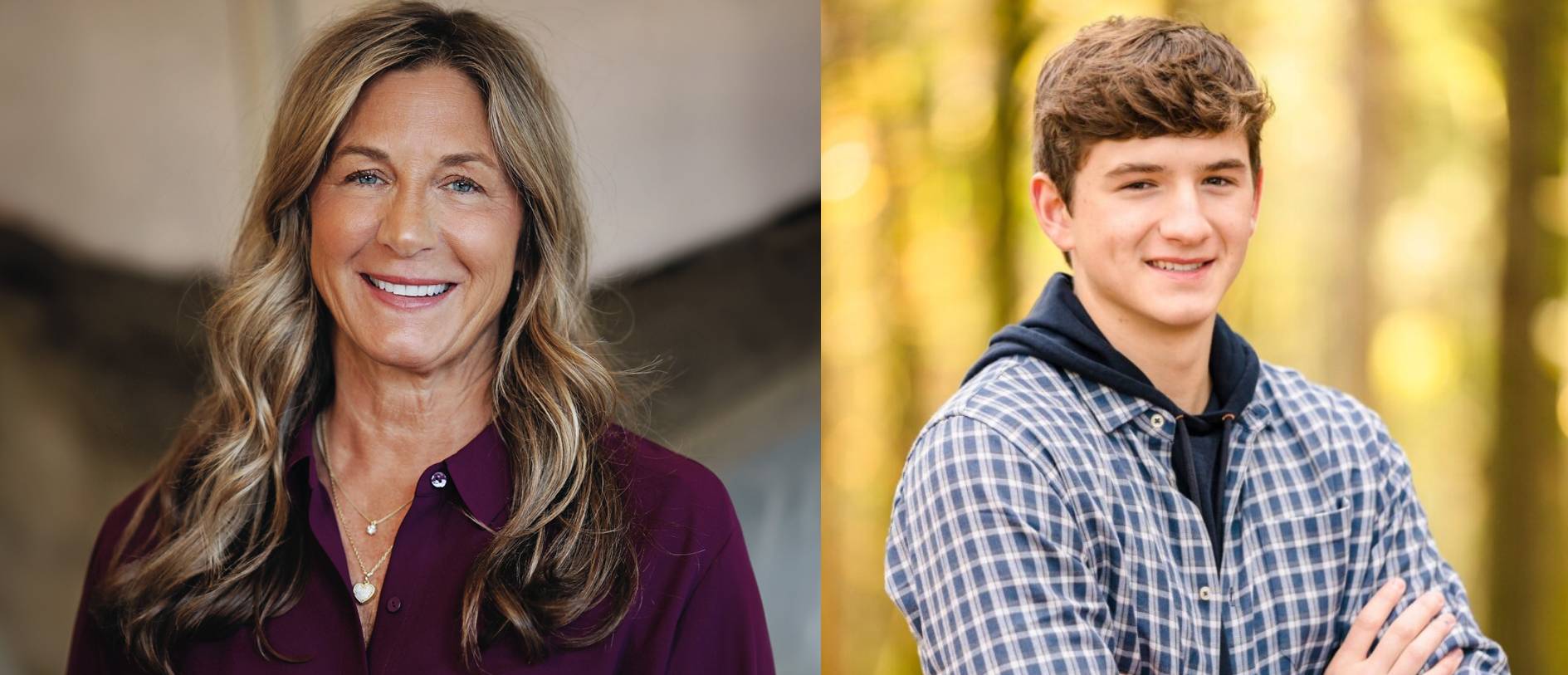
Welcome to the Always a Logger podcast, where we tell the stories of how University of Puget Sound alums have taken their careers and their lives to the heights. I'm super excited about today's show because I have two guests and they know each other so well. They were in each other's weddings. Kai Correa is bench coach at the New York Mets, and Craig Driver is first base coach at Miami Marlins. I told you Craig, I'd screw yours up. There you go, you were on it. What's so fun about these guys is they have taken their careers to Major League baseball, which is really exciting coming from a Division III school. So welcome to the show, guys. I love how long you've known each other. You've been friends forever.
Kai Correa (00:44):
Yeah, thank you. Thanks for having us.
Julie Gates (00:50):
Some stories about each other that we can get into later. I bet.
Kai Correa (00:53):
Yeah, probably a few. No comment.
Julie Gates (00:57):
What was your welcome to the big leagues moment when you were coaches and you were like, wow, I'm actually here. I've actually arrived. Craig, what was your moment?
Kai Correa (01:09):
Man,
Craig Driver (01:10):
I'll have to think about it. Kai, if you have one. Go ahead.
Kai Correa (01:15):
I think I was just talking to somebody about this recently and I think it happens in series. There's no singular one, but it's just kind of like a slow burn, right? I think you get the spring training, and these jobs are so substantive in terms of responsibilities. It's hard to be in awe because you have too much to do, but I think you get these moments the first time you get on the airplane, the first time you stand on the anthem and the plane, the jet flies over. The first time you go to the postseason, you just get each of these little thresholds where you're like, holy crap. And then you get the little simple things along the way where you, like the Christmas cards on your refrigerator on your wall changed drastically with major league players and coaches, and you're like, oh, that's different. And so I think it's a slow burn for me.
Craig Driver (02:07):
I feel like thinking back on it, I have a vivid memory of my first spring training game where I was like, whoa, this is a totally different level of baseball than I've been at. And it wasn't even the beginning of all that when you're, I think we opened in Atlanta my first year, and like Kai said, I think it was, I don't remember what the plane was, but it was like a military flyover and all that stuff is pretty cool. But the first spring training game was the first time where I was like, alright, this is it. Because it wasn't something that I ever thought I was going to do, to be honest. People had asked me for a long time if I wanted to get into professional baseball. And because I didn't play at that level, I never thought that was going to be a reality for me. And I think Kai probably feels the same way in some regards. And I think we're fortunate in that we've had some people take chances on us and made the most of those things. And Major League Baseball has also become a lot more open to people with non-traditional playing backgrounds being a part of that mix and that coaching group.
Julie Gates (03:09):
Well, let's roll it all the way back. Let's start with your journeys and tell everybody how you got to where you are today. So Craig, we can start with you. Tell us about your baseball journey. It started before Puget Sound actually, didn't it?
Craig Driver (03:21):
Yeah, yeah, definitely. I grew up in Seattle, not far from UPS, obviously. I kind of played high school baseball and summer ball and all that stuff. And I went to a junior college my freshman year in college before I went to the UPS called Columbia Basin in Pasco, Washington. I had a really good experience there, but had looked at UPS out of high school and was pretty interested in that, and then it kind of opened the door for me to come back there. And I remember I called Coach Billings, who was the head coach at the time, and I said, Hey, I'm going to come next year. And we had just received a commitment from Mark Rocky, who's the all-time home runs leader at UPS that was also a catcher. So Coach Billings was kind of caught off guard that he was getting me at the same time, and it definitely probably stunted my playing time to a certain extent, but that was kind of how I worked my way to UPS.
(04:21):
And yeah, it ended up being great, and Kai was one of actually the first people I met. He was working as an RA at the time, so he was helping people move in and I was trying to figure out how to get into my sophomore dorm that I was living at on the move in day since I had never really done the beginning of college. I was at a junior college and it's obviously not the same. So yeah, so I ran into Kai and he helped me move some of my stuff and there you go.
Julie Gates (04:47):
That's amazing. Was Kai your RA?
Craig Driver (04:51):
No, he was not, but I had a friend from high school that was on Kai's floor, Gerald Grisetti, who played basketball at UPS, and so I ended up seeing Kai a lot with some of the people on that floor that were a year younger than me.
Julie Gates (05:09):
That's fun. And so after you played catcher and what else did you do if you just found, because you also continued as a coach and a recruiter at some point.
Craig Driver (05:17):
Yeah, so as my senior year was coming to a close, I had been coaching this high school summer baseball team for a couple of years and Coach Billings asked me if I was interested in staying on and continuing to coach, and I did that for a year. And then I went and got my master's at Central Washington University for a couple of years, and then I came back and actually followed Kai in the exact same role that he had that I'm sure I'll tell you about, but where we kind of oversaw the athletic department recruitment to a certain extent and would help set up visits and give tours and stuff like that for all of our sports as well as the baseball team.
Julie Gates (05:52):
That's great. And then you moved on to coaching elsewhere. Tell us about that journey.
Craig Driver (05:57):
That journey. Yeah, so I coached at Yale for a year and a half, so one full season and then a fall, and then I got my first major league opportunity with the Phillies. Our manager was Gabe Kapler, and he was really looking for a bullpen catcher that had kind of a unique background but could coach the catchers and yeah, I remember to this day and he called me and he was like, what are your concerns about this job? That was the first question he asked me and I was like, man, I haven't caught in 10 years. I don't know if I can catch your guys. So that was probably the biggest one. But yeah, spent a couple of years with the Phillies, really fortunate in terms of the people I was able to work with and the players that we had. And then got an opportunity with the Chicago Cubs, spent four years with them, coached first and also did some of our game planning stuff on the defensive side as well as coaching our catchers. And then I spent the last two years with the Los Angeles Dodgers as the catching coordinator before I ended up with the Marlins.
Julie Gates (06:51):
That's amazing. Sounds like a great journey. It sounds like a lot of work, but amazing. Kai, share your experience starting at Puget Sound.
Kai Correa (07:01):
Yeah, so went to Puget Sound in 2006. My mom was an alum and she also went to OT school at UPS, so obviously I was very familiar within my family at Puget Sound, obviously was on the baseball team as Craig pointed out outside a variety of other activities that were a blast. I was in ASUPS, I was the director of public relations. I did some graphic design. I was in Res Life, I did that for multiple years and then I was a programmer booking guest speakers and musicians for campus, so I had a lot of fun jobs on campus and enjoyed that. Just like Craig going into our senior year, they asked me if I wanted to stay and coach, and so we got to do that together. And in addition to that, as Craig pointed out, I was given the opportunity to be the athletic recruitment coordinator, which was essentially that liaison job between the athletic department and the admissions office.
(07:54):
It was a blast because it got to represent the university not only based on my experiences as experiences as a student athlete, but based on my experiences as a former member of Res Life, as a former member of ASUPS, as a former member of other departments on campus. And so that was a lot of fun. Craig and I think both really enjoyed sharing our love for our experience and sharing our love for the campus, not only with future baseball student athletes, but with future rowers and basketball players and track athletes. And it was a lot of fun introducing people to the place that really shaped us. Following my time at Puget Sound, I coached there for three seasons. I got my first Division I opportunity at the University of Northern Colorado in Greeley, Colorado. It was a program that had struggled in recent seasons and I was fortunate to be a part of a turnaround, and we went from a team that won six games to a team that won 30 games and was knocking on the door of a conference championship in terms of the tournament championship.
(09:02):
And so it was really fun. That led me to my first professional baseball opportunity, similar to Craig, and that was with at the time the Cleveland Indians, now the Cleveland Guardians. I worked in the player development space as a coordinator for the Cleveland Indians, then got my first major league opportunity in San Francisco as the bench coach. I did that for four seasons, then I returned to Cleveland now the Guardians where I was on the Major League staff for the last two, and then this offseason got the job as the bench coach with the Mets. So if you take Craig and I's timelines, we're always just kind of doing similar things just a year off arriving. Arriving at UPS a year apart, going to Division I baseball a year apart, going to professional baseball a year apart, going to the major leagues a year apart, and then changing to new organizations now at the same time. So this is the first time we're synced up. We made the moves consistently, right? Yeah, it took us 20 years, but this is the first time we committed to the same thing at the same time since we first took our assistant coaching jobs.
Julie Gates (10:07):
Craig had mentioned that you both have changed jobs, so you're both really, really busy right now. What is it like? Do you have to relocate to the cities in which you're working and do your families come or how does that work in the major league baseball lifestyle?
Kai Correa (10:22):
Yeah, I would say that's the most common question you get from non-major league people, and it's obviously appropriate one. For most of us, chasing jobs with homes would be foolhardy because how rapidly you change organizations. So traditionally we establish home bases. Most people either establish home bases in one of three places: where you grew up or you have the support of your parents that assist with your children, where your wife grew up so you have the support of your in-laws, or near one of the spring training facilities so you can recoup those days at home. So those kind of the three places that people live for Craig and I, we both live in the off-seasons. Our full-time, homes are in our wives', you know, home areas for Craig in Philadelphia and for myself in Colorado in the season, we each live for six weeks at our spring training locations.
(11:13):
And so we're in housing, some kind of condominium or hotel provided by the team, and then we live for six months in some kind of housing we secure, whether that's an apartment, a condo, a rental home, an Airbnb, and so you kind of have this cycle. So the way I think about it is I spend roughly, I would say 90 nights a year in my home, 60 in spring training, and then the other six months in our major league home cities. Of those six months, 180 of 'em, you have games and 162 of them, 81 on the road and 81 at home. So you then split those six months in three months in hotels and then three months in your rental. So it's quite confusing. A lot of W2s, a lot of rental agreements, East Ca lot of car shipments. And then for everyone, their family's situation is different, but for the most part, we try to create stability with our routines for our children so that way they have as normal, normal as an upbringing and home life as possible. And so for me, a lot of guys, I see my kids about once a month, my wife and kids about once a month while the school year is still in session, whether that's spring break or a long weekend, and then I see them for two months continuously through the summer break before school starts, and then again once a month, once school reconvenes in the fall and then every single day in the off season. So that's kind of what that cycle is.
Julie Gates (12:38):
That's intense. Is it the same for you, Craig? Similar lifestyle?
Craig Driver (12:42):
Yeah, pretty similar. This is the first time that we are going to do a similar arrangement to Kai's family. With my family. When I was with the Cubs, my family would come out for the whole season and just live in Chicago for the six months that we were there. So we are obviously being on the East Coast, my family lives outside of Philadelphia, being able to pop up and down to Miami is a little bit easier. And then we obviously have New York and Philadelphia in our division, so we'll make some trips back into the Northeast as well, so we're going to see how that goes. I'm not a hundred percent sure. My kids are a little bit younger than Kai's, so we're not dealing with school schedules quite as much yet.
(13:23):
And I think that's oftentimes what drives people to go with this arrangement is that it allows them to keep their kids in school in one place the entire year and not have to worry about bouncing around and stuff like that. Obviously a lot.
Julie Gates (13:39):
I really appreciate you sharing this because I had no idea, but I think about military families and other families that have their jobsB take them other places and just the sacrifice you make for us to be entertained, really, baseball is like America's pastime and this is your life, so it's really amazing. I imagine there's a lot of strategy and I imagine the community of Major League baseball somehow supports the families because I can't imagine how hard this is.
Craig Driver (14:08):
Yeah, I think it's different everywhere we go. I don't know if Kai feels the same way, but I personally felt really supported by the Marlins since we got here and they've been really nice about like the president of baseball operations' wife reaching out to my wife, the manager's wife. A lot of the coaching staff wives have been really supportive in terms of just getting to know her and at least making her feel welcome. Other places it's more like, 'Hey, when you get there, we will take care of you guys.' So yeah, there tends to be some variance from place to place with that as well, but it definitely takes a village to make it through the season with just the nature of the amount of hours that we're working. You come to a Major League Baseball game and you're there for three or four hours and you're like, that was a long game, and that's about a third of our day, maybe a quarter of the day, so you're putting in a lot of hours at the ballpark whether your family's in the same city as you or not. So finding a really strong support system for our families is super important too.
Julie Gates (15:08):
Yeah. Well, you had mentioned when we just started our call, how long your workday was today? What time did you guys start work this morning?
Kai Correa (15:17):
Well, spring training is quite the doozy because it's such a substantive undertaking. You have upwards of 70 players and then sometimes as many as 150 staff when you're thinking about clubhouse staff and chefs and groundskeepers and massage therapists and chiropractors and pitching coaches and analysts and then data engineers. And so it's a huge apparatus. And so to operate that apparatus, it takes a ton of organization. And so for many coaches, just like Craig and myself, we're arriving around 5 a.m. The players trickle in somewhere between 7 and 8. And so if you want to get your own personal life in, if you want to work out, if you want to sit down and eat a breakfast or have a cup of coffee, you need to arrive roughly two hours before the players arrive. And so that's when our workday begins in the spring.
Craig Driver (16:03):
Yeah, Kai called me at like 5:04 the other day and I answered on the first ring. We were both up. My day was actually pretty easy today in the grand scheme of things. We had a later start because we had our minor league camp starting as well as our position player physicals, and they just renovated our facility in Jupiter here, so they are still working through some of that stuff. So they didn't really have the ability to run a workout while doing all the physical stuff today. So we had an afternoon workout, so I didn't go in until * o'clock today, which is really nice.
Julie Gates (16:38):
Look at you sleeping in. Yeah, this is amazing. Thank you for giving us all these insider scoop. I didn't even know we were going to go this way in our conversation. What would you like to say to Logger athletes who are thinking about what they'll do after graduation and if they may want to pursue going professional?
Kai Correa (16:57):
There's so many different directions you can go with that question. I think one of the first directions I'd like to go is that to excel in professional sports, our experiences on campus beyond being student athletes are just as substantive, just as important if not more important to the success we've had. The skills we've acquired in each of our departments, pursuing our degree with that really small student-professor ratio really teaches you how to manage up and navigate with navigate peers with different thought processes and perspectives in these discussion-based courses. And I find myself utilizing those tools, whether it is presenting in front of a large group, coming to a decision and collaborating across domains. I would say young Logger athletes need to recognize that in everything you do on campus, you're potentially sharpening your sword to be able to take on a task like this. The second word of advice I give is that Craig and I are huge beneficiaries of being generalists and being able to navigate a variety of skills based on our experiences on campus, but we're also the beneficiaries of being specialists. And one thing that will really help you find the home in professional sports is being able to be a measurable objective expert at a singular specific task because everything is about asset management and return on investment at this level. There's no time to be messing around and experimenting. And so what they want is known commodities who can improve the odds of winning, who can improve performance. And so each of us taking the time to specialize and do independent research along the way has opened doors. And so I think you want to find that balance between being flexible and having a broad skillset, but having one calling card.
Craig Driver (19:10):
I think it's so much about your ability to communicate because you spend so much time in small settings where you're forced to communicate, whether it's classes where you're, there's nine students or whatever it may be, and you spend a lot of time critically thinking to be able to put yourself into a spot where you can work through issues and build systems that can scale to different things. And I think that's the things that have benefited me the most is one of the things that I think is really valuable is you find yourself communicating with people from many walks of life at UPS and in professional baseball, especially now, more so than ever, there are people from many countries and also with varying backgrounds of a lot of different areas. And I obviously spent a couple years coaching at Yale and working with kids that are very, very smart, much like the students at UPS.
(20:08):
And I found that those experiences, just figuring out how to problem solve with people that think at that level makes it much easier to problem solve across a wide group where you have some people that were born in Venezuela and they're native Spanish speakers and they don't speak hardly any English to one of our coaching staff members is he was a physics professor at one point in his life, so a totally different frame of reference for him than a lot of our players. And I think being able to communicate with those people and figure out what they need from you and what you can gain from them is super impactful in our space.
Julie Gates (20:53):
I love what you're saying because a lot of Logger alumni, they may not go on to professional sports, but they may go on to leadership or people leadership roles. I would love to hear advice from the two of you about how do you take a group of people who may be from other countries just completely different backgrounds and create a unified group. This is something that coaches do every day, but people in the workforce are trying to emulate as well. We'll take your wisdom. What do you want to share? How do you do that? I
Craig Driver (21:21):
I mean, I think there's just a ton of just meet people where they're at. I think that, I don't know how Kai's Spanish is right now, but I would guess it's pretty decent. I think mine is pretty good, but definitely a lot better than it was at UPS. But just finding ways to take yourself out of your comfort zone to make other people more comfortable is super beneficial when you're dealing with so many people that are from varying different backgrounds and stuff like that, that ability to just say, 'Hey, I'll get uncomfortable if you're willing to get uncomfortable with me,' is super impactful. I think so that's the biggest thing for me.
Kai Correa (21:55):
Yeah, I mean, I think there's a lot of tools to lead a diverse group. I think one of it is the clarity of communication. I think clear and consistent communication across the board as generic of an answer as that is goes a long way for everyone. So there's less surprises. The second layer to this is context, and I think what Craig is talking about is a sub-component of that. Have you acquired enough context for each person's background in the room? Not only just their biographical background, but where did they go to acquire these skills? What makes them a specialist? What motivates them? And so when you have that context on their family history, on their playing background, on their areas of expertise, on their passion, what drives them on their current family setting, then you can arrive at that middle ground that Craig's talking about. And so I think for me, that organizational skills and clear and consistent communication that sets the floor and then allows for you to then customize interactions for each subgroup in the same way that Craig was discussing. Not earth-shattering answers, but it just takes a lot of intentional time and energy.
Julie Gates (23:16):
Clearly, you both love people. That seems like just a throughline for the role that you have. I'd love to hear about highlights so far in your career. What's been a big moment for both of you?
Kai Correa (23:27):
I mean, there's a ton of personal individual ones, but I think the easy answer for me that jumps out is going to the postseason. I've been fortunate enough in six years in the major leagues to go three times. And I think when you're a kid and you watch baseball and TV and they show the guys pile on the field and they show you run around with the banner and then you see everybody in the clubhouse with goggles with ski goggles and champagne,
Julie Gates (23:58):
Yeah.
Kai Correa (23:59):
You're like, wow, that's out of a movie. And I remember the first time when somebody handed me the t-shirt to put on and then the snapback hat that says 'Division Champion.' And then they give you your goggles and then they stick champagne you're in and you're standing there and there's plastic on the walls and you feel like you're having an out-of-body experience. You're an actor, you're an extra in a movie that you don't belong in. And I hLope that never gets old, and I highly doubt it, but that's the easy answer for me.
Craig Driver (24:32):
Yeah, I mean, I was fortunate in the last two years to be a part of Los Angeles Dodgers organization, and obviously we had a ton of success in those two years I was there. So getting a chance to see a group of people that you work really closely with reach the peak of their sport and win a World Series is really cool. And I guess fortunately, unfortunately, depending on how you want to look at, I wasn't a part of the Major league staff, but being able to get my first World Series ring last year, and I have another one on the way this year, is a really cool opportunity that is something that I'm really, really cherishing. I don't know what to do with them. That's another story. But people always ask me where they're like, they're in my stock drawer. I dunno what you want me to say.N
Julie Gates (25:24):
Comments, their suggestions on what you should do with your rings.
Craig Driver (25:27):
Yeah, I mean, I think one of the things that kind of never ceases to amaze me is in the clubhouse, they always have MLB Network on. So they've been playing old World Baseball classics, which is the World Cup of baseball. And it's wild to me to just see how many familiar faces you're seeing in these historic games of people that you now consider to be friends that you used to grow up and idolize to a certain extent. And whatever the context is or whatever the game is that's involved was in the Dominican Republic a couple of weeks ago, and we were watching the Dominican World Series, basically, of the Dominican Winter League. And I was just amazed at how many players and coaches that I've recognized and had been with on different teams that I've been a part of. So I think that side of things is constantly amazes me, is just how many of these guys you've crossed paths with over the course of our careers as they're going on almost. We're getting close to 10 years in professional baseball.
Julie Gates (26:39):
That's amazing. That's really cool. Have either of you ever been starstruck by someone that you were supposed to coach a super elite athlete on one of your teams?
Kai Correa (26:50):
That's not necessarily how my personality works. That's probably a shortcoming of mine, but intuitively--
Craig Driver (26:59):
Kai likes to be the star doing the striking moreso.
Kai Correa (27:06):
For me, I'm so process-oriented and my job is to make you better even if you're in the 99th percentile. And so that's what I have the blinders up for.
Julie Gates (27:16):
That's good though. That makes you a good coach, right?
Craig Driver (27:21):
Yeah. I feel like especially the players that we work with on a daily basis that are in our particular space, it's really easy to just look at them more as coworkers and less as international superstars, which a lot of them are. I remember when I first got to the Cubs and they had that whole group that broke the Cubs World Series Curse in 2016 that was still there with John Lester and Chris Bryan and Anthony Rizzo and Javier Baez, all those guys. And I remember just realizing the magnitude of how different that spring training and that season experience was. And the first year was the 2020 COVID-shortened season, so there was no fans in the stands, so I didn't really get the full taste of it. But I do remember spring training, just seeing the magnitude of how important these people were to others. And then obviously the Dodgers, the same thing, especially after they signed Ohtani and some of the Japanese players. Just the fanfare of that organization was just so high. And I would guess that Kai's probably experiencing that being with the Mets in comparison to Cleveland a little bit. There's probably a few more eyes on their workouts and spring training and stuff like that, which is always part of it for me.
Julie Gates (28:39):
Alright.
Kai Correa (28:41):
I do have one thing. I would like to revise my answer a little bit,
Julie Gates (28:47):
OK.
Kai Correa (28:48):
Craig struck me the way he answered the people who were in our orbit every day. It's desensitizing, but I would say when the historic greats also come around, that's a pretty fortunate thing that Craig and I as mutual league coaches get exposed to. And for me, that's Willie Mays. When you sit there and you shake hands with Willie Mays and he knows who, he knows your name, you're a liar if you're saying you're not starstruck in that moment. And so I'm sure Craig has had similar interactions, the more organizations that work for the more historic greats you get to meet, but there's nothing that beats those interactions.
Craig Driver (29:26):
Yeah, I do remember I had- a Ryan Sandberg poster in my room growing up that was autographed by Ryan Sandberg, and then I got to Chicago for my first spring training and his locker was right next to mine. And I sitting down, I was like, this is interesting. For sure. I wasn't expecting this.
Julie Gates (29:40):
Well, I guess there's greats in all of our industries no matter which industry we work in, so it makes sense as coaches that you've just put on your coaching hat and you just get down to work. You're not going to spend time being intimidated. I thought it might be fun to do a rapid-fire round of some questions, just hear some answers from you guys. Both of you give your answer. We will start the question. Craig, best hitter you've seen in person.
Craig Driver (30:05):
Best hitter I've seen in person. Shohei Ohtani.
Julie Gates (30:09):
How about you?
Craig Driver (30:10):
That's an easy one for me.
Kai Correa (30:11):
Barry Bonds.
Julie Gates (30:12):
Ooh, favorite MLB park.
Craig Driver (30:18):
My favorite MLB park is Wrigley Field, but of the new fields, I think Atlanta Truist Park is one of my favorite ones.
Kai Correa (30:26):
Gotcha. I mean, there's not many duds, but I would say I love going to Safeco now, T-Mobile and Coors.
Craig Driver (30:37):
I've never been.
Kai Correa (30:37):
Oh, there you go. Because they're places that are personal to me, like places I live. So places you went to as a fan that you now go to work at, that's a pretty insane experience.
Julie Gates (30:50):
What about your favorite ballpark snack?
Craig Driver (30:54):
Man, I don't eat many snacks at the ballpark. We're living on a different diet, so the Philadelphia visiting clubhouse, they make cheesecakes in the clubhouse, so that would be one of the predominant ones that you'll hear from people across the league said they get going there and having that particular food of the city is a big one. And they're pretty good actually in the grand scheme of things. I've had a lot of cheesesteaks over the course of the last handful of years I've lived there and they do a good job.
Kai Correa (31:21):
Yeah, Craig's right. The spread that you're eating in the clubhouse is quite ridiculous. Like fringy Michelin star-esque. And so you're talking about the prime rib and lobster at Yankee Stadium or the cheesesteaks in Philadelphia or the shrimp tacos in Miami. So a lot of great ballpark snacks.
Julie Gates (31:44):
That's fun. How about one teammate from Puget Sound you'd want on your MLB coaching staff?
Craig Driver (31:52):
I will say Kai, that's easy. I'll take the answer because he's already a major league coach. None of those Other guys are.
Kai Correa (31:59):
Exactly. I feel identically. There's a singular person who's qualified, so it's a process of elimination.
Julie Gates (32:09):
Alright. Between the two of you who had the better hair in college?
Craig Driver (32:13):
Well, if you can see mine now on the video, I think it's pretty easy to answer that one. But with that said, I cut Kai's hair in college, so I think I deserve some of the credit.
Kai Correa (32:27):
And just like us following each other in footsteps, Craig's only a couple seasons ahead of me in terms of me having to shave my head. So I think backwards in time, I felt like I had better hair, but Craig was the artist. So.
Julie Gates (32:42):
There you go.
Craig Driver (32:43):
Yeah, there you go.
Julie Gates (32:44):
Okay, if you guys had a home run derby today, which one of you would win? Be honest.
Craig Driver (32:49):
Definitely Kai. I had one home run in college, so I mean, I wasn't like leaving the yard with any sort of regularity.
Kai Correa (32:56):
It would be a pretty fruitless expedition unless they let us hit from second base. So I think there's no winners there. I'll take the half win, but I'm a phenomenal practice player, so that's not a good compliment.
Craig Driver (33:17):
Kai and I got the opportunity to get into coaching really early because neither of us were amazing players.
Julie Gates (33:25):
You were both in each other's weddings. Is that true?
Craig Driver (33:28):
Yes.
Julie Gates (33:29):
That's beautiful. I want each of you to tell me one thing that I don't know about the other. One fact, because each other so well,
Craig Driver (33:46):
Kai's unique background in a lot of ways, but I think probably Kai grew up on a farm in Hawai`i. That is a rare thing that people don't associate Hawai`i with farmland a lot of the time, unless you're from Hawai`i, then you see more of that. But I think people think of Hawai`i as beach and blue sky and blue water. And Kai had a unique background in Hilo where yeah, he grew up on a farm. Is that a good way to put it, Kai?
Kai Correa (34:19):
Man, that is such a good answer. I'm so screwed.
Craig Driver (34:23):
I even answered first, so you had time to think about it. No, the thing that jammed me up that I usually go with is the fact that Craig was a barber that I already said surprising, but now that was baked into the hair question. He went with an authentic great answer about the farm. Gosh, what do I want to say? We covered Craig not being there and coming from a junior college. Oh my God. Craig, what is the fact you would say about yourself? You're such an open book. You're such an open book.
(35:07):
In regards to Kai, I tell this story a lot, but Kai's first coaching job in the United States, sorry, not in the United States. I'm not here, but in the mainland, not in Hawai`i. I hired him.
Kai Correa (35:24):
So that's where I was thinking about going. And it was during a haircut.
Craig Driver (35:29):
I was coaching a team of 14-year-olds and I was weighing over my head because I didn't know how to handle middle schoolers, but I was like, what do you think about coming to practice with me one day? And Kai came to practice and he was way better with the 14-year-olds than I was. And I was like, all right, what do you think about coaching next year too? So yeah, so we ended up coaching together in summer ball for a handful of years in select baseball, which is always, it's a funny story for a lot of people because I think at this point in our careers, there are a lot of people that know Kai, and there are probably a smaller number, but a decent number that know me. And when I tell people that Kim and I coached together and coached 14-year-olds together, people were like, that was a wild coaching staff for a 14-under baseball team.
Julie Gates (36:19):
That's amazing.
Kai Correa (36:20):
That's a good answer. So we're going to take both of his answers.
Julie Gates (36:24):
Okay. That's fair. That's fair. Well,
Kai Correa (36:27):
He doesn't have a lot of secrets.
Julie Gates (36:28):
Our final, I know you both open books, which is so nice. What would you like to say to the Puget Sound community?
Kai Correa (36:40):
Craig, I'll wear this one and go first. This is a tough question and you gave us, I'm not ready. Both of our secrets. So yeah, me, what I would say is really I'd like to express my gratitude. I was thinking about it the other day recently, on a sad note, I got my degree in history and one of my favorite professors at Puget Sound was Breitenbach. And he recently passed away. I got a notice within the last handful of weeks that he passed away. And so it made me really reflective of my time there and just the caliber of teacher I had over and over across subjects across years and how their feedback shaped the way I write, shaped the way I present shape, the way I interact with others. And then I think about people in residence life who shape the way I lead. People who had random jobs on campus that weren't even specific to molding me who took the time. And I think that's so indicative of that community and how family-oriented it is. And so when Professor Breitenbach passed away, I couldn't help but kind of flashback to that air in my life and how ill-prepared I was to make substantive decisions to be on my own. And that's a community that raised me and set the stage for everything that we've been fortunate to accomplish since then. And so my biggest thing is that I have so much love for that place, and I just wanted to say thank you for all the people that I crossed paths with and gave me a little bit of wisdom along the way. There's not a day that goes by that I don't think about that.
Craig Driver (38:31):
Good answer. I think for me there, UPS is a special place, and I think a lot of people say that's what they're colleges, but I think due to the small nature of the school, you just get a chance to meet a lot of people that affect your life for a lot longer than four years. And there are still people to this day, kind included that I keep up with on a daily or weekly basis. I honestly don't know how much that is the case everywhere. But the cool thing is we were both college athletes, but we have friends in such a wide variety of spaces from UPS that just that isn't the case in a lot of places. It's like, oh, I know my buddies on the baseball team and maybe the people in my major, but there's so much overlap in that university to be able to meet all those different people that I think that's the side of things that I really appreciate. And I hope that the students that are there, there are appreciating their opportunity to be able to dip their toes into a lot of different waters and enjoy college and a lot of different facets.
Julie Gates (39:41):
How can the Puget Sound community keep in touch or reach out with you all? Where can they find you?
Craig Driver (39:49):
Well, you know where to find us for 162 days of the year.
Julie Gates (39:54):
We all have social media channels or should we follow your teams? Where can we follow what you're doing?
Craig Driver (40:02):
I'm definitely not as active on social media as I used to be, but I do a little bit. I don't even know what my, I'm not even sure my Twitter handle is anymore. Kai, I'm going to be honest, Kai probably knows better than me. Yeah, follow the Marlins, that would be the thing that we would appreciate.
Julie Gates (40:17):
Yeah.
Kai Correa (40:18):
Yeah. I would say for me, traditionally responsive when it comes to direct messages on Twitter and Instagram specifically for alums or student athletes or students in general at the university, when somebody drops a 'hacks and chops' on me or some kind of Puget Sound-specific reference in a message, I try to be nimble to respond. And so that's the best way.
Julie Gates (40:43):
That's great. Thank you both for joining. It was really fun to have you together. Congrats on your success. Can't wait to see the next part of your career and where you take it. Thank you.
Kai Correa (40:54):
Alright, thank you. Thanks for having us.
Julie Gates (40:57):
We're always looking for great alumni to join this new podcast, the Always a Logger podcast. It's being put on by your University of Puget Sound Alumni Council. If you have ideas for great guests, send them to me. My email is juliegates@pugetsound.edu. Thanks, guys.