Julie Gates (00:06):
Welcome to the University of Puget Sound podcast for alumni. It's Always a Logger podcast and we're talking to a variety of our alums who've taken their career or their lives to the heights. Today we're talking to Clara Brown. Clara is a 2017 graduate, a Matelich Scholar, and was a coxswain on crew. And what did you get your degree in, Clara?
Clara Brown (00:27):
My degree was in international political economy and environmental policy.
Julie Gates (00:33):
That's a lot.
Clara Brown (00:34):
It's a lot of words.
Julie Gates (00:36):
That was a lot o work, too, I'm of work, too. I'm sure
Clara Brown (00:38):
That too.
Julie Gates (00:39):
Definitely. Well, Clara has a champion mindset. She has gone on to be an extraordinary athlete, a Paralympian, a world champion, and an Olympic medalist in cycling. Can you share some of the awards and honors that you've earned over the years in cycling?
Clara Brown (00:56):
Sure. I most recently won my fourth world title in September in Belgium.
(01:03):
Congratulations.
(01:04):
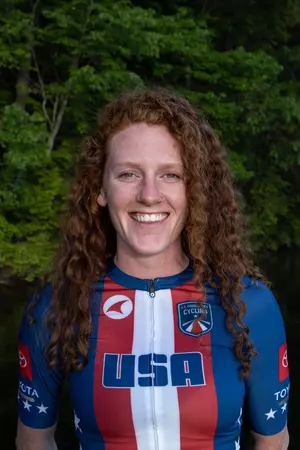
Thank you so much. So in cycling you have the honor, the world champion has the honor of racing in rainbow stripes. So we have a distinctive jersey for the full year until the next world championship. So I am very excited to race next season proudly wearing Team USA rainbow stripes and I have won a Bronze Paralympic medal in Paris 2024. That was my second Paralympic team. I had also gone to the Tokyo Games and finished just off the podium in fourth as my best result. I have, I don't know how many world championship medals
Julie Gates (01:46):
Probably I read somewhere like 11, but that might be old.
Clara Brown (01:51):
Somewhere in that
Julie Gates (01:54):
Somewhere north of 10
Clara Brown (01:54):
In that count. I'm a multi-time Para PanAm champion and really feel so fortunate to have a long career racing and just glad to do what I love.
Julie Gates (02:09):
That's so wonderful. So were sports always a part of your life?
Clara Brown (02:13):
They have been, yeah. I grew up very active and doing a variety of sports. I was a skier, a runner, a gymnast, and really specialized in gymnastics until I was 12 and had a fluke accident that changed the trajectory of my athletic career. But it's always been very innate. I have loved to move my body and push it to its limits.
Julie Gates (02:38):
Well, you did push it to the limit at 12. Can you talk a little bit about the extent of the injury you faced at 12?
Clara Brown (02:44):
Sure. Yeah. So I fell in my head at gymnastics practice and crushed two vertebrae in my neck. So I broke C five, C six and damaged my spinal cord. So I was initially paralyzed from the neck down and gradually regained function. Was very fortunate to have an incomplete injury and was left with partial paralysis on my right side. So I have motor impairment on my right side. Most of my right arm is impaired and my left side is sensory impaired. So I've lost the ability to sense temperature and sharp versus dull objects, but all things considered very fortunate to have recovered to the extent that I have and be able to enjoy the activities to the extent that I am
Julie Gates (03:33):
With a spinal cord injury. Were you ever told that you weren't going to be able to walk again?
Clara Brown (03:38):
Yeah, that was actually said to me in the ambulance as I was being loaded up to head to the hospital when I was first hurt, which my mom was very distraught hearing in the emergency room when I passed that along. But beyond that, there was always just some level of curiosity and hope. With every spinal cord injury, it's just a vastly different outcome. It's hard to really predict and so much of it is luck. I mean, I certainly worked very hard to strengthen what was returning, but there's also just an unknown element. And again, yeah, I was just very fortunate.
Julie Gates (04:20):
I must have taken some serious grit. I can't even imagine fighting back for that.
Clara Brown (04:26):
It was definitely challenging In some ways I was beneficial being so young, I was a bit naive and just not really understanding the scope of what I was working with. And so I had this kind of ignorance is bliss mentality and my parents were very protective of the level of information that was shared with me directly and I always had the sense that I would return to sport and the things I loved and was a very powerful mindset to have without knowing where it could be.
Julie Gates (05:02):
So I understand you got into crew then as you got older?
Clara Brown (05:07):
Yes. Yeah, so I found it in high school. I had several years of rehabilitation from the spinal cord injury and some compounding injuries and really needed a competitive outlet. And my mom was a rower in college, so she sought out a rowing team in high school. I didn't have one through my public school, but was grateful to be able to join a nearby team and fell in love with being on the water and being a part of a team sport again. And that was definitely something I looked for in college when I was looking at places to go to school. So was really glad that Puget Sound had a team as well.
Julie Gates (05:48):
Now let me get this right. You grew up in Maine?
(05:51):
I did, yes. Up outside of Portland.
(05:53):
Then you chose to go to college in Washington state? There has to be a story. Why did you choose Puget Sound?
Clara Brown (06:01):
There are a lot of parallels between the two areas, but mostly I have to attribute it to my brother. He had done a PNW college tour several years before me, came back and raved about Puget Sound. That was by far his favorite. And then we had an admissions counselor visiting high school and it happened to be during a class I didn't really want to be at anyway, and so I took the opportunity to chat with her and we really connected. And then I applied and was selected to be a part of the Matelich process and really fell in love once I went out and visited and really felt like home. So I'm glad I ended up there.
Julie Gates (06:43):
That's about as far away from home as you could get in the US, isn't it?
Clara Brown (06:47):
Yeah, I mean, yeah, I think there was also an element of being known as the girl who broke her neck and had this pretty dramatic high school experience and everybody kind of knew who I was and I just wanted to get out and explore and see what else was out there and be a little bit more anonymous.
Julie Gates (07:05):
Create your own identity, right?
Clara Brown (07:06):
Yeah, definitely.
Julie Gates (07:08):
Well, congrats on the Matelich. That is an outstanding honor. So congratulations.
(07:12):
Thank you.
(07:12):
So tell me about your experience at Puget Sound. What was that like for you?
Clara Brown (07:16):
Yeah, I mean it was overall incredibly — it changed my life. I mean, I think it is such a unique place in a sense that it feels like you have the freedom to kind of dream. There's no set path that any student takes, and I really benefited from that flexibility. I lived in Schiff, which is a residence hall where we did an advisor class as part of our floor. So we just became very close and actually had a wedding a few years ago from two of the freshman year
(07:55):
Oh, that's so fun.
(07:56):
They weren't roommates but floor mates and we all stayed close and then throughout the next three years lived together in some kind of accommodation and really felt like I found my people there and spent also quite a bit of time off campus. I spent all of my junior year off campus and loved the ability to have experiential learning as part of my curriculum and really felt like I got the most out of my experience. I did a few seasons of crew before finding the bike and then that ultimately took over and I loved exploring Tacoma by bike and that was also a big element in my experience that I adored.
Julie Gates (08:40):
How did Puget Sound connect you to cycling? I want to hear this story.
Clara Brown (08:45):
So I was on the rowing team and one of my rowers worked at a bike shop and I was telling him a bit about my disability and how intimidated I was to ride, but I'd always been curious and he was so encouraging to tell me about how adaptable the bike is and he sent me home with kind of — it struck a chord. I went back to Maine after my first year and went to a bike shop right away and got set up and immediately fell in love. I mean, it was such a transformative experience riding all summer in Maine. And then I brought the bike back to Tacoma and got to explore Tacoma, Gig Harbor, Puyallup, all the kind of surrounding areas and really felt like I got to see campus and then some. It's just such a freeing few hours of riding. You're not really doing anything else because you can't, and I really enjoyed that aspect to just have an escape from the stress of school and work. I also had several jobs while I was on campus and the stress of the scholarship, and not in a bad way, but of course, there are expectations.
(09:59):
Just normal pressure, right?
(10:02):
Yeah. So that was really a big outlet for me. And then I did a semester studying geology called southwest semester and was able to bring my bike on that course. So that was another kind of great outlet. It was a small group of students and we definitely had our small group dynamics and for good and bad, but it was my way to kind of get out every day and explore wherever we were. We were staying mostly in national parks in the desert southwest. So beautiful riding and yeah, it was such a life-changing, kind of meet with this other student who taught me about bikes and here I am.
Julie Gates (10:46):
Who ?could have predicted where it would take you. This is really a great story. So when did you actually start racing and competing?
Clara Brown (10:54):
That was... my very first bike race was 2018. So I post-grad, took a job leading bike vacations, so I brought people all over the world on week-long bike trips. And one of my guests my second season happened to be on the Paralympic Advisory Committee, so got to know him over the week and he was another just big advocate for getting me involved. And at this point it was moreso the competitive side. He knew my now high-performance director and connected us directly. And within two weeks of meeting this man, George, I was out in Colorado Springs at the Olympic Training Center for a talent ID camp. So it's just kind of been a series of very, very serendipitous meetings that have led me to the path that I'm on today.
Julie Gates (11:47):
There's two things I want to lean into that you addressed. One is stress management. I think that's a really important topic, not just for the students of Puget Sound who might be listening and watching, but alums who are in careers knee-deep or raising families and having careers. What are your recommendations and why has cycling been such a good outlet? You must have some insight for how to best manage stress for people.
Clara Brown (12:09):
Well, I think there's definitely been research to prove that physical activity alleviates stress and enables people to focus better. And if you're able to learn while doing something physical, you retain the knowledge better. So I think just in general, physical activity and movement is medicine, but as far as stress management, it's always been my outlet. If I'm overwhelmed, I just want to go move — and everybody's different. There are people who would want to sit and meditate or do some other de-stress that works for them, but for me, it's always been physical activity, and I'm just really grateful to be able to push my body to its limits.
Julie Gates (12:58):
Well, you kind of remind us not to have excuses because if anyone had an excuse, you'd be like, yeah, I had a spinal cord injury. That's a pretty decent excuse to say I'm not going to exercise today. So for all of us watching and listening, we may want to rethink that using excuses to not move our bodies anymore. You started in 2018 then with racing and you went to your first race and how did that go for you?
Clara Brown (13:23):
Yeah, sorry, I guess I didn't quite finish the full story. So I had gone out to the talent ID camp, this was June of 2018, and there was just kind of an open-ended, like they acknowledged I had some potential, but there really wasn't any results or anything to prove where I stacked up amongst my field. So they had said you could fund yourself to get to the last World Cup of the season, which would be in August, see how you do. And I ended up on the podium, my first race. So that was a promising sign that I had potential. And then I swept national championships a few months later on the track, which was a different discipline and
Julie Gates (14:08):
What does that mean? What's on the track? What's that?
Clara Brown (14:11):
The velodrome. So it's a different discipline of cycling. No brakes, no gears. You're on a fixed gear bike, a lot shorter, higher-intensity racing sprints, typically. I mean there are some endurance events, but for general purposes, shorter duration, and it's on an indoor cycling track at a velodrome, so it's 250 meters banked. It's very spectator-friendly. It's probably the most compelling bike racing to watch as a spectator. People may argue differently, but just being able to see the whole race unfold in front of you is really exciting. As a spectator, as an athlete, it's a little intimidating. I had never seen a velodrome before being out in the Springs, but I obviously took to it and did pretty well. So took that and moved into the training center in Colorado Springs to specialize in the track. So I was a resident athlete there 2019 to 2020 leading up to the Tokyo Games.
Julie Gates (15:17):
And you've been doing it ever since. It's pretty much full-time work at this point, right?
Clara Brown (15:21):
Yeah, that's my full-time gig. I made the national team in 2019 and had qualified for the Tokyo Games with my performance at Track World Championships in 2020, which was when I won my first world title. And then of course with the postponement, there was a little bit of a change in the timeline, but was able to then go compete once we had the games in 2021.
Julie Gates (15:49):
That's tricky on an athlete, I imagine the way your training is set up is so you peak at the actual event and then when the time of the event gets moved, how do you manage that mentally, emotionally, and physically?
Clara Brown (16:02):
Yeah, I mean physically, honestly, it was a benefit. I was so new to my racing career and having a full year of no racing and just training, I had an amazing bump in fitness and felt so much stronger than I could have been with it only being a few months away from when I had qualified mentally, emotionally. It was definitely, it was a challenging game, but the thing is everybody was in the same boat and I had made so many strong connections to other athletes while living at the training center. I felt like I had a really good support system and with the world, COVID was hard on so many people and it felt like as an athlete with the postponement of the games, that was a pretty small worry. It felt like I was really able to keep it in perspective of how fortunate I was and lucky to have my health and be able to ride a bike every day outside as my job that I just was able to pick myself up and compete a year later. It really wasn't all that challenging for looking at the broader picture, and it was just,
Julie Gates (17:21):
I'm listening to you, Clara, and I am seeing where your champion mindset comes in because a lot of us, it doesn't take much to knock us over, right, mentally? Just like a little bump about something in our lives and we kind of fall apart. How does an athlete, at your level, what do you do to create that mindset, a winning mindset? What do you do? How do you train that?
Clara Brown (17:44):
Well, I think there's certainly confidence and repetition. I ride a bike for anywhere from 15 to 25 hours a week, so I do it a lot. I know how to push myself. And then I've worked with a sports psychologist on just managing the race anxiety. That's been probably the biggest challenge. I didn't have this long rise to the top. I had pretty quick success, and so I was pretty intimidated feeling like I had a lot of pressure on myself, proving myself early and then having to maintain that status. And one of the biggest pieces of advice or guidance that I got from my sports psych was the highlight reel. So every time I'm in the start queue or waiting on a start line and just having that anxiety of what's to come, I go through all the success moments I've had. So best case scenario and just, you know, little snippets of a section of a course when I felt so strong or when I attacked and really made the other girls in my field suffer. And just remembering those moments and hyping myself up and demonstrating that I do have it in me. It's not anything to be afraid of, so.
Julie Gates (19:06):
People who are listening and watching this show because we're doing it in video and audio formats for those who are consuming this podcast, is that, what did you call it? The
Clara Brown (19:17):
Highlight reel.
Julie Gates (19:17):
Highlight reel. I love that. Is that something that you recommend? Anyone who's going through different challenges in life or facing anxiety use?
Clara Brown (19:25):
Yeah, I mean, I'm definitely not a licensed psychologist, I'll say that, but
(19:30):
I understand.
(19:31):
Yeah, I have other pressures outside of cycling that again, I face moments of anxiety and fear and reminding myself that I do have plenty of evidence to back up that I'm capable and should be confident has definitely helped. So I've had a lot of firsthand experience with that and feeling glad, and that's one of many tools. I think that's another thing to remember is that's one of many strategies that I've been able to try to utilize and that works well for me, but other things,
Julie Gates (20:11):
I'm stealing it.
(20:12):
Great. Happy, happy to leave that.
(20:16):
That's really good. The highlight reel. How do you stay motivated? You're doing the same work and it's really competitive and it's such high pressure. How do you keep your motivation?
Clara Brown (20:27):
I think for me it's so personally tied to having the feeling that I get to do this, the privilege of being able to push my body this way. I just remember the several years of grinding and feeling like my body was kind of trapped. I was trapped within this body that it wasn't performing the way I wanted it to or working the way I wanted it to, and it still doesn't, but I am so, so grateful for what I do have and having that mentality of I get to do this. There are plenty of other possible scenarios that could have played out where I wouldn't get to do this or I would get to do this and it would look differently, and I just want to be very, very grateful for what I do have. And then secondarily, and maybe not in this order, but I have had so many people support me and I just want to make them proud because this career is not, even though I'm riding a bike solo for the most part in training, it takes so many people to set me up for success. And I just really want to pay respect to all of the effort that people have put into my career and say thank you, I guess is a big motivation.
Julie Gates (21:53):
That's wonderful. I could ask you so many questions. I guess we should find out what's next for you. What else are you want to accomplish in your life? You've done so much so far.
Clara Brown (22:04):
Well, I did mention next season I'll be racing in stripes, so I really, really just want to soak that in. It's such an honor. And I am looking forward to a full World Cup calendar on the road with Team USA. I have a few really exciting events. I also race gravel, which is a different discipline in cycling. I'm going to do a stage race in Morocco in February that I'm very excited about. And then I don't know if I'm going to try to go for the LA 2028 games or not. I'm very much taking it year by year, but I am very excited to be pursuing a career in aviation. So I've been flying and working on my ratings as a pilot and just absolutely loving that too. Where
Julie Gates (22:52):
Are you at in that journey? That's exciting.
Clara Brown (22:55):
Yeah, I'm just a few hours shy of my commercial license, which is a very big milestone. And from there I have several more ratings. I'll go for my multi-engine, which allows me to fly a two-engine airplane and build time from there and see where the career goes.
Julie Gates (23:18):
What's a big dream? What would be fun for you in aviation?
Clara Brown (23:22):
There are so many directions I could go, which is another thing. I mean, the airlines have stability and I really grew up with my dad being an airline pilot, so I kind of always dreamt of going
(23:35):
I didn't know that. That's amazing.
(23:37):
Yeah, potentially. I mean, the thing is, I'll consider any path. I think that's been a big experience that Puget Sound is reinforced, is saying yes to things when they present themselves and not going in with a specific pigeonholing yourself and with a specific mentality of this is only what I'm going to do, and goals are certainly important, but at the same time, having the flexibility and the ability to adapt to when situations arise that may steer you down a different path and embracing them is really important. So who knows? I'm early enough along. I have a lo-t, I've several hundred more hours to go before I'm even considering.
Julie Gates (24:29):
Well, there's no question that you're going to be a champion in that industry as well. I can't wait to see where aviation takes you. That's really exciting. Congratulations on everything. Do you have any final messages you want to say to those who are students at Puget Sound, recent alums? What message would you like to say back to your alma mater?
Clara Brown (24:47):
Well, I do want to say just a thank you to all the faculty and staff that were just so impactful in my experience there. And I've kept in touch with several professors and really just cherish their mentorship and just guidance, encouragement, all of it. And I think just utilizing the connections that come with such a tight-knit school has been incredibly helpful and heartwarming. And yeah, these connections are for life, and I really, really am grateful to be a part of this network.
Julie Gates (25:30):
Thank you. Clara, how can the University of Puget Sound community follow you or support you? Where should they track you down?
Clara Brown (25:38):
Sure. So Instagram is probably the most frequently updated. My handle is @clara.brownie. I also have a Strava if you're more into the physical activities of what I'm up to. And I'm also featured on USA Cycling's Instagram or Team USA as well. Lots of channels.
Julie Gates (26:03):
Great. Well, we'll add all those to the show description and the notes. Thank you, Clara, for being a part of the show. It's just so great to meet you and hear how you've taken your life to the heights, and I will continue to watch. I think we're just halfway there right now.
(26:17):
Well, thanks. I appreciate it. Thank you.
(26:20):
If you know of any great Puget Sound alums who should be a part of the Always a Logger podcast, please send me an email. We are trying to track down the greatest alums, hear their stories. It doesn't matter what they've done, but if they've gone to the Heights, we want to hear about it. My email is juliegates@pugetsound.edu.