How Dogs Take Their Cues From Humans

A dog eating a treat off a black dish

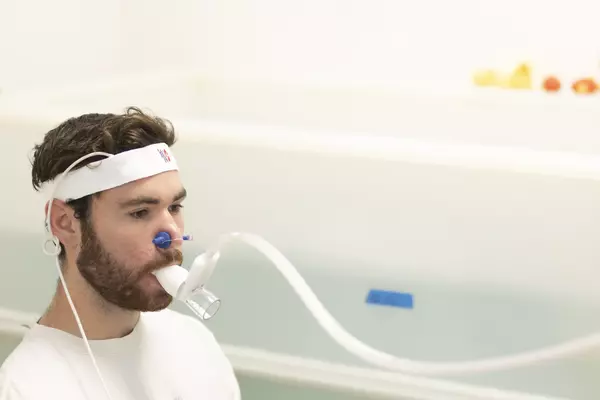
Devin Anderson ’22 spent the summer feeding dogs for science.

Anderson worked with Erin Colbert-White, associate professor of psychology, on a project to understand how humans influence dogs—and the extent to which humans’ behavior can make a dog override its own judgment.

Baseline for Beaches

Tacoma beach

Addie Tinkham ’22 spent last summer taking a closer look at local beaches. She was one of the students who participated in summer research at Puget Sound in 2020. Working alongside her faculty advisor, Professor Berry Goldstein, Tinkham cataloged slope, length, and sand grain size at 10 Tacoma-area beaches. A volunteer from Citizens for a Healthy Bay worked with Tinkham to collect the data that will be used as a baseline for future scientists to apply to their research. This project was the first of its kind in the Tacoma area.

Xenophobia in the time of COVID-19

Allie Highsmith ’22

Soon after the first cases of COVID-19 were reported in the U.S., Allie Highsmith ’22 started hearing people call it the “the China virus,” the “kung flu,” and other xenophobic names. As a double major in Chinese language and culture and sociology and anthropology, Highsmith wanted to study how people cope with anti-Asian sentiment during the pandemic. Soon after she submitted her summer research proposal, a gunman killed six Asian women in Atlanta, bringing the subject of hate crimes directed at East Asian Americans into the national spotlight.

Bridge the Gulf

Marshall Casebeer ’22

Marshall Casebeer ’22 didn’t spend a lot of time thinking about the rights of North African women or anti-corruption efforts taking place in the Middle East—but he does now. As an intern with the National Council on U.S.-Arab Relations, Casebeer works with Reconnaissance Research, a think tank dedicated to building ties between the United States and Kuwait to tackle issues like authoritarianism and refugee crises in the Persian Gulf. Through the program, he's getting to conduct research with far-reaching implications for the region.

What Bees Can Tell Us About Parkinson's Disease

A bee is held still in a tube-like apparatus while a researcher holds a needle-like tool near its head

On the rooftop of Thompson Hall, Adam Schmidt ’23 emerges in a white jumpsuit, a wide-brimmed hat with a mesh face veil, and thick protective gloves. Carefully, he approaches the hive, a 5-foot-tall stack of wooden boxes located behind a greenhouse near the roof’s edge. Schmidt, a molecular and cellular biology major, isn’t interested in these bees for their honey—he wants to study their brains in an attempt to understand the progression of neurodegenerative diseases in humans.

University of Puget Sound Inspires Philanthropy with Unique Admission Gift

Tacoma, Wash. – Today, the University of Puget Sound announced its “Remake the World” initiative which celebrates the class of 2025 by empowering admitted students to engage with local nonprofit organizations. Each incoming student will choose one of five community programs to receive a small donation made by the university in their honor, with a total of $25,000 being donated across select local organizations in Pierce County focused on issues of climate, hunger, sexual abuse, equity, social justice and more.

Citizens of the World

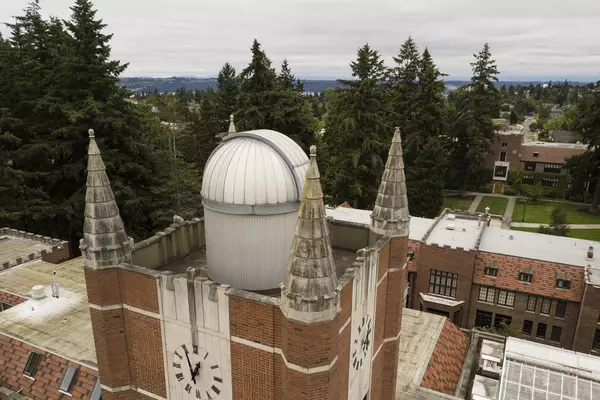
Aerial view of a brick building

This year, 10 Puget Sound students were selected as semi-finalists for the highly competitive Fulbright U.S. Student program, more than in any previous year. We talked to some of the Loggers who are hoping to perform research or teach English as 2021 Fulbright grant recipients.

Pandemic Podcasters

Cover image for Guide Puget Sound podcast episode

For students who started college in fall 2020, the first semester of their first year was nothing like they expected. Unable to live on campus or take in-person courses, incoming Loggers instead got to know their professors and classmates online. That’s how Jojo Marshall ’24 found herself sitting at her family’s kitchen table late at night, reading from a script into the voice memo app on her smartphone. 

The Cortex Crew

Blue, green, purple, and yellow claymation figures sit on the corner of a work table

In an art studio in Los Angeles, Catherine Croft ’21 is adjusting a silicone puppet shaped like the hippocampus region of the human brain—but with a face. After some fine-tuning, Croft steps back and double-checks that everything is in place on her miniature set. Then, she snaps a photo and starts the process all over again. In a typical day, she’ll shoot more than 700 photos to create one minute of film. She’s racing against time to complete a 15-minute stop-motion video as part of her summer research project at Puget Sound.