Summer School

person reading comic book

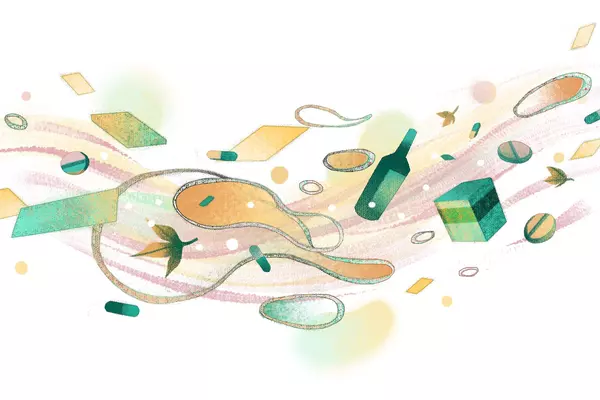
Last spring, 80 students were selected to receive summer research grants to support 10 weeks of independent research in the sciences or humanities under the guidance of a faculty advisor. Projects covered a wide range of topics, such as wastewater opioid analysis, the influence of hip flexibility on running gait, LGBTQ and person of color representation in young adult fiction, environmental racism, and more, including:

The Human Condition

Andrew Gardner

His casual observation was backed by data—the Gulf States are the third primary destination for migrant workers—and at the time, no one was studying it. He returned to the Gulf States many times, and is now regarded as a leading expert on transnational migration.

Why Stories Matter

Zines from Collins Memorial Library

“Stories matter. Stories are a reflection of power.” When Alicia Garza, a founder of the Black Lives Matter movement, said this during her keynote address at the close of the 2018 Race & Pedagogy National Conference held on campus last September, it struck me that this was the crux of the conference. Its title,“Radically Re-Imagining the Project of Justice: Narratives of Rupture, Resilience, and Liberation,” was a call for participants to share their stories and to speak into the spaces that have rendered them invisible.

All the Exciting Things

Siddharth Ramakrishnan

Siddharth Ramakrishnan, associate professor of biology and the Jennie M. Caruthers Chair in Neuroscience, has a weird brain. He is a master of the microscopic details and concepts of neuroscience—while a research scientist at Columbia University, he designed microchips to record from brain cells, and in his lab at Puget Sound, he studies the development and physiology of reproductive neurons in zebrafish—but he is also a creative visionary, capable of a more spatial, fluid way of seeing the world.

Playing to Learn

a woman smiling

Twenty years ago, Tanya Saine Durand ’93 and her colleagues at the nonprofit Children’s Museum of Tacoma found themselves wondering if their jobs—their mission—should continue to exist. After an unsuccessful fundraising campaign and a steep rent hike, the museum was facing substantial debt. “We were in this very humble place of asking the community, ‘Should we shut our doors?’ And resoundingly, folks said, ‘No. This is a valuable asset. We need to strengthen it.’”