For more than 40 years, Puget Sound students and alumni have connected around a simple idea — that the future of the university is something everyone can help build.
The connection comes through the Phonathon (now known as the Student Philanthropy Center, or SPC), where students reach out by phone to alumni to discuss the latest happenings on campus and ask for support for the Puget Sound Fund.
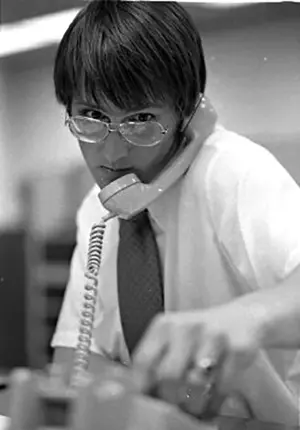
Initially started as a Greek philanthropy initiative, the Phonathon became an official university program in the 1983-84 academic year. Michael Amend ’86, who is now a member of the university’s Board of Trustees, was one of the first participants and went on to be director of the program in 1986.
“The program has seen many changes but has kept its spirit,” said Sajin Alcid, assistant director of annual giving and the staff member who oversees the program today. “They used the same physical ‘calling card’ system from its inception up until 2018 or 2019 when it went digital.”
In the 1990s, the Phonathon operated out of Jones Hall and then moved into a yellow house on Theme Row. Today, students make their calls from Warner Gym, the second oldest building on campus. “This program has led me to encounter some of the most passionate, unique, and talented Loggers we have,” Alcid said.
One of those current student callers is Chase Miller ’27, an international business major who is co-manager of the SPC this fall. He said his love of sales makes working in the philanthropy center a great fit.
“I’ve really come to love working here, and take extra shifts each week whenever I can,” he said. “It’s a supportive community that offers not only a great job, but a fun and challenging job as well. It’s not easy to pick up the phone and call someone, but there is no more important skill than good communication. I’ve learned so much.”
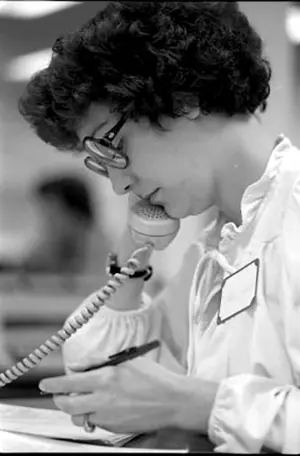
Past phonathon callers also remember the work fondly. “My time working for the Student Philanthropy Center helped me in so many ways,” said Emma Fish ’23. “I made some great friends, I learned how to better communicate professionally on the phone, and it opened my eyes to the joys of icebreaker questions!”
John Tocher ’94 added: “In the early ’90s, when students crowded into a small attic in Jones Hall surrounded by a bank of push-button phones, the Phonathon was not the sophisticated fundraising operation it is today.” Tocher remembered his “newbie” script mentioned the cherry blossoms — a detail alumni loved hearing about — but when he completed training and started working with a different script, “my donations plummeted.”
In the end, Tocher realized fundraising was not his forte, and he moved on to working at The Trail. But he fondly remembered the eruption of cheers during his Phonathon days when a fellow student would announce a large gift, and he still believes that raising money for the university “really did help provide the next generation of students access to the best liberal arts education around.”
GWA Lifelong Learner Pillar
Stories related to the campaign pillar about lifelong learning