Campus, Faculty

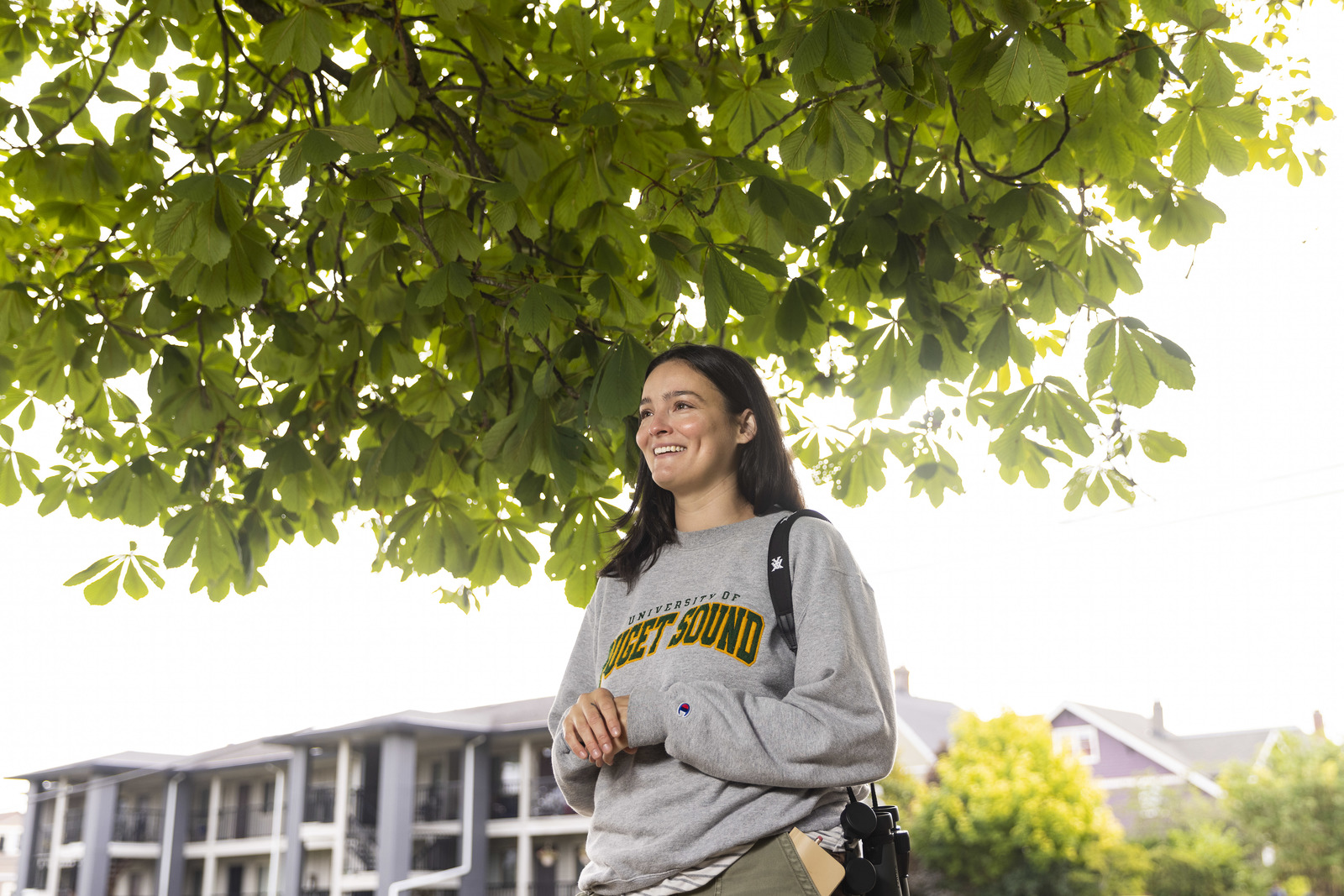
Frances Edwards-Hughes '27 was interested in the biodiversity on campus, so she sought out an expert, Professor of Biology and Environmental Studies & Sciences Peter Hodum, to learn more.

Walking around the University of Puget Sound's campus, you're immediately surrounded by a rich and vibrant landscape. Trees, shrubs, and native plants fill the area, creating a living environment that supports and shelters a wide variety of animals and other plants. This ecosystem isn't just beautiful to look at — it plays a vital role in the physical health of students, faculty, staff, and visitors. Furthermore, simply spending time among the towering Douglas firs and natural spaces on campus can greatly improve our mental well-being. The President's Woods quietly offers lessons that are easy to miss but deeply needed in today's divided world. If we pay attention, the natural world can teach us about resilience through diversity, the power of patience and perseverance, and the importance of simply noticing what surrounds us.

To better understand these lessons and the biodiversity that makes them possible, Edwards-Hughes spoke with Peter Hodum, professor in the biology and environmental studies and sciences departments. Hodum is a conservation biologist and applied ecologist who mainly studies threatened and endangered birds. He notes that the campus' biodiversity isn't just aesthetically pleasing; it also provides a vital green space in Tacoma's urban environment.

"The community of plants present is really important in structuring biodiversity," says Hodum. The abundance of flora provides critical habitat for the fauna on campus, he adds. Without the shelter, water, and food these plants offer, we wouldn't witness the deer roaming freely, or see the many birds perched on branches outside our residence hall, office, and classroom windows.

Hodum's office is on the second floor of Thompson Hall, overlooking the President's Woods. He keeps a pair of binoculars nearby to birdwatch. "I've seen at least 20 species of birds just out my window," he says.
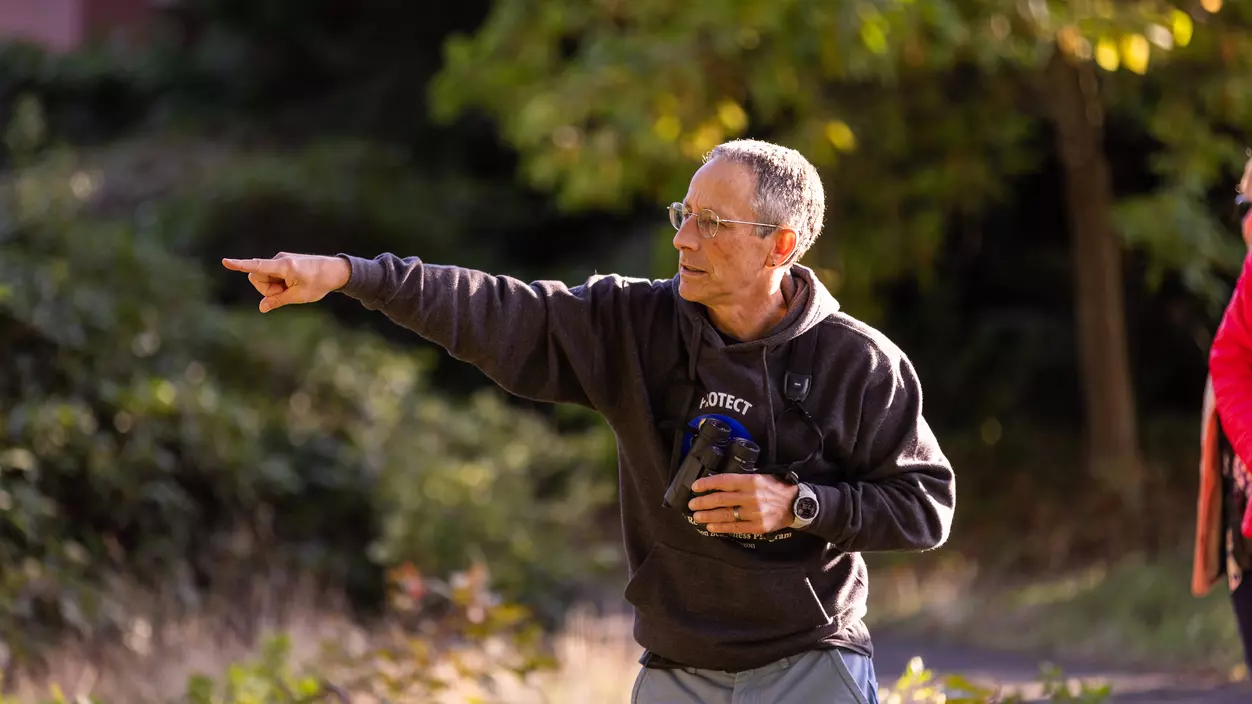
Prof. of Biology Peter Hodum leads a bird watching group on campus.

Prof. Peter Hodum teaches in the Dept. of Biology and the Dept. of Environmental Studies & Sciences. His research focuses on avian ecology and conservation biology.

Hodum values the rich diversity of plants and animals that thrive on campus—not just rare or unusual species. Even familiar trees like Douglas firs, which may go unnoticed, play a vital role in supporting the campus ecosystem.

"I can see some Douglas firs, and they're just these magnificent trees that host insects and birds — Anna's hummingbirds, chestnut-backed chickadees, and pine siskins," Hodum says. "You might think that the only things we would see on campus would be species that are pretty highly adapted to living amongst humans. But we actually get species of birds that are considered to be forest species."

Both outside his office and in the space between Thompson and Wyatt Hall, he has spotted brown creepers — birds generally associated with larger, more intact forest areas. Hodum notes that "[these species] are finding these places and using them successfully."

The campus — and the natural world more broadly — sustains a wide range of species, including our own. As we design environments that support biodiversity, we're also creating spaces that support human health. Hodum points to a deeper question: why do we, on a physiological level, thrive when we're immersed in nature?

"The vast majority of human history, humans have lived outdoors. We as a species have been actively engaged in surviving in those natural spaces — whether that was as hunter-gatherers, whether that was a nomadic lifestyle, or whether it was more agrarian," Hodum says. "That's kind of our evolutionary touchstone, and only in the last couple thousand years have we really begun to depart, on a large scale, from what this long evolutionary history of humans has experienced."

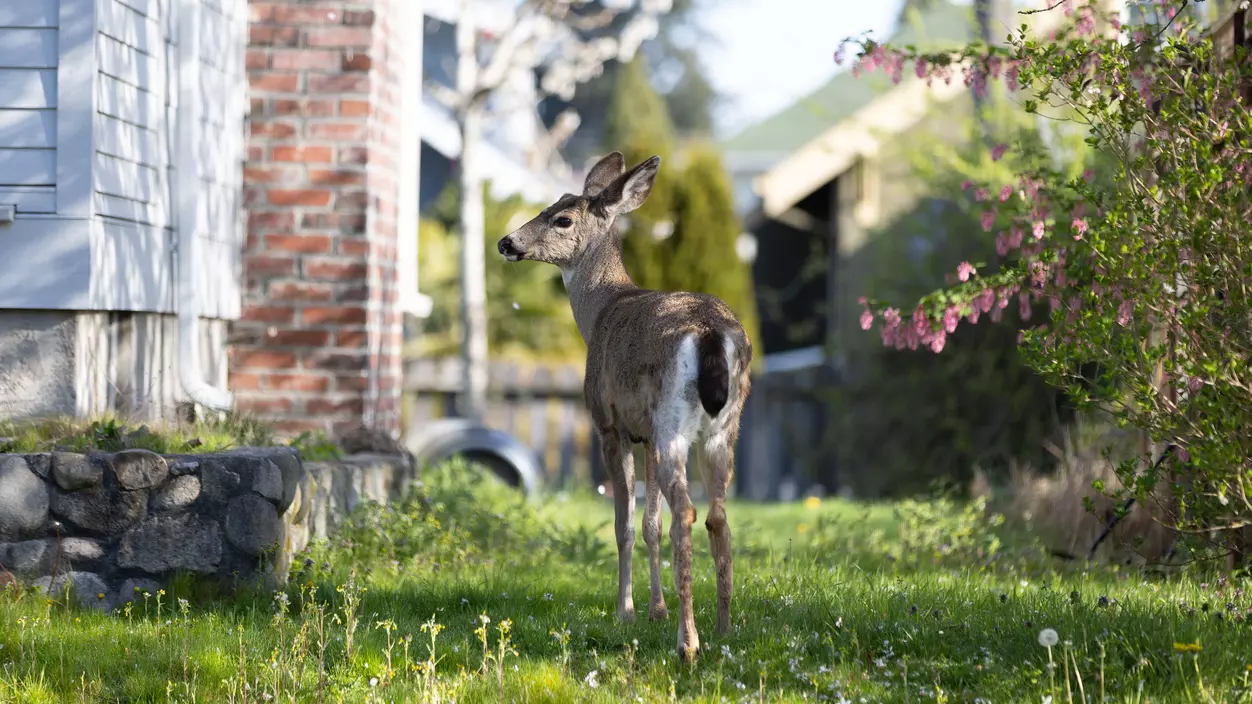
Deer are a frequent sight on campus.

As we become more distanced from the natural world — especially in increasingly urbanized environments — we lose touch with the evolutionary connections that have shaped us. Recognizing how vital green spaces are to our well-being, it's essential to rethink how we design our surroundings so that both people and biodiversity can flourish together. Whether planting native species in parks, on campus, or in front yards, small actions practiced broadly can lead to significant change.

Preservation and environmental justice have never been more critical. Hodum argues that our ongoing destruction of the planet is a global concern that needs recognition beyond the realm of science alone.

"We're talking about a social issue that science informs, but science in and of itself is never going to be sufficient to move people to act. We need to reach people in a deeper, more personal way than just data," Hodum says.

We all need to participate in reconciling our relationship with the world around us — and it can begin simply, by noticing what's already here and moving through the world with intention.

The trees hold patience, perseverance, and community — qualities we should strive to emulate in our own lives. While some people claim that we are the most knowledgeable species, there's likely a tree in your backyard that was planted long before you were born and holds more wisdom than we could ever fully understand, let alone recreate.

“Seeing cedars that are eight feet in diameter and over a thousand years old — the scale of time they've experienced, what they've lived through — is unimaginable to us. That, to me, is both inspiring and humbling."