Alumni, Faculty, Arches

Loggers who embarked on the labyrinth of learning and the Puget Sound faculty who illuminated their path

At the University of Puget Sound, the classroom has always been more than a place where faculty deliver information to students. It is where conversations unfold as students test ideas and begin the challenging and rewarding work of thinking itself.

For more than 700 Loggers, that work does not end at graduation. Today, they stand at the front of classrooms and labs around the world, continuing a lifelong relationship with learning, teaching, and discovery. 

An Intellectual Odyssey. Illustration by Brent Bates.


Loggers teach philosophy and physics, history and medicine, music and climate science, education and architecture. Some always imagined themselves becoming professors or researchers. Others arrived there by less direct routes through industry consulting, clinical practice, entrepreneurship, or years spent seeking answers to questions that refused to let go. 

What unites these alumni is not a single discipline or career trajectory, but a shared Puget Sound education rooted in close faculty mentorship, rigorous inquiry, and the belief that students are capable of serious, original thought. Whether they graduated from Puget Sound in 1974 or 2018, alumni recall moments when a Logger professor assumed their competence before it was proven, encouraged them to pursue uncertainty rather than easy answers, or offered patience when confidence wavered. 

Their stories complicate any romantic notion of academia. They speak candidly about shrinking job markets, long years of training, and institutions under political and economic pressure. Yet they return to the same source of meaning: the classroom, the professor, the students. A discussion that catches fire. A research project that reframes how a student understands the world. A moment when guidance becomes empowerment.

In this story, we celebrate Puget Sound alumni who now find themselves on the other side of the desk. What follows is a candid conversation, tracing how Puget Sound shaped these alumni — and how they, in turn, are shaping the future of higher education.

Call to Adventure. Illustration by Brent Bates.

The Call to Adventure 

Christina Baker ’06

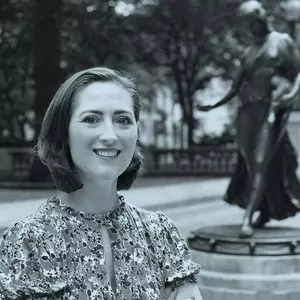
Becoming an academic was never part of the plan for Christina Baker ’06. A first-generation college student, she moved forward step by step, from BA to MA to Ph.D., guided by encouragement more than certainty. “I never really knew I wanted to be an academic, I just kept going because people believed in me,” Baker said. Faculty mentors like John Lear, the late Mark Harpring, and Oswaldo Estrada not only shaped her scholarly interests, but modeled what it meant to be both rigorous and generous. Now an associate professor of Latinx American performance and director of the Humanities Center at Temple University, Baker focuses on undergrad students, recreating the intimacy of a liberal arts education she experienced even within an R1 institution.

Sara Pritchard ’94

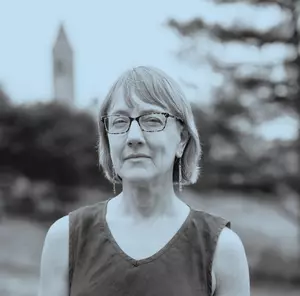
That sense of gradual discovery also resonates with Sara Pritchard ’94, who did not grow up imagining academia as an option. Her fascination with environmental history took shape at Puget Sound, where faculty such as Nancy Bristow, Drew Isenberg, and Michel Rocchi encouraged undergraduate research and treated students as emerging scholars. Today, as a professor in the Department of Science and Technology Studies at Cornell University, she carries forward that discussion-driven, student-centered ethos, even while navigating the increasing demands placed on faculty. “I enjoy discussing ideas with students and facilitating discussions, whether the entire class or in smaller groups,” she said. “I appreciate getting to know my students — their backgrounds, their interests, what drives them — and helping cultivate trust in the classroom as we learn together.”

Rachel Gross ’08

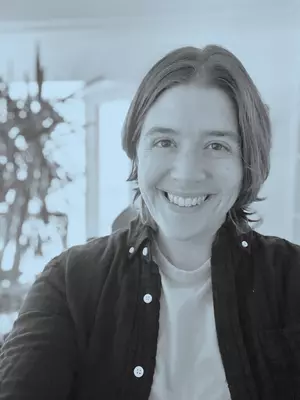
For Rachel Gross ’08, the desire to teach was always present. “I always wanted to be a teacher. When I arrived at Puget Sound, I simply changed my goal for what level I wanted to teach at,” she said. As a history and Spanish major, she recalls a moment in Wyatt Hall when Katherine Smith affirmed her goal of becoming a professor, when, as Gross puts it, “I was buoyed by that confidence and reaffirmed in my path.” That encouragement was reinforced through research in Nancy Bristow’s History 200 course and a summer project supervised by Doug Sackman in the Yosemite National Park archives. Now an associate professor of history and director of graduate studies at the University of Colorado - Denver, Gross strives to recreate the seminar-based conversations and faculty investment that shaped her at Puget Sound.

Erik A. Anderson ’91

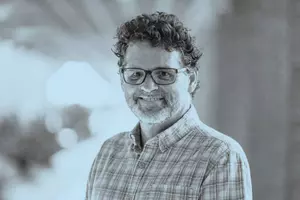
Others felt the pull to academia early. Erik A. Anderson ’91 knew after his first semester that he wanted to recreate the intellectual community he found at Puget Sound. “I developed close relationships with my professors, gained confidence in my intellectual abilities, and experienced an intimate and supportive learning community,” Anderson recalled. Philosophy professors like Doug Cannon and Bill Beardsley treated students as thinkers, transformed his confidence, and shaped his teaching philosophy. Now the philosophy department chair at Furman University, Anderson sees his work as both a privilege and a responsibility, especially in a moment when learning the skills of critical thinking through a liberal arts education is more important than ever.

John Harding ’94

For John Harding ’94, the path to academia was nearly preordained. Immersed in Asian studies and religious studies, he found mentors who deepened his scholarly focus and offered life-changing advice about graduate study. Those professors still influence his work today as a professor of East Asian religions and coordinator of Religious Studies and Asian Studies at the University of Lethbridge in Canada. “I have Mott Greene’s class and journal assignment in mind when I create assignments for students to respond to readings,” Harding said. “When I supervised a student’s independent study and fieldwork in Japan, I thought about how Chris Ives had made that possible for me. Before I started an Asian Studies program at my university, I looked back to my undergrad experience as a model, and I also spoke with Suzanne Barnett, who was a founder of the Asian Studies program at Puget Sound. I continue to find her example and the example of other role models from Puget Sound invaluable.”


Meeting the Mentor. Illustration by Brent Bates.

Meeting the Mentor 

Forrest Pierce ’94

Nearly every alumnus points to a Puget Sound professor whose influence still reverberates. For Forrest Pierce ’94, now a composition professor at the University of Kansas, mentorship was foundational. “I had some wonderful mentors who were able to help me get the training I needed to be successful as a professor,” he said. Of Lawrence Ebert, Pierce recalls “eight or nine classes” that grounded his craft, while Denise Despres “taught me to write English prose in a way that has benefited me ever since.” Mott Greene’s journal assignment also made a lasting impression on Pierce. “The journal was transformative,” Pierce recalled. “I had never been given an assignment like that, in which my only task was to explore how the ideas, texts, and traditions I was encountering interfaced, resonated, and danced with my own background and worldview. In short, it was the most reality-based thought practice I could have imagined. The journal still sits on my shelf, and gets opened from time to time.”

Helen Hoenig ’77

Helen Hoenig ’77, now professor of medicine (geriatrics) at Duke University, traces her academic path to early experiences at Puget Sound, where her curiosity was encouraged rather than constrained. “My tendency to ask a lot of questions did not begin when I started work at the University Hospital,” she recalled. “It was there from the get-go in my occupational therapy (OT) classes.” That curiosity was met with patience and care by Margo Holm, who joined the faculty the same year Hoenig began OT school. Holm’s willingness to meet after class and engage deeply with questions showed Hoenig how careful inquiry could shape both practice and teaching. Reflecting on her own mentors, Hoenig says what stands out most is “their care and kindness towards me,” adding that the best way to honor those gifts is to pay it forward by supporting students with empathy, rigor, and respect.

Phyllis Jestice ’82

That ethic of assumption, believing in students, and supporting their intellectual adventures also shaped Phyllis Jestice ’82, now professor and chair of history at the College of Charleston. At Puget Sound, mentorship from Esther Wagner, who worked with her one-on-one in Latin for two-and-a-half years, reframed how Jestice understood learning. “It was like a shifting of a kaleidoscope,” she said, seeing university education “not as a hoop to jump through, but as a great intellectual adventure.” She also credits honors thesis mentor Walter Lowrie with guiding her toward a passion for the Middle Ages, an approach she now strives to extend to her own students.

John S. Ott ’91

John S. Ott ’91 teaches history at Portland State University. He traces his academic path to early mentorship at Puget Sound by Bill Barry and David Smith, who modeled the importance of engaged teaching and historical inquiry. By his junior year, Ott began to see academia as a possible vocation. “I was pretty impressed by how my profs combined a life of the mind with a middle-class lifestyle that involved lots of travel, discovery, and exploration,” he recalled. “It looked like a pretty appealing package.” A turning point came with his senior honors thesis, supervised by Walter Lowrie, who treated Ott’s work with seriousness and respect. Through that experience, Ott came to see research not as rote accumulation but as an unfolding process of inquiry, an approach he still carries with him. 

Now teaching at a public regional university, Ott views his role as extending the Puget Sound liberal arts tradition to students who may not yet see themselves as scholars. “I actually get to live and teach something I fundamentally believe in, every day,” he said. “Sharing that with first-generation and nontraditional students is pretty magical.”

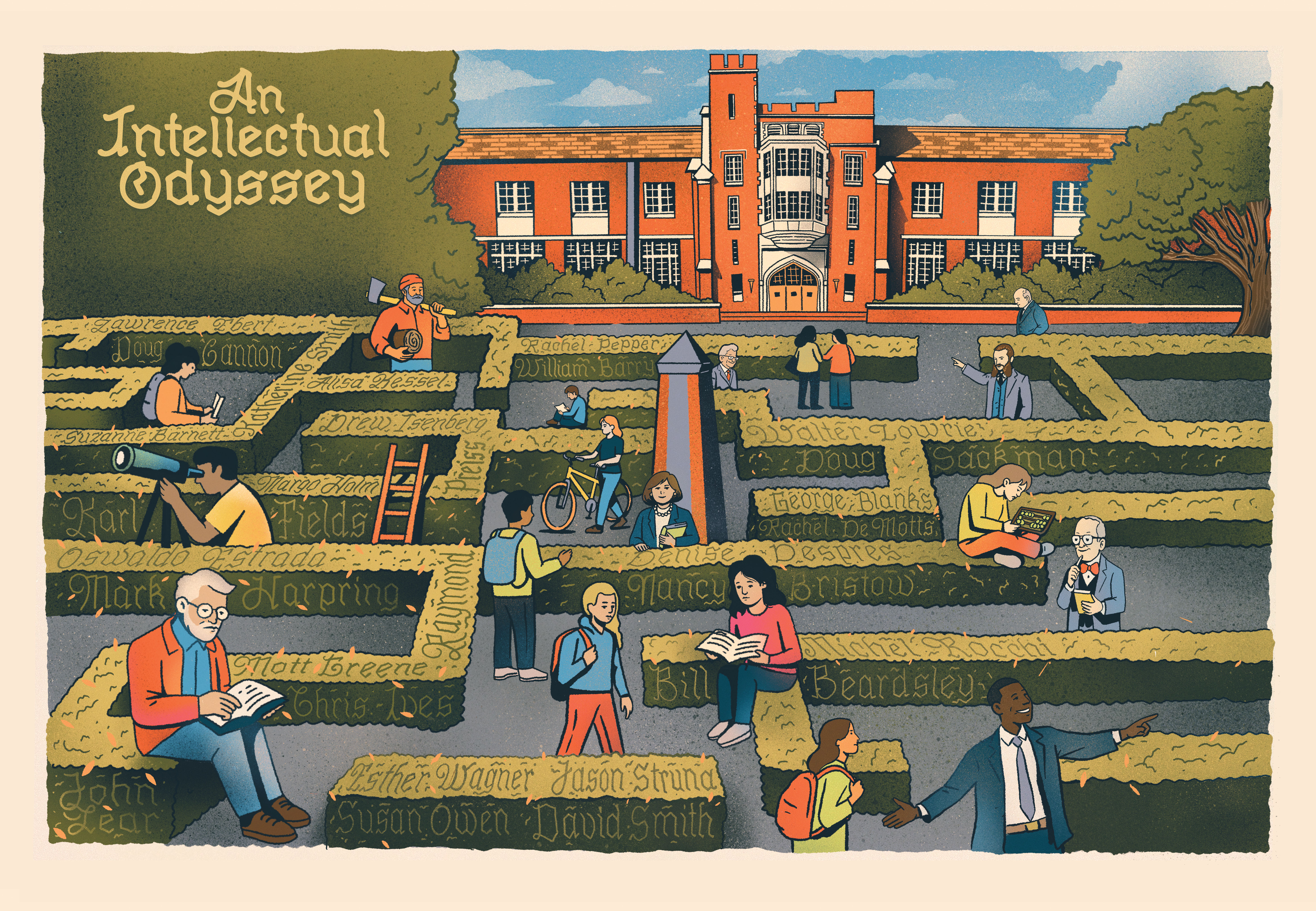

 

Trials and Triumphs. Illustration by Brent Bates.

Trials and Triumphs 

Jeffery M. Vance ’74 (center)

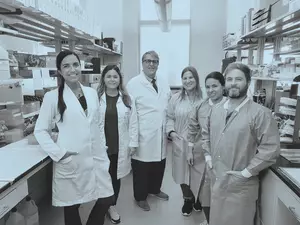
Experiential learning emerges as a defining theme for Jeffery M. Vance ’74, now a professor of neurology and human genetics at the University of Miami. Vance credits George Blanks for nurturing his early interest in genetics, as well as Puget Sound’s immersive 4-1-4 program and hands-on research opportunities, for shaping his approach to science education. “Most people do not really realize that medical research is very creative,” Vance said. “Instead of paint or clay, we work in creative ways to utilize facts.” That philosophy now guides his work as founder of a National Institutes of Health-funded summer internship program for high school students, where participants conduct real research alongside faculty and postdoctoral scholars. The program reflects a belief rooted in his Puget Sound experience: deep learning happens through participation, not observation.

Joel Eklof ’16

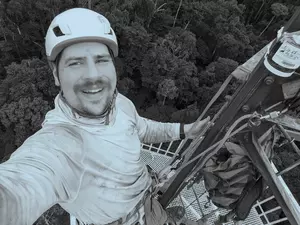
That philosophy is shared by Joel Eklof ’16, who returned to Puget Sound as an assistant professor of environmental studies and sciences. From field courses in Africa to fluid dynamics research, professors Rachel Pepper and Rachel DeMotts encouraged experiential learning that defined Eklof ’s undergraduate years and inspired his own teaching. “Nothing provides as much personal spark as seeing students grow and build new confidence,” Eklof said. Now, he designs courses that take students into snow pits, whitewater rivers, and permafrost terrain, spaces where complex environmental theory meets climate change urgency. 

Emma X. Paulson ’18

Emma X. Paulson ’18, didn’t intend on going into academia, but after time in the private sector, she kept circling back to unanswered questions seeded at Puget Sound. The encouragement and steadfast support of faculty mentors like Jason Struna and Alisa Kessel were fundamental to her journey. Paulson now teaches and conducts research in information sciences, striving to offer students the same careful attention and mentorship she once received. Reflecting on returning to higher education in a new discipline, Paulson said “pursuing academia is about community, trust, and persistence.”


The Ordeal and Transformation. Illustration by Brent Bates.

The Ordeal and Transformation 

Kyle L. Chong (張陳創庭) ’18
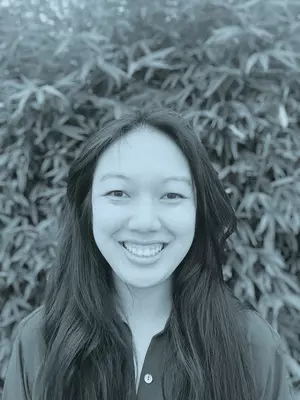
Photo credit: Paige Haddas, College of Education, Michigan State University

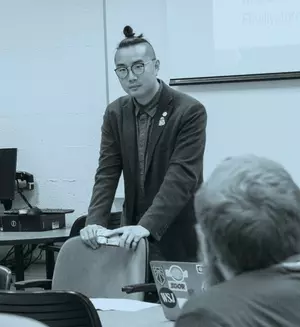
Being on the other side of the desk is less a reversal of roles and more a deepening of responsibility for Kyle L. Chong (張陳創庭) ’18, a postdoctoral researcher in the Department of Teacher Education and a core faculty member in Asian Pacific American Studies at Michigan State University. Chong understands his teaching as supporting students to “keep their promises,” or to enact their commitments to justice like many faculty taught him. Professors such as Karl Fields and Alisa Kessel fostered a love of learning through seminar-style courses, writing as practice, and an insistence on education as inherently political. Reflecting on that influence, Chong noted what Kessel wrote in a book she gifted him after he completed his senior thesis: “Writing is a practice, and a grueling one at that.” This lesson continues to guide how he mentors students and structures his own classrooms. Chong’s work in critical race studies and educational foundations reflects his own commitment to mentoring students, many of whom are future K–12 teachers, to critically reflect on questions of power, identity, and belonging, so his students can be the teachers their future students deserve. Drawing directly from his Puget Sound experience, he designs courses in social justice education and pedagogy that invite students to connect theory to lived experiences as students develop their own teaching philosophies and ways of pursuing educational and racial justice. 

Mark Robert Mansfield ’93, P’27

Mark Robert Mansfield ’93, P’27, whose career spans entrepreneurship, urban research, and the development of a university-anchored innovation district, traces his academic orientation to the intellectually vibrant community he encountered at Puget Sound. Drawn to the life of the mind, he credits faculty such as Raymond Preiss and Susan Owen with extending learning beyond the classroom and modeling how inquiry could be both rigorous and deeply connected to lived experience. Mansfield recalled a moment of clarity from his undergrad years: “Walking across the quad, I knew with certainty that I always wanted to be in an intellectually stimulating community.” Now teaching in Norway, he sees that same legacy unfolding anew as his son carries on the Logger tradition as a current student. Mansfield continues to shape his classrooms by honoring a lesson he first learned at Puget Sound, mixing the fresh perspectives of students with a supportive environment of experts and the freedom to explore new ideas.


Bringing the Treasure Home. Illustration by Brent Bates.

Bringing the Treasure Home 

When asked what they would tell current Puget Sound students considering academia, honesty prevailed among these 14 professors. Many urged caution, acknowledging long training periods, competitive job markets, and structural inequities.

Several emphasized the importance of community, mentorship, and financial prudence. Others encouraged students to remain open to lives beyond academia, reminding them that intellectual fulfillment is not confined to a single career path. Yet no one discouraged curiosity itself. Instead, they urged students to pursue questions that matter, to seek mentors who challenge and support them, and to define success on their own terms.

For many of these alumni, the path into academia was neither obvious nor inevitable. It developed through small but meaningful moments of mentorship, which shaped habits of curiosity, resilience, and intellectual generosity. Those habits now animate the careers of Puget Sound alumni who teach and conduct research across the world.

On the other side of the desk, these Loggers strive to recreate what they experienced as undergraduates: seminar rooms where discussion matters; research opportunities that invite students into discovery; and mentorship rooted in care, patience, and high expectations.

The influence of Puget Sound faculty lives on, not only in memories, but in syllabi conversations, advising meetings, and mentoring relationships still unfolding. The students became the teachers. And through them, the Logger spirit continues.


Kristi Bowman Morgan ’93 has spent the past 30 years shaping stories that inform, engage, and resonate. A seasoned storyteller she has built a career around the art of crafting compelling narratives. Beyond her professional work, Morgan finds inspiration in cheering on baseball, the adventure of travel, quality time with her family, and singing beautiful choral music.

Other Loggers Who Have Answered the Call

The stories shared above reflect only part of a much larger conversation. There are more than 700 Loggers in our records who say they have or are currently working as educators and researchers in higher education around the world. Here are some of the other Puget Sound alumni we heard from who are now shaping their disciplines and passing on the love of learning they experienced on campus. If you’d like to be added to this list in our online story, email the editor at arches@pugetsound.edu.

Kirk Abraham ’94

The person at Puget Sound who influenced my academic journey the most was my advisor, Roberta Wilson, and taking her exercise physiology class opened my eyes to new possibilities. As a swimmer, I was intrigued about training adaptations and how they improve athletic performance. The topics we covered in that class directly related to what I was doing in the pool. Although I attended large research-focused graduate schools for my graduate degrees, my positive experiences at Puget Sound directed me toward a teaching-focused position at a liberal arts college. For me, the best part of engaging in research today is working with undergraduate students. By participating in the research process from beginning to end, they learn about data collection, critical thinking, and how new knowledge is developed.

Kirk Abraham ’94
Professor of health and exercise science
Transylvania University


Thomas Coate ’01

I have been a professor in the department of biology at Georgetown for almost 12 years, and running a federally funded research program since 2013. I attribute my trajectory and much of my success to the wonderful faculty in biology at Puget Sound. I am especially indebted to Alyce DeMarais. As a student in her classes and research lab, I became totally hooked on the molecular basis of organismal development. Alyce was the first of many outstanding mentors along my academic path. I’m thrilled to emulate her in my current position, hopefully nudging the next generation toward great things. I would also like to give special thanks to Joel Elliott, Peter Wimberger, and Wayne Rickoll, who managed to see past my, ahem, imperfect academic record and believe in my research potential.

Thomas Coate ’01
Associate professor of biology
Georgetown University


Jen Bossard Pelletier ’00

I’ve studied and worked at The Ohio State University for nearly 26 years. Most of my time has been spent with the Office of Student Life, supporting student engagement outside of the classrooms, but for the past two years, I’ve worked with our Organizational and Leadership Effectiveness team in Human Resources. In this role, I support leader development programs, coaching, and our university’s new leadership philosophy and framework for staff and faculty. Though I don’t spend my time in classrooms and labs, I am a higher education leadership educator. My dissertation research was on motivations for leadership roles, and I regularly design and deliver educational programs and resources.

Jen Bossard Pelletier ’00
Consultant, Organizational and Leadership Effectiveness
The Ohio State University


Eric Schneider ’08

I was a history major and biology minor at Puget Sound, and I have continued in that spirit with my academic research today. Puget Sound played a formative role in developing my interdisciplinary academic interests. I moved from seminars with history professors exploring the nuances of primary sources to biology labs often spent outdoors measuring species diversity. I first learned the statistical and demographic methods I now teach as a professor of economic history not in economics, but in an ecology course. Summer research internships on topics I genuinely cared about cemented my love of discovery, and along the way, faculty consistently encouraged and supported my path.

Eric Schneider ’08
Professor, economic history
London School of Economics and Political Science


Roland Stout ’76

I retired in 2024 after a 42-year teaching career. I spent the last 23 of those years at the University of North Carolina - Pembroke, where I also engaged in research, including studying the distribution of mercury in the Lumber River system. ...I remember Florence Sandler, who taught an honors English class called The Novel. In it, we read nine or 10 novels and wrote about 12 papers. Mine were returned filled with red ink marking my many errors. On about the eighth paper, there was nary a red mark until a note well into the paper: “It is a shame to put your wonderful ideas in such poor language.” This note was the catalyst that, over several years and with much hard work, turned me into an excellent writer.

Roland Stout ’76
Professor of chemistry, retired
The University of North Carolina - Pembroke


Jenny Tenlen ’95

I did my honors thesis under Betsy Kirkpatrick, which became a lesson in making lemonade out of lemons after our research plot was lost in a forest fire. That experience, along with serving as a biology lab TA and peer writing advisor, contributed to my development as an educator and researcher. One of my favorite classes was Bev Pierson’s microbiology course, which integrated primary literature into lectures as well as her own research in extremophile bacteria. Most memorable was when she invited the class into her home for a “microbial fest” potluck, where all of the food (such as breads and cheeses) required some microbial assistance. Bev was a model for how to be an engaging and rigorous professor.

Jenny Tenlen ’95
Associate professor and chair of biology
Seattle Pacific University


Melissa Thomasson ’88

I am so glad of the influence Puget Sound had on my life and career, and many professors shaped my path and turned me into an academic. Lisa Nunn introduced me to economic history and encouraged me to pursue graduate study. Those courses showed me how deeply historical experience informs modern economic policy, and how careful empirical work on the past can illuminate present-day debates. She was an extraordinary teacher and mentor, unfailingly supportive, and instrumental in shaping my path to graduate school. My professors made each class feel like a community. That’s such a rich environment in which to learn, and something I have always sought to emulate.

Melissa Thomasson ’88
Associate vice president for strategic initiatives, and professor of economics
Miami University


Talia Welsh ’95

The two professors who most influenced me were Larry Stern and Paul Loeb in philosophy. Their courses were the first ones that I felt I simply had to attend to understand the mystery of what was contained in the texts. They shaped my curiosity for discovering what lay beneath the “obvious,” which led to a career as a philosopher looking at norms around human development, gender, and health. Having worked in three countries as an academic and visited many more as a lecturing professor, I can say that while great education can happen anywhere, the small courses and liberal arts focus of Puget Sound is the best foundation for developing sincere curiosity about the world.

Talia Welsh ’95
Professor and chair of Women’s and Gender Studies
University of Alberta