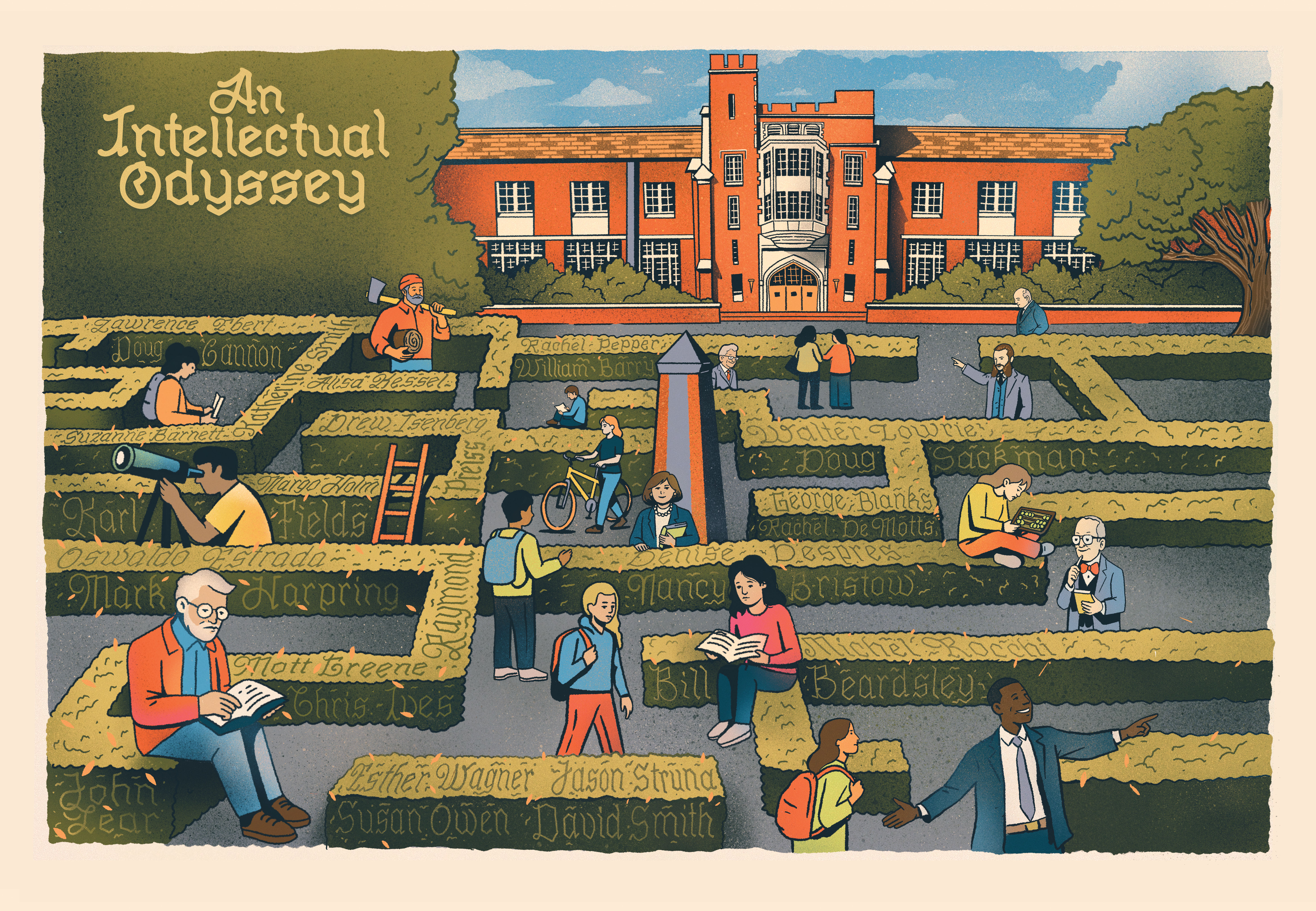
What you read in the main story in the Spring 2026 issue is just part of the conversation our Arches team has been having with Loggers working in higher education. In the following Q&A, these 14 Loggers speak candidly and in-depth about their paths into academia, the challenges they have faced and continue to face, the undergrad professors who influenced their career paths, and the values that continue to guide their teaching and scholarship. Their reflections capture the depth, honesty, and intellectual generosity found at the heart of the Puget Sound experience.
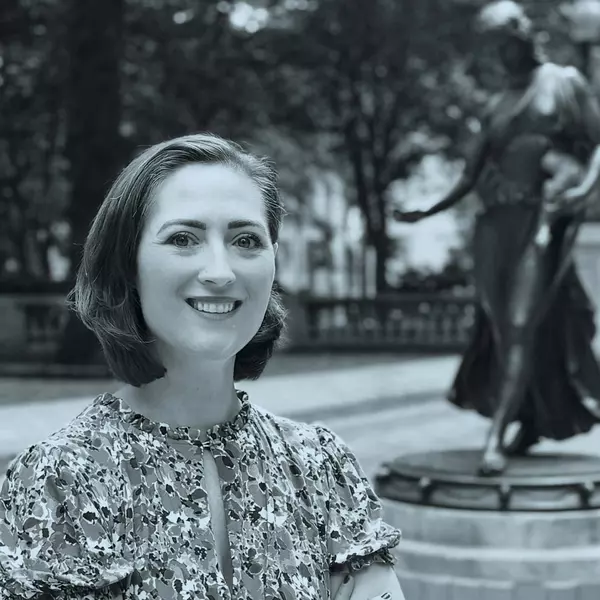
Christina Baker ’06
Puget Sound degree: Bachelor of Arts in History and Spanish
Graduate degrees, years, and institutions: Master of Arts in Latin American Studies; Cultural Studies Certificate, University of California - San Diego (2009); Ph.D. in Latin American Theatre; Ethnomusicology minor, University of Wisconsin - Madison (2015).
Current title/position/dates held: Associate professor of Latin/x American Performance at Temple University (2025-); Director, Center for the Humanities at Temple (2025-); Co-Editor Theatre Journal (2025-). I was Assistant Professor of Latin/x American Performance at Temple (2020-2025); Assistant Professor at University of Dayton (2018-2020); Visiting Assistant Professor at William and Mary (2016-2018)
Area of study/research: Contemporary Latin/x American Theatre and Performance; Mexican Cultural Studies; Mexican Theatre; Sound Studies; Ethnomusicology, Queer Studies
Was there a certain moment when you knew you wanted to have a career in academia? Or did it develop over time? Put another way, how did you get where you are now?
I never really knew I wanted to be an academic. I had no idea what I wanted to do, but I received constant support along the way, so I just kept going, from a BA in History, to an MA, and then to a PhD. I'm actually a first-generation college student and never really knew what I was doing, I just pretended like I did and people believed me. I have held three faculty positions at three different institutions, two of which have been tenure-line roles, so I would say I have been extremely fortunate to land on my feet.
Was there anyone at Puget Sound who influenced you in your academic journey, and how did they shape your path?
Dr. John Lear, Mexican historian - recently emeritus, Dr. Mark Harpring, recently deceased, and Dr. Oswaldo Estrada, who left Puget Sound in 2006 for a position at University of North Carolina - Chapel Hill. I actually interviewed for a visiting faculty role in the Spanish Department back in 2017, I believe, and it was so lovely to see Dr. Pepa Lago, Dr. Harpring, and Dr. Lear at my job talk. I didn't get the position, but I have always been inspired by their work as researchers and teachers that my dream is to return to Puget Sound as faculty. Maybe one day. I would also be remiss to note Dr. Lear's constant cheerleading as I navigated academia. We have met up at conferences over the years, where I got to see his book on Diego Rivera take shape, and he got to hear me develop my own book ideas. We also have spent time in Mexico together, him taking me to his favorite restaurants, and me taking him to see some cabaret. His partner, also an incredible academic, Dr. Marisela Fleites-Lear, also stepped in to be on my dissertation committee, at Dr. Lear's suggestion. Puget Sound faculty made it possible for me to make it through advanced studies in so many ways.
Can you share a favorite class, professor, assignment or memory from your time at Puget Sound that left a lasting impression?
It is so hard to pick just one, but when Dr. Lear launched the Oaxaca Study Abroad program with Pacific Lutheran University, with Dr. Tamara Williams as director, he encouraged me to go. There were only five slots for Puget Sound students, but I got one. It changed my life and that is not an understatement. I learned to salsa dance, which led to my MA research, and ultimately my Ph.D. interests. It also led me to advocate for Study Abroad to whomever will listen. This year, that program celebrates 20 years, which is wild, but I hope it has changed the lives of every one of its students.
Are there ways you bring something from Puget Sound into your own classroom, whether through teaching style, assignments, or mentorship?
All the time. I teach salsa whenever I can and tell my students about my experience learning in Candela, a nightclub in Oaxaca City. I tell them about training with groups that during the mid-aughts were international superstars, and then talk about how migratory patterns and visa processes have changed how Mexican dancers have a presence in the U.S. dance scene. At the graduate level, I teach my students about what it means to do field work, whether that means going to archives, as I learned about with Dr. Lear and Dr. Bristow, asking analytical questions on the ground like I heard Dr. Monica Dehart speak about, drawing maps of space and artifacts, like I did with Dr. Zaixin Hong in Art History, or analyzing literary texts, films, and songs, as I learned with Dr. Estrada, Dr. Lago, and Dr. Harpring. When I took my own first group of students on a study abroad trip to Mexico (Mérida), I taught them how to order food, hail a taxi, and barter, like I learned on my trip to Oaxaca in 2005. Reflecting on that being my first international trip, I helped my own students who never traveled out of Philadelphia feel more comfortable and confident.
What does it mean to you to now be “on the other side of the desk,” guiding students as you were once guided?
I have taught at mid-size liberal arts colleges and now am at an R1 institution. I miss the small liberal arts college feeling and try to make that happen via my courses. I always ask students how they are doing, what their interests are, and point them toward opportunities that they otherwise don't know about. As Director of a Humanities Center, I have made it a goal to center undergraduate students so I can support them with programming, information about study abroad, and create engaging events to help them have these moments that you are asking about.
What are you most excited about in your current teaching or research?
I just submitted a peer-review article about memory, queer geography, and music in a cabaret performance by Tito Vasconcelos, a queer icon in Mexico. I'm also working on a second monograph about Selena Quintanilla and her various resuscitations and importance in popular memory, now 30 years after her death. As an extension of that, I created a course called Salsa, Samba, Selena, which has been quite exciting and popular.
What advice would you give to current Puget Sound students who may be considering academia?
Academia is a very difficult place to be right now, and the academic job market has been continually shrinking, which can make it hard for so many to follow that dream. I think anyone considering academia should never take out debt to attend graduate programs (which was advice Dr. Lear gave me back in 2006), and they should remember that their value and intelligence is not determined by academic structures that can be exclusive and reproduce broader social inequities.
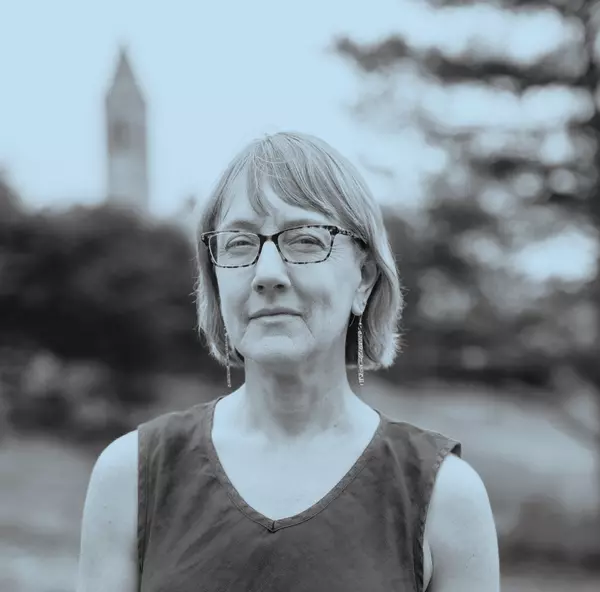
Sara Pritchard ’94
Puget Sound degree: Bachelor of Arts in History
Graduate degree, year, and institution: Ph.D., History, Stanford University, 2001
Current title/position/dates held: Professor, Department of Science and Technology Studies, Cornell University
Area of study/research: Environmental history, history of technology, and science and technology studies. Currently researching the history, science, and ethics of artificial light at night.
Was there a certain moment when you knew you wanted to have a career in academia? Or did it develop over time? Put another way, how did you get where you are now?
There was no single moment. It developed over my time at Puget Sound. I don't come from an academic family, so it wasn't part of my world or expectations growing up, but I became fascinated by environmental history and interested in conducting research at UPS (as we called it then!). I naively thought, maybe I'll go to graduate school.
Was there anyone at Puget Sound who influenced you in your academic journey, and how did they shape your path?
Oh, many professors, especially those in the History and French Departments (I majored in History and minored in French), and the Honors Program: Nancy Bristow, Drew Isenberg, Michel Rocchi, Mott Greene, Ili Nagy, Jim Evans, to name a few... I was fortunate to have incredible mentors who were inspiring and encouraging.
Are there ways you bring something from Puget Sound into your own classroom, whether through teaching style, assignments, or mentorship?
It's with me every day. Sometimes I joke that I really should (still?) be at a liberal arts college. I enjoy discussing ideas with students. I enjoy facilitating discussions, whether the entire class or in smaller groups. I appreciate getting to know my students — their backgrounds, their interests, what drives them — and helping cultivate trust in the classroom as we learn together. That's much harder in a large survey class of 90 or 180 (yes, I've taught both). I've been honored that some students have shared their struggles with me, and I hope that I've made a positive difference as they've navigated classes, semesters, college, and also life.
What does it mean to you to now be “on the other side of the desk,” guiding students as you were once guided?
It's incredibly rewarding on the good to great days. I can't imagine doing anything else professionally. It's also extremely difficult — and increasingly difficult (impossible, really) — to juggle all the professional expectations that are now required of faculty. I've seen and experienced dramatic changes in academia since my Ph.D. in 2001.
What are you most excited about in your current teaching or research?
I've become a total artificial-light-at-night nerd. I've also become quite interested in writing styles and publications that are intellectually rigorous while seeking to reach broader audiences. In terms of teaching, I'm incorporating more modes of engagement, learning, and communication in my classes. When I've given students an option to do creative projects, for instance, some of them go way above and beyond expectations. It can be stunning. For instance, in my environmental ethics survey, students can write a final paper or do a final creative project accompanied by an "artist's statement" explaining the intellectual rationale behind their project (drawing on class materials, of course, to do so).
There was an amazing student majoring in Fashion Design who made a shirt that embodied a number of class concepts — from the fabric she chose (natural fibers) to the color (green) to the words she printed across the shirt, which centered on environmental justice. I wanted to keep and frame the shirt, but she understandably wanted it back! In spring 2020 (yes, that semester...), many of the undergrad final projects were so amazing, the two TAs and I were able to collaborate with the Center for Humans and Nature, and publish an edited collection of student work online.
What advice would you give to current Puget Sound students who may be considering academia?
Unfortunately, students really need to be aware of the academic job market, especially in the humanities and interpretative social sciences. If any prospective grad student asks me, I emphasize that they need to care about ideas and independent research. That needs to motivate them through grad school, not the promise of an academic position at the end of five to seven years, especially a tenure-track position. Sorry to rain on that parade, but anyone thinking about a career in academia needs to have eyes wide open and be realistic.
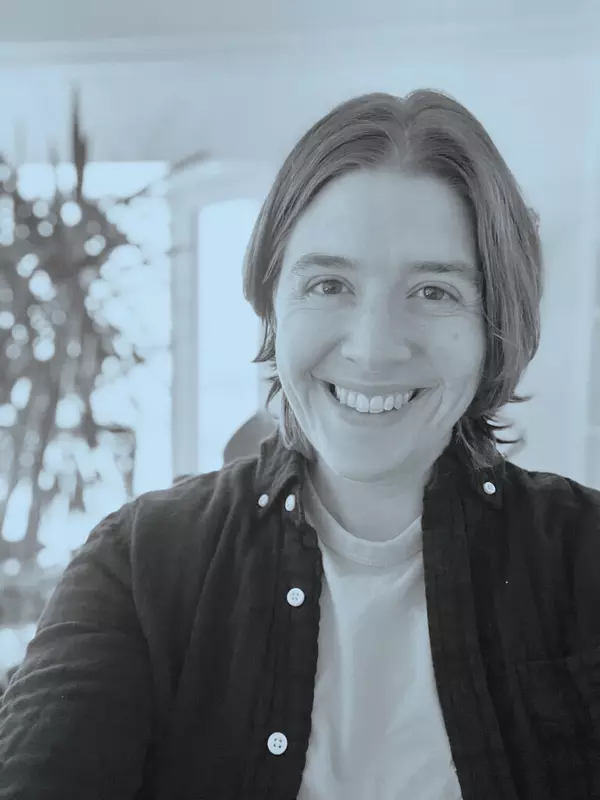
Rachel Gross ’08
Puget Sound degree: Bachelor of Arts in History and Spanish
Graduate degrees, years, and institution: Ph.D. in History, 2017, UW-Madison; MA in History, 2012, UW-Madison
Current title/position/dates held: Associate Professor of History 2025- ; Director of Graduate Studies 2025- ; Co-Director of the Public History Program 2020- ; Assistant Professor of History 2020-25
Area of study/research: Modern U.S. history, environmental history, business history, public history
Was there a certain moment when you knew you wanted to have a career in academia? Or did it develop over time? Put another way, how did you get where you are now?
Maybe I lacked imagination when it came to understanding careers beyond what I saw in front of me, but I always wanted to be a teacher. When I got to Puget Sound, I simply changed my goal for what level I wanted to teach at. There was a distinct moment in the atrium of Wyatt where I shared with my history professor Katherine Smith that I wanted to be a professor, and she said she could totally see that happening for me. I was buoyed by that confidence and reaffirmed in my path. It was also clear how fun the research process was, first in Nancy Bristow’s History 200 methods class, and then when I expanded on my project on the history of women’s park ranger uniforms in Yosemite with a summer research grant supervised by Doug Sackman. I actually got to go to the Yosemite National Park archives to collect materials!
Was there anyone at Puget Sound who influenced you in your academic journey, and how did they shape your path?
I didn’t really understand how to apply for graduate school. I mean, I knew how to write an application, but I didn’t know how to survey the range of excellent programs around the country and understand what was a good fit for me. Doug Sackman wrote a clear chart of schools I ought to consider on the back of a piece of scratch paper. I adhered to his suggestions closely, understanding from his recommendations not a simple hierarchy of the “best” programs but rather ones that were a good fit for me and my interests and where the faculty would fit with how I worked. Because of the timing of a post-Puget Sound fellowship (the Watson), I was traveling around the world during the months when a campus visit to the schools I was considering would have made the most sense. So I sent in my acceptance and arrived in Madison sight-unseen, mostly because Doug said that it was a place that made sense for me. The school was an excellent fit, and I know Doug’s advice made the difference for helping me feel confident in my choice from the mountains of Tanzania.
Can you share a favorite class, professor, assignment or memory from your time at Puget Sound that left a lasting impression?
I remember that groups of students had the chance to lead discussions in Prithi Joshi’s course on Jane Austen. I was leading the discussion—maybe on Lady Susan, Austen’s unfinished epistolary novella?—and had such fun with it. I remember feeling the rush of leading students through an engaging opening question and then delving deeply into the text. If that was what professors did, I wanted to be a part of it.
Are there ways you bring something from Puget Sound into your own classroom, whether through teaching style, assignments, or mentorship?
Like many of my Puget Sound classmates who went on to be professors, I moved from the cozy familiarity of a small liberal arts college to a big Research 1 university for graduate school. It was a good school, of course, and the professors there gave masterful lectures to halls of hundreds of students. I admired their performances but knew that wasn’t the best fit for me. The contrast between the institutions highlighted for me the kind of teacher I wanted to be. I aimed to recreate the stimulating conversations of my seminar-based courses at Puget Sound as a graduate teaching assistant, and later, as a postdoc and professor.
I also think about the care and investment my professors had in me as a model. I returned to campus almost 20 years after graduating to present on my new book on the history of the outdoor industry. In a conversation with Doug Sackman about his current students’ excellent senior thesis project, he recalled the project I had done 20 years earlier on the Native American history of Tacoma. I hadn’t even remembered that paper! His glowing enthusiasm for current students’ work, and the fact that he knew the topic of something I had written decades before, speaks to the care that Puget Sound professors bring to their teaching. It is something I aspire to.
What does it mean to you to now be “on the other side of the desk,” guiding students as you were once guided?
It is an honor. My professors, especially the U.S. historians I took classes with, shaped how I think about history, the profession, and the world. I hope I’ve made them proud in the ways I’ve carried forward the values they taught through their work. I don’t know if my own students think about me in that way, but the possibility makes me want to live up to the models of the excellent teachers I had.
What are you most excited about in your current teaching or research?
I’m working on a community history project about the history of our campus, Auraria. It was a thriving Chicano neighborhood in the middle of the 20th century until it was torn down, and the residents were removed to make way for universities. I get to apply the skills and access my position provides to an important project that impacts local residents. I also get to involve graduate and undergraduate students in the work, including giving walking tours, creating exhibits, and publishing histories of the neighborhood. I love that they get to see the power of telling these stories.
What advice would you give to current Puget Sound students who may be considering academia?
Tread carefully. I love this job, but I recognize that getting to be in a position like mine (in a city I am happy to live in, no less) is not just the product of hard work but also good luck, timing, and privilege. Consider how much you care about where you want to live, and how close you want to be to family, before falling headlong down this path. For those who consider the challenges of the job market and still want to consider academia: don’t forget to have fun along the way. Landing a job as a professor takes many years and involves a lot more schooling. Being sure to enjoy the ride, rather than pinning an internal measure of accomplishment to the end goal, will go a long way in making the journey sustainable.
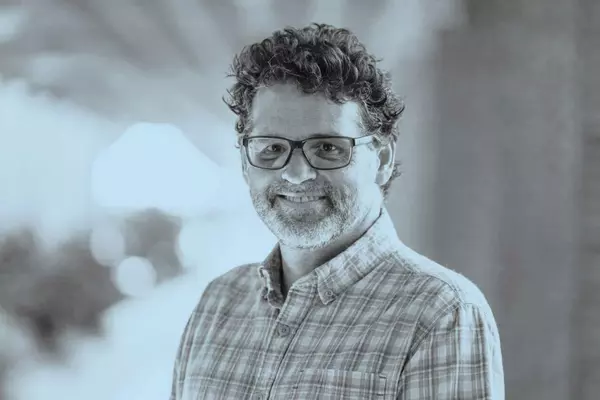
Erik A. Anderson ’91
Puget Sound degree: Bachelor of Arts in Philosophy
Graduate degrees, years, and institution: MA in Philosophy, University of Connecticut, 1995; Ph.D. in Philosophy, University of Connecticut, 2001
Current title/position/dates held: Professor of Philosophy, Furman University, 2001-present
Area of study/research: Ethics, Political Philosophy, Philosophy of Gender
Was there a certain moment when you knew you wanted to have a career in academia? Or did it develop over time? Put another way, how did you get where you are now?
I knew I wanted to be an academic after my first semester at Puget Sound. I transferred to Puget Sound from a large state school (University of Arizona) where I felt completely anonymous. My professors were these distant figures who were intimidating to talk to. When I came to Puget Sound, I developed close relationships with my professors, gained confidence in my intellectual abilities, and experienced an intimate and supportive learning community. I thought to myself, “Who would ever want to leave this?” Of course, Puget Sound forced me to graduate eventually, so I had to find a way to recreate that kind of intellectual community in my own life.
Was there anyone at Puget Sound who influenced you in your academic journey, and how did they shape your path?
Quite a few professors had a big impact on me, including Laura Laffrado (English), Bill Breitenbach (History), Mott Greene (History, I think), Doug Cannon (Philosophy), and Bill Beardsley (Philosophy). In their different ways, these professors took us seriously as thinkers in ways that were transformative for me. They provided me with role models to follow and served as mentors for me. At bottom, liberal learning is based on respect — respect for students’ experiences and intellects in the setting of a supportive community. I felt respected and supported by these teachers. They also provoked and inspired me to broaden my horizons and become excited about learning.
Can you share a favorite class, professor, assignment or memory from your time at Puget Sound that left a lasting impression?
I took an interdisciplinary humanities class with Kent Hooper (German) and Larry Stern (Philosophy) that was highly memorable. I wrote my favorite undergrad paper for that class. I compared Nietzsche’s Thus Spoke Zarathustra and William S. Burroughs’ Naked Lunch. It was titled, “Zarathustra and the Talking Asshole.” I got an A+. It felt edgy to use a profanity in the title, but we studied radical ideas in that class and were treated as adults.
Are there ways you bring something from Puget Sound into your own classroom, whether through teaching style, assignments, or mentorship?
The main thing I try to do is to create a sense of community in the classroom of the sort that I first experienced at Puget Sound. I try to create a democratic and egalitarian environment in which we all cooperate in expanding our understanding. While I obviously know more about the subject matter than the students, I am always willing to learn from them. I don’t present myself as having some repository of knowledge that I then deliver to the students. In my view, that’s not doing philosophy, where the autonomy of the individual is paramount.
What does it mean to you to now be “on the other side of the desk,” guiding students as you were once guided?
I am so grateful for the opportunity to guide students the way my profs guided me. These are dark times in academia. The existence of liberal arts colleges like Puget Sound and Furman University (where I teach) seems more tenuous than ever. I am simultaneously amazed that there are places where young people can spend a few years following their intellectual passions and worried about the growing hostility toward higher education. I see my work as a precious but vulnerable opportunity to help students think about questions that really matter — in a country that increasingly wants to shut critical thinking down.
What are you most excited about in your current teaching or research?
I am currently working on a book about men and masculinities. This project involves utilizing a number of ideas from contemporary feminist philosophy to think through the experiences, privileges, and challenges facing young men in our society. Given the role of patriarchal masculinity in powering the rise of authoritarian movements around the world, it is an important time to turn an empathetic yet critical gaze on men and different forms of masculinity.
What advice would you give to current Puget Sound students who may be considering academia?
The life of a tenured professor is wonderful, but the price of admission is incredibly high. You have to survive years of graduate study and a ridiculously competitive job market. You have to be willing to postpone things like making a steady income until comparatively late in your life. And of course, there are so many forces working against colleges and universities at present, from the government’s assaults on free speech, academic freedom, and anything that smacks of DEI, to a culture that is increasingly hostile toward learning for its own sake. Going into academia is not for the faint of heart. To make it, you need to be resilient, have realistic expectations, and have a good support network. Also, you need to have a Plan B. There is no shame if it doesn’t work out, since there are far more people who want to be academics than there are positions for them.
Is there anything else you’d like to add or that we forgot to ask?
How about asking people for a book recommendation? If you want to understand what’s happening in the world right now, I recommend The Revenge of Power by Moisés Naím, which explains how contemporary authoritarians are taking power in liberal democracies.
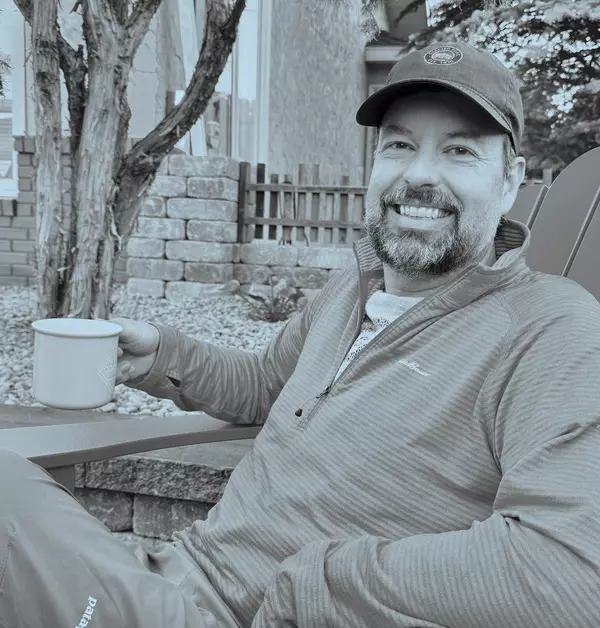
John Harding ’94
Puget Sound degree: Bachelor of Arts in Asian Studies with minor in Religion
Graduate degree, year, and institution: Ph.D. 2003, University of Pennsylvania
Current title/position/dates held: Professor of East Asian Religions; Coordinator of Religious Studies; Coordinator of Asian Studies (University of Lethbridge, 2003 -present)
Area of study/research: Japanese Buddhism and global networks of influence and cross-cultural exchange within and beyond Asia that shaped the development of modern and global Buddhism in the past two centuries. Other publications address the academic study of religion.
Was there a certain moment when you knew you wanted to have a career in academia? Or did it develop over time? Put another way, how did you get where you are now?
I have been interested in an academic career for as long as I can remember — even from before undergraduate studies. Although I kept options open in the first year or two at Puget Sound, simultaneously participating in the Honors Program, the Business Leadership Program, and courses for a major in Asian Studies and a minor in Religion, I think my sights were firmly set on academia by my third year.
Was there anyone at Puget Sound who influenced you in your academic journey, and how did they shape your path?
There were many! Chris Ives was especially influential. Following a number of excellent courses in Asian Studies and Religion, I had considered pursuing graduate studies with either a focus on East Asian or South Asian religions. Chris Ives influenced my decision in favor of Japanese Buddhism. As an exemplary scholar and teacher in that field, Chris taught courses that were formative to that decision and to my career path even now, but it was more than that. As a mentor, he facilitated my undergraduate research based in Kyoto and supervised my Honors thesis related to my study in Japan. Moreover, when I mentioned the Ph.D. programs I was considering, he provided the life-altering good advice to pursue my grad studies with Bill LaFleur at the University of Pennsylvania because LaFleur was a remarkable human being as well as a preeminent scholar of Japan.
Can you share a favorite class, professor, assignment or memory from your time at Puget Sound that left a lasting impression?
Mott Greene’s capstone course for the Honors Program, Honors 401: Some Classics of the Asian Traditions, was extraordinary! The readings, topics, and discussions were precisely at the intersection of my interests, and the skillful and provocative ways Mott engaged these materials lived up to the “genius” reputation of a MacArthur Fellow! I have kept the 277-page journal I wrote for that class in the spring term of 1993, and, prompted by this Arches story of Loggers in academia, I just glanced at some of my concluding remarks from that assignment. I will include here a paragraph that I wrote for that journal in early May 1993 to bring in that undergraduate voice reflecting on the course’s lasting impression, indicating my awareness then that there would be additional stages (still ongoing) in my study of these classics, and mentioning two of my classmates, who also became academics, Forrest Pierce ’94 and Sara Pritchard ’94.
I am many years, lifetimes, and yet undefined cycles from any solid conclusions. Fortunately, I seek no closure. I hope that all of us are only at the beginning of our own personal value exploration, and I am fortunately only at an early stage of my exploration of classics from the Asian Traditions. Any tradition and branch of knowledge can offer an opportunity for comparative values, introspection, and discussion. I am glad that we used Asian classics as our vehicle. I have enjoyed many of these texts even before this class. Different works and ideas from these traditions are part of my personal exploration vocabulary.
During the last ‘unofficial’ class meeting of four or five of us a couple Wednesdays back, we discussed how each of us not only sees things differently but employs different points of reference from which to understand ourselves and the world around us. For example, Forrest translates what he sees and reads into musical concepts. Sara interrelates stimuli with Environmental History, and my interpretation of reality is filtered through and flavored by some of the concepts within these Asian Traditions. This class has provided a foundation of works and concepts for my good friends in my chosen language. With each new branch of learning, the ability to communicate with others as well as understand for ourselves is broadened. This expansion is particularly beneficial to me in the sense of being better able to communicate concepts more directly (with less need of background information and far-reaching analogy), and I am grateful that this course was our last class experience.
Are there ways you bring something from Puget Sound into your own classroom, whether through teaching style, assignments, or mentorship?
Yes, to all of the above. I have Mott Greene’s class and journal assignment in mind when I create assignments for students to respond to weekly readings. When I recently supervised a student’s independent study and fieldwork in Japan, I thought about how Chris Ives had made that possible for me. Before I started an Asian Studies program at my university, I not only thought back to my undergrad experience as a model, but I also spoke with Suzanne Barnett, who was a founder of the Asian Studies program at Puget Sound. Although unlikely to match fully her competence or care, I continue to find her example and the example of other role models from Puget Sound invaluable.
What does it mean to you to now be “on the other side of the desk,” guiding students as you were once guided?
It is a privilege, but also a sobering reminder of what was asked of professors at Puget Sound. The balancing act required to be there so fully for students while consistently producing quality research and providing service to the department, university, and community can be daunting. In addition, I can now better appreciate the sheer amount of writing we did at Puget Sound, with professors’ detailed feedback on those assignments requiring untold hours of time and care. As for guiding my own students, favorite moments are more often in upper-level seminars that are discussion-focused and provide a stronger sense of learning and exploring together in a more fluid and collaborative way than might be suggested by being “on the other side of the desk.”
What are you most excited about in your current teaching or research?
I am excited about the ways these categories of teaching and research can productively interact. I will teach a fourth-year seminar this January, “Global Buddhism,” which is closely tied to a 15-year-long collaborative research project on the modernization of Buddhism in global perspective that I conducted with my colleagues from two other universities in Canada, Victor Sōgen Hori (McGill, now retired) and Alexander Soucy (Saint Mary’s University in Halifax).
Our research project was funded for approximately half that time with a $260,000 grant, which is fairly large for the Humanities but relatively small for research projects in the sciences. The funding and our collaborative research afforded interesting travel and the development of international conferences, which in turn led to several books and journal articles in terms of research. However, it is also gratifying to reintegrate that research into the classroom. At times, anecdotes and more substantial conclusions from research analysis come up in the classroom to better illustrate or challenge ideas in courses that are part of our more typical rotation. At other times, there are exciting opportunities like this coming seminar where the course can take form directly in dialogue with one’s research.
What advice would you give to current Puget Sound students who may be considering academia?
I am cautious about advice on that front, and what little I offer is typically crafted to an individual’s specific context and concerns. There is merit, of course, to engaging in life-long learning and open-minded exploration, but I think that is true both within and beyond academia. An academic career can be remarkably rewarding and varied, but the path through graduate school is often precarious as are the tenure-track job openings relative to the larger number of remarkably knowledgeable specialists seeking those too-scarce resources.
So, if you are studying something about which you are so passionate that the benefits of that pursuit outweigh the sacrifices, even if graduate studies do not ultimately lead to a tenure-track job, then go for it. However, even in the midst of graduate studies, post-doctoral fellowships, or sessional teaching while hoping for an ideal alignment with a less precarious academic job opening, I think it is worthwhile to remain open throughout to career paths and pursuits beyond academia.
These questions remind me of another role model from Puget Sound. I was fortunate to take an excellent survey course on histories and cultures of the Indian subcontinent from Del Langbauer just before he retired. My recollection is that he was relatively young and chose to leave a successful career in academia to devote more time to his environmental work and related passions, such as rock climbing, through which he had been part of teams putting in new routes for challenging climbs in places such as Denali.
My knowledge of his motivations for early retirement would have been very limited then and even more suspect now with the passage of time, but I do recall registering surprise and admiration that someone who was so good at a difficult to attain academic job would be willing to give it up earlier than typical career expectations. While this anecdote may arise from my own thoughts about the potential merits of early retirement as much as the prompt about advice for students who may be considering academia, I think there is shared ground, as his example speaks to a celebration of academic pursuits without overbearing attachment to an academic career.
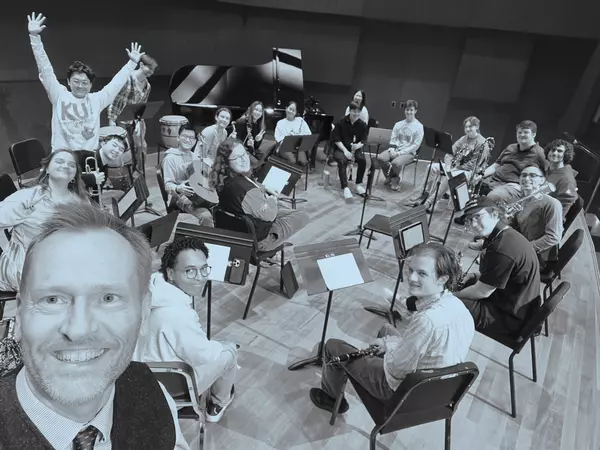
Forrest Pierce ’94
Puget Sound degree: Bachelor of Arts in Music
Graduate degrees, years, and institutions: MA in Composition, University of Minnesota 1996; Doctor of Music in Composition, Indiana University, 1999
Current title/position/dates held: Professor of Composition, University of Kansas School of Music (since 2006)
Area of study/research: Choral, Vocal, and Chamber Music Composition
Was there a certain moment when you knew you wanted to have a career in academia? Or did it develop over time? Put another way, how did you get where you are now?
My main goal was to become a composer. Because the music that captured my heart was music for the concert hall, “contemporary classical music,” the place to learn that was in the Academy. And by the time I finished my graduate degrees, I had fallen in love with teaching. So I had some wonderful mentors who were able to help me get the training I needed to be successful as a professor, and as a professional composer.
Was there anyone at Puget Sound who influenced you in your academic journey, and how did they shape your path?
I was certainly influenced by the eight or nine classes I took with my composition mentor, Lawrence Ebert. His approach was an old-school craft-based training in traditional compositional techniques. Two other professors in the honors program were particularly influential to me. Denise Despres taught me to write English prose in a way that has benefited me ever since, and Mott Greene’s honors course in comparative values gave me my first exposure to the world’s lineages of mysticism, philosophy, and scripture. Reading and journaling on the Qur’an, the Daodejing, and the Dhammapada in his class directly led to my life and practice as a student and teacher of Sufism.
Can you share a favorite class, professor, assignment or memory from your time at Puget Sound that left a lasting impression?
The expansive syllabus that Mott Greene gave us for our final course in the honors program included about three hours of reading and note-taking per day, followed by another hour or two of journaling. The journal was transformative: I had never been given an open-ended assignment like that, in which my only task was to explore how the ideas, texts, and traditions I was encountering interfaced, resonated, and danced with my own background and worldview. There was no real rubric, no carefully crafted lesson plan, and no way to complete it without wading into each ocean of tradition, swimming to the point of exhaustion, and then staggering back up the beach. In short, it was the most reality-based thought practice I could have imagined. The journal still sits on my shelf, and gets opened from time to time. The self-discipline and personal integrity it asked for has guided my thinking ever since.
Are there ways you bring something from Puget Sound into your own classroom, whether through teaching style, assignments, or mentorship?
I teach at a school now that offers mostly professional degrees in music. My students tend to be aspiring professional composers, rather than liberal arts students interested in broadly shaping their thinking and character. Still, the musical skills that I learned at Puget Sound, as a pianist, conductor, and singer in the Adelphians are the foundational tools for my daily teaching with students, whether I’m sight reading their new compositions, or training them to write effectively for the human voice. The fundamental evolutionary need for human beings to create connection through group singing and artistic expression was modelled beautifully at Puget Sound in ensembles, small classrooms of engaged colleagues, and living communities of fellow seekers. And my students know that all of my classes will have an ongoing journal of significant size.
What does it mean to you to now be “on the other side of the desk,” guiding students as you were once guided?
I guess I don't think about this that way. My hope is that my students will be empowered to guide themselves through their work with me. My doctoral students are usually seasoned professionals coming back to pursue their terminal degrees after a career in the professional world. Many are older than I am, and almost all of them have at least one area of experience or skill that I have not yet encountered. So, I find that I am facilitating conversations, community, and supporting an atmosphere of unfettered curiosity and exploration. Mostly I want them to be free. They must be free to be artists.
What are you most excited about in your current teaching or research?
I'm currently really interested in community music making, non-hierarchical ensemble structures and non-performative music, and the way that these concepts can create collaborative, restorative, healing experiences for people in an increasingly fractured culture. I find that this field integrates my training as a classical vocal composer, as a teacher of Sufism in the Chishti lineage, and my long-ago work as a rock musician and performer. So, my choral compositions incorporate some of this, and I serve as a leader of interfaith dance circles, as well as a leader of traditional Sufi zikr practice. I write music for local circles to sing and dance to, for Sufis to chant to, and for classical choirs to perform and explore. And I still fill commissions for chamber music works, which tend to be extremely virtuosic and expansive. That satisfies a longing in me to stretch the limits of my craft and imagination.
What advice would you give to current Puget Sound students who may be considering academia?
Academia is a challenging path for everyone, perhaps especially in the arts. There is always a friction between the mechanism of tenure and the necessity for authentic unfettered artistic expression. It requires a great deal of code switching to navigate successfully, if for you that means creating a life of artistic freedom while crafting a stably-employed existence. My advice, in that case, is to become very adept at translating the ineffable into the language of the scholarly, while keeping the soul of your work untouched by quantification, prestige, and academic fashion. It is unlikely that those who will review our artistic work in the academy will have the aural, visual, or kinesthetic vocabulary to communicate and interact effectively with our music, visual art, or dance in its own medium; it is almost always incumbent upon the academic artist to communicate in the language of publication, peer reviewed work, and impact, even when our work is concerned with none of these. That’s a challenge, for sure!
And the benefits of being in constant dialogue with exciting, inventive colleagues and students are immense, and a wellspring of inspiration for our own work. We have to get real about what we’re doing—this is a community, like any other. Find the place in you that wants to learn from the world, from your life, from your heart. Then, research, teaching and service become one and the same. If you imagine fame, prestige, and influence as the goal, you will likely suffer your whole career, and that’s no fun.
Is there anything else you’d like to add or that we forgot to ask?
I think it's important to recognize that just because you're good at something doesn't mean that you need to teach it. Just because you enjoy school and are good at it doesn't mean you need to stay in school for the rest of your life. The best professors are often people who have lived interesting, adventurous, and spectacularly human lives, and it may be that your own path in the Academy will benefit greatly by spending a few years—maybe more—hustling and gigging, or wandering and exploring, or loving and breaking your heart.
Helen Hoenig ’77
Puget Sound degree: Bachelor of Science
Graduate degrees, years, and institutions: MD, 1985, University of Arizona College of Medicine; MPH, 1993, University of California at Los Angeles
Current title/position/dates held: Professor of Medicine (Geriatrics), January 2012 – present; Duke University School of Medicine, January 2012-present
Area of study/research: My research is on geriatric rehabilitation, with particular interest in rehabilitation health services and telerehabilitation. Patient populations of interest include geriatric patients with diverse medical problems including stroke, spinal and/or musculoskeletal disorders.
Was there a certain moment when you knew you wanted to have a career in academia? Or did it develop over time? Put another way, how did you get where you are now?
I chose OT because I thought I would like the work and because it would provide me with training that could support diverse future career paths. My first job after graduating was at the local university hospital. I loved my work with patients and occupational therapy, but I also loved going to the various educational opportunities for the physician trainees (e.g., Grand Rounds). I had many questions about my patients, and I found that some of them did not (yet) have an answer. I was disturbed over the lack of evidentiary support for many of our rehabilitation interventions. I wanted to be a part of the solution.
My curiosity and analytical strengths seemed to lend themselves to clinical research. At that time and in that location, the path to doing clinical research of the sort that interested me led through medical school. After that, one step led to the next, through residency, fellowship, and on to a tenure-track position in academia.
Was there anyone at Puget Sound who influenced you in your academic journey, and how did they shape your path?
Yes. Dr. Margo Holm joined the faculty as Assistant Professor the same year I started OT school. I loved her classes. I remember being quite taken by the idea of breaking functional tasks down into their component parts to help identify what to focus on for treatment. My tendency to ask a lot of questions did not begin when I started work at the University Hospital in my first job. It was there from the get-go in my OT classes. Dr. Holm kindly offered to meet with me after class to answer some of those many questions. She was an inspirational role model for me with regards to how to think about use of Occupational Therapy to treat disability and how to support students in their own journey.
Fast forward 10 years or so … I met Dr. Joan Rogers during my Geriatric fellowship, when she was recommended as someone for me to include in the equivalent of a capstone project. I was excited to learn that she knew Dr. Holm, and I found her approach to rehabilitation inspirational like I had Dr. Holm.
Fast forward another five years … I was at a national geriatrics conference and noticed a presentation by Drs. Holm and Rogers on measuring physical function in elders (as I recall, it was an early version of the PASS). I went to it (great presentation!) and I went up to talk to them afterwards. To my amazement, Dr. Holm remembered me.
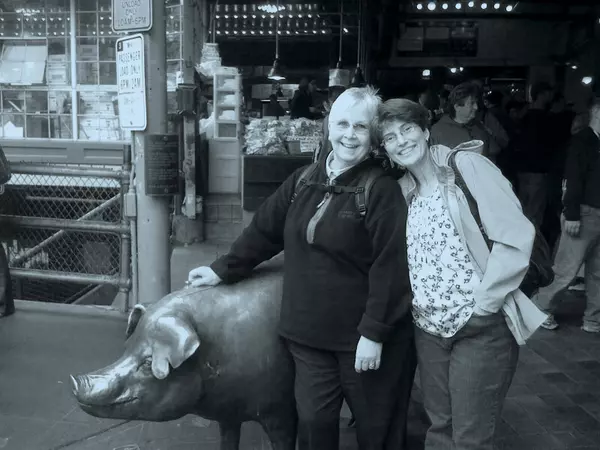
I continued to follow the research by Drs. Holm and Rogers over time and kept in touch with them. The photo is from 2009 at the fisherman’s wharf market in Seattle. In these many different roles and contexts, I’ve found Dr. Holm to be supportive and a great role model.
What does it mean to you to now be “on the other side of the desk,” guiding students as you were once guided?
What stands out in my mind when I think of my various mentors over the years is their care and kindness towards me. It seems to me that the best way I can thank them and honor their gifts to me is to ‘pay it forward.’ Like anyone else, I don’t always succeed, but I try to use a candle of kindness to light my path with others.
What are you most excited about in your current teaching or research?
In the last year or so, the work that has excited me includes the following a blend of clinical, administrative and research activities. Research includes collaborative work on a newly published conceptual model for implementing telehealth technology into clinical care Rauzi et al, Arch Phys Med Rehabil 2025, finalizing/disseminating instructions for video administration of physical performance measures (soon to be released at our Duke Pepper Center Measures Core). On the clinical administrative side, at a national level, in my role as Subject Matter Expert, I continue to be very involved in the Veteran Health Administration store and forward My VA Images mobile app. At the local level, I’ve been engaged in figuring out how to more efficiently assess people for admission to our VA SNF-based rehabilitation unit and in refining the processes we use to develop evidence-based clinical guidelines for provision of various technologies for use in the home.
Over the years, I’ve found it useful to have a five-year plan and to reassess that plan with some periodicity. Honestly, I think it’s a good idea for everyone, in academia or otherwise. I’ve been doing that for myself this last year. There are various methods for that, but this year it has taken the form of crafting a “personal statement.” I found it so invigorating to take a step back, look at all my interests and experience, and think about how I might want to put it together for the next five years. One consistent theme in all my 5-year plans over the years has been that I love breaking new ground, like the proverbial bear – simply to see what is over the next mountain.
What advice would you give to current Puget Sound students who may be considering academia?
I value all types of ways that we can learn – informal and formal consensus development, quality improvement studies, qualitative research, large database analyses, randomized trials, etc. It’s important to know what type of research methods you most enjoy, which ones will answer the questions that trouble you or enable the change you would like to see, and what is valued by the relevant academic institution.
I’d say that the most important thing and the most difficult thing is to identify what you love to do and do that.
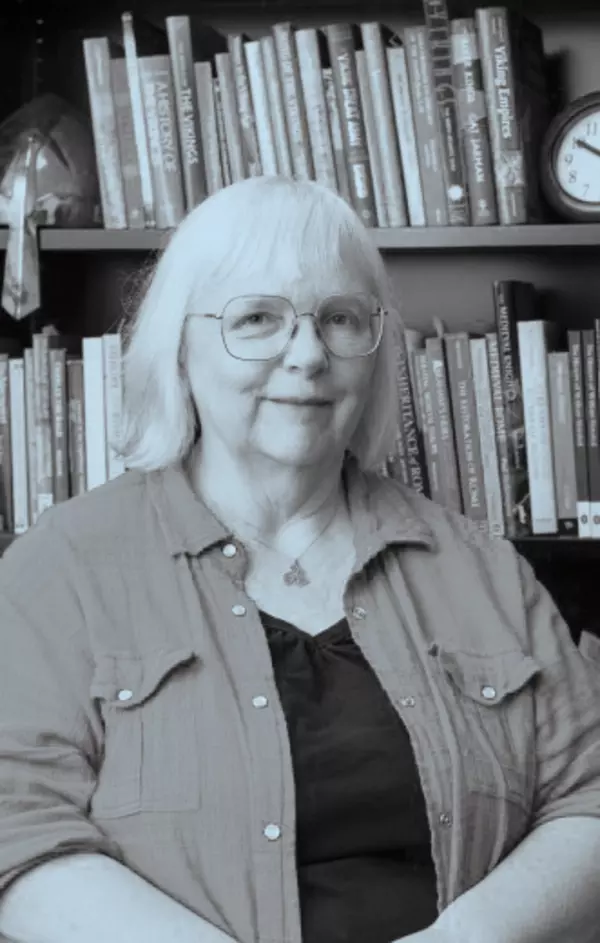
Phyllis Jestice ’82
Puget Sound degree: History B.A.
Graduate degrees, years, and institution: M.A. History and Humanities, Stanford University, 1985, Ph.D. History and Humanities, Stanford University 1989
Current title/position/dates held: Professor and Chair, Department of History, College of Charleston
Area of study/research: I’m a historian of medieval Europe, with particular focus on the history of religion in the earlier Middle Ages.
Was there a certain moment when you knew you wanted to have a career in academia? Or did it develop over time? Put another way, how did you get where you are now?
I started at Puget Sound thinking I was going to be a secondary school music teacher (with history as a back-up). I switched fully to History after damaging my wrist badly; the problem was, I’m just not much interested in American history, and that’s most of what’s taught in public schools. And ALL my History professors (and some people in other departments) started nudging me to focus on my true passion — the Middle Ages — which meant the route of higher ed.
Was there anyone at Puget Sound who influenced you in your academic journey, and how did they shape your path?
SO MANY people! First and foremost, Dr. Esther Wagner of the English Department, who mentored me one-on-one in Latin for 2½ years. My monthly donation to Puget Sound goes to her memorial scholarship fund (despite the fact that it funds an English major!) But not far behind Esther was Walter Lowrie of the History Department. His mentorship (including my honors thesis) turned into a true and deep friendship. When I was finding things at their very hardest in grad school, it was Walter I turned to for advice and guidance. (Oddly, eventually he became my step-step sibling; his stepmother married my father after my mother died.)
Can you share a favorite class, professor, assignment or memory from your time at Puget Sound that left a lasting impression?
This is the one I included in an essay when I competed for the Laura H. Cunningham memorial scholarship (which was endowed just in time for me to be the first recipient): Frank Danes in the Physics Department taught classical Greek, simply because he thought any university worthy of the name should have Greek (no Classics Department at that time). My mother was going through the course schedule my first semester, saw Classical Greek, and, to my embarrassment, set up an appointment for me to go talk to Frank. The man plain and simple ASSUMED that I would want to power through elementary Greek so I could catch up and join the class in the spring semester, and ASSUMED I had the ability to do so. It was an amazingly validating experience. It was like a shifting of a kaleidoscope, so that from one minute to the next I thought of university education in a different way—not as a hoop to jump through, but as a great intellectual adventure.
Are there ways you bring something from Puget Sound into your own classroom, whether through teaching style, assignments, or mentorship?
I can’t really imagine any time I DON’T bring something from those formative years into the classroom. My teaching style has developed from what I saw Walter Lowrie do; Esther Wagner modeled how to really engage with students on a personal as well as an educational level; Frank Danes taught me how utterly transformative assuming the best of a person can be. And there are lots more examples than this.
What does it mean to you to now be “on the other side of the desk,” guiding students as you were once guided?
I’m getting pretty late-career (I just turned 65), but it’s still exciting, and I have yet to reach the point where I can even imagine retirement. And sometimes it still feels pretty unreal. I’m the first college graduate in my family.
What are you most excited about in your current teaching or research?
I’m currently having a blast teaching a course on the Vikings. I’ve done a thorough overhaul of the class, adding the latest archeological studies and historical revision. And research for my current book is at a fun stage—I’m about ready to start outlining and then writing.
What advice would you give to current Puget Sound students who may be considering academia?
Honestly, the advice I give to every student I’ve had who was thinking about grad school and a possible academic career is: don’t do it if you can imagine something else you can do and have a happy and fulfilling life. It’s hard, it’s uncertain, even a degree from one of the greatest schools is far from an assurance that you’ll get a job. But on the other hand, an academic career can be enormously satisfying.
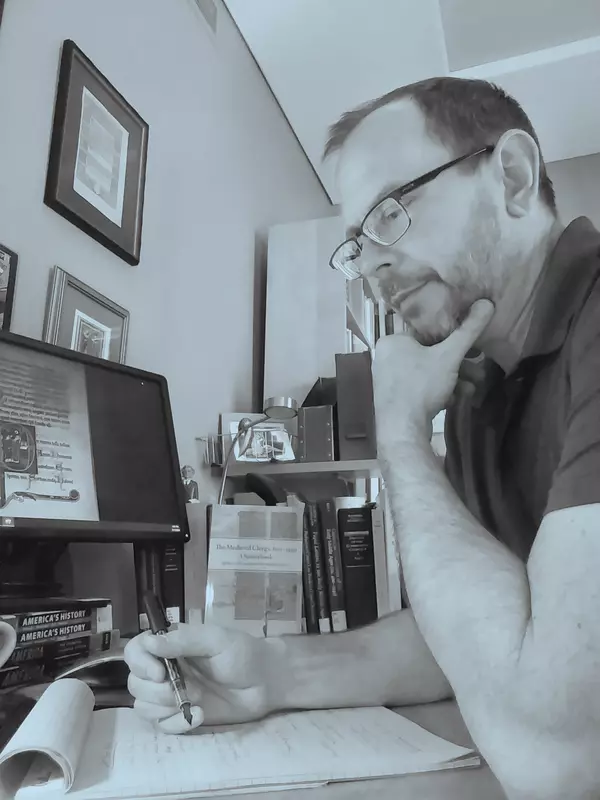
John S. Ott ’91
Puget Sound degree: Bachelor of Arts in History
Graduate degrees, years, and institution: MA in History at Stanford University 1994, Ph.D. in History at Stanford University, 1999
Current title/position/dates held: Professor of History at Portland State University, from 1999 to the present; Department Chair of History at Portland State University from 2019-2024; Interim Dean, College of Liberal Arts and Sciences at Portland State University, March to September 2025
Area of study/research: Medieval European History (France, 1000-1200 CE, ecclesiastical/cultural history)
Was there a certain moment when you knew you wanted to have a career in academia? Or did it develop over time? Put another way, how did you get where you are now?
I figured out that a career in academia looked pretty good by spring semester of my junior year/early senior year. I didn't actually know what getting a job in academia involved, but I was pretty impressed by how my profs combined a life of the mind with a middle-class lifestyle that involved lots of travel, discovery, and exploration. It looked like a pretty appealing package, so I applied — unsuccessfully! — to grad school my senior year of college. After being turned down everywhere that year, I regrouped and reapplied (successfully, this time) the following year.
Was there anyone at Puget Sound who influenced you in your academic journey, and how did they shape your path?
I had several mentors/teachers who inspired me. I was really influenced quite early on by the Honors College faculty, especially William (Bill) Barry and David Smith, who taught the Honors freshman History course in tandem. Both were historians, and I loved our syllabus. Mott Greene, also in Honors, happened to be teaching a survey of medieval history in Spring semester my freshman year, and I enrolled in that. The hook was set at that point. Later, Walter Lowrie supervised my thesis and served as a mentor, and I had great instructors in the French department — Michel Rocchi, Steven Rodgers, and Lisa Neal. Over in English, I learned from Denise Despres and Peter Greenfield, and Michael Veseth served as the Study Abroad instructor my Junior year, which is when I met him and his wife, Sue. They were instrumental in me landing my first job out of college, as a public historian for the City of Tacoma's Division of Light, Water, and Municipal Railroad. All of them modeled what it was to be an engaged and passionate instructor, which is what I think was most attractive to me about serving in the professoriate -- they were incredible teachers. When I was a professional in the field, I became a colleague of Michael Curley (Honors, English) and David Tinsley (German).
Can you share a favorite class, professor, assignment or memory from your time at Puget Sound that left a lasting impression?
The main formative assignment from that time was my Senior Honors Thesis, which I did under the direction of Walter Lowrie, with Bill Barry as a second reader. That was when I began to understand what historical research actually involved, and the experiences I had doing that — including winning a small grant of a couple hundred dollars to go up to Suzzallo Library at UW to work with older materials in their collection, and incorporating French scholarship into my thesis -- were really very formative. I was pretty proud of the thesis I produced and still keep a copy of it on my office shelf to show my own advisees from time to time. I also need to give a shout-out to the History of Astronomy course taught by James Evans, where we assembled astrolabes and celestial spheres and used them to calculate various celestial coordinates. It was a fun, hands-on experience.
Are there ways you bring something from Puget Sound into your own classroom, whether through teaching style, assignments, or mentorship?
Teaching style, definitely: My instructors, for the most part, led engaged discussions rather than merely lecturing, and those were where I learned how to teach effectively — they weren't content to be merely the 'sage on stage', but involved students in their own learning. I teach in a large, state/regional access university, and the same lessons apply.
What does it mean to you to now be “on the other side of the desk,” guiding students as you were once guided?
I have been very lucky to become an academic. It is a unique profession in that it allows you to combine a personal passion (medieval history, in my case) with serving a larger, public good in educating students about one's discipline and the past. I actually get to live/teach something I fundamentally believe in, every day. It's pretty magical. Not that academia is a bed of roses -- far from it, especially the past decade or so! But the basic role of education and the benefits it confers to students and society have not changed, and I am particularly fortunate that I am able to share those benefits with first-gen and other students at PSU (about half our students are first-gen college students).
What are you most excited about in your current teaching or research?
I am particularly excited about researching and publishing previously unknown texts that I've come across in my research. Right now I am working on a canon (church) law collection from the 11th century that is not very well known in terms of its diffusion and genesis. I will soon be publishing a previously unknown/unremarked collection of canon law written in the margins of an 11th-century manuscript. It's not Indiana Jones, but it's as close as it comes in my field. (BTW, Greta Austin at Puget Sound is a colleague and friend in the same field, and I know and admire the other medievalists there, including Katherine Smith and Kriszta Kotsis in Art History.)
What advice would you give to current Puget Sound students who may be considering academia?
Academia is an extremely difficult but also potentially rewarding place in which to work. Above all, students should speak to trusted mentors — as many as possible — about what's involved in pursuing a Ph.D. and seeking a job in academe. I don't actually recommend the path to many of my students, and only if they go into it with eyes wide open. My field is in a sustained period of contraction, and there are few jobs to be had these days. That may change in the future, and it was also the case when I was considering applying for Ph.D. programs back in 1990. But no one should enter academia with any illusions about what's involved and what sacrifices it entails — and it does entail sacrifice. Still, the potential rewards are immense. Seek advice, and understand why you're pursuing a degree, what you hope to use it for, and what you will take away from it personally.
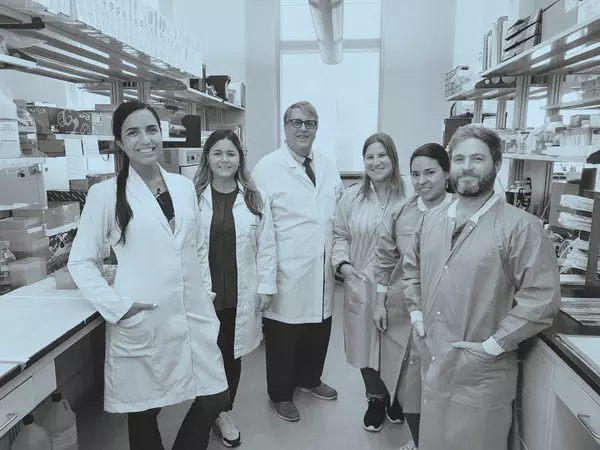
Jeffery M. Vance ’74
Puget Sound degree: Bachelor of Science, Biology
Graduate degrees, years, and institutions: Ph.D., 1979, Indiana University; MD, 1984, Duke University; Internship (Medicine) and Neurology Residency, Duke University 1989
Current title/position/dates held: Professor, (Founding Chairman 2007-2012), John T. Macdonald Foundation Dept of Human; Genetics, Miller School of Medicine, University of Miami, Florida, 2007-present; Professor, Department of Neurology, Miller School of Medicine, University of Miami, Florida, 2007 to present; Director of the Center for Genomic Education and Outreach, Hussman Institute, Miller School of Medicine, University of Miami, Florida 2007 - present.
Area of study/research: Neurogenetics, the study of genetic causes of disease
Was there a certain moment when you knew you wanted to have a career in academia? Or did it develop over time? Put another way, how did you get where you are now?
When I entered Puget Sound I knew I wanted a career in science; business had no interest for me. I was headed towards academia from the beginning, I guess. I obtained my Ph.D. from the Department of Medical and Molecular Genetics at Indiana University in Indianapolis and found I really liked research. Most people don’t really realize that medical research is very creative; instead of paint or clay, we work in creative ways to utilize facts. I found the stimulation and flexibility it provides enjoyable, you can be independent and do your own thing, follow your own ideas.
During my PhD postdoctoral fellowship at Duke University, I also realized that I needed more than just laboratory work. I wanted to have more control over what I was doing and greater opportunities. Ph.D.s did not have the career choices they do now. I also missed the patient contact, as we had a lot in my Ph.D. training. After attending Duke University Medical school and obtaining my MD, I did a Neurology residency at Duke and stayed and rose to be a Professor of Medicine (Neurology). During that time my wife, Dr. Margaret Pericak-Vance (Peggy) and I started and grew the Duke Center of Human Genetics (CHG). In 2007, the University of Miami and the state of Florida recruited Peggy and I to the University of Miami Miller School of Medicine to establish the Hussman Institute for Human Genomics. We brought with us over 70 members of the CHG at Duke to start the institute.
Was there anyone at Puget Sound who influenced you in your academic journey, and how did they shape your path?
Dr. George Blanks was my genetics professor, and he inspired my growing interest in genetics. He often approached ideas and concepts in an “out of the box” way which I enjoyed. Also Dr. Slater, who had the natural museum named for him, and Dr. Jeffrey Bland in chemistry are professors I remember fondly. Their enthusiasm inspired my interest in continued learning. Also, Earl Scott, a philosophy professor who taught a class discussing how consciousness can occur from our organic brain which was probably my most memorable class I had at Puget Sound. This class really got me interested in neurology.
Can you share a favorite class, professor, assignment or memory from your time at Puget Sound that left a lasting impression?
I was fortunate to be in the 4-1-4 program of Puget Sound at the time, and that had a tremendous influence on me. You really could get excited about science in that six-week immersion. Getting out of the classroom is so important. I did a biology field trip to the San Juan Islands with Dr. Slater on a 53-foot boat, Marine Biology at UHawaii at a lab in Kane'ohe Bay and molecular anthropology with Dr. Blanks at UC Berkeley with Dr. Wilson, who was one of the founders of the field. I also did independent research, worked with an electron microscope, which was pretty cool for an undergrad. I also had the opportunity to work on the initial parts of the “Red Wolf Project” at the Point Defiance Zoo, a project which has grown and is highly successful and still active.
Are there ways you bring something from Puget Sound into your own classroom, whether through teaching style, assignments, or mentorship?
Yes, I am PI of the JJ Vance Summer Internship for rising high school seniors at the Hussman Institute. Funded by National Institutes of Health, it is named after our son JJ, who died when he was 15 (www.jjvances.org). It is a hands-on, embedded experience where students do research on the same projects as the postdocs and faculty, working with them each day. This approach was inspired by my 4-1-4 experiences. The effect of just eight weeks of experience on students is amazing, both in their confidence and knowledge. Last year we had 128 applications for just 12 positions, so it’s very popular.
What does it mean to you to now be “on the other side of the desk,” guiding students as you were once guided?
Well, you try to use your experience to help students keep events in perspective and to help them focus on what is important. For instance, students become fixated on technology. But technology continually changes, but learning how to be successful, how to approach problems, how to decide what path to take next, these are things that do not change.
What are you most excited about in your current teaching or research?
My current research is on the genetics of Alzheimer disease. Utilizing epigenetic and functional approaches like CRISPR, we are working to create a therapy for APOE4 carriers, a variant that 60 percent of Alzheimer patients carry. I am also excited about our work to bring African and Amerindian ancestry into research. We have projects in 10 African countries and in several in South America. Collaborating and visiting with these scientists is really enjoyable and rewarding.
What advice would you give to current Puget Sound students who may be considering academia?
Best advice I got career-wise was not to worry about the time you must spend in the next few years going to school, or training, but to think where you want to be in 10 years. That should determine your course. You are going to spend most of your life after your training, so why not end up doing what you want, and if it takes a few more years, so what? As a MD/Ph.D. I have been able to do so many different things in my career, which I hope is a good example for individuals just starting out.
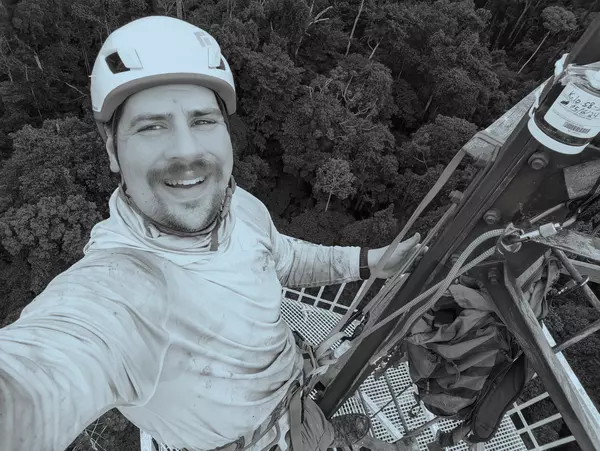
Joel Eklof ’16
Puget Sound degree: B.S. in Physics with minors in Environmental Policy and Math
Graduate degrees, years, and institution: M.S. in Hydrology and Hydrodynamics from the University of Washington in 2018, Ph.D. in Civil and Environmental Engineering from the University of Washington in 2024
Current title/position/dates held: Assistant Professor of Environmental Studies and Sciences at the University of Puget Sound
Area of study/research: Permafrost Thaw and Climate Change
Was there a certain moment when you knew you wanted to have a career in academia? Or did it develop over time? Put another way, how did you get where you are now?
I knew, from my time at Puget Sound, that I wanted to pursue a Ph.D. In engineering, higher education often offers greater professional variety. I found the idea of working on diverse projects compelling. While pursuing my Ph.D., I got the opportunity to teach courses and get involved in youth education. I knew almost instantly that being an educator was what I was meant to do. Nothing provides as much personal spark as seeing students grow and build new confidence.
Was there anyone at Puget Sound who influenced you in your academic journey, and how did they shape your path?
The list is extensive! Professors Rachel Pepper and Rachel DeMotts provided exceptional undergraduate research experiences and instilled in me a deep love of scientific exploration. Instruction from professors Dan Sherman, Peter Wimberger, David Latimer, and Rachel Pepper was formative and foundational in my own identity as an educator. Professors Mike Veseth and Jeff Matthews were and continue to be exceptional mentors and friends. I met my beautiful wife, Chloé Eklof ’13, MAT’15, during my time at Puget Sound. Chloé is an exceptional educator and constantly makes me a better person and teacher.
Are there ways you bring something from Puget Sound into your own classroom, whether through teaching style, assignments, or mentorship?
During my time at Puget Sound, I was able to benefit from a wide variety of experiential learning opportunities, from a field course in Botswana and Namibia, to summer fluid dynamics research, to camping and field excursions to see local environmental clean-up projects. I am continually working to bring experiential learning to my own students. I have snow pit digs planned for a new cryosphere course, white-water rafting and data collection planned for a new hydrology course, and I will be bringing research students to permafrost terrain on Mt. Rainier and across Alaska.
What advice would you give to current Puget Sound students who may be considering academia?
When looking for research-based graduate programs, finding a position is equal parts luck, relationship, and ability. Reach out to potential advisors early, so that once they get funding to take on a graduate student, you are already on their mind. When you finally visit, talk to the current graduate students. Are they happy? Ph.D.s take a long time, and your well-being should be an integral part of the decision-making process.
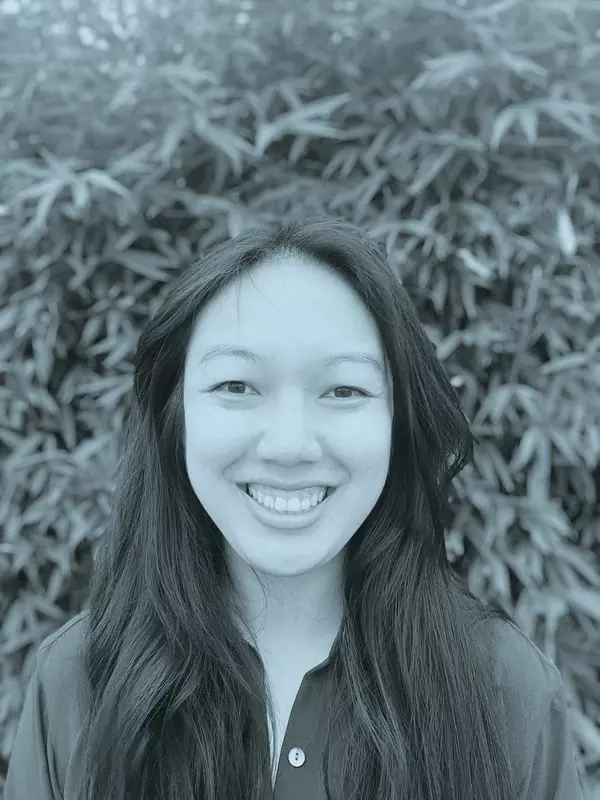
Emma X. Paulson ’18
Puget Sound degree: B.A. Sociology and Anthropology
Graduate degree, year, and institution: Ph.D. Information Sciences (in progress), University of Illinois Urbana-Champaign
Current title/position/dates held: Doctoral student
Area of study/research: Media representations, popular culture, Asian American studies, transracial transnational adoption
Was there a certain moment when you knew you wanted to have a career in academia? Or did it develop over time? Put another way, how did you get where you are now?
When I left undergrad, I did not want to pursue additional education, partially because I hadn’t done any planning for grad school and partially because I had no desire to join the ivory tower. After several years in private sector research and consulting, however, I began to realize the questions that had burrowed their way into my thinking at Puget Sound remained and could only be answered in academia. That, along with some (light) peer pressure from my good friend Dr. Kyle L. Chong, encouraged me to finally put thought into action and pursue academia.
Was there anyone at Puget Sound who influenced you in your academic journey, and how did they shape your path?
I would not be where I am in my academic journey without the encouragement and steadfast support of Dr. Jason Struna from the Sociology and Anthropology department and Dr. Alisa Kessel in Politics and Government. I had Dr. Struna during his first semester at Puget Sound, in SOAN101 and we were able to grow together through my senior year where he served as my Coolidge Otis Chapman Honors Thesis advisor. When I graduated, he said to me “I’ll see you in academia” to which I scoffed because I had no plans or desire to pursue a graduate degree, but now he gets to say “I told you so” for the rest of my life. While Dr. Struna was a mentor during and after my time at Puget Sound, I only developed a significant relationship with Dr. Kessel after deciding to apply to Ph.D. programs. Although I doubted she remembered me from one course years ago, she has shown me so much kindness, clarity, and support during my application and early doctoral student times, especially when I was feeling discouraged or overwhelmed. Both professors have truly shown me how pursuing academia is about community, trust, and persistence – many people have the smarts and the capability and the desire to pursue it, but oftentimes it comes down to having people around you to lift you up.
Can you share a favorite class, professor, assignment or memory from your time at Puget Sound that left a lasting impression? Are there ways you bring something from Puget Sound into your own classroom, whether through teaching style, assignments, or mentorship?
I truly value the experience Puget Sound gave me and believe that it gave me access to some of the best instructors I could have hoped for. Their attention and intention with students is something that I try to bring with me into instruction with my own students. While the students I’m teaching at an R1 institution have a very different experience and relationship with their professors, I take every opportunity I can to build up their thoughts, shape it into clearer and more critical thinking, and provide thoughtful feedback on their work so they can move on from my class not only with greater content knowledge, but with stronger ways to craft questions and think about answers.
What does it mean to you to now be “on the other side of the desk,” guiding students as you were once guided?
Being “on the other side of the desk” now, I am only beginning to realize the responsibility that I feel for my students and their growth. Even though I’m only with most of them for a semester, I am still deeply invested in them. I’m looking forward to being able to be the person for them that Dr. Struna and Dr. Kessel were for me.
What are you most excited about in your current teaching or research? What advice would you give to current Puget Sound students who may be considering academia?
Academia is hard and long and tiring; half of the work isn’t the work, it’s perseverance. There are always those people who can go it alone, but your life will be made immeasurably better when you surround yourself with community. Puget Sound will equip you with the tools to thrive in academia, but your achievements will also be built on the shoulders of your mentors, peers, and friends who will feed you, both literally and figuratively.
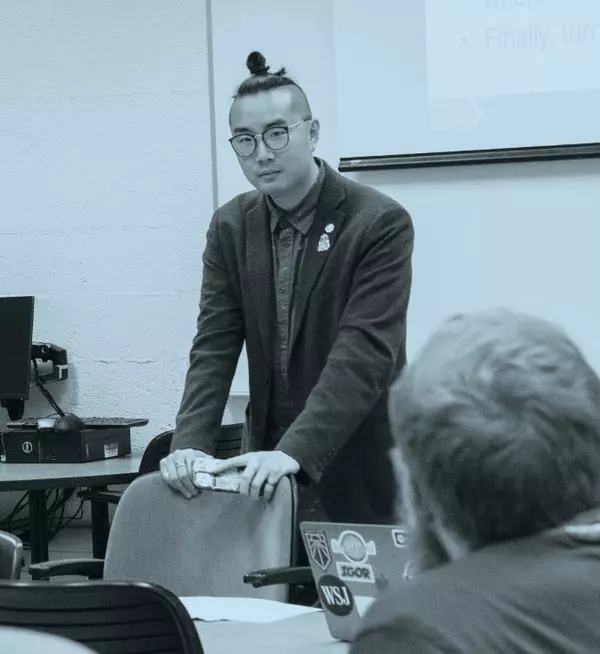
Kyle L. Chong (張陳創庭) ’18
Puget Sound degree: Bachelor of Arts, Politics and Government; Robert S. Trimble Distinguished Asia Scholar
Graduate degree, year, and institution: Doctor of Philosophy, 2024, Michigan State University
Current title/position/dates held: Postdoctoral Researcher, Department of Teacher Education; Core Faculty, Asian Pacific American Studies Program, Michigan State University
Area of study/research: Critical race studies in education, Asian American Studies, curriculum studies, social justice education, educational policy
Was there a certain moment when you knew you wanted to have a career in academia? Or did it develop over time? Put another way, how did you get where you are now?
I would say I decided I wanted to go into academia at some point during my time at the University of Puget Sound. I loved the debates, the commitment to getting an argument “right” as opposed to just “getting a good grade.” I am a Taiwanese and Japanese American transnational but not transracial adoptee, meaning that my Chinese-American adoptive parents also look like me. My parents and grandparents are descended from some of the first Chinese settlers in California, some of whom are documented in Thomas Chinn’s Bridging the Pacific as among the first generation of Asian, American medical doctors and my aunt, Elizabeth, who was the first Chinese American Principal in the San Francisco Unified School District. For me, I was privileged to have exceptional, teachers and professors throughout my education, and I found myself gravitating more towards the humanities and social sciences because of the racism I experienced throughout much of my education, especially in school subject areas that Asian Americans are stereotyped to excel at, such as mathematics and science.
Was there anyone at Puget Sound who influenced you in your academic journey, and how did they shape your path?
At Puget Sound, I started out as a philosophy major, and quickly changed to Politics and Government where I credit several faculty, especially my advisor Dr. Karl Fields and Dr. Alisa Kessel, whose teaching both confirmed my interest in understanding the contours of power, but also validated my potential to be a researcher. As Dr. Fields used to say to much fanfare on PacRim, “identity is a two-way street,” which continues to ground much of my research. I also credit Dr. Kessel for being the one to push me towards education as a field of study, given the thesis she directed in my senior year. I appreciated her patience, generative questions, and support of my writing as I explored a game-based pedagogy and how it can invite students to practice the skills needed for democratic citizenship. It was in this process of doing my own research that I decided academia was for me. I still have the book that Dr. Kessel gifted me upon completing my thesis, in which she wrote that “writing is a practice, and a grueling one at that.” Throughout the process of writing that thesis, and the conversations I got to have around my topic, I decided that academia was for me. In short, she and Dr. Fields had done the rich pedagogical work needed to seek and create new knowledge. At the same time, I was also grateful to have participated in the Pacific Rim program, where I also pursued the now-retired Robert Trimble Distinguished Asia Scholar designation that required writing a second thesis. In the process of writing the second thesis, I worked closely with faculty members who each profoundly influenced my current scholarly trajectory by giving me language and methods to interrogate the difficult interdisciplinary questions I was, and continue to be, struggling with.
I also worked with Dr. Jason Struna (Sociology and Anthropology), and Dr. Stuart Smithers (Religion) to conduct a study while we were traveling throughout Asia, who I chose because of their respective interdisciplinary work. Each has shaped my academic journey in different ways. Dr. Struna especially, who I had serendipitously met during new student orientation and subsequently interviewed on my KUPS show during my junior year, became a close friend and colleague because of our shared interests in understanding the dignity of work, and how systems of power impact real people every day. I also should thank current and former professors Denise Glover, LaToya Brackett, Brett Rogers, Eric Orlin, Aislinn Melchior, Mikiko Ludden, Johnathan Stockdale, and Zaixin Hong for the ways they each individually helped me think differently about teaching, learning, and identity through my undergraduate career. Each of them contributed significantly to the ways I conduct my research and engage with my students now.
Can you share a favorite class, professor, assignment or memory from your time at Puget Sound that left a lasting impression?
There are several books, assignments, and teaching strategies in my current professional practice that directly come from my instructors at the University of Puget Sound. In my work in the fields of Educational Foundations and Teacher Education, I work with future and current teachers to think critically about how they can notice and disrupt systems of oppression in their daily practice. What I often find difficult is that many students come into my classes or trainings having not thought about how their own lived experiences may have differed from those around them. This often means that, in my classes, I have to invite students to critically "map" (that is, to name) their identities, how they come to their identities, and that power/privilege those identities afford individuals. Building on how faculty like Dr. Fields invited us to consider the political contours of Chinese identity, much of my research now uses similar methods of weaving historical and political analysis with critical reflections. In 2023, I published an article analyzing a primary source we were assigned as part of PG 378 on PacRim. In the paper, I analyze the United States military training curriculum artifact from World War II with a particular focus on race, and how the pamphlet says seeds, some of the stereotypical troops that are still imposed on Asian Americans in schools today. This artifact, which I studied in education research for the first time, is also a rare example of where curriculum, pedagogy, and policy collide and exemplify the ways the ideological work of curriculum.
Are there ways you bring something from Puget Sound into your own classroom, whether through teaching style, assignments, or mentorship?
I use two things from courses I took at the University of Puget Sound. First, I use activities similar to those that Dr. Kessel used in PG 104 (Introduction to Political Theory) and PG 340 to interrogate the contours of political ideologies, and how ideologies manifest across different contexts to invite students into critical conversation about assumptions that education, law, or curriculum are "neutral". Second, I continue to borrow heavily from the ways that Dr. Fields, in courses like ASIA 344 (Asia in Motion) and PG 378 (Chinese Identity), complicated the formations and embodiments of social identity markers using interdisciplinary approaches, allowing students to compare and contrast different approaches to understanding identity across disciplines. In addition to these particular classroom practices, and the structures of assignments that both professors used, I still frequently draw from readings and other course materials they assigned in order to ground my research.
What does it mean to you to now be “on the other side of the desk,” guiding students as you were once guided?
I consider liberal arts approaches to teaching and learning to be central to how I work with students now. My classes are always designed as seminars, much as I had at the University of Puget Sound. Working with undergraduate students has always been something that excites me about being an academia, and I consider it a great privilege to share in students’ ‘a-ha’ moments where they begin to connect the sometimes-abstract language of how we talk about power and privilege to their own daily lives. While I continue to use several of the readings and other course experiences from my time as a student at Puget Sound, I most frequently find myself drawing on the ways that Puget Sound faculty taught me how to write. In fact, the writing guide that I provide my graduate and undergraduate students at the beginning of every course I teach cites at least six Puget Sound faculty members, and lessons they taught me as they patiently guided my own writing.
What are you most excited about in your current teaching or research?
In my current work, I am the Postdoctoral Researcher on a multimillion-dollar Hewlett foundation funded grant on racial justice and teacher education. In my current work, I currently supervise doctoral and undergraduate students as I lead a national study of how future teachers develop their teaching philosophies — and how those emerging teaching philosophies can center racial justices. I am really excited to work with future teachers, as they start to cultivate their teaching philosophies because the courses I teach are largely in what my field calls the "social foundations of education" where future teachers learn about how power and privilege impact the daily lives of students. My research is studying what students say in those classes, and how they write about their teaching philosophies, to try to figure out what "promises" future teachers make to social justice, and how they envision "keeping" those promises (and not). This research is important because it helps us think about how teacher training programs, and academic programs broadly, will frequently say they're committed to equity and social justice, but can sometimes "break" the promises that they make to social justice and equity by training students (and future teachers) to perform a set of commitments, but not know what to do with them. My work tries to break this cycle by considering what actions students feel like they can and cannot take as early career teachers to disrupt systems of oppression and find ways to design academic program experiences that allow them to practice the skills of disrupting systems of oppression.
In addition to being a Faculty Mentor in multiple national organizations, I also work closely with doctoral students as they navigate graduate school in their own doctoral education journeys. Mentorship is really important for me because of the mentoring I received from faculty of Puget Sound, and I was honored to publish the first of hopefully several pieces with Emma Paulson ’18 recently in Research on Diversity in Youth Literature. I am honored by the trust that my students and colleagues place in me to support our growing scholarly family and community across disciplines because of how isolating graduate school and academia can sometimes be.
What advice would you give to current Puget Sound students who may be considering academia?
I would have the following advice for undergraduate students of color especially who are thinking about graduate school in the social sciences and humanities (I don't know anything about STEM, sorry!). Never let anyone who doesn’t know us speak for us. Whether that’s a community with which you identify, or a context you have roots in, the “ivory tower” profits when they speak about us like we can’t speak for ourselves. Research, when done unethically, is extractive, especially when (usually white) scholars profit (materially or socially) from being an “expert” on a community by speaking for it. I just want to remind y’all that being of a community is an expertise they will never have. I strongly encourage you to think about how you can disrupt the narratives that are told about a community you belong to.
In my field, there aren't a ton of us doing work specifically with/about Asian American communities in ways that build coalition with other racialized communities, and so often I'm having to push back on people who are trying to talk about my experience through disembodied data, abstracted theory, or “objective” statistics. But where is the humanity in that? If you're thinking about graduate school, consider how the “new knowledge” you’ll create will be shaped by the family of mentors you seek out. Furthermore, consider critically who can help you to ask critical questions of the field that you're interested in, so that your story, and stories from communities with which you identify, can be central to the work you're doing.
Many of my students know I often ask “what work do you have to do to understand this story?” To me, this helps to preserve and center the humanity in the work we are doing. The second piece of advice I have is a little bit more practical, which is that those who are wanting to work towards Ph.D.'s in particular need to think critically about where you will be safe, and what you need to feel safe in your doctoral work. I am enormously privileged to currently work in a state where there isn’t curricular censorship or a sudden infusion of outward white nationalist extremism in what students learn in schools and universities. Not all of us are in such “comfortable” circumstances. Right now, many early-career scholars (like me) who do critical work in the social sciences and humanities, especially about race, are experiencing acute challenges on the job market. As universities increasingly become targets of culture war politics, and academic free speech is eroded nationally. There are simply some places where it is no longer safe to do work about race, racism, or other systems of oppression. So, I encourage you to work with your mentors to be critical of where, and with whom, you will feel safest doing your graduate (and especially doctoral) work.
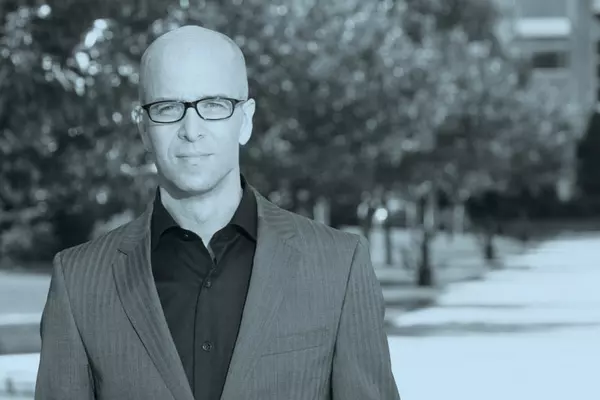
Mark Robert Mansfield ’93, P’27
Puget Sound degree: Bachelor of Arts, with Honors in Communication. Minor in Psychology
Graduate degrees, years, and institutions: MBA - Master of Business Administration from the University of Washington, 2003; MDesS - Master of Design Studies with distinction from Harvard University, 2006; Ph.D. in Architecture from The Oslo School of Architecture and Design, 2015.
Current title/position/dates held: My main role, in the legacy of Puget Sound’s impact, was as Executive Director for the University District, in Spokane, leading the coordinated interests of six universities and colleges – the University of Washington, Washington State University, Eastern Washington University, Gonzaga University, Whitworth University, and the Community Colleges of Spokane (2015-2017). Today, I teach at BI Norwegian Business School in the Master of Science in Digital Communication Management.
I have also taught at: University of Oslo’s International program, Oslo Norway (2007-2014); Norwegian University of Science and Technology (NTNU), Trondheim Norway (2012); Oslo School of Architecture and Design, (AHO), Oslo Norway (2007-2008); and Westerdals - School of Arts, Communication and Technology (2014).
Area of study/research: My research explores how where we live shapes our lives, and the potential of our cities to be enlivening places that bring out the best in us. My company, Urban Archetypes, is a think tank that provides analysis and recommendations to improve governance and policy across a wide range of architecture and urbanism topics.
Was there a certain moment when you knew you wanted to have a career in academia? Or did it develop over time? Put another way, how did you get where you are now?
I didn't apply to Puget Sound immediately after high school, and when I got there, I knew I wanted more than an education; like many, I wanted a transformative experience. That time will always be special, abounding with potential and promise. We arrive as freshmen knowing where we come from and may even have a sense of what we want, but our future is open and undetermined. Though I come from a family of educators and was raised to appreciate problem-solving and life-long learning, my years at Puget Sound were decisive in charting my own path.
I do not think there was a specific moment or revelation that made me want an academic career; I still don't know what I want to be when I grow up. But, attending Puget Sound, I knew I loved being a student, was stimulated by the manifold intellectual pursuits on offer in class and across campus, and was captivated by a vague notion of living The Life of The Mind. Young adults should be excused, perhaps even admired, for their propensity for heady thoughts: one of mine occurred between Thompson Hall toward the Collins Memorial Library. Walking across the quad, I recall knowing with certainty that I always wanted to be in an intellectually stimulating community and surrounded by the rigours of inquiry and reflection I was experiencing at Puget Sound.
Was there anyone at Puget Sound who influenced you in your academic journey, and how did they shape your path?
Absolutely! The question makes me awash in gratitude, and brings a parade of people and experiences to mind. I will forever be thankful to Raymond W. Preiss (Professor of Communication Studies) and Susan Owen (Professor Emerita, Communication Studies) for the ways they extended learning opportunities beyond the classroom, nourished my intellectual curiosity, and encouraged my academic development.
Professor Preiss is an animated lecturer and an inspiring champion for applying statistical methods to gain insights. He was always quick to sketch a bell curve on the chalkboard, make statistical concepts accessible, and promote data-based insights. He provided me with my first extracurricular research opportunities, including developing surveys, entering data, and running to the mainframe in the computer lab to retrieve the processed datasets. Later, we co-authored and presented a paper together at a regional communication conference during my sophomore year.
Professor Sue Owen had a profound orienting influence on my life — professionally and personally. I first met Professor Owen in her media and rhetorical criticism class. I gravitated to the material through her teaching; I felt like she provided corrective lenses to see, in more detail and with higher fidelity, culture in a way that intrinsically interested me. Though I had enrolled in Puget Sound pursuing interests in business and law, soon after completing my first course with Professor Owen, I declared my major in Communication. Perhaps my interests were already intact in the subject matter; however, her teaching was determinative. Professor Owen’s classroom was a crucible for students’ potential development. She had high expectations and always provided a high level of support to me and all other students who rose to the challenges. This decision defined my undergraduate focus and secured my years of tutelage under Susan through several classes, engaging seminars, and independent study. I would characterise her teaching as a pairing of her exceptional ability to elucidate complex ideas, providing penetrating insight with her Socratic teaching style, requiring students’ constant engagement. I found myself inspired to spend evenings and weekends in the library reading outside of assigned material, as the discursive approach of her class generated more and more questions. At one point, Professor Owen even helped petition the library staff to grant me a dedicated office space in Collins Memorial Library where I could keep my books and study.
I believe that through Professor Owen's impassioned teaching, all her students felt the elevated importance of criticism as more than a textual practice. Instead, criticism was an urgent and essential activity in the pursuit of truth and meaning; a rigour required to support principled action; and an aspect of one's character to cultivate. I am saying that, though we were taking classes in media and film criticism, rhetorical criticism, and studies of visual rhetoric, we were ultimately learning about ways to lead a principled life.
Professor Owen’s own intellectual commitments served as a model and inspiration. Though it is to be expected for every professor to identify with their disciplinary interests, Professor Owens' dedication to her research, to me, went further. Her work took on a dimension of advocacy. Perhaps what made her teaching so compelling was the congruity between class and her example. She modelled a life in accord with her values. On more than one occasion, she defended difficult and controversial positions on campus that I must imagine caused friction for her within campus politics. In the process, she demonstrated the power of persuasive speech and principled action beyond the classroom curriculum.
I am grateful for the support Professor Owen provided after graduation. She provided exceptional encouragement and support for me to explore attending graduate school. When I did not immediately enrol, she still offered timely counsel at critical junctures of my career. I could hardly imagine in 1993, when graduating with a degree in Communication, that my interest in how we process and consume media, arguably, would become one of the most relevant frames for understanding contemporary society and the modern world. It would help me identify opportunities and grow my own company in the 1990s evolution of the World Wide Web, pioneering e-commerce practices, and developing what would later be called a social network platform.
My success as an entrepreneur of a web-based business enabled subsequent opportunities to further my interests in architectural and community development. Along the way, I had the additional benefit of numerous outstanding professors and mentors in pursuit of master’s degrees from the University of Washington and Harvard University, though none exceeded the influence and example set by Professor Owen. Professor Owen’s recommendation no doubt strengthened my Ph.D. candidacy, but, moreover, her belief in my abilities emboldened my resolve to pursue my interests.
Can you share a favorite class, professor, assignment or memory from your time at Puget Sound that left a lasting impression?
My senior year coincided with the 10th anniversary commemoration of the Vietnam Veterans’ Memorial. The memorial and event represented a unique opportunity to examine the social construction of cultural memory. Many of Professor Owen’s lectures and her then-forthcoming publication, Parallels (authored with J.T. Hansen and Michael Patrick Madden), examined an oral history of warfare. Consequently, a classmate, David Bishop, and I made independent plans, inspired by and under the advisement of Professor Owen, to fly to Washington D.C. and embark on our own extracurricular research, ethnographic study, and photo essay.
While there, I had the privilege to participate with public figures, politicians, military leaders and others in the reading of every soldier's name on the memorial wall. I was honored to receive the Michael Patrick Madden Research Award in 1993, for the research I produced based on this trip. That experience laid the cornerstone for much of my academic life and eventually, my doctoral dissertation studying national narratives, collective memory, and the built environment.
Are there ways you bring something from Puget Sound into your own classroom, whether through teaching style, assignments, or mentorship?
Count me among the many who appreciate Arches for highlighting the diverse ways Loggers make a difference in the world. My primary role, in legacy of my experience at Puget Sound, was as Executive Director for a University District, leading the coordinated interests of six universities and colleges – University of Washington, Washington State University, Eastern Washington University, Gonzaga University, Whitworth University, and the Community Colleges of Spokane. It is a model where university research and learning are leveraged for real-world solutions.
My mandate was to bring together university research with entrepreneurs, startups, business incubators, companies and organisations as a flywheel of economic and community development. The mission of the University District empowered me to promote everything I identified with my time at Puget Sound: to mix the fresh perspectives of students with a supportive environment of experts and the freedom to explore new ideas across disciplines. Based on my own experience, as well as graduate research, it was easy for me to promote an expanding role of higher education and applied research to transform the world around us.
What does it mean to you to now be “on the other side of the desk,” guiding students as you were once guided?
In thinking about guiding students, there is a very memorable encounter that I think about yet have never recounted. Perhaps one of my most important lessons at Puget Sound was not part of any curriculum, yet it has influenced how I have run my businesses, my classrooms, and shaped many of my personal interactions — including as a father. I'm not going to incriminate myself, but I will say I made a mistake and got myself into a bit of a regrettable misadventure during my first year at Puget Sound. Kristine Bartanen (Provost emerita and Professor emerita), in her leadership role, was to decide my fate. Instead of imposing a punitive judgment as outlined in the bylaws, her decision gave me the opportunity for redemption. In a moment when I might have gotten what I deserved, Kristine offered grace and a larger opportunity for growth. She gave me more than the benefit of the doubt in her consideration. I often think of her empathy and insight as a leader in how she treated my mistake, helping me better myself. I try to pay this gesture forward when I can, looking for the best in others before passing judgment. Especially with students, I try to remind myself to use every interaction as a teaching moment to help them grow.
What are you most excited about in your current teaching or research?
Students are in an increasingly polarized world, confronted with the profound uncertainty of shifting job markets, dizzying technological changes related to artificial intelligence, and the noise of everything all the time in our internet-of-things and hyper-connected world. I am intrigued by the possibilities of the classroom to meet students where they are, shaping the learning experience to their needs. I am excited by the opportunities to enrich the learning experience in a way that helps them navigate these complex conditions.
Though I teach in a Master of Science in Business program, I am continually smuggling in the underpinnings of the liberal arts education, promoting critical thinking, problem-solving, and an ardent desire to inspire each student to a better understanding of themselves so they can lead their own life and positively impact the world around them. I value how engaged teaching requires a growth mindset, continuous learning, and expanding my skills to adapt to the students. The classroom is a brilliant environment for personal growth of the teacher, as well as the student.
What advice would you give to current Puget Sound students who may be considering academia?
Everyone’s path should be different; most of my career was as an entrepreneur, not an academic. But if a Puget Sound student is considering academia, I would say: you are needed! It is a profession where you can pursue independent, innovative thought and champion getting good ideas into practice.
Is there anything else you’d like to add or that we forgot to ask?
I have not exhausted my deep-felt thanks for a long list of formative teachers. I'm smiling, recalling my first class at university with Professor "Wild Bill" (William) Haltom (Professor Emeritus, Politics and Government). He apparently had studied the incoming Freshman Record “face book,” recognising each of us by our names. There would be no hiding in his classroom! Seeing him call out to other students around campus makes me think he had incredulously learned the names of the entire incoming class. There was so much good in his classroom that it is hard to register against our contemporary moment and social mores. His high standard of returning any paper after detecting three errors and then lowering a full grade after revisions seems like a towering standard at a time when basic spell-checking was not uniformly available on word processors and personal computers. I would also love to think there is still wiggle room for a professor to hold (unofficial) office hours at E9 Brewing Co., as he did. Wild Bill was strict, knowledgeable, and a booming and affable presence in the classroom. One of the greats!
Also, I want to mention Hans Ostrom (Professor Emeritus, English). Though I only had one class with him, his detailed feedback on my writing still impresses me. Especially now, as a teacher myself, I marvel at the generosity of time and attention Professor Ostrom gave students. I’m not sure how he did it. Around graduation, I stopped off at his office. I wanted him to know I appreciated his class. He didn't seem moved by my praise; instead, he got busy with probing questions about my plans, pulling a couple of books off his shelf to send with me. The focus was clearly still on helping me improve myself even though I was set to graduate. I hope he didn't expect me to return the books because I still have them on a shelf of writing references, and I still want to be a better writer. His encouragement has stayed with me as much, if not more so, than his classroom lessons.
Perhaps the greatest testament to my appreciation for the opportunities I experienced during my undergraduate years is the delight I feel that my oldest son now attends the University of Puget Sound. Though he is 5,000 miles from where I am and where he grew up, I take great comfort in knowing exactly where he is: in an exceptional learning community that supports the development of his intellect and interests.
FUTURE UG STUDENTS
Stories to be featured on the Future Undergraduate Students audience page