Julie Gates (00:05):
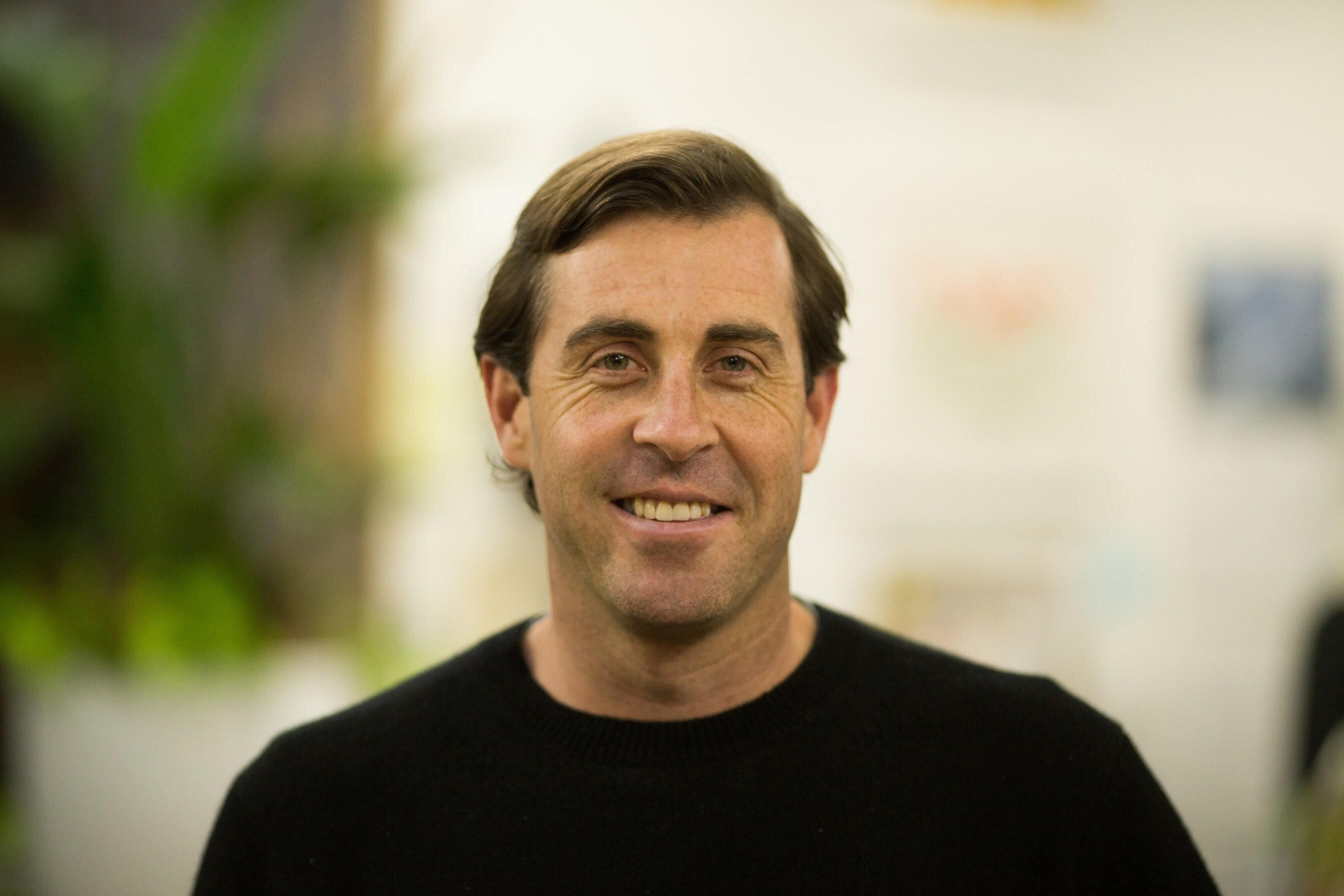
Welcome to the Always a Logger podcast, where we talk to Puget Sound alumni who have gone to the heights and have done some really amazing things in their lives. Today we're going to talk to Clint Wallace. Clint is a phenomenal Puget Sound alum. While he was on campus, he was a Phi Delt. He played Logger football and he studied math and art. We'll find out how that came into play later. And he also has done many amazing things in his career and has been awarded the University of Puget Sound Alumni Professional Achievement Award. In honor of this, among as many accolades, he is a recipient of the Academy Award from Hollywood. That's the highest honor you can get in filmmaking. And today among things, Clint is a production designer for Marvel. I want to hear about that moment you won an Oscar, Clint. What was that like?
Clint Wallace (00:52):
Well, it was early in my career. It was for the Curious Case of Benjamin Button.
Julie Gates (01:02):
Brad Pitt, right?
Clint Wallace (01:04):
Yes. Which I was really lucky that early in my career I got connected to some really talented production designers that hired me. I don't know why they did, but they did. And so Don Burt is the one that I worked for when we won the Academy Award for the Curious Case of Benjamin Button, and I did a number of projects with him. He's done all the David Fincher films, you know, ongoing, has won multiple Academy Awards. So yeah, it was obviously a really cool, that movie was a cool experience. We shot it in New Orleans. It was during Hurricane Katrina.
Julie Gates (01:53):
Oh my gosh.
Clint Wallace (01:54):
When Brad Pitt got really involved in the rebuilding of New Orleans after that, because going through, because we had started the movie, Katrina happened, and then we had to finish the project, and then Brad has always really been into architecture as me being an architect and background. So it was cool that he really got engaged with the community on that one.
Julie Gates (02:24):
Amazing. So when you get an award of that caliber at the beginning of your career, do you just go, oh gosh, now what? How does that feel? Or did it launch you even more?
Clint Wallace (02:35):
Well, yeah, you never know, right?
Julie Gates (02:38):
Yeah!
Clint Wallace (02:38):
Never know. Have not had one since, been nominated for other ones. But it's not always obviously about that. It's about the work and the process and doing good work. And the Academy awards certain kinds of movies.
Julie Gates (03:08):
Interesting. Okay. So there's a whole thing to it that none of us would know on the outside. Alright, well, let's back up a little bit. I've just mentioned that you've won an Academy Award, but we haven't really talked about the work you do. So you went to Puget Sound, you studied math and art, which is a really cool intersection, which I imagine played really well into your career. Then you went to UCLA and got a master's in architecture. So you have been involved in design and art literally your whole life. So you have an architecture career path, but you also have motion picture and production and art design. Is that correct? Is that being described properly?
Clint Wallace (03:42):
Yeah, yeah.
Julie Gates (03:42):
Okay. So you are now a production designer. You're doing projects for Marvel, which is really exciting. And you've been in LA working in that industry for a big chunk of your career now?
Clint Wallace (03:52):
Yeah, 30 years.
Julie Gates (03:55):
How long?
Clint Wallace (03:56):
30.
Julie Gates (03:57):
Oh my gosh. We're not that old, are we, Clint?
Clint Wallace (04:02):
I know. Well, yeah, yeah, yeah. So I graduated. We graduated from—
Julie Gates (04:09):
Yeah, same year
Clint Wallace (04:11):
At Puget Sound in ’90, and right after that I applied to grad school at UCLA in architecture and some other schools. And frankly, it was the only school that accepted me, and the only reason I found out later why they accepted me is because I was a academic All-American in football. And they're like, oh, that's cool. We've never had an All-American in football in our program before. One of the guys told me.
Julie Gates (04:46):
That's funny. That's the thing that got you there.
Clint Wallace (04:49):
Yeah.
Julie Gates (04:50):
Yeah.
(04:51):
A student, athlete's important. It really helped propel you.
Clint Wallace (04:55):
It is. It's a great thing, being a student-athlete. But yeah, then, you know, I had no intention of going into film. That was not something I was interested in. Frankly, I thought you were selling out if you were going into film, because at the time when I was there at UCLA, which frankly was just, I've had many strokes of luck in my career, but one of which is back then in the ’90s, my professors were Frank Gehry, Zaha Hadid, Thom Mayne for Morphosis, Eric Owen Moss, Daniel Libeskind, all these guys who have now gone on to be massive architects in the world and massive brands. Like Zaha Hadid is a massive brand. And so it was a really exciting time to be in architecture. Frankly, I equivocate it to, it was like grunge. It was like we had Pearl Jam, we had Sound Garden, we had Nirvana. I mean, that's what the LA scene was like in the ’90s with architecture. It was a really exciting time. And so I was like, I want to be a part of this. That's what I want to do. And if you go to film, you're kind of a sellout.
Julie Gates (06:21):
I love this. I had no idea. That's great. You were a purist.
Clint Wallace (06:25):
So my first friends that went into film early, and I'm like, what are you doing? This is an incredible historic time because frankly, internationally, LA was the global center of architecture at that point. And so I got my license, I went to work for a firm, and then ultimately one of my buddies who did go into film early said, Hey, you want to jump on a movie? And that was right about the time that I was kind of ready to go out on my own. I got my license. I was working for this design firm, Barton Myers. I got to do some cool projects, did this house that's known as one of the most significant houses of the 21st century, this house up in Montecito.
Julie Gates (07:16):
Congratulations.
Clint Wallace (07:18):
But at that point, I was done. I was ready to go out on my own. So I thought, oh, I could do film and I could do architecture. I could do both. Right? And that's always, not to totally go back to a whole ’nother story, but that's always, to me, what I got out of UPS is that you can do multiple things. You don't, going to a school like UPS, like I played football, I did math, I did art, I was a cheerleader. I broadcast basketball games. And so I've always said that philosophy that you should be able to do, not just one thing, you don't have one career, you have multiple careers. You have multiple things that you do in your life. And so anyway, started that started my first film, which was The Adventures of Pluto Nash with Eddie Murphy in 1999, now known as one of the worst movies of all time.
Julie Gates (08:29):
That's awesome. That was your first film after doing architecture, which was very, very highly regarded. You went to that movie.
Clint Wallace (08:37):
Which I take pride in. I definitely take pride in that.
Julie Gates (08:41):
I love that, though.
Clint Wallace (08:43):
Yeah. But what's amazing is I worked with some amazing people that were on that film. That's the thing about movies, is you never know, right? When you're working on a film, we all give the same amount of effort, whether it's a good film or whether it's a bad film. We're all giving our a hundred percent. And sometimes it just doesn't come together. But I was lucky that I got connected to some really good people, and that led to my next steps in film.
Julie Gates (09:21):
So you've been an art director and in production design, can you explain to our audience what that is? Are you basically the world builder of the film? Are you the one who creates the visual elements that the director have?
Clint Wallace (09:33):
Very good. Very good, Julie, that's exactly right. That's what a production designer is. The production designer is responsible for everything you see in a movie.
Julie Gates (09:44):
Wow.
Clint Wallace (09:44):
Locations, sets, visually. So what you do is you read a script, you have a concept of how the words are going to translate into imagery and have a meeting with a director, and then I give a pitch, and then if they like my pitch, then I work with that director. And then we work together on coming up with kind of the visual concept for the film. And sometimes the visual concept informs the story. So that's probably the most fun part, is early on when you're, like, right now I'm on a movie in Budapest right now I'm working with the director and some of the things we've been talking about end up changing the script, right? Changing the story. Because as a production designer, you have to be the first guy on because we take the most time to, we have to come up with a concept, and then we have to build the sets, find the locations, do whatever. So that's often the most fun part, is the early process.
Julie Gates (11:02):
What a creative job. So I can't even imagine how fun that job is. I'm sure there's stress and pressure, like any work, but the creative work must be exhilarating.
Clint Wallace (11:12):
It's fun. It is fun. It is, yes. But of course, like anything, yes, of course. It's stressful when it's like the day before and you have to come up with a new idea, and we're going to be shooting in a day, and you've got to work all night to get it done. And there's a lot of that. It's amazing that movies ever get made.
Julie Gates (11:45):
That's so funny.
Clint Wallace (11:47):
It's such a team effort with hundreds of people coming together and together, and there's a million things that can go wrong,
Julie Gates (11:58):
I imagine. So you're the one or your team that you lead comes up with these crazy, wild visuals that we see as we're sitting in the theater and enjoying just basically the world-building of a movie. You're the one who comes up with those concepts. That's amazing. I want to go through a list of some of the films you've done, and I want to hear a two or three word, like, this is how it was working on these films for you. So let's start with Pirates of the Caribbean. Give me a couple words to describe that experience.
Clint Wallace (12:29):
Biggest movie that I will ever do in terms of set design. I designed all the boats on that movie, including the Black Pearl and the Flying Dutchman. That was, like, we'll never see those budgets again. We spent about a billion dollars on those two movies, but the art department budget alone was well over a hundred million, which you just don't see anymore. So it was a pretty amazing process. Built those ships in the Bahamas was a tough location being in the Bahamas.
Julie Gates (13:20):
How long did you have to do that work in the Bahamas? How long were you out there?
Clint Wallace (13:24):
I think it was about six months. Yeah.
Julie Gates (13:27):
That's awesome. Yeah. Well, you had to take one for the team, Clint. What about Men in Black III?
Clint Wallace (13:38):
Great production designer, Bo Welch, amazing guy. I mean, actually some of the best design I think I've ever done or been a part of, it wasn't just me, but the entire team, is Men in Black III wasn't a hugely successful movie, but the stuff we did in the movie was pretty incredible. And I was lucky. Again, like I was saying, that I've been connected to these amazing production designers. Bo Welch is the guy who designed Beetlejuice. He designed Edward Scissorhands, the original Men in Black, and a great guy. So I was very lucky to be a part of that whole team. And shooting in New York, we were in New York, and so got to live the whole New York experience there in Manhattan.
Julie Gates (14:30):
And not have to pay the rent yourself. That's nice. O.K. What about Transcendence? A couple words.
Clint Wallace (14:37):
Oh, Transcendence. We all loved the script. And this is a good story of where you never know, right? When you get a script, you're like, oh, wow, this is great. This is going to be cool. It's about, you're kind of uploading your consciousness into the cloud, which is kind a real thing now that's happening was kind ahead of its time. And Johnny Depp. But it just ended up not really working that well as a movie, but still was as an experience, was a good experience. But that's the thing with movies is sometimes you have a great experience and you make a crappy movie, or you have a crappy experience and you make a good movie. It doesn't always correlate.
Julie Gates (15:42):
Let's talk about some of your Marvel films. Do you want to just throw out the names of the ones you've worked on and then share a little bit about that?
Clint Wallace (15:50):
Sure. Yeah. So the first one I worked on was Captain America: The First Avenger, which was the second movie that Marvel ever released. Fun story on that one was that they were trying to figure out how to make Steve Rogers, who's Captain America, how to shrink him down. Chris Evans is a buff guy, had a shrink to make him skinny. Skinny, and then he becomes buff. So they're trying to figure out how do we do that? What's the process? So at the time, the visual effects director, Victoria Alfonso, who is one of the top three at Marvel, she said, Clint, come on. Take your shirt off. We're going to take pictures of you. And they use me as a model to test how they could do this, how they could do it. And years later, I found out through a visual effects guy, because I thought, it looks stupid. I saw what they did. It's like they took me and shrunk me down. But what they actually did is face replacement, where they cast a skinny actor and they did face replacement with Chris Evans, and then went back to him. But then years later, I found out, no, they actually did some of that. A visual effects supervisor recognized me from that footage and said, no, that we actually did use some of that.
Julie Gates (17:28):
Do they still have that body floating around somewhere that they use for other projects? Is there an image of you out there?
Clint Wallace (17:33):
That's so funny you say that, because I just found out when I was working on Antman: Quantumania that my art director said, you know that your body is being used by Marvel. Because what we do in all the Marvel movies is we do these pre-vises, right?
Julie Gates (17:55):
Sure.
Clint Wallace (17:56):
So we do it all on the computer where it's like a video game. Of course, it looks like a video game, of course. So we understand the action sequences. We understand how everything goes together. Well, it turns out they've been using my figure that they scanned years ago in those pre-vis, and he had recognized me that I'm in there.
Julie Gates (18:16):
That's so funny.
Clint Wallace (18:17):
Marvel owes me some money for that.
Julie Gates (18:18):
Yeah, they do. They definitely owe you money. And now everyone knows what you look like shirtless. That's kind of awkward.
Clint Wallace (18:24):
Yeah, 20 years ago.
Julie Gates (18:26):
Well, yeah. At least it was 20 years ago, right?
Clint Wallace (18:28):
Yeah.
Julie Gates (18:30):
Oh my goodness. Okay. What about the Doctor Strange film? Doctor Strange in the Multiverse of Madness.
Clint Wallace (18:37):
That was actually one of my cooler production design experiences. The head of, because I came in later in the project, and the head of Marvel, Kevin Feige, came to me and basically said, I had a Zoom with him and said, "We hate what we have right now." And he said, "Clint, whatever you can do, make it cool."
Julie Gates (19:05):
Oh, neat.
Clint Wallace (19:06):
And that was his only direction, and you have a week to do it. And so it was about designing this multiverse, because a lot of times in this world of ,ultiverses, it all gets very dystopic. It gets very dark, kind of Blade Runner. And so we're like, no, we're going the other way. That there's the go to this other universe that's all about where cities become gardens and streets or rivers. And so I pitched this whole idea and they loved it. And then we had to build it, and it was a massive build. It was a massive build on the paramount lot. And if you see the movie, it's this one multiverse with where cities are green streets are rivers and crazy colors and crazy flowers, and
Julie Gates (19:59):
That's sounds amazing.
Clint Wallace (20:00):
Fun, cool thing.
Julie Gates (20:03):
Let's talk about Top Gun Maverick. What was that like?
Clint Wallace (20:09):
Top Gun was one of my favorite projects, I'd say, along with Pirates. It was just such a fun experience, and the success that it had was super cool to see that happen. But we shot it- all in California and starting down at San Diego, NAS North Island and Coronado, and one of the cooler things was just hanging out with all the pilots.
Julie Gates (20:42):
Oh, fun.
Clint Wallace (20:42):
We were hanging out in the bar. I remember being in the bar with those guys, and they checked their watch and they're like, oh, man, we got to go to work. And then 15 minutes later, you'd hear the F-16 taking off.
Julie Gates (21:01):
That's so cool.
Clint Wallace (21:02):
Going off in the thing. You know, we were geeking out on them and the planes and all that, but they were geeking out on us with the original Top Gun. Yeah. But it was just a really overall super fun experience. We started off down in San Diego, went up to middle California, worked with Skunkworks — famous secret plane manufacturer. One of the coolest stories from that Tom Cruise loved was we built this plane. In the beginning of the movie, there's this Dark Star that Tom goes in and it blows up. So we built a full-size replica of that plane, and we worked with this top-secret Skunkworks, which they built all the top secret planes for the military, and we worked with them, and they had it in their hangar, and they pulled it out at one point. And because they know they're getting tracked all the time by the Russians and the Chinese, so all the satellites said, "Oh, damn, the U.S. has this whole new weapon, this whole new plane."
Julie Gates (22:18):
Oh my God.
Clint Wallace (22:19):
Yeah. Yeah. So they thought it was like this whole new technology that
Julie Gates (22:24):
Amazing. Oh, you're causing all kinds of world controversy. That's so fun. Let's talk a little bit about just you and your career path. I want to think about the students who might be watching, people who are attending University of Puget Sound, maybe recent alums who are just figuring out where to go and how to go along their path. There's two philosophies, right? There's the career ladder where you just go up and up and up and kind of get into higher roles in a certain industry. And then there's also a career river where you kind of meander down through different career paths. What advice would you give students as they look at their career journey, just based on your experience?
Clint Wallace (23:03):
I'm definitely the latter. I'm definitely a river guy, because again, I, well, I loved movies as a kid. Star Wars was a huge influence on me as a kid. I had all the making-of books. I was always into the art of it from when I was 10 years old. It was fascinating to me, but I never considered a kid from Seattle that could be in the movie industry. It was never a consideration. So I just kind of followed, you know, leaning into art and to math and architecture, and then just kind of finding my way. And I think what I always like to tell young people is, you're in control, but you're not always in control. Opportunities are going to be presented to you, and you have to make the best out of those opportunities. While I say that, I also say the opposite, which is, if you really have a passion, and I tell this to people who want to get into film all the time, if you really do and you want to get into film, if you're committed, you'll get there. It might take you a while, you'll get there. So I guess it's a combination of a little bit of luck and also a little bit that you have a passion and an interest, because I think my passion for film was always kind of in there, but it didn't come out ’til later in life.
Julie Gates (24:56):
It really is an indicator that some of the things we really loved when we were kids is really kind of a signpost of where we might end up as adults in our careers.
Clint Wallace (25:06):
For sure.
Julie Gates (25:07):
So you've really taken advantage of lifelong friendships that you've built at Puget Sound. Can you share with our audience what Andrew Fest is and what you all do?
Clint Wallace (25:19):
So this was a group of fraternity brothers that we decided at my wedding that we would all get together once a year every summer, and we did. So we've carried that on. So this was the 30th year of continuous get-togethers. Now that we're old, we're a lot more boring, and we're doing river floats, and we're not sleeping on the ground. But early on, we climb Mount Whitney, we climb Mount Rainier, we went mountain biking and Mount St. Helens, all kinds, lots of hiking and camping and all that. But it's been this amazing connection with a bunch of loggers that has continued to this day. And my wife, Alison Anderson, a fellow Logger —
Julie Gates (26:28):
Sorority sister of mine. Hi, Al!
Clint Wallace (26:30):
That's right, that's right. For years, I must say, when we had young kids, it would be sometimes a little difficult because I'd be leaving to go on a weekend, and I kept encouraging her, say, Hey, you should do the same thing with your girlfriend. So now they've been doing the same thing with girls that you know.
Julie Gates (26:57):
Yeah, I just saw photos of a get-together. They were on a lake, I think in Idaho, they had a great time.
Clint Wallace (27:02):
I'm really glad that they've taken that on because I think those friendships at this point in life become really, really valuable.
Julie Gates (27:16):
So there's another part of your career we haven't talked about yet, and that is somehow, and I would love to hear the story, you've opened a distillery in Seattle. Share a little bit about this.
Clint Wallace (27:28):
So this was a dumb idea that I had about 10 years ago where I developed this as an architect. I developed this project with Greg Vaughn, a fellow Logger, and we said, "Oh, hey, we have this open space" in this building that he owns, that I developed. We said, "Oh, we should start a distillery." And we had no idea about distilling or anything. So it was three Loggers, Mark Hallman, Greg Vaughn, and myself. And we started this with no clue, with made every mistake possible, did absolutely everything wrong, but somehow we've course-corrected. And so 10 years later, we're doing well. We have an exclusive license with the Space Needle to do their Space Needle, we have the sculpted Space Needle bottle that I created, and that's been a big success for us. But I should also say that Skybound is the term for, it's honoring our logging, Logger heritage. It is the term for the last remaining tree in a clearcut. It refuses to be cut down. That's called a skybound.
Julie Gates (28:53):
Really? That's cool. I didn't catch the Logger connection there. Thank you for that. That's really cool. Well, I could talk to you forever live from Budapest while you're on location, but we should just probably wrap this up. Your final question, Clint, is what message do you want to give the University of Puget Sound community?
Clint Wallace (29:13):
Well, I think back to what I kind of said earlier is being at the small school like Puget Sound, is take advantage of that to explore all opportunities and that you can do, unlike at a big school where it's really tough to do anything more than play football or focus or be pre-med, take advantage of just the opportunity to do many, many things and explore. I mean, the first film I ever made was at UPS at Foolish Pleasures, which Julie probably remembers.
Julie Gates (29:58):
Yeah, the film festival.
Clint Wallace (29:59):
Which was this film festival. And we made a film. And so that definitely, I think, also played into my development into of film. And so
Julie Gates (30:10):
Here you're in Hollywood.
Clint Wallace (30:12):
Yeah.
Julie Gates (30:12):
Yeah. That's beautiful. Thank you. Okay, so if our viewers and listeners, this is going to be audio and visual podcast, want to be in touch with you or learn more about you, can you share your personal website and the one for your distillery?
Clint Wallace (30:27):
Sure. Yeah. You can check me out on clintwallace.com, which is just film and architecture.
Julie Gates (30:34):
That's really cool.
Clint Wallace (30:36):
And then skyboundspirits.com is the distillery.
Julie Gates (30:41):
Thank you, Clint.
(30:43):
Okay. Thank you so much. It's so fun to talk to you and hear about all the great work you've been doing. That's Clint, Academy Award winner, award-winning architect, distillery owner. And be sure to subscribe and share this podcast so we can get the word out about the cool things that Puget Sound Loggers and alumni are doing today. And if you know of a great alumni that we need to tell their story and interview them, please send me an email with their names at juliegates@pugetsound.edu. Thanks so much. We'll see you next time.
Clint Wallace (31:11):
Bye!