In this section

Program Description

The Interdisciplinary Emphasis in Artificial Intelligence and Human Values aims to equip students with the intellectual tools needed to understand and critically evaluate the rapidly expanding role of AI today. This will enable students to play an active role in shaping how AI is understood, developed, and used going forward. The program operates with a human-centered focus devoted to elevating human excellence rather than replacing it.

To achieve this mission, the program has two interrelated educational goals. First, it aims to give students a working understanding of how AI systems function—we regard this as essential to informed discussions of AI. Second, it aims to give students an understanding of how AI models interact with various domains that human beings care about—in other words, human values.

The AI and Human Values program is intentionally designed as an Interdisciplinary Emphasis so as to be easily combinable with a wide range of majors and minors and to provide students with the flexibility needed to chart their own path through the program according to their interests and goals. For example, the program can be combined with a computer science major to learn how to develop AI systems, with a politics and government major to focus on AI policy, with a business major to work on AI strategy, with a philosophy major for a specialty in AI ethics, and more. Students’ work in the program can support a wide range of careers in healthcare, business, law, government, art, education. 

Who You Could Be

  • AI researcher
  • AI consultant
  • AI policy analyst
  • Technology policy advisor
  • AI ethics specialist
  • AI developer
  • Educational technology specialist
  • Technology lawyer

What You'll Learn

  • How AI systems function
  • How AI interacts with domains that reflect human values, including areas such as ethics, equity, creativity, and social life
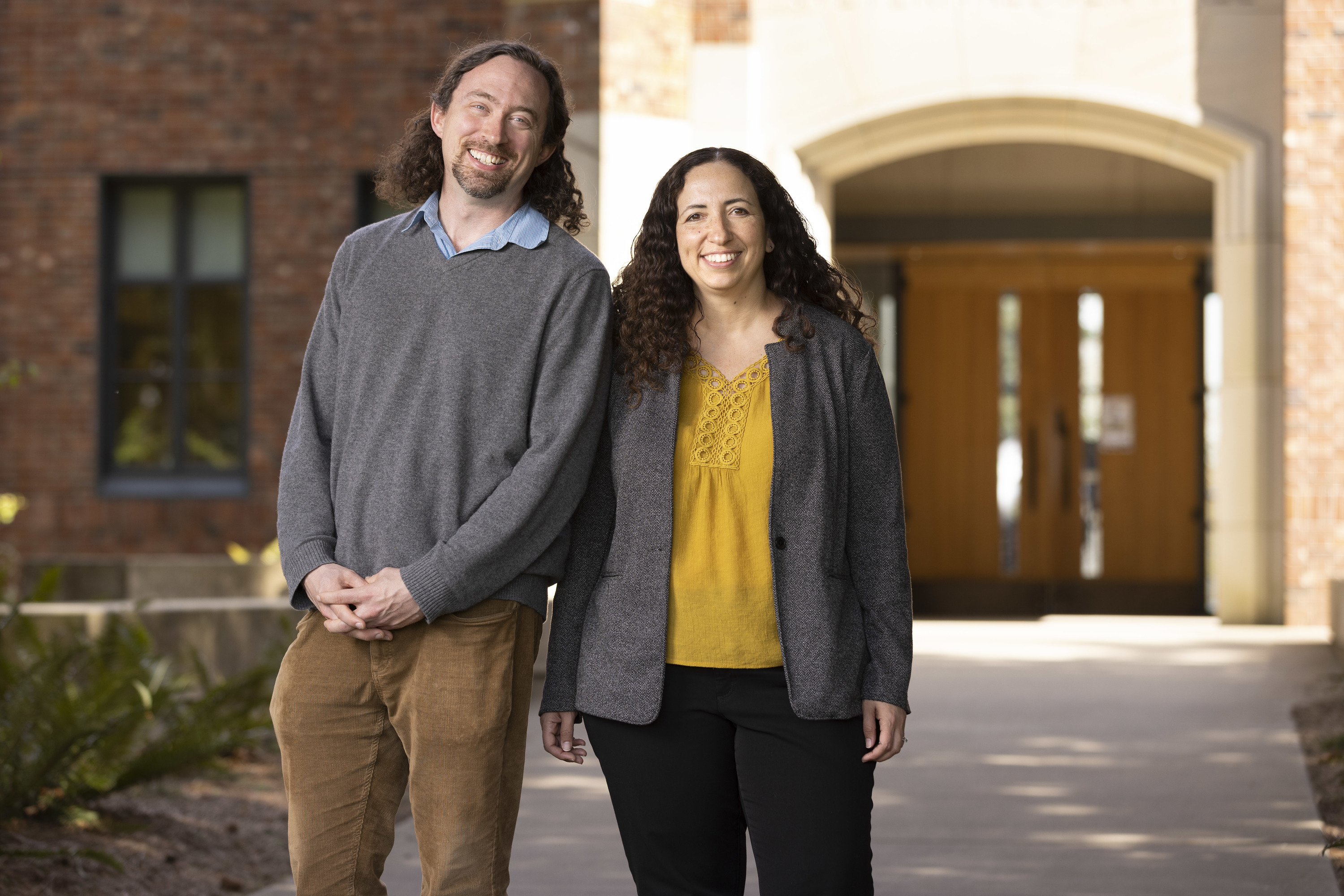
Professor Ariela Tubert
Professor
Ariela Tubert

“We want to equip students with the skills to know when it makes sense to use AI and how to use it well, with awareness of potential ramifications. That requires more than technical skill — it requires understanding social and ethical implications.”

Sample Courses

This course focuses on social, economic, legal, and ethical issues that arise from the collection, analysis, and use of large data sets, especially when these processes are automated or embedded within artificial intelligence systems. The course explores the design of ethical algorithms by considering questions like the following: what kinds of biases are ethically problematic and how can they be avoided? what are the effects of automation on jobs and inequality? what are the privacy considerations that arise when collecting and using data? what is the ethical significance of transparency in automation? who owns data sets and who has the right to access information? who is responsible for actions that result from artificial intelligence systems? In thinking about these complex questions, students consider specific case studies of controversial uses of data and algorithms in fields such as medicine, biotechnology, military, advertising, social media, finance, transportation, and criminal justice, among others. In addition to relevant ethical theories, students are introduced to philosophical, legal, and scientific theories that play a central role in debates regarding the ethics of data and artificial intelligence. Readings are drawn from a number of classic and contemporary texts in philosophy, science and technology studies, law, public policy, and the emerging fields of "data ethics" and "robot ethics".

Code
Artistic and Humanistic Perspectives

This course examines the impact of artificial intelligence and emerging technologies on economic, social, and political structures. It explores how AI integration across sectors such as healthcare, education, media, and the arts affects labor markets, democratic processes, and human relationships. Students investigate the ethical challenges AI presents to democracy, safety, and equality, weighing these against potential benefits. The class considers what practices and governance structures
can ensure ethical and safe AI deployment, evaluating existing legal and scientific frameworks while discussing the need for new regulatory systems and societal norms. To contextualize these issues, the course draws parallels with historical
technological revolutions. It adopts an interdisciplinary approach, incorporating perspectives from philosophy, sociology, history, law, and political science to provide a comprehensive understanding of the AI revolution. By the end of the course, students gain a solid foundation in the legal, policy, and practical aspects of AI, preparing them to navigate an increasingly AI-driven world.

Code
Connections 200-400 Level
Prerequisites
PG 101 recommended.

This course introduces the student to the techniques of artificial intelligence. Students learn strategies for uninformed and informed (heuristic) search, knowledge representation, problem-solving, and machine learning. Additional topics may include motion planning, games, modern neural networks, large language models, and philosophical implications.

Code
Natural Scientific and Mathematical Perspectives
Prerequisites
CSCI 330, MATH 180.

This course examines ethical issues related to the implementation of artificially intelligent systems in medicine and healthcare from a philosophical perspective. Topics include (but are not limited to): algorithmic biases in medical diagnoses and healthcare decisions; the impact of AI on the ability to foster trust and respect patient autonomy; disagreements between clinicians and AI decision-support systems; and the implementation of empathic or empathy-simulating AI in healthcare.

Code
Artistic and Humanistic Perspectives
Jordan Steinhart '26
Double major in Politics & Government and Philosophy
Jordan Steinhart '26

“AI is not going away. As it improves, humans need to improve alongside it. Learning how to use it, understanding how it works, and knowing how to be ethical when doing so — that’s incredibly important, not just for college, but for your life and your community.”

Experiential Learning