Lillis Scholar Dominique Langevin ’26 dives into gene expression
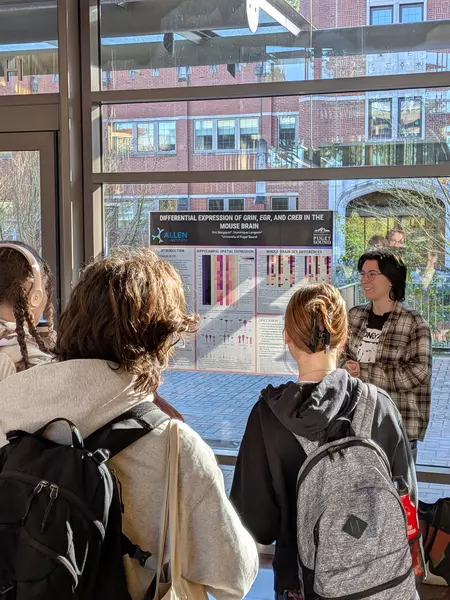
Dominique Langevin ’26 stood in front of a small crowd of students in the Harned Hall atrium. They weren't just presenting a class assignment. They were sharing research they helped shape — work rooted in the same datasets used by scientists at the Allen Institute.
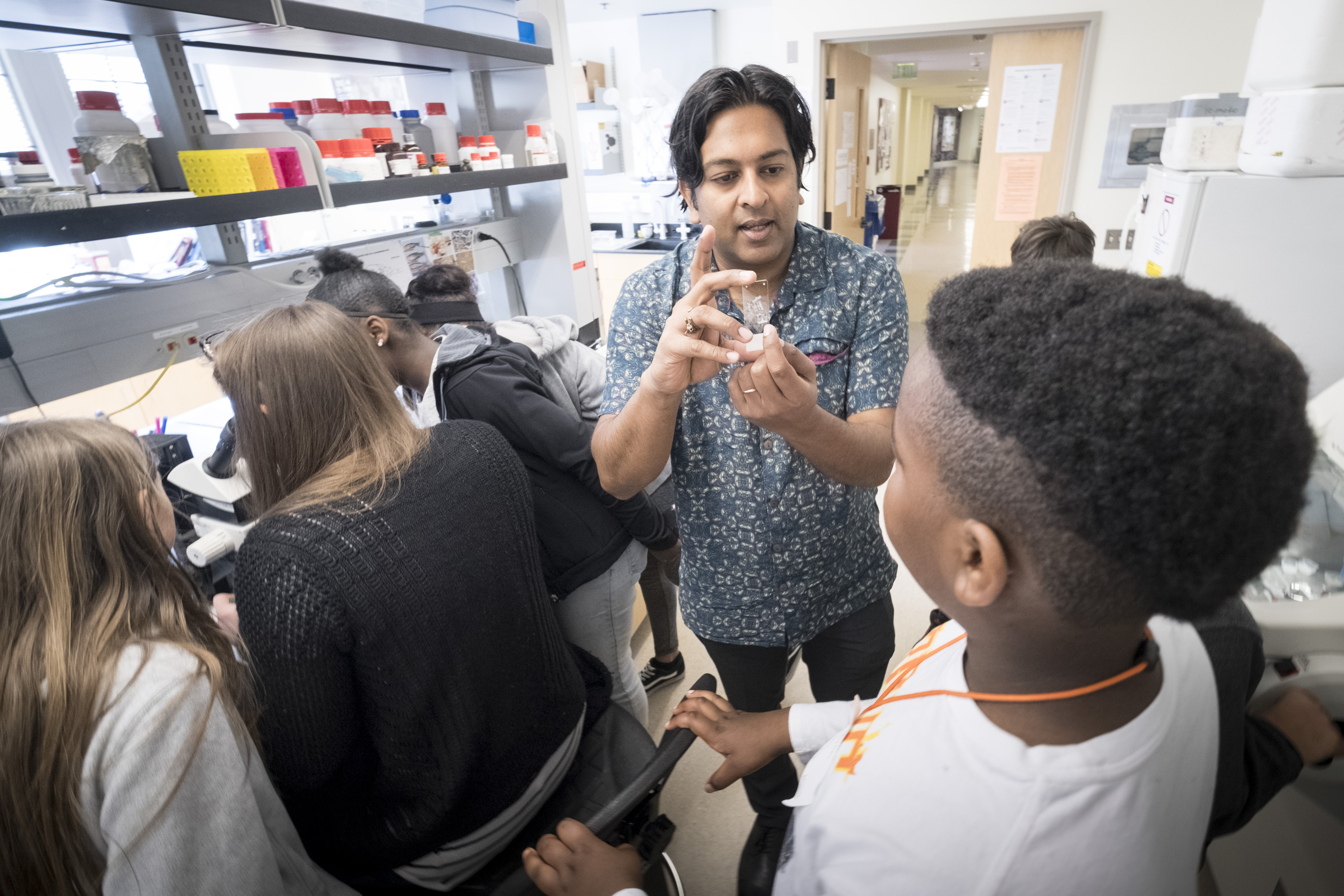
Throughout the semester, Langevin and their classmates in Professor of Biology Siddharth Ramakrishnan's Advanced Topics in Neuroscience course dove into massive open-source datasets, learning to code in Python and navigate Google Colab along the way. The experience gave students access to real scientific data and the researchers who generated it.
Earlier this semester, three scientists from the Allen Institute visited the class to present the datasets. Students then got to choose which to pursue for their class project. Langevin, a molecular and cellular biology and neurophilosophy major and a Lillis Scholar — the university’s most prestigious merit award — said the structure gave them ownership over their work.
“We got to pick which dataset was most interesting to us and which one we thought we could answer questions about,” they said.
Langevin's project focused on the ABC Atlas (Allen Brain Cell Atlas), where they examined gene expression in the brain. Through their work, they mapped how key learning and memory genes are expressed across the male and female mouse brain, aiming to build a critical foundation for understanding sex differences in neurological disorders — work that could one day help pave the way for more personalized treatments for conditions like Alzheimer's and autism. The collaboration with the Allen Institute didn't stop with access to the datasets. Students spent weeks developing original questions and experiments with input from their Allen Institute partners. Ramakrishnan said the process pushed students to teach themselves.
“A lot of it was self-led, where they had to dive into the pool and figure things out,” he said.
The work culminated in a trip to Seattle, where students presented their findings at the Allen Institute, one of the leading bioscience centers in the Northwest. For Langevin, the experience meant presenting to the researchers whom they had cited in their own poster.
“Going there, I was like, ‘Oh my God, I'm presenting to neuroscientists,’” they said. “These people know so much about what I'm talking about. But what was really cool was that they were willing to engage with me and just really give new insight.”
The close collaboration between students and working scientists — a hallmark of Puget Sound's liberal arts approach — created opportunities rarely available to undergraduates.
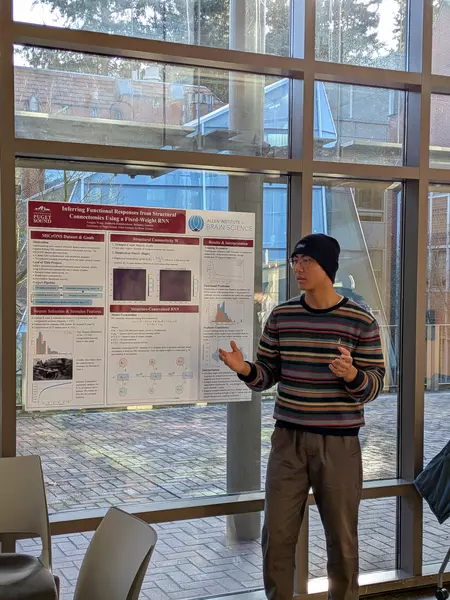
“The lovely part was that the researchers they cited in the papers for their posters? They actually met them,” Ramakrishnan said. “Everyone was saying, 'Oh, I read your paper, and I'm actually meeting you.' And the researchers were also excited about it because they normally produce all this work, but they don't see how it's being used. So this was a real connection for them.”
Back on campus, Langevin and their classmates presented again — this time to peers and faculty in the Harned Hall atrium. The posters on display reflected weeks of hands-on work and mentorship from working scientists.
Working on this type of project as an undergraduate has significantly influenced Langevin's academic path and enhanced their professional profile. They credit their interdisciplinary studies in neurophilosophy — a program they chose Puget Sound for — with giving them a framework to tackle complex issues related to the field.
“I really like asking big questions about the mind and about consciousness and about the ethics of neuroscience,” they said. “So getting to explore that here was important.”
That curiosity helped them land a competitive internship last summer at the Fred Hutch Cancer Center. They wrote their application essay on how philosophy drives their interest in neuroscience. After graduating, Langevin will return to Fred Hutch as a post-baccalaureate researcher.
Learn more about the partnership on the Allen Institute news page.
FUTURE UG STUDENTS
Stories to be featured on the Future Undergraduate Students audience page