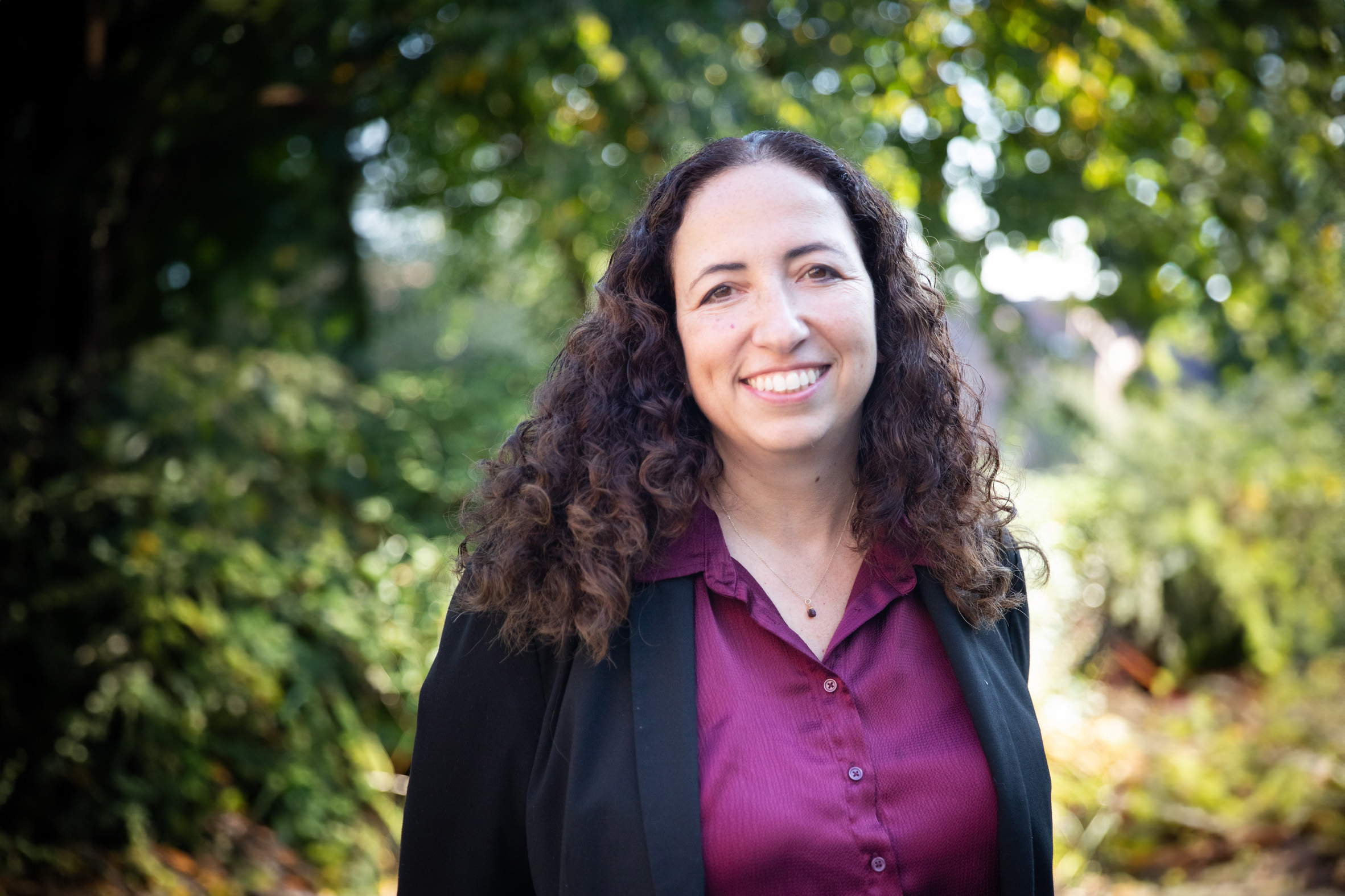
University of Puget Sound Associate Professor Hajung Lee, an expert in religion and bioethics, recently participated in a prestigious Harvard Medical School bioethics delegation to Asia. A key insight from her trip is that building a global bioethics framework requires bridging deep cultural and religious divides through conversation, not by imposing Western standards.
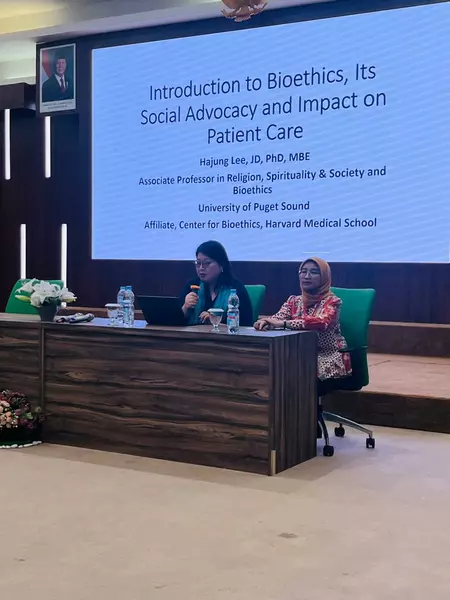
Lee, who serves as an affiliate of Harvard Medical School's Center for Bioethics, was invited to join the international delegation as a keynote speaker, moderator, and trainer. The delegation was led by the Center's director, Dr. Rebecca Brendel, and included Harvard's Master of Bioethics (MBE) graduates and Fellowship alumni. This summer, they embarked on a 10-day trip to Hong Kong, Malaysia, and Indonesia, co-facilitating presentations, panel discussions, and workshops at major institutions such as the University of Hong Kong Li Ka Shing Faculty of Medicine, the Chinese University of Hong Kong Centre for Bioethics, the International Medical University in Malaysia, and the Faculty of Medicine at Universitas Diponegoro in Indonesia. The trip's mission was to share global bioethics perspectives and help the region build its own clinical ethics expertise.
“This experience profoundly broadened my perspectives,” Lee said. “The conversations in Asia pushed me to question deeply embedded Western frameworks—especially Western principlism in bioethics—and even prompted me to rethink how we understand the role of religious and cultural elements in clinical ethics. When we take those lessons seriously, we don’t just contribute to the growth of contextualized bioethics globally—we find new pathways for improving cultural humility, equity, and patient care in our own healthcare system.”
Lee's participation was made possible by a Fall 2024 sabbatical supported by the Esther Wagner Endowed Faculty Sabbatical Grant, awarded to advance faculty research and scholarship. During that sabbatical, she was also invited to serve as a Visiting Associate Professor in Global Health and Social Medicine at Harvard Medical School. A central theme of Lee's sabbatical research and her teachings during the delegation was helping health care providers move beyond past simplified assumptions and toward a deeper understanding of the nuances of intersections of religion and culture in patient care, rather than relying on a checklist-style approach to cultural competency.
In Indonesia, Lee led a workshop for medical school faculty and local physicians on how to teach bioethics and facilitated a simulated hospital ethics committee meeting involving a multi-faith family, allowing participants to navigate complex religious and cultural dynamics in clinical ethics. A dinner with psychiatry faculty and residents at Universitas Diponegoro further highlighted the significance of cultural perspectives in patient care.
In Malaysia, the team was invited by the Academy of Medicine of Malaysia (AMM), the Academy of Family Physicians of Malaysia (AFPM), and the Hospital Ethics Support Service (HESS) of Hospital Ampang to train practicing physicians. Many private practice doctors closed their clinics for the day to participate in small-group sessions and case discussions—a significant sacrifice that underscored the high demand for bioethics education. Lee examined how religious and cultural traditions inform physicians’ social and ethical responsibilities, and many participants emphasized how critical the training was for their daily work.
For Lee, the trip was as much about a learning experience as a teaching one. She immersed herself in the local customs and professional practices, gaining insights into challenges facing their health care systems. These conversations challenged her own perspective, providing invaluable material for her students.
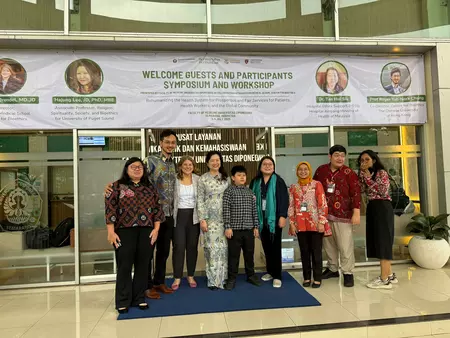
Lee plans to incorporate what she’s learned into her own bioethics courses, ensuring students benefit from her experience abroad. This work is a perfect example of the power of a liberal arts education and the value of supporting faculty research.
“I think this approach aligns powerfully with a liberal arts education,” Lee said. "A liberal arts education’s broad, interdisciplinary perspectives offer students new insights into the humanities. When I teach bioethics, I draw from religion, law, global health, and the wider fields of medical and health-focused humanities, bringing together multiple ways of understanding human experience."
Lee and her delegation colleagues are planning future collaborations on joint scholarly work. For Lee, the mission remains clear and ongoing — to promote a global dialogue on bioethics, learning from one another to ensure culturally sensitive care for everyone.
FUTURE UG STUDENTS
Stories to be featured on the Future Undergraduate Students audience page
CURRENT UG STUDENTS
Stories to be featured on the Current Undergraduate Students audience page