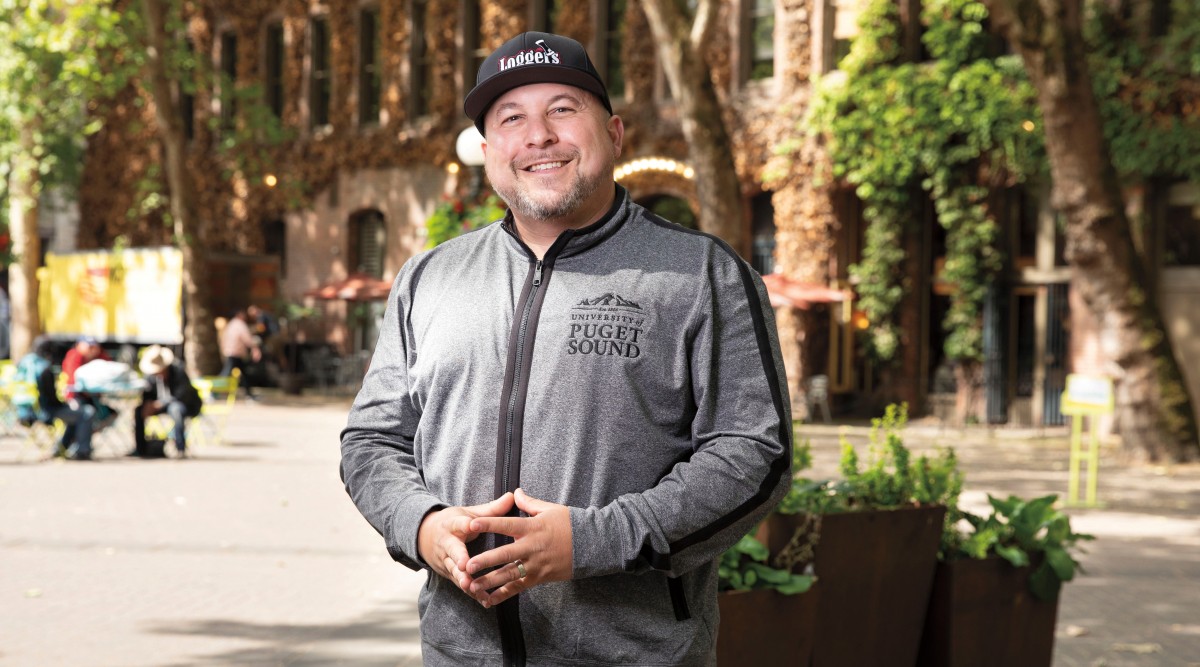
Coming out of college on a softball scholarship, three things were true about University of Puget Sound alum Tara Brown Clark ’93.
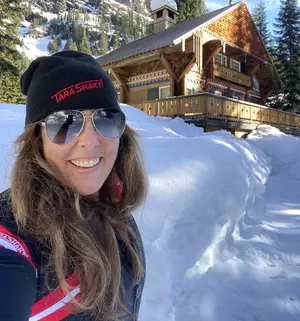
First, she had absolutely no idea that she was creative. Second, she had no idea that an adult onesie would one day change her life. Third, and most importantly, she never imagined how many women she would end up lifting up — including Olympians.
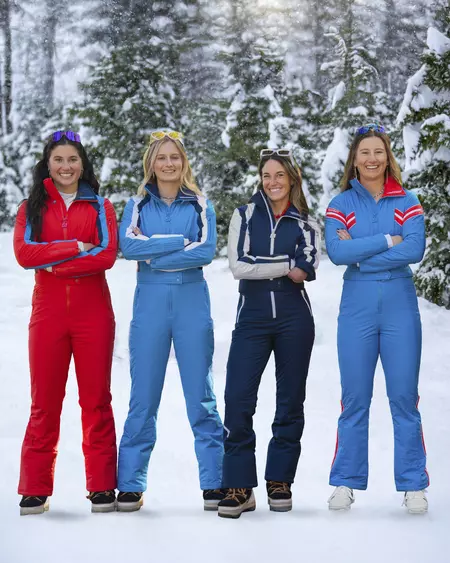
Today, she is well aware of all three things. Clark is the founder of Seattle-based TaraShakti, a women-led apparel brand that looks to the past — vintage ski and snowboard suits — to outfit today's skiers. Her gear has traveled to the Olympics in Italy this winter, powered by partnerships with Olympic gold medalists like Picabo Street, Debbie Armstrong, and younger U.S. skiers such as the Macuga sisters and Dani Aravich.
“I like to try things and see where it leads me,” says Clark, 54, who grew up in Salem, Oregon. But, she concedes, “I did not think I would start an apparel company.”
'MOTHER OF SNOW'
Clark, a business major at Puget Sound, was a professional photographer for 20 years. She spent time in Africa in the Peace Corps in the '90s, living on a mountain at 7,500 feet. Her name in Sesotho translates to “Mother of Snow.”
Yet she never skied until she began a relationship with the “ski bum" whom she later married. She learned to ski as an adult, and they raised their kids to ski. “I had a love-hate with skiing — maybe even more hate than love — until a 40th birthday kicked off an annual women’s trip to Whistler. Every winter, the working moms’ trip was a highlight of my year and would ultimately change the course of my life."
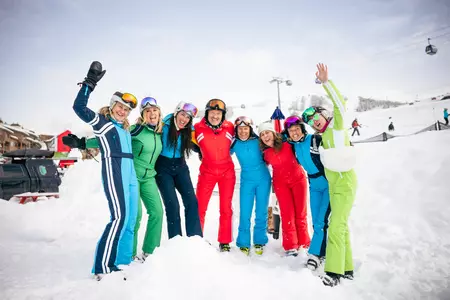
Following the third annual trip, one woman was diagnosed with an aggressive glioblastoma. The group was certain they would not return to the slopes as a core five ever again. Thanks to cutting-edge research and treatment received in Seattle, she outlived the initial prognosis and told the group she wanted to go back to Whistler and insisted that everyone showed up in a one-piece ski suit.
Clark, who doesn't like shopping, discovered she loved vintage one-pieces as “they elevated the mountain experience. Then I made a disco-ball helmet, as you do.” Ultimately, she amassed a collection to film Downhill at Crystal Mountain, outside of Seattle, to raise funds for brain cancer research. Says Clark: “There was a lot of freedom and fun that was discovered through these suits.”
AN ESTABLISHED ENTREPRENEUR
When she decided to step forward into what would become onesie fame, Clark's business background came roaring to the forefront. She cold-called the founder of Sherpa Adventure Gear in Seattle and asked him if they could help her produce a modern tech onesie. “He took a big risk on me,” she says. She placed her first order just before the pandemic hit.
Fast-forward six years. Now Olympic gold medalist Deb Armstrong and Picabo Street are wearing TaraShakti suits and have said the colorful, innovative gear is “the next generation of skiwear.” Women and men of all ages are discovering the comfort and performance of her designs that are secretly a two-piece thanks to a hidden zipper under the waist belt. “Ultimately, and most important to me, is that our products are a vehicle for confidence, connection, discovery, and community,” Clark says. “At the core, that's all I really care about.”
Through her life experiences, she has learned “we all are more alike than we are different,” she says. “Connecting, learning, sharing, laughing and celebrating life with everyone around you is a life worth living!”