Alumni, Arches

Grad’s new memoir, Fighting for the Puyallup Tribe, chronicles a lifetime of on-the-ground advocacy and “thinking generationally”

The education of Ramona Bennett Bill MEd’81, Hon.’00 did not start auspiciously.

In first grade during World War II, when students were taught letters with stereotypical blackboard pictures of chiefs to go along with “I is for Indian,” her mom visited school one day. But, steeped in the anti-Japanese racism suffusing the schoolyard, “this nasty pig of a boy made slanty eyes at her.” Young Ramona promptly “clocked him!” After that, her mom stayed home, but she remained a combatant in her daughter’s education. When Bennett Bill talked about how she was taught “Columbus discovered America,” her mom set things straight: “We weren’t lost.”

Teachers told Bennett Bill, whose father was white, that she could pass as white. She refused: “As a child and all through life, I identified as Indian. That was important to me.” Her mom told her the truth about white people’s “racism and genocide,” and when “we traveled in areas with ‘No Dogs or Indians allowed’ signs, I could have gone with my dad and used the restaurant or gas station facilities, but I always peed in the bushes with my mom.”

At Franklin High School in Seattle, a counselor told her point-blank that she wasn’t college material, putting her in the typing and bookkeeping pipeline. But she was wrong about the material Bennett Bill was made of. Now enshrined in Franklin’s Hall of Fame, she would go on to use those skills to earn college degrees — including a Master of Education degree in 1981 and an Honorary Doctorate in 2000 from the University of Puget Sound.

And she would use them to literally put the Puyallup Tribe back together, helping bring back “scattered” and “lost” members and lands. As she defiantly recounts in her firecracker of a memoir, Fighting for the Puyallup Tribe, much of her life’s work was devoted to fighting for education — but the right kind of education for her and her people. Along the way, her education was grounded in community: she learned from family and other Indigenous leaders, and then she applied all she learned with a fierce sense of commitment.

From personal and family experience, Bennett Bill knew that much of the education Puyallup and other Indigenous people had been subjected to was meant to torch their culture. Her mom was exposed to the “sadists and pedophiles” of the Cushman Indian School before moving on to the Catholic-run Saint George Industrial School, where she and other kids were “repeatedly told, ‘You have nothing to cry about. You get a free education! Don’t giggle or laugh.’” And if “they made little fists, ‘Don’t even think about it!’” Her mom said they were “beaten stoic.”
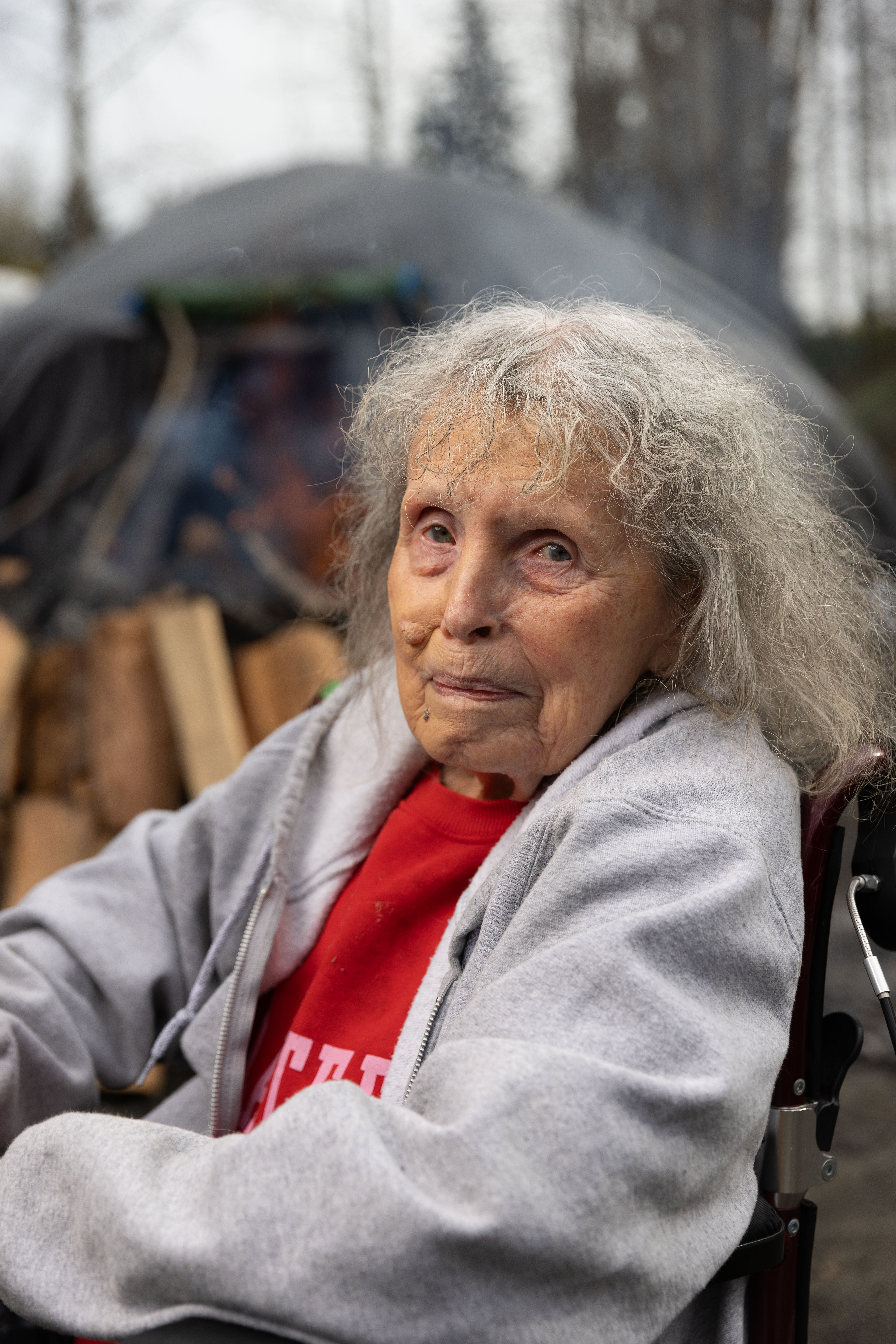
Ramona Bennett Bill MEd’81, Hon.’00
Ramona Bennett Bill MED’81, Hon’00, sits in front of the sweat lodge affectionately called “The Ramona Dome,” located at her Puyallup home. The lifelong organizer, advocate, and community leader just published her memoirs, Fighting for the Puyallup Tribe.

In Her Own Words

We were taught and told: Each river was given families of Indians. We are needed to protect our brothers and sisters, the nations of salmon. How blessed are we to be descended from those families Creator put here at Spalalapbush. The white people couldn’t say our name, so we’re known as Puyallup (which they also can’t say).

Creator put everything we could possibly need right here. Mother mountain’s name to us is still Tahoba, not Rainier. She provides fresh clean water year-round and a home for the salmon. Puyallup River was First Avenue and the Salish Sea the highway. The thick tall trees provide shelter, canoes, clothing, utensils, nuts, and warmth. Every kind of roots and bushes you could imagine, some for our diet, some for our art and garments. This area is especially rich with wild cranberries. Bogs here and near the ocean provide both a treat and medicine. Tiny native blackberries grow along the ground in areas that had burned. Tiny, sweet huckleberries grow on our side of the mountains.

Several runs of salmon come to us year-round. Our beaches were rich with several kinds of clams, and the tide flats and Salish Sea held crabs, geoducks, and devilfish (octopuses). Deer, elk, seals, sea lions, fowl, and small game shared our paradise. We prayed before we took any life, animal or vegetable. We were always thankful and grateful. We do not kill for fun.

—Ramona Bennett Bill

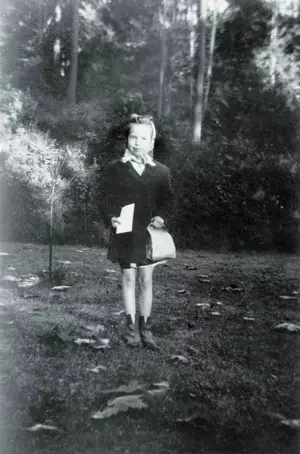
Ramona Bennett Bill waits for the school bus on Illahee Road in Bremerton on the first day of third grade in 1946.

Bennett Bill decries how education and religion were used as a weapon. The founder of the boarding school system, Richard Henry Pratt, made cultural genocide his motto: “kill the Indian, and save the man.” Such “education” equaled “culture shock:” she wrote that “our kids were removed from our own families and brought to institutions. The term ‘institutionalized’ fits perfectly. The kids were lined up and marched every time the schedule required a change of locations.” The rigid grid of time and dehumanizing order at these schools violated the way Puyallups had always reckoned time “by the tides, nature’s schedule, and seasons.”

But the students did make “little fists,” fighting back against the unnatural institutionalization. They also turned the intent of boarding school education on its head, using it when they could to preserve and protect themselves and their cultures. As Bennett Bill explains this paradox, the “boarding schools caused pain and suffering and enriched our lives. Mama always said, ‘Every silver lining has a cloud.’”

One example is sewing, taught to every girl to ready them to perform domestic service for white households. But sewing machines, which had long since become a prized potlatch gift, could be used to thread Indigenous patterns. Working at the Seattle Indian Center in 1966, she typed, wrote grants — and sewed for the dance and culture classes. Teaming with others, she thrifted and sewed the Seattle All-American Indian Dancers into being.

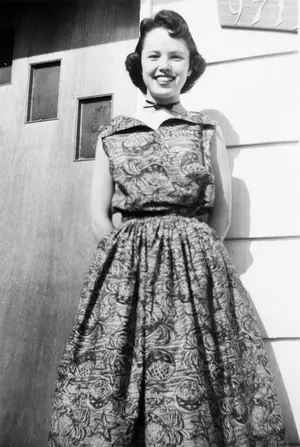
Bennett Bill is wearing an outfit she designed and sewed herself in ninth or 10th grade, about 1952.

Around the same time, the Puyallup Tribe, confronting severe efforts to eliminate them as a sovereign people, faced an existential dilemma: “selling our tribe or hanging on to a hopeless belief in our future.” Voting members were deadlocked. At the last minute, Maiselle Bridges mobilized her Chemawa boarding school network and secured the vote needed to keep the Tribe from giving in. A connection forged in a place designed to destroy Indigenous culture ended up keeping the Puyallup Tribe together, if only by a thread.

The Tribe decided it was time for new leadership, and Bennett Bill was elected to the council. Other representatives concentrated on land and salmon; Bennett Bill took on health and education. But from the vantage point of the small plot of remaining land the Tribe maintained along the Puyallup River, she could see that everything was interrelated.

In the summer of 1970, the Tribe set up a fishing camp there, determined to exercise their treaty-guaranteed right to “hunt and fish at their usual and accustomed places.” The state saw things differently and cracked down violently on the Puyallup people and their allies on Sept. 9, 1970. Over 500 law enforcement agents surrounded the 70 people protecting their rights on the river where salmon swam. Firing live ammunition and tear gas, police blocked the roads, but allies began swimming in — including University of Puget Sound English professor LeRoy Annis, acting as an ACLU witness. He had been notified by Sharon Hansen P’87, wife of another professor who helped protect the camp, J. Tim Hansen P’87. Hansen was motivated to help because when his dad helped run the Minidoka, Idaho, prison camp of Japanese Americans during World War II, he had seen children “beaten up and ridiculed” in public school.

Bennett Bill, Annis, and some 60 others were arrested and hauled to jail. Tim Hansen bailed out Bennett Bill, and he took her to the Puget Sound campus where there was a “big crowd to talk about what’d happened.” The news from the river got out, reaching sympathetic people across the nation and world. Sharon Hansen — who later “learned how to do nice beadwork” — stored fish in her laundry tub, The Trail reported, and helped sell salmon for the Tribe on campus.

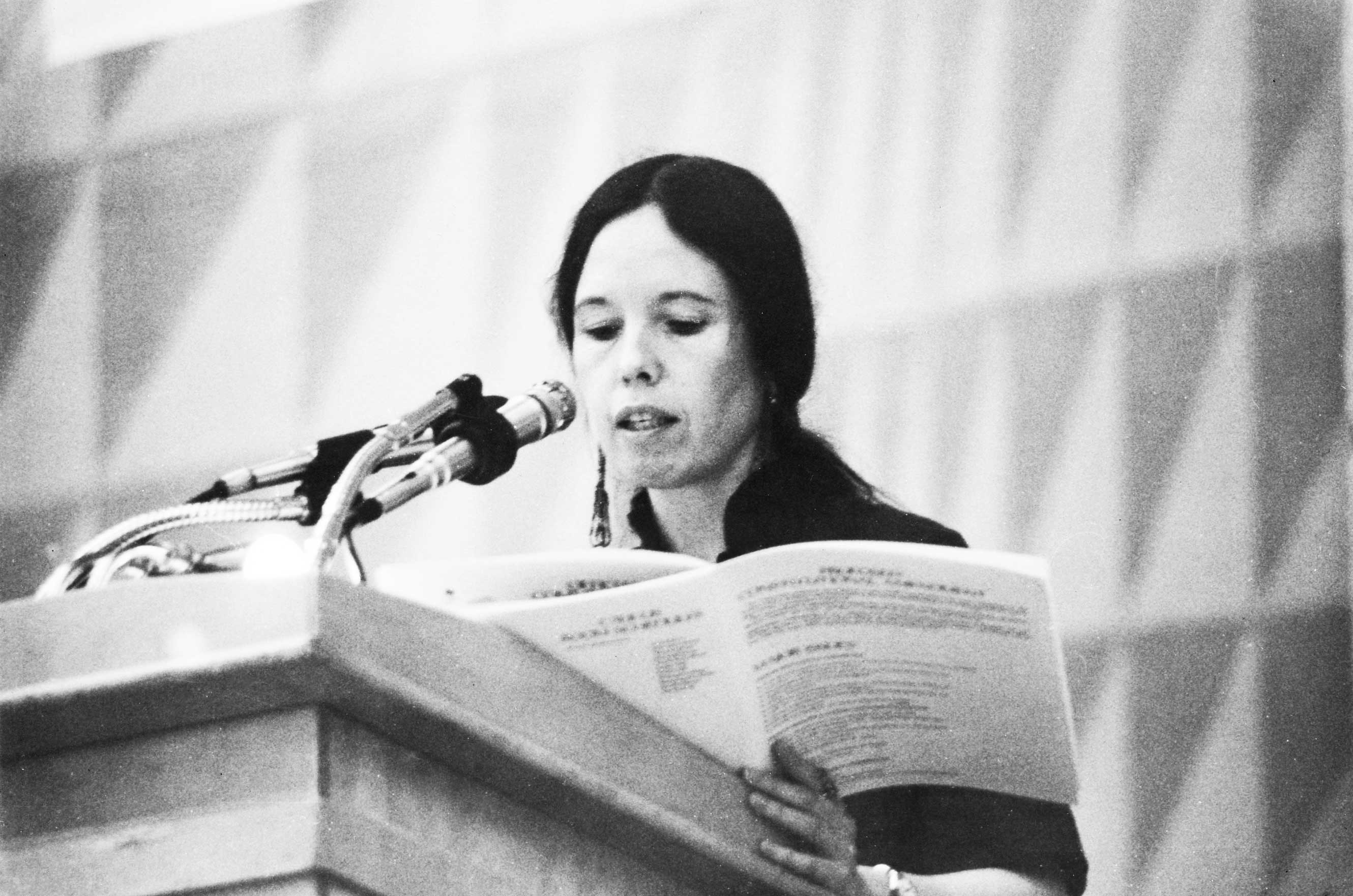
Bennett Bill calls roll as elected secretary at the National Congress of American Indians’ 34th convention in 1977. Courtesy of the Puyallup Tribe.

In the face of repression, the acts of courage by the Puyallups (and their allies) paddled on the movement that led to the momentous Boldt court decision of 1974, upholding the Tribe’s right to fish and protect the salmon, as they had always done.

On the river that summer, Bennett Bill’s commitment to righting the wrongs of education deepened, as she spent time with Puyallup kids who were suffering in state-run schools. “Our fishing camp pushed us to get our own school system going,” she recalls. She wanted to create “a school where Indian kids could laugh, cry, argue, learn, speak Indian, sing, and dance without being ridiculed or punished.”

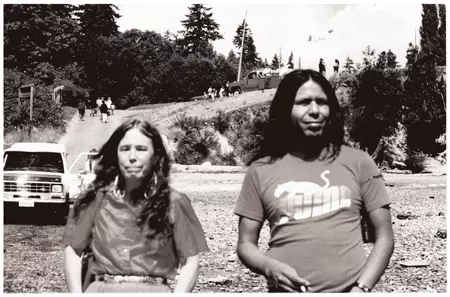
Bennett Bill with her husband, Clyde Bill, on the shore at Suquamish in the summer of 1976.

Turning that vision into a reality would involve an arduous journey on earth that had been scorched by anti-Indigenous policies. The Puyallup Tribe would need to reclaim and restore its land to create the school she envisioned, but the school she envisioned would also help them reclaim and restore their land.

It seemed like everyone was putting up obstacles, telling her and other Indigenous leaders they should go away — that they were “trespassing.” Fed up, she started swashbuckling onto lands, and into buildings, telling the purported owners that they were the trespassers. With others, she occupied Fort Lawton in Seattle in 1970, leading to the creation of Daybreak Star Cultural Center, which continues to offer a preschool for Indigenous children as well as offer classes and host powwows.

In Her Own Words

Indian time was determined by the tides, nature’s schedule, and seasons. There’s a time to dig, hunt, pick, and gather. There always were hands ready and time to clean, sort, store, dry, and prepare the foods and materials for future use. Our life ends when our work is done. Scal-lal-a-tud is a spirit or angel who comes to lead us across the veil. Kiyah (Grandma) said, “If you want to walk with liars, fools, cowards, or thieves, just be that way and you will … in this world and the next.” We believed and believe in an afterlife. We earn our place there. If we die suddenly or are angry or terrified, some believe, our spirit goes to what’s now called Lake Crescent (on the Olympic Peninsula). We need to heal before we cross the veil. Mama said, “We cry when we come into this life and cry when we leave it, because we don’t know what to expect.”

—Ramona Bennett Bill

Bennett Bill traveled to Washington, D.C., with Charles William, Roleen Hargrove, Ella Aquino, and Martin Sampson to lobby for treaty services. Courtesy of the Puyallup Tribe.

While it’s impossible to recount here every anti-trespassing move she made in her own Puyallup homelands, they included:

  • claiming an unused elementary school;

  • criss-crossing the continent on the Trail of Broken Treaties, occupying the Bureau of Indian Affairs headquarters in Washington, D.C., and getting arrested again;

  • writing grants to build school buildings;

  • striking a deal with the governor to reclaim Tribal lands that had been used for the Cushman school and then the Cushman Indian Hospital, only to see him renege on it behind her back;

  • occupying those buildings, serving an eviction notice to the state while being backed up by Uzi-packing Tribal Vietnam veterans;

  • going toe-to-toe with government officials who threatened to blow up the building and everyone inside;

  • and ultimately forging a deal to get the land back with the Undersecretary of the Interior, who traveled from the other Washington, wanting to make amends for having wrongfully arrested her in the Bureau of Indian Affairs occupation.

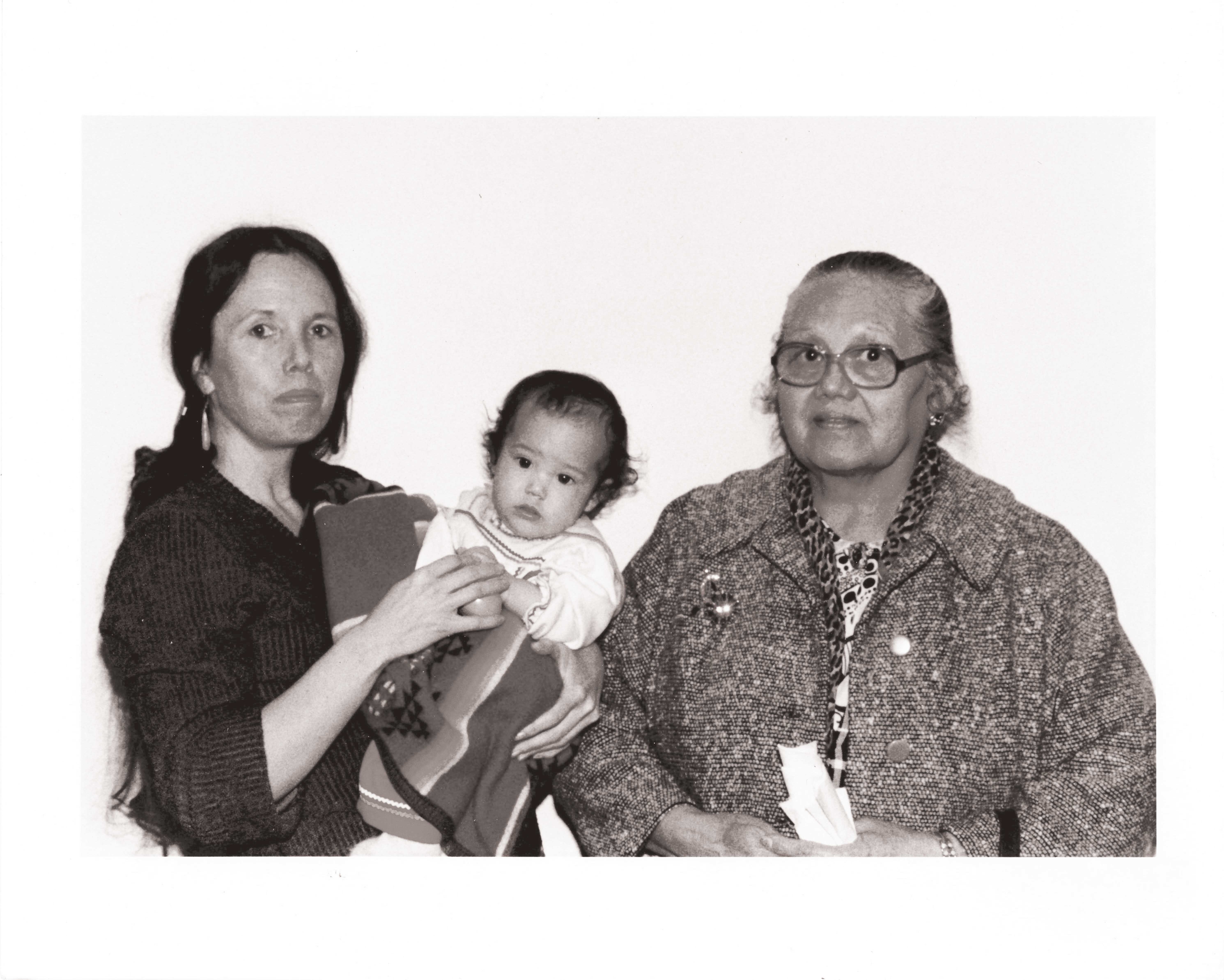
Bennett Bill is pictured here with her daughter, Ah-Bead-Soot, and her mother, Gertrude McKinney, in about 1980. Courtesy of Elizabeth Winter.

It’s a tale you couldn’t make up, yet it is the one that Bennett Bill actually did make up, as she went along, compelled to fight for the Puyallup Tribe and her educational vision.

Having secured the land, they could now create “a school to offset the damage the boarding schools had done.” They named it Chief Leschi, honoring the legendary leader who stood up for Indigenous rights in the 1850s, and who was “judicially murdered.” Bennett Bill sees this fight as the same ongoing fight for the rivers, salmon, health, and education. In creating Chief Leschi Schools, the Puyallup leaders wanted their children “to know we love them. A school is the heart of a community. We intended and wanted our tribal community to have a heart.”

In December 2025, Bennett Bill was honored at an assembly at Chief Leschi. After the event, she shared on Facebook the words she told the schoolchildren, that “our ancestors loved us and tried to leave something good. We loved them before we saw their faces and tried to prepare good things. It’s called thinking generationally.” It was a full-circle moment.

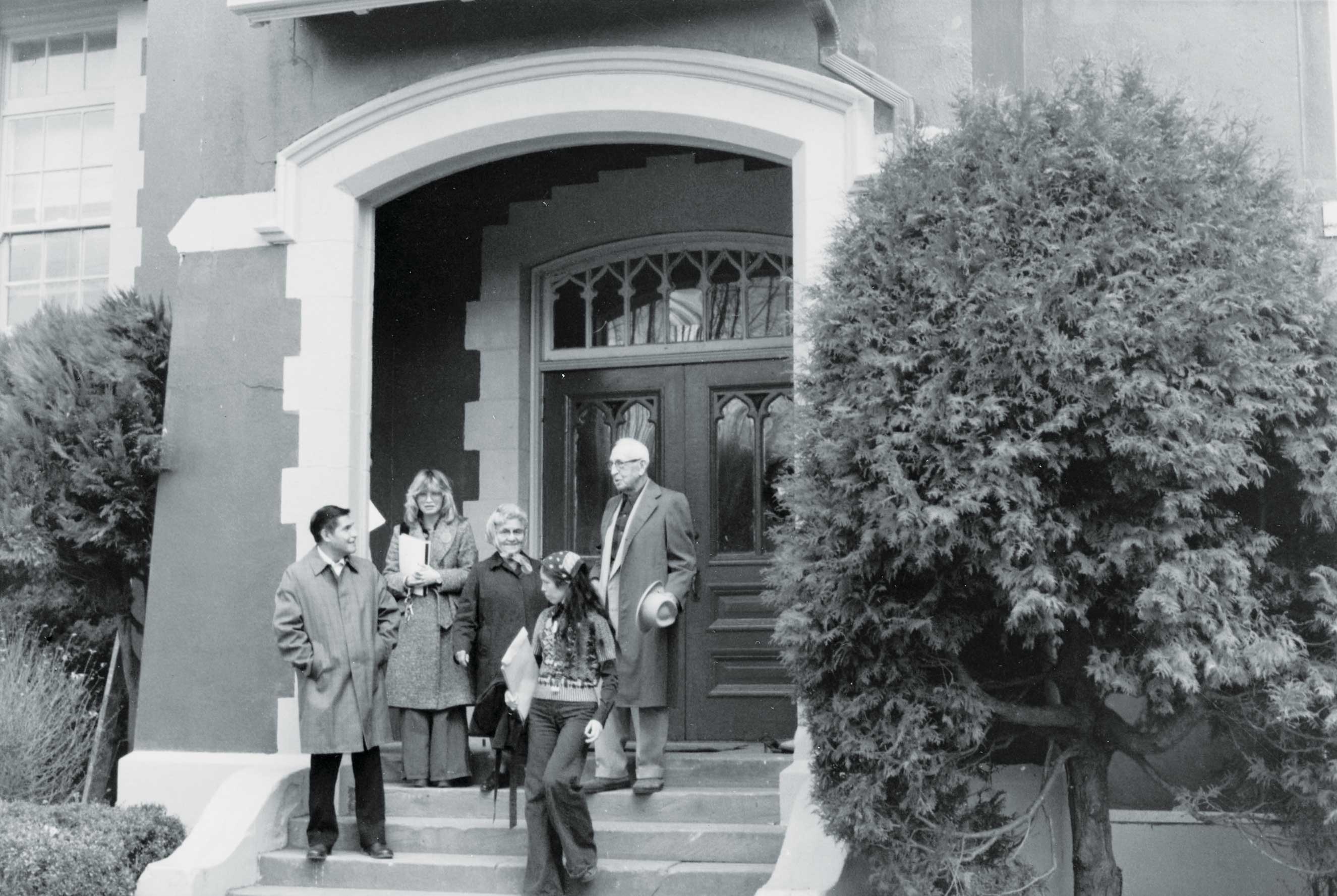
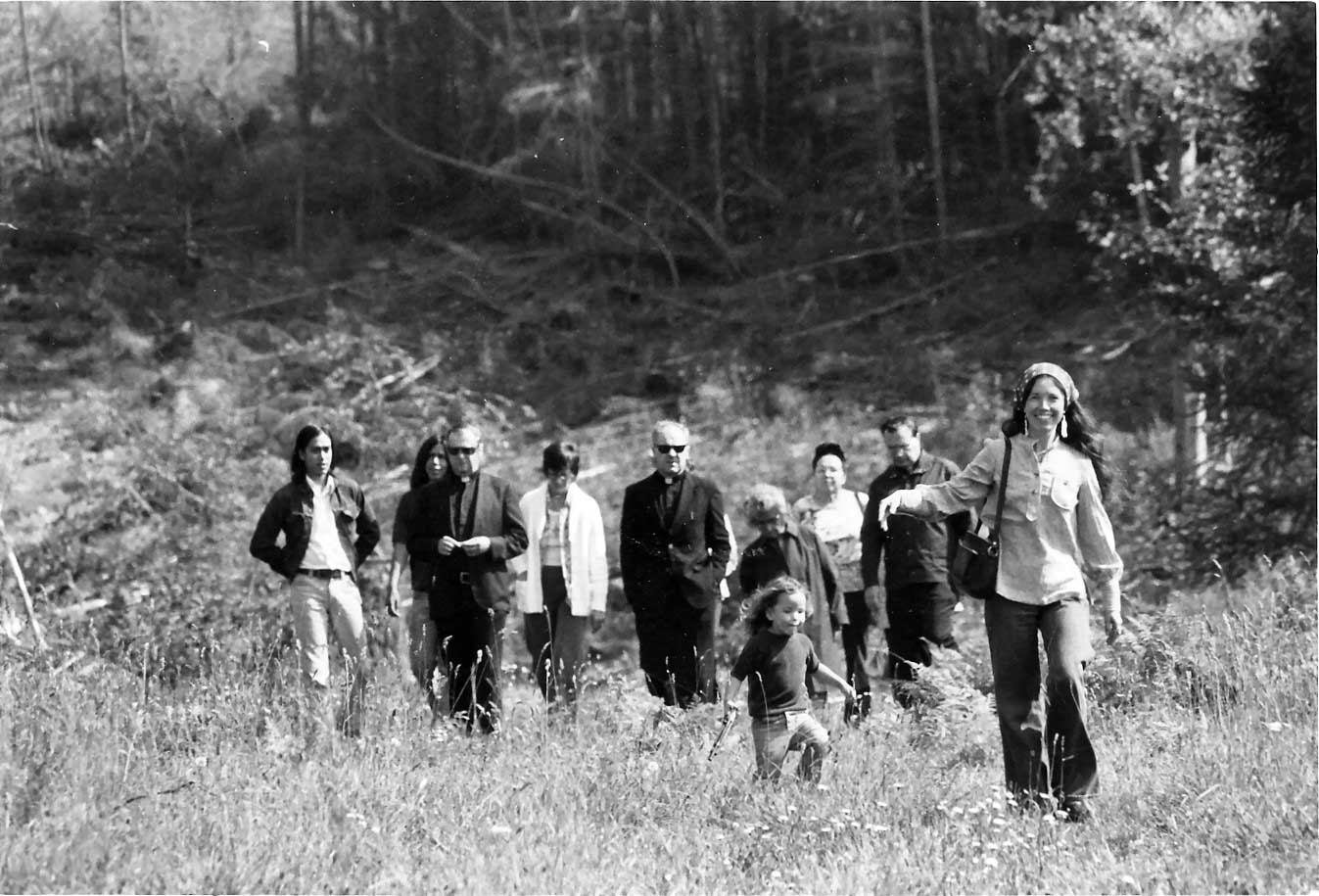
Bennett Bill and her daughter, La-huh-bate-soot, lead the newly assigned Archbishop Raymond Hunthausen and others on a walking tour in 1975. Courtesy of the Puyallup Tribe.

From her first days in school, state-run education had given her the proverbial run-around. But she was always faster, and she had more stamina. In 1971, she used federal grant money to offer some college classes through Fort Steilacoom Community College, which provided classrooms at the psychiatric Western State Hospital. While appreciated, being put there sent a double-edged message: “I never got over the notion that thinking Indians were college material caused the FSCC administrators to think we were crazy.” But the students “went on to do amazing things.”

Bennett Bill earned her own Bachelor of Arts degree from The Evergreen State College while serving as Puyallup chairwoman and helped get the Tacoma branch started by offering its founders space in the new Puyallup building. Later, her son Charles Carson would earn his degree there. Talk about being “college material!”

After her time as chairwoman, she continued her pursuit of education. Bennett Bill told Arches that Tim Hansen and Bob Ford MA’72 — who was a professor of counselor education and director of the Black Studies program — recruited her to come to Puget Sound when her term on council was nearing its end in 1979. She laughed as she told the story about how she had been accepted to the program and arranged her school funding, but on the day of her interview with the admission committee, she learned she would also need to take a standardized test.

The committee told her that the Miller Analogies Test, a standardized exam used for graduate school admissions until 2023, was being offered that day at Pacific Lutheran University. So she went out that same day, “paid the $70 and took the test, and they said I got all 60 questions right,” Bennett Bill said. Her particular test focused on Greek mythology, and she remembers being asked how she knew so much about that topic.

“In high school, I would go to a Carnegie library in Seattle,” Bennett Bill recalled. “I never could find any Indian legends, so I read Greek mythology. The day I took the test, I could remember everything. And that’s the Creator at work.” She started classes for a Master of Education degree in counseling the Monday after she was recalled.

Her educational pursuits were always community-centered and multilayered — while pursuing higher ed, she was also working for the Tacoma Indian Center and teaching her own and many other children in her orbit. She served as principal of the Wa He Lut School in Olympia, Wash., founded Rainbow Youth and Family Service, and received an Honorary Doctorate in Public Affairs in 2000 from Puget Sound.

Now 87, Bennett Bill continues to give back and educate everyone around her. Pick up a copy of Fighting for the Puyallup Tribe: you, too, will be educated — and entertained — in Ramona Bennett Bill’s illimitable fashion.

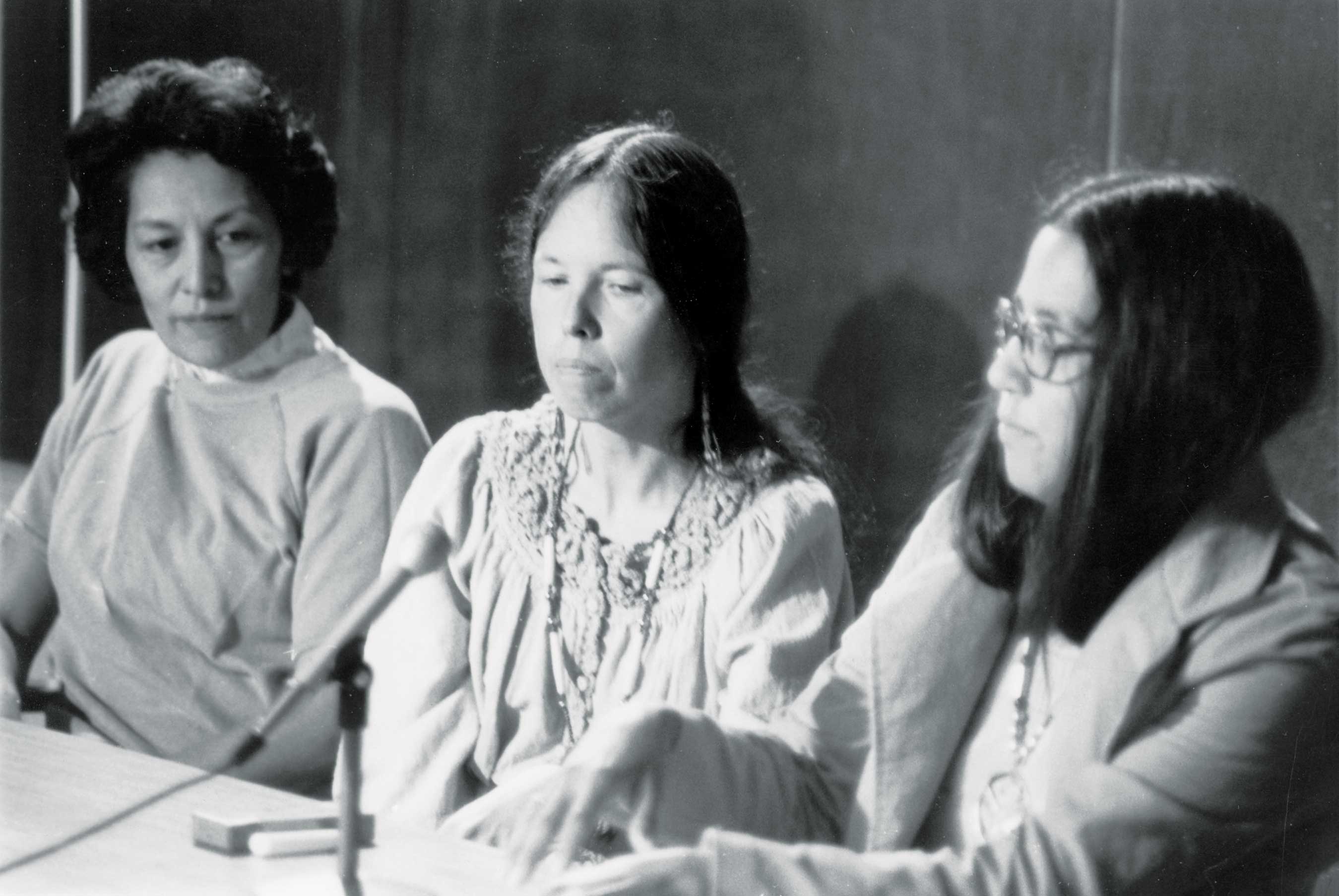
Pictured here are Bennett Bill with Faye LaPointe (left) and Suzette Mills (right) in 1974. LaPointe had agreed to supervise a tutoring/counseling education program at Hawthorne Elementary School (now part of Chief Leschi Schools). Mills and Bennett Bill confirmed and welcomed her. Courtesy of the Puyallup Tribe.

In Her Own Words

Chief Leschi sacrificed his life because he knew he loved us without ever seeing our faces. It’s up to us to think generationally and know we love the ones who’ll come after us. We must leave something good for them.

I’ll conclude with a phrase that Indigenous people in North America use at the end of a prayer, speech, or story to express our worldview about the interconnectedness of all creation — people, animals, insects, plants, inanimate objects: AMR — All My Relations.

—Ramona Bennett Bill

About Fighting for the Puyallup Tribe

Cover of Fighting for the Puyallup Tribe, a memoir by Ramona Bennett Bill MEd’81, Hon.’00

A relentless advocate for Native rights, Ramona Bennett Bill has been involved in the battles waged by the Puyallup and other Northwest tribes around fishing rights, land rights, health, and education for more than six decades. Her memoir, Fighting for the Puyallup Tribe, is full of vivid stories of her testimony in courtrooms and press conferences on issues affecting Indian Country, and celebrates the many friends and comrades she made along the way.

About the Author

Douglas Sackman is Distinguished Professor and Chair of History at the University of Puget Sound. A U.S. historian focusing on the North American West, he is the author of Wild Men: Ishi and Kroeber in the Wilderness of Modern America and Orange Empire: California and the Fruits of Eden, among other publications.


All quotes and excerpts are from Fighting for the Puyallup Tribe by Ramona Bennett Bill and used with permission from the University of Washington Press. Copyright © 2025 Ramona Spirithawk Bennett Bill.