Visitors to Disney's Animal Kingdom may be in awe of the park's immersive storytelling, with its crumbling architecture, overgrown ruins, and the sense of an ancient, distant world. But Professor of Communication Studies Derek Buescher sees a different story. His research shows how these manufactured ruins subtly teach tourists to view non-Western cultures as broken, outdated, and in need of fixing.
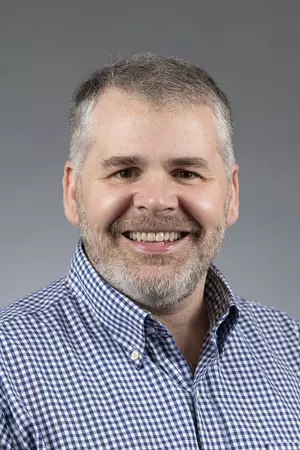
Buescher explores how Disney’s theme park acts as a rhetorical tool in his research published in the 2024 collection “Relics of Modernity: Theorizing Rhetorics and Performance Ruins.” By examining the physical spaces of the park, he uncovered how the culture industry generates meaning that guests consume alongside their popcorn and souvenirs.
Buescher spent roughly 20 hours over several days at Animal Kingdom in Florida, documenting the smallest details of the park’s design. He observed that while Discovery Island, the central hub of the park, is pristine and vibrant, the sections representing Asia and Africa are depicted as sun-bleached and shabby.
He refers to this as comfort colonialism. By creating an experience that feels outdated, Disney offers a safer way for tourists to explore the unknown, traveling to under-resourced countries.
“Disney offers sanitary, safe locations or movies and films that are supposed to be fun and innocent,” Buescher says. “In the case of Animal Kingdom, it offers us contact with others that is controlled and secure.”
This sanitization also extends to the physical management of the park. Buescher sees Disney's focus on trash as a symbol of its bigger goals — from strategically spacing trash cans to ensure guests don't have to walk around with trash in their hands or litter, to the costuming and choreography of garbage collectors. This effort helps Disney erase anything that might remind guests of the economic anxieties of modern life or the colonial violence buried beneath its representations of Asia and Africa.
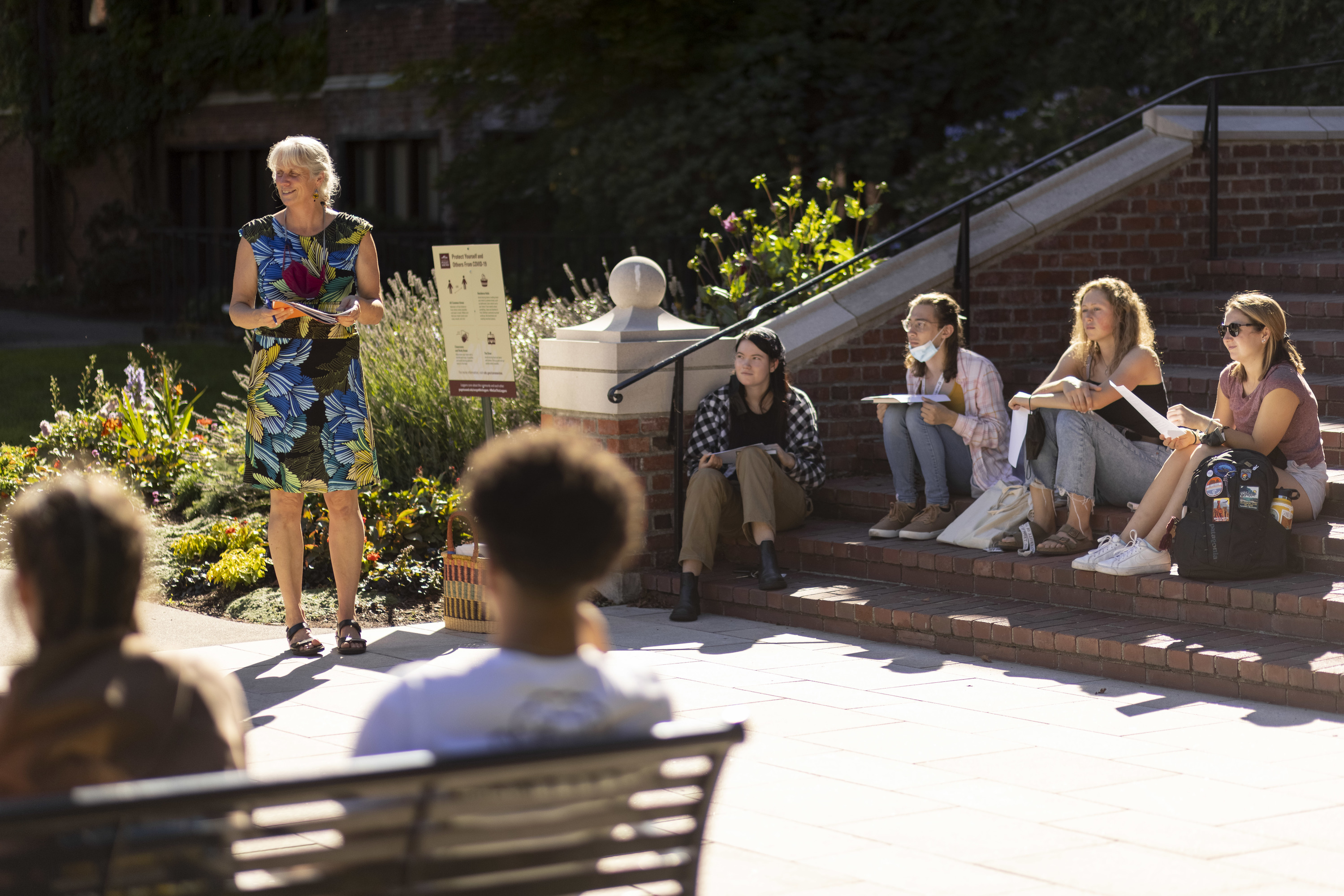
In the classroom, Buescher brings these critiques to life, like in his Contemporary Media Culture Deconstructing Disney course. Buescher says he often begins the semester with a lighthearted warning to students: be prepared for him to destroy their childhoods.
The goal, however, is not to ruin the fun but, as Buescher explains, to build a critical eye. By using theories from influential philosophers of the past, Buescher helps students see that their favorite films and vacation spots are complex texts that define who we get to be and how we get to act.

Buescher’s work is an example of the core of a liberal arts education. It is the ability to see the world critically. By analyzing theme park architecture, his communication studies students learn to identify similar patterns of Disneyfied sanitization in Starbucks, public parks, and even political rhetoric.
The impact of this approach is evident in his students. Juliet Johnston ’26 says the class provides tools that extend far beyond the gates of Disneyland.
“When I think of [the] Disney class, I think of the frameworks we used to analyze Disney,” Johnston said. “On a daily basis, I'll catch myself applying something I learned in [the] Disney class to the world around me. It gives students the tools to deconstruct not only Disney, but the world around them at large.”
She also credits the experience with helping change the way she approaches her education.
“Professor Buescher challenges his students in a way that makes you want to do your very best,” she adds. “I wouldn't be half the student I am today without his courses.”
This critical awareness, Buescher argues, is exactly the point, because what we watch, consume, and visit shapes more than just our entertainment choices.
“The media that we consume is constituting meaning and thereby defining the roles that we get to inhabit,” Buescher said. “That means we need to engage in constant practices of criticism.”
Ultimately, he said, critical media literacy isn't about ruining enjoyment. It's about expanding possibilities.
“It means finding spaces to open up different possibilities of subjectivity — of who can be where, why, and how,” he said.
For students like Johnston, those practices have become second nature. She now sees the world through a different lens — one that questions the stories embedded in everything from a Disney vacation to a coffee shop to a political advertisement.
That, Buescher said, is the point. Not to ruin the magic, but to understand how the magic works.