School of Occupational Therapy

1500 N. Warner St. #1070
Tacoma, WA 98416-1070

Weyerhaeuser 204

253.879.3514
253.879.3518

OT Clinic & Department Assistant

Christine Hills

Program Coordinator

Sue Hinrichs

Academic Fieldwork Assistant

Claire Brecher

Associate Fieldwork Coordinator

Andee Spehar, MOTR/L

Program Description

Established in 1944, the Puget Sound Occupational Therapy Program was the first of its kind in the region and embodies the liberal arts emphasis of the university. A collaborative yet academically rigorous environment nurtures MSOT and OTD students together in a combined cohort model as they learn to think critically and analytically, develop professional values and goals, and become intellectually autonomous. Students benefit from high impact educational practices, innovative project opportunities, frequent experiential learning opportunities, and a curriculum that develops the professional reasoning skills essential for success across practice settings.

Why Puget Sound OT?

  • On site clinic: Puget Sound teaching clinics offer students three unique opportunities to work under the supervision of practicing occupational therapists who guide students in performing every part of the OT process with participants from the local community offered free of charge.
  • Two tracks offered in a single-cohort model entering once a year in the Fall:
    • MSOT is a full-time cohort-based program that includes two academic years on campus followed by two 12-week, full-time Level II fieldwork rotations (the entire program requires 2-1/2 years to complete). Follow this link to find out more about the Entry-level Master’s Program (MSOT).
    • OTD is a full-time cohort-based program that requires three years to complete. It includes two 12-week full-time Level II fieldwork rotations and a 14-week Capstone experience. Follow this link to find out more about the Entry-level Doctorate Program (OTD).
    • All students have the option to switch tracks at the end of their second semester of study.
  • NBCOT pass rate: Puget Sound occupational therapy graduates have consistently demonstrated strong educational outcomes. To view or pass rate data by year, please use the direct link to the National Board for Certification in Occupational Therapy (NBCOT) program data results.
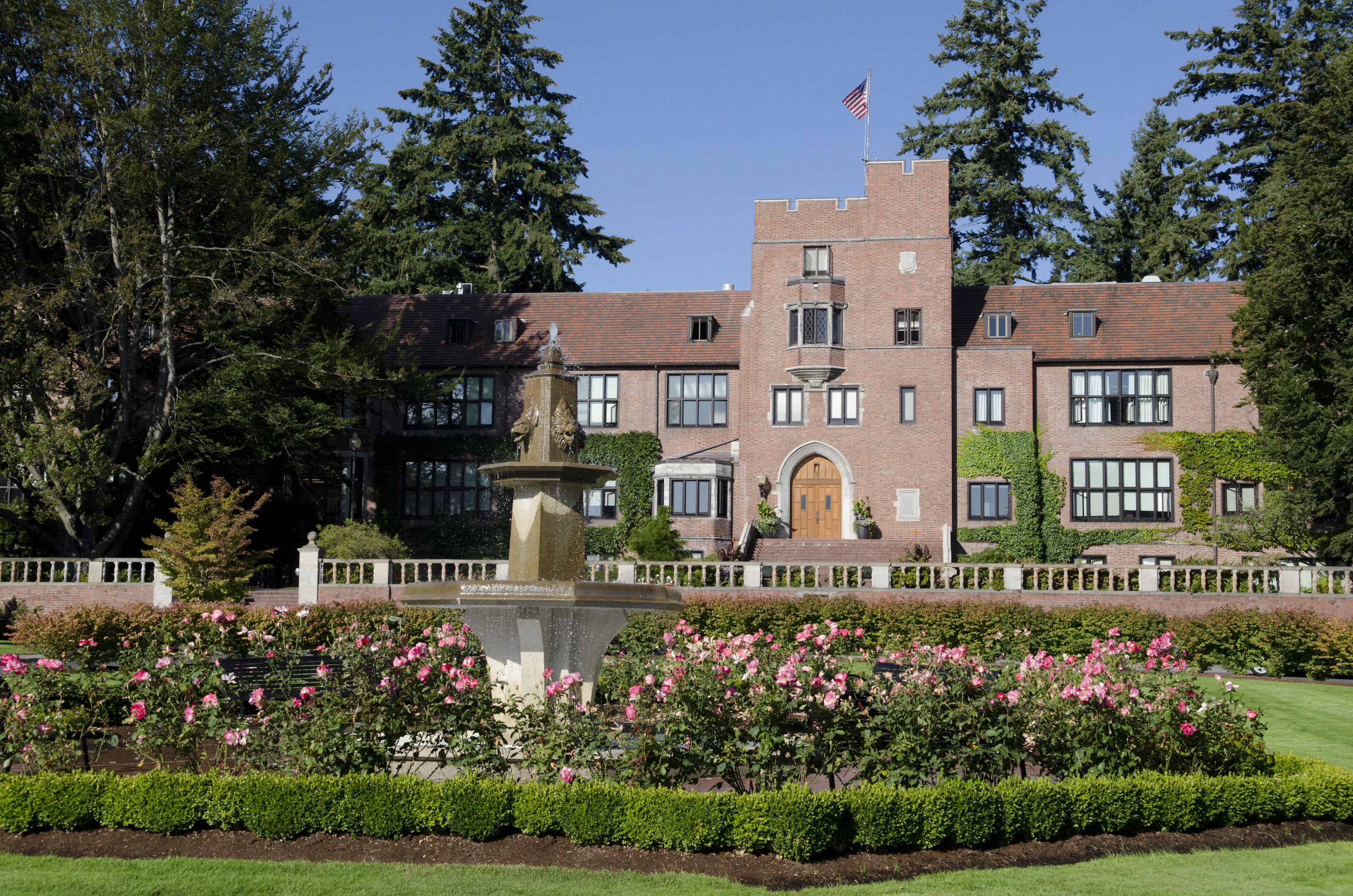
  • Fully in-person on-campus learning with all courses taught by OT’s: Students engage, connect and learn with professors and their cohort in classes on the Puget Sound campus. The Puget Sound campus has been voted in the top three Most Beautiful Campuses by College Rover!

Find out more about the OT Program

  • Course sequence and curriculum: Students move through a set sequence of foundational, practice, and fieldwork courses designed to build skills progressively.
  • Weekly schedule and time commitment: During the on-campus academic terms, students can expect classes, labs, and teamwork Monday through Friday (a typical graduate-level load). Fieldwork and capstone semesters are full-time, 40 hours/week in clinical settings.
  • Learning format: The program is primarily in-person and is cohort-based. Some courses or components may incorporate small hybrid elements, but the core of the MSOT and OTD programs at Puget Sound is in-person. Technology is integrated throughout the program, requiring access to online services. Technology guidance can be found here: Technology Services
  • Fieldwork placements: Full-time internships are required for both tracks and the program has contracts with various organizations providing OT services throughout the country.
  • Doctoral capstones: OTD students complete capstone projects and experiences in their third year and present scholarly work in the annual evidence symposium.

Why Puget Sound?

Two OT students practice techniques on a third student
Community Engagement

Robust community-based experiences include student-driven experiential learning projects, evidence-in-practice projects conducted in collaboration with community practitioners, culminating presentations open to campus and community members, and optional study-abroad opportunities.

Occupational Therapy students in a learning lab 2023
Culturally Sensitive Practice

With a 30-year history of teaching cultural humility and culturally responsive practice, our program is highly experienced in engaging students in meaningful examination of the social determinants of health and preparing them to provide culturally sensitive and unbiased quality care to clients from all backgrounds and widely varied lived experiences.

Occupational therapy student getting hands-on instruction
Hands-on Learning

Our teaching clinics offer students three unique opportunities to work under the supervision of practicing occupational therapists who are hired to guide students in performing every part of the occupational therapy process with volunteer clients from the local community. The teaching clinics emphasize adult services, pediatric services, and group services for clients with mental health needs.

Experiential Learning
Who You’ll Learn From

All Puget Sound faculty members have actively practiced occupational therapy and all courses are taught by licensed occupational therapists. Other faculty characteristics: earned specialty certifications, elected to national and state leadership positions, volunteering in professional and the local community organizations, maintaining active research agendas, authoring textbooks and official documents, publishing in peer-reviewed journals, presentation at national and international conferences, earned awards and recognitions, and more.

Sample MSOT & OTD Courses

This course critically examines the role of sociocultural, socioeconomic, and diversity factors as they impact participation in occupation for persons, groups, and populations in a changing healthcare environment. Using analytical and evaluative skills, students collaborate in problem-solving activities with classmates in and outside of class and increase understanding of the ways in which race and class impact occupational performance and participation.

Prerequisites
Admission to the School of Occupational Therapy.

Essential gross anatomy of the musculoskeletal system of the limbs and trunk, including peripheral nerves and vascular structures, is studied as a basis for understanding and analyzing human functional movement. Biomechanical principles of human motion are studied, as well as kinesiologic analysis of movement. Introduction to goniometry, manual muscle testing, palpation of superficial structures, and clinical presentations are also covered.

Prerequisites
Admission to the School of Occupational Therapy.

This class is a foundation course designed to introduce occupational therapy students to the basic and applied functions of the human nervous system and begin to understand how those functions affect sensorimotor activity, cognitive/affective behavior, and, ultimately, occupational performance. Instruction on somatosensory and visual testing is included.

Prerequisites
Admission to the School of Occupational Therapy.

This course introduces the context of OT research, the major types of research, issues of research design, concepts of evidence-based practice, and the principles of descriptive and inferential statistics. Students analyze and interpret data, complete and present pilot descriptive research projects, and begin preparations for implementation of the evidence project in OT 630 or OT 730.

Prerequisites
Admission to the School of Occupational Therapy.

This course develops theoretical knowledge of and practice skills for the occupational therapy process with clients with diverse psychosocial needs, ranging from the importance and meaning of occupation for mental health promotion to the impact of psychiatric conditions on occupational performance. Students administer assessment methods, identify and analyze occupational needs related to mental health, and compare a variety of evidence-informed psychosocial intervention approaches. Therapeutic use of self and reflection and reasoning is further developed while designing and implementing therapeutic group interventions. Doctoral students further evaluate evidence that supports the role of occupation in the promotion of mental health and prevention of mental illness.

Prerequisites
Admission to the School of Occupational Therapy.

In this course students learn foundational concepts of professionalism, universal principles of professional therapist-client interaction, and assimilation of a professional self-identity. Key concepts include personal responsibility for learning, therapeutic use of self, professional communication, clinical reasoning and reflection, professional behaviors, and understanding self as a professional.

Prerequisites
Admission to the School of Occupational Therapy.

Graduation Data

MSOT Fall Cohorts Persistence and Graduation

Graduation Year Entering Students Graduated with MSOT Graduated with OTD Total Graduated Graduation Rate
2022 12 8 4 12 100%
2023 22 18 4 22 100%
2024 16 9 6 15* 94%
2025 14 10** *** *** ***

* One student withdrew / did not finish program
** 4 students who entered as MSOT switched to the OTD track
*** OTD students continue to be enrolled with anticipated graduation in 2026.


OTD Fall Cohorts Persistence and Graduation (program opened in 2020)

Graduation Year Entering Students Graduated with MSOT Graduated with OTD Total Graduated Graduation Rate
2022 - - - - -
2023 28 10 18 28 100% 
2024 18 9 9 18 100%
2025 31 12 18 30* 97%

- The first graduating class of OTD students was May 2023
* One student withdrew / did not finish program.

Rev. 1/22/26

Jean Baumgartel '76

For Jean Baumgartel ’76, a sense of adventure, coupled with her passion for humanitarianism, has taken her all over the globe. In her career as an occupational therapist, she’s traveled to Chile, Vietnam, Peru, Honduras, Nepal, Bhutan, and Georgia, among countless other places. 

Student working at home

A Google search for "home workspace tips" yields more than 50 million results. Some articles recommend standing desks; others swear you'll be most productive on the couch.

Accreditation

Both the entry level MSOT and OTD Occupational Therapy Programs are accredited through the Accreditation Council for Occupational Therapy Education (ACOTE) of the American Occupational Therapy Association (AOTA), located at 7501 Wisconsin Avenue, Suite 510E, Bethesda, MD 20814. ACOTE’s telephone number, c/o AOTA, is (301) 652-AOTA, and its web address is www.acoteonline.org. Puget Sound MSOT and OTD graduates will be eligible to sit for the national certification examination for the occupational therapist administered by the National Board for Certification in Occupational Therapy (NBCOT). After successful completion of this exam, the graduate will be an occupational therapist, registered (OTR). In addition, all states require licensure to practice; however, state licenses are usually based on the results of the NBCOT certification examination. A felony conviction may affect a graduate’s ability to sit for the NBCOT certification examination or attain state licensure.

NBCOT Pass Rate

Puget Sound occupational therapy graduates have consistently demonstrated strong educational outcomes.

To view our pass rate data by year, please use the direct link to the
National Board for Certification in Occupational Therapy (NBCOT) program data results.